Early October, 877 AD. The mist clung to the rolling hills of what is now northern Scotland, veiling a land rich with echoes of its enigmatic past.
The Rise of a People Carved in Stone
The Picts emerged in written history as the mysterious northern adversaries of Rome, first named in late third-century annals. These formidable inhabitants of "Pictland," stretching across modern-day northern and eastern Scotland, were never subdued by Rome despite its vast conquests. The Roman frontier, solidified by Hadrian's Wall, marked the boundary of their southern reach, a testament to Pictish resilience. For generations, the Roman military machine recoiled from Pictland, recording the Picts as a persistent thorn in the side of the empire.
Living in chiefdoms, the Picts spoke a language distantly akin to the Brittonic tongues of southern Celts, suggesting a shared Celtic heritage. Their cultural DNA showed influences as disparate as the fierce Caledonii, a lineage of northern tribes known for their defiance. Yet, their unifying identity as "Picti" was more a Roman construct than self-defined. Not until the seventh century did they adopt the name as an endonym during the era often dominated by the kingdom of Fortriu, a powerful Pictish realm that played a key role in shaping the region's history.
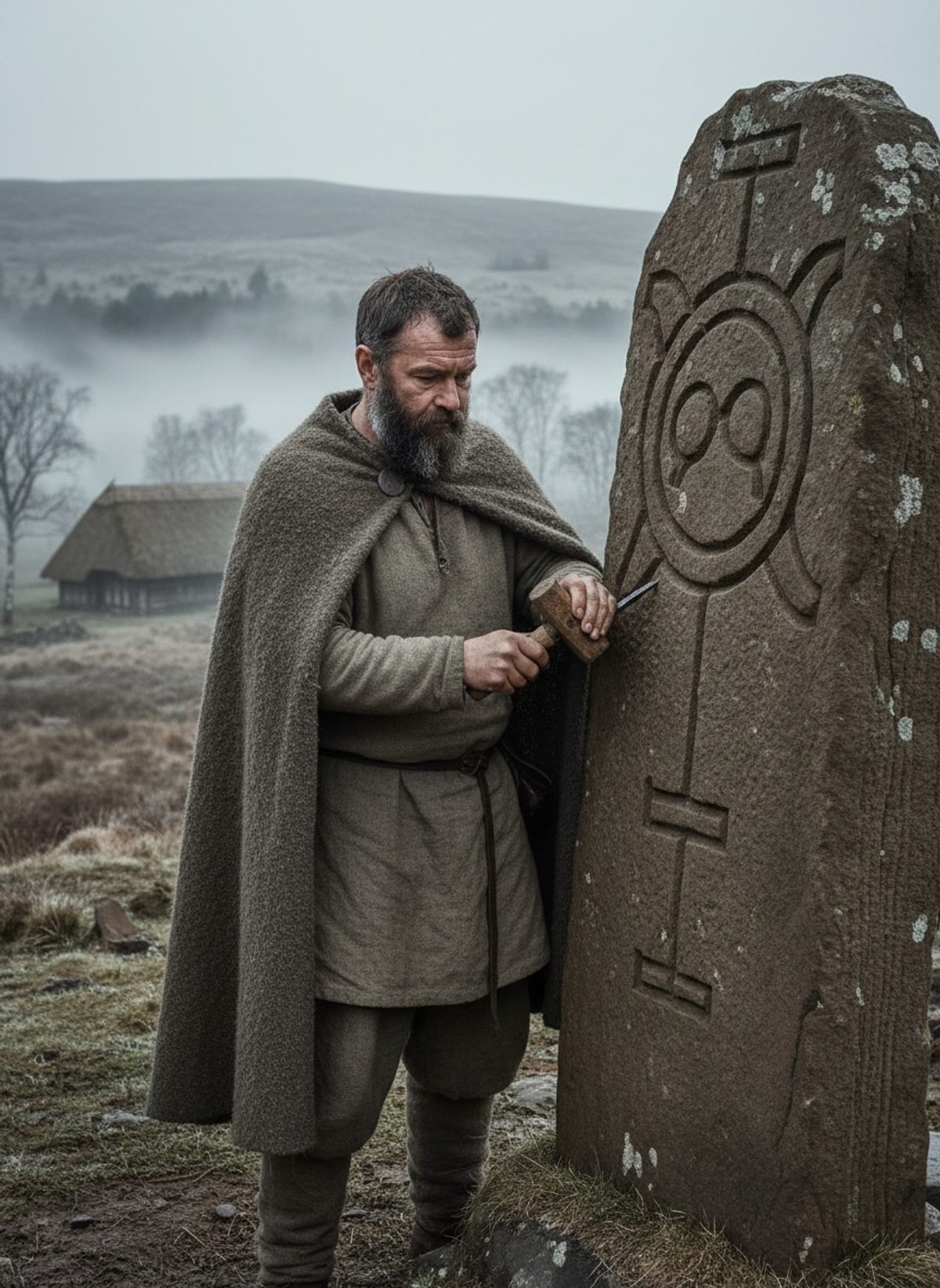
The Picts left an indelible mark through enigmatic stone carvings, hundreds of which scatter the landscape. These stones, cryptic and richly decorated, remain one of the few tangible insights into Pictish life and beliefs. Intricate symbols—now associated with everything from sacred rites to heraldic images—hint at a society that valued both the tangible and the abstract. Researchers continue to puzzle over these symbols, striving to decode the Picts' language and intent. Although the stones can’t tell the entirety of their story, they whisper secrets of a land where history mingles with legend.
Read next: Ashoka Saw the Battlefield. He Never Raised a Sword Again.
A Kingdom Without Borders
Central to Pictish power was the kingdom of Fortriu, located perhaps around the Strathearn and Menteith regions of Scotland. Notably, the first documented Pictish king lists from this period suggest a lineage steeped in myth as much as reality. These rulers commanded a confederation of tribes and, under Fortriu's influence, expanded their domain. While the Picts had no fortified cities as medieval Europe would later see, their hillforts were centers of both defense and ceremonial significance. Here, amid Scotland’s rugged terrain, the Picts thrived.
During the seventh and eighth centuries, the Pictish kingdom reached its zenith. They absorbed and sometimes battled with neighboring groups, including the Gaels of Dál Riata. Interaction with the Gaels led to a gradual process of Gaelicisation, as Middle Gaelic customs, language, and religious practices slowly permeated Pictish society. Perhaps this blending of cultures sowed the seeds for an eventual union.
Religious transformations marked the age, influenced by Irish missionary efforts. The conversion to Christianity saw a shift in the Pictish spiritual paradigm. Figures such as Columba, chronicled by Adomnán, played notable roles in this conversion. The syncretic fusion of traditional Pictish beliefs with Christian ideology can be seen in their art and stone carvings portraying biblical tales beside earlier Pictish motifs.
The Silent Absorption
By the ninth century, something unremarkable yet extraordinary was happening: the Picts were vanishing, not in battle nor in defeat, but through assimilation. This process saw the merging of Pictish and Gael identities into the Kingdom of Alba, the precursor to modern Scotland. By 900 AD, under the House of Alpin, a dynasty considered by many a unifying force, the distinct political entity of the Picts had dissolved. Alba was the new reality, with Scottish Gaelic culture as its dominant identity.
No single event marked their end, no last stand or record of conflict documented their departure from history. The idea of Pictish continuity lingered momentarily but faded as Gaelic traditions took precedence. Over a relatively brief period, the Pictish language receded, supplanted by Gaelic, which formalized this cultural absorption. The ethnic identity of Picts blended into a nascent Scottish ethnicity that would shape the nation’s future.
Why does the story of the Picts matter in the great tapestry of history? It’s a vivid reminder that cultural transformation is often subtle and complex—an amalgam of conquest, diplomacy, and adaptation. The Picts’ journey from fierce independence to quiet integration reflects broader themes in history, where borders shift, languages evolve, and identities merge. Their legacy, though elusive, endures in the stones that stand sentinel over Scotland’s past, silent yet rich with a history that speaks to the resilience and mystery of humanity itself.