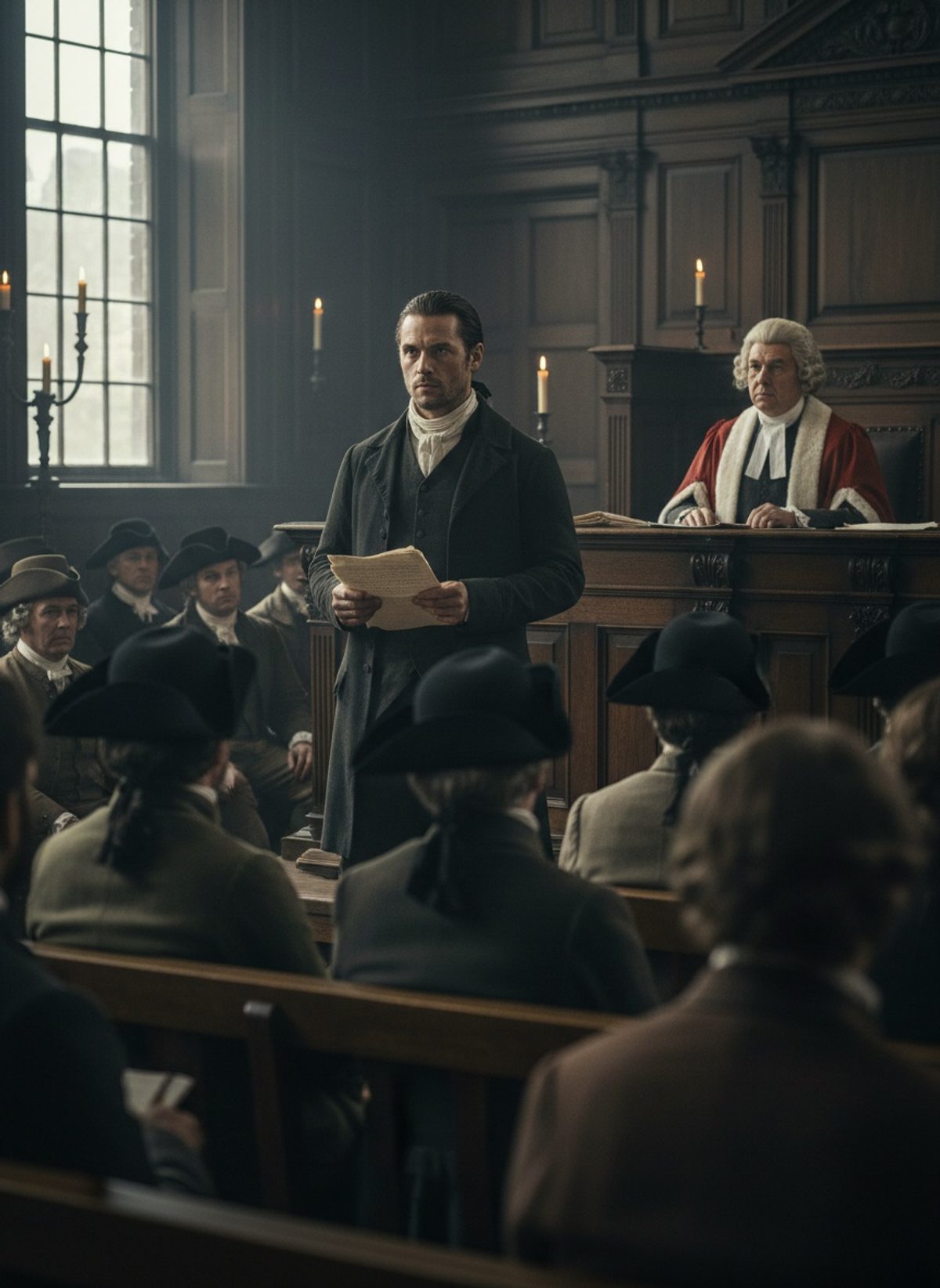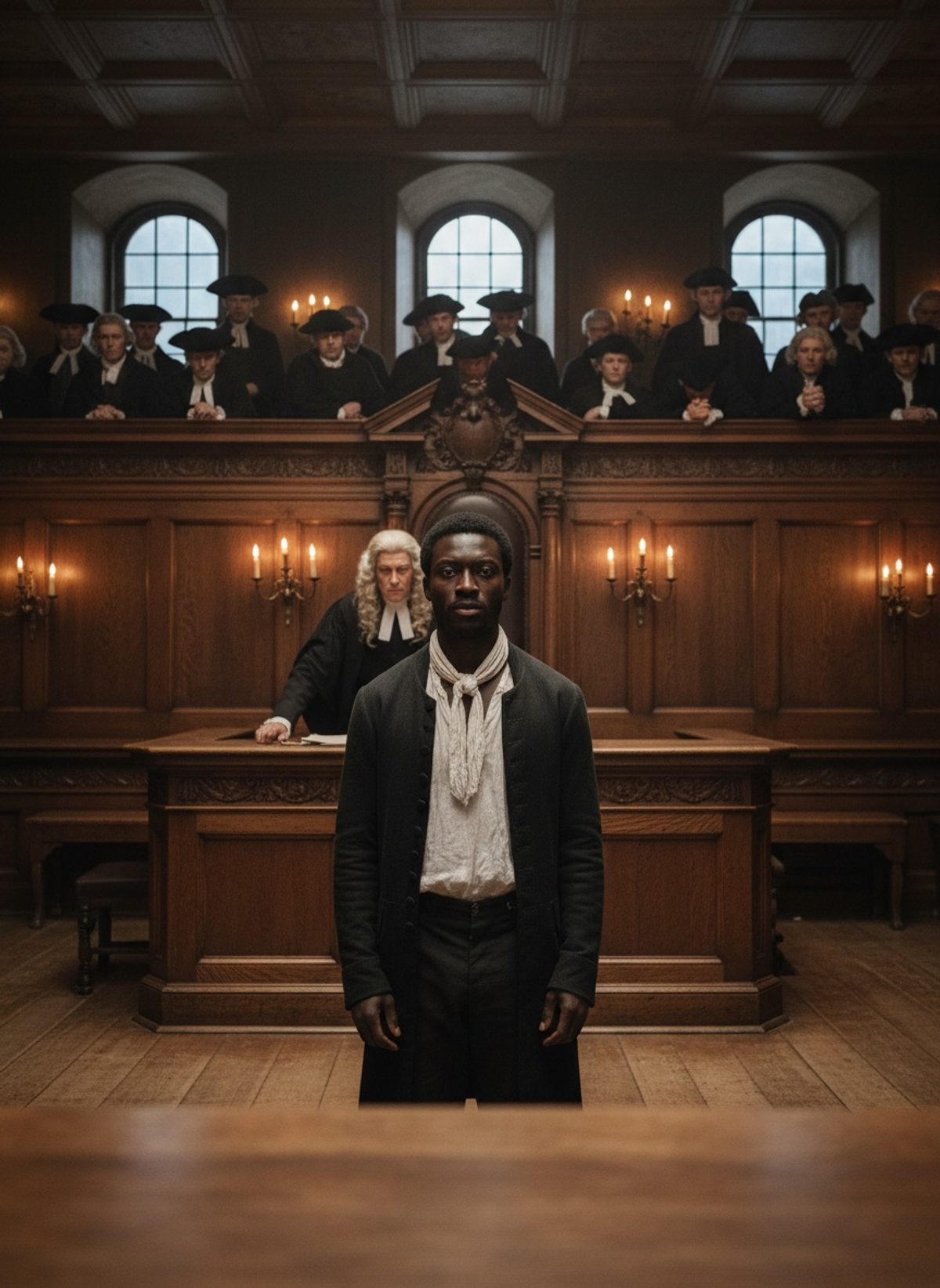
The cobblestones of London's streets gleamed dully in the muted light of a cloudy day, the air thick with the mingling scents of river fog and smoke wafting from a myriad of chimneys. The year was 1772, and the atmosphere crackled not just with the chill of early spring, but with an undercurrent of change. A profound shift was about to ripple through the fabric of British society, brought to light by the determined steps of one Jonathan Strong as he entered the staid and imposing halls of justice.
The Shadow of Cruelty
Jonathan Strong's story began in chains, but his spirit remained unshackled. Born into bondage, he found himself serving a master who wielded brutality with disturbing ease. The pistol-whipping that left him sprawled on a cobbled street in London seemed the final, violent chapter of his oppression — until fate, disguised as compassion, intervened. Left for dead, Strong was discovered and taken in by a surgeon whose healing hands and humanitarian spirit stitched the young man's torn body back together.
Yet, the bonds of slavery would not release their grip so easily. Upon his recovery, Strong learned with growing dread that his former master had not forgotten him. The specter of chains loomed large once more as the man who had subjected him to such vicious torment sought to reclaim him in the eyes of society and the law. Here was the unforgiving paradox of Georgian Britain: a system that perpetuated human ownership while nestled within a culture gradually questioning such norms.
The Courage to Speak
In the heart of a city steeped in tradition, Jonathan Strong resolved to challenge the very structure that threatened to envelop him again. His journey to the courtroom was not beset by the applause of fervent crowds, but by the weight of his own silent conviction. To walk into those hallowed halls was, for him, an act of defiance, a declaration that he would be heard not as a chattel, but as a man with a voice and a narrative that mattered.
Read next: The Day a Granville Sharp Freed a Man on English Soil
The legal corridors echoed with the whispers of those who questioned and those who doubted. Strong stood, not alone in spirit though seemingly so in the flesh, his heartbeats synchronizing with the ticking passage of justice. His claim was stark in its simplicity: He had suffered enough, borne the scars of man's inhumanity, and sought to step into the light unencumbered by the chains of enforced servitude.
The Judge's Gaze
Presiding over this singular case was a judge whose decision would resonate far beyond the stifling walls of the court. The proceedings unfolded under his watchful eyes, his heart and mind perhaps grappling with the weight of implications that extended well beyond the matter at hand. Could a single ruling confront a centuries-long lattice of beliefs and practices? Could the voice of Jonathan Strong pierce the shroud of indifference that had long enshrouded the institution of slavery?
The air inside the court was tinged with the tension of expectation, as the judge's decision would not merely determine Strong's fate, but echo through the legal chasms of the nation. His ruling was unprecedented, a legal pronouncement that challenged the very foundation of slavery on British soil: He declared Strong a free man, liberating both his body and his spirit.
Ripples of Liberation
As Jonathan Strong walked from the courtroom, he carried with him the weight of history and the promise of something greater. His release ignited conversations that spilled from London streets to colonial plantations, amplifying the burgeoning discourse on human rights and dignity. The decision in his case shone a spotlight into the darkest corners of societal norms, asking questions that had long been stifled. Was it possible for freedom to be the birthright of all, regardless of race or creed?
The outcome of the trial reverberated like a stone cast into a still pond, and its waves lapped at the shores of complacency. This was a moment that presaged the eventual abolitionist victories to come — a moment when a man's courage to stand up and speak his truth, against the odds, served as a catalyst for change.
A Testament to Humanity
Jonathan Strong's journey from enslavement to liberty transcends the annals of history, casting a light on the enduring power of resilience and the unyielding pursuit of justice. His story speaks profoundly to the core of what it means to be human — the right to self-determination, the imperative to challenge injustice, and the transformative potential of standing firm against the tide. Strong reminds us that while the pages of history may often omit certain voices, the echoes of courage found in the actions of one can shake the conscience of many.
In a world still striving toward equality, his saga is a vivid reminder that the fight for freedom must be enacted, and re-enacted, countless times. Jonathan Strong's defiant stand speaks not just of one man's triumph, but of a profound and ongoing conversation about the soul of humanity and its unquenchable thirst for justice.