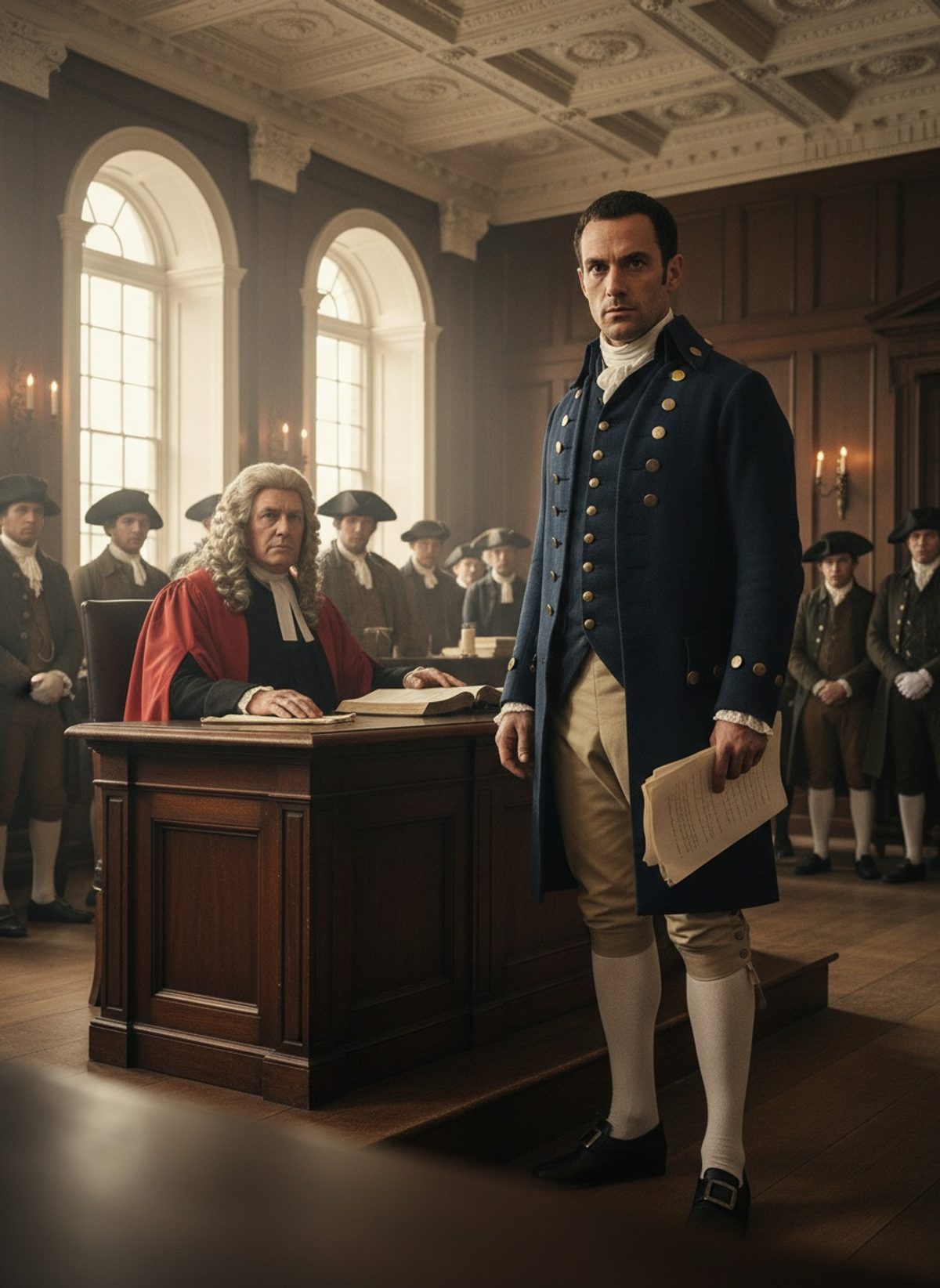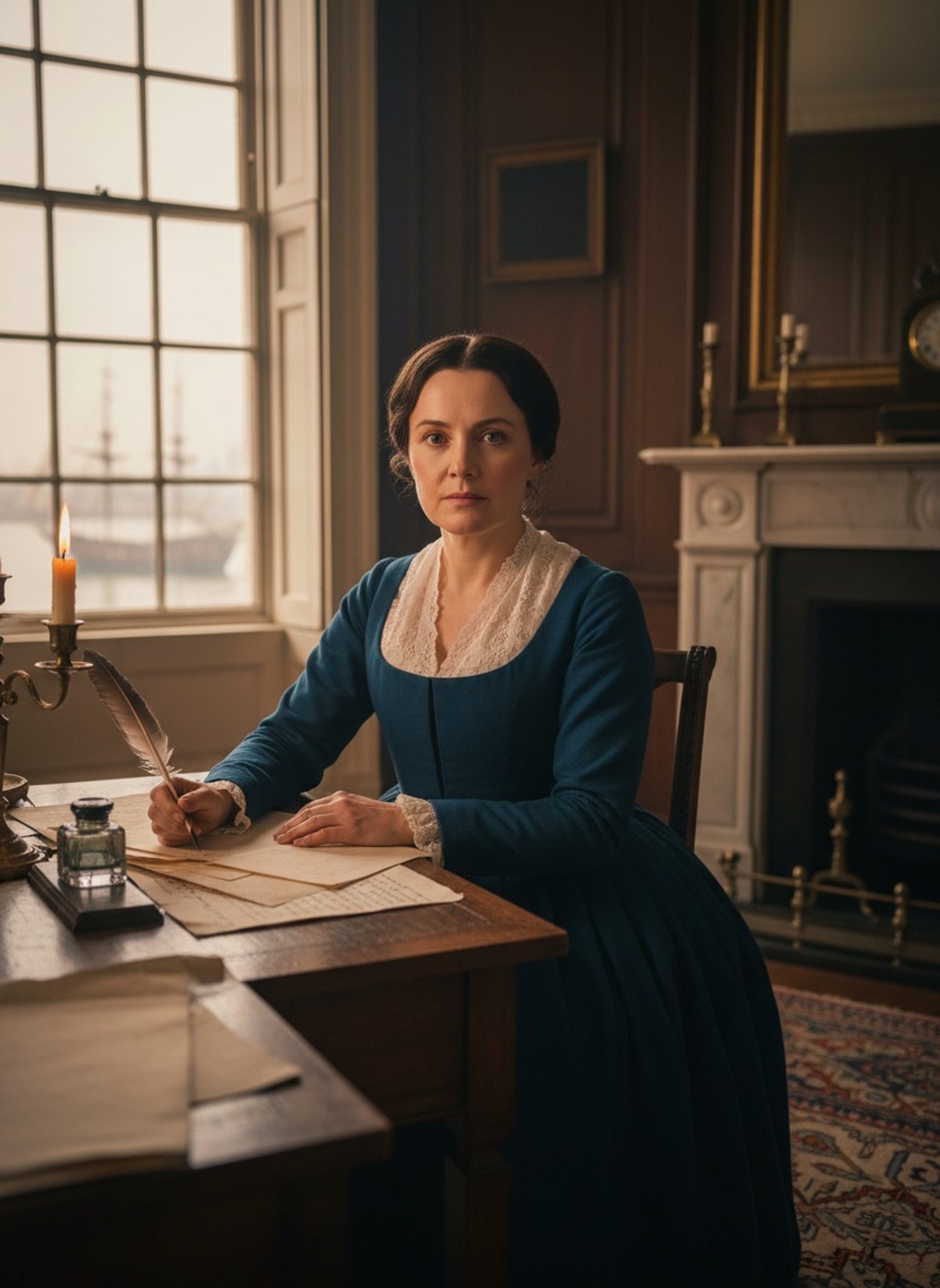
May 23, 1787. The harbor air was thick with the scent of salt and something more sinister.
A Meeting of Worlds
The city of Bristol, with its cobblestone streets and bustling docks, was a nexus of the booming trade that underpinned the wealth of Georgian England. Ships lined the quays, their masts reaching toward the sky like skeletal fingers, laden with goods from distant shores. Amongst these vessels sat a ship of peculiar interest, an infamous slaver freshly returned from the West African coast. Its captain, a man with a commanding presence and an even larger ego, held court with fellow merchants in a nearby tavern, regaling them with tales of his recent exploits.
It was in this dimly lit room, filled with the mingling aromas of ale and pipe smoke, that Hannah More found herself drawn into this grim narrative. More, a well-known figure in literary circles and a woman of strong convictions, had long moved in circles of influence, yet the spectacle before her was something altogether different. The captain's words, delivered with callous bravado, painted a stark picture of human suffering reduced to a mere transaction.
The assembled merchant men, accustomed to the captain's tales, laughed heartily at his crude jest and exploits. However, Hannah More did not join them. Instead, she listened intently, her mind racing with indignation. She was no stranger to the societal ills of her time, but this encounter was a catalyst for what would become her crusade against the inhumanity of the slave trade. Bristol, after all, was steeped in this commerce, with its very prosperity entwined in the misery of others far away. Yet for many, this was a reality they met with indifference or outright denial, protected by the physical and psychological distance the sea provided.
Read next: The Day a Freed Slave Walked Into Court and Won
Pen as Sword
Hannah More left the tavern that day with a singular mission: to shatter the blissful ignorance of an entire nation, one word at a time. She was already a distinguished writer, having charmed the likes of Samuel Johnson with her wit and insight. But it was with her newfound purpose that her literary skill found its true power. She picked up her pen and began to write with fervor, using her unique position to unveil the brutal realities of the slave trade to the comfort of drawing rooms and social gatherings.
Her pamphlets, employed with an incisive intellect and moral clarity, drew upon both emotion and rational argument. She held a mirror up to society, reflecting the cruel paradox of a nation that prided itself on civility and enlightenment while perpetuating one of history's greatest inhumanities. More's work wasn't merely a condemnation but a call to action, stirring the public conscience and rallying many to the cause of abolition.
While others involved in the movement may have focused on economic arguments or religious doctrine, More's strength lay in her ability to humanize the statistics and speak directly to the hearts and minds of the British public. Her evocative descriptions of the slave's plight resonated with a sincerity that was difficult to ignore. More didn't just want to appeal to the wealthy's sense of pity; she demanded accountability and moral imperative in addresses that left an indelible mark on the society of her day.
A Nation Awakened
The resonance of More's words was palpable, rippling through English society and igniting discussions not just in the privacy of homes but in Parliament itself. Her writings soon became a cornerstone of the growing abolitionist movement, entwined with the efforts of contemporaries like William Wilberforce and Thomas Clarkson, forging a coalition determined to rid Britain of its most shameful practice. No longer could the horrors of the Middle Passage be brushed away as distant concerns. More's vivid portrayals brought them to the doorsteps of every English household.
Thus, a dinner conversation in a Bristol tavern catalyzed a pivotal shift in public consciousness. Hannah More's relentless advocacy through the written word laid the groundwork for cultural change and underscored the power of individual action. Her story, often overshadowed by her famous male counterparts, is a reminder of the significant influence wielded by those armed with conviction and creativity.
In reflecting on this past, we are reminded of the enduring relevance of More's example: the courage to confront uncomfortable truths and the will to change them. In a world that continues to wrestle with its past and present inequities, Hannah More's pen remains a symbol of the power one person holds to shape the conscience of a nation. By ensuring her voice was heard, she challenged the foundations of her society, leaving a legacy of change far greater than she might have imagined on that brisk May day in 1787.