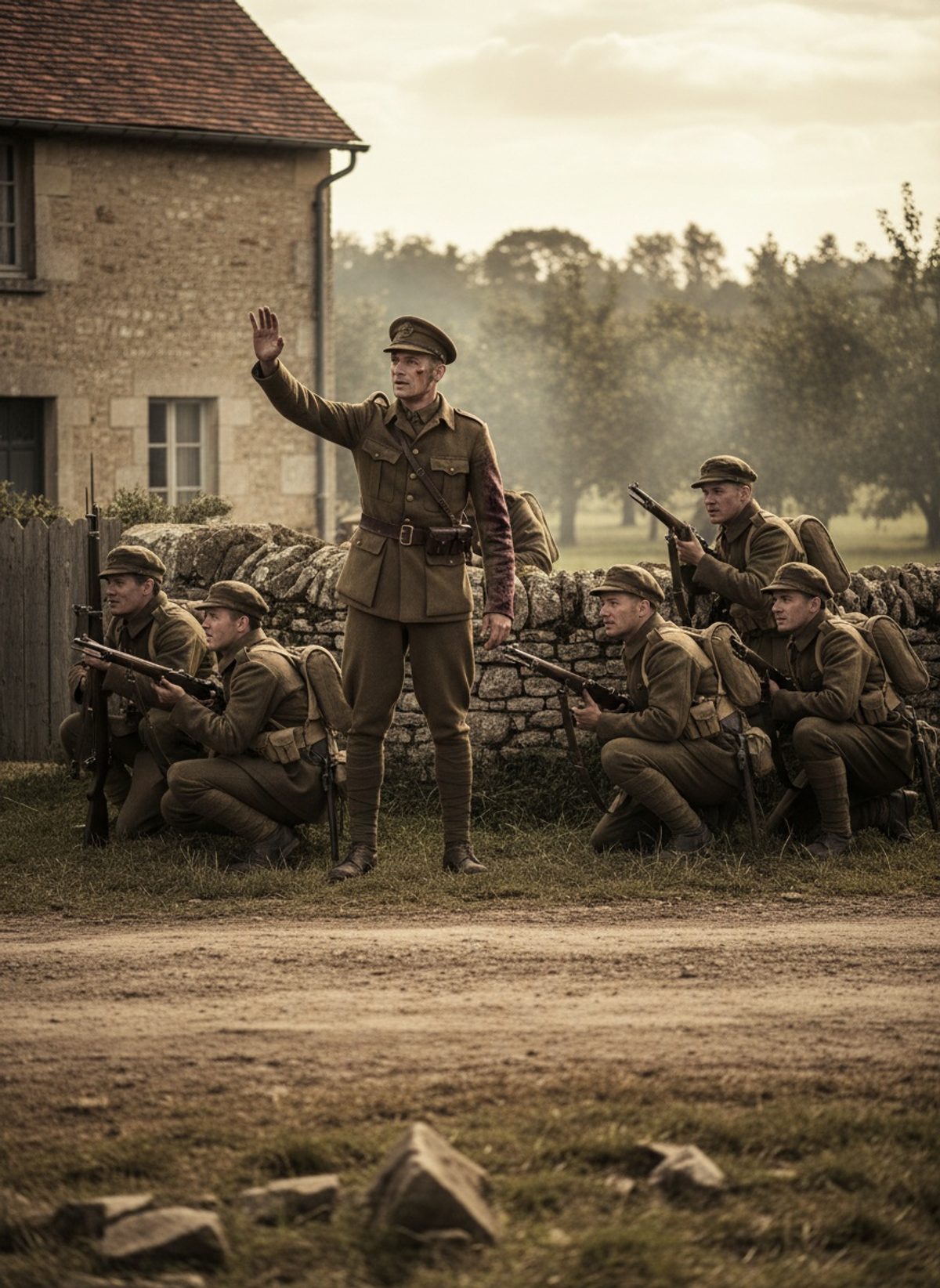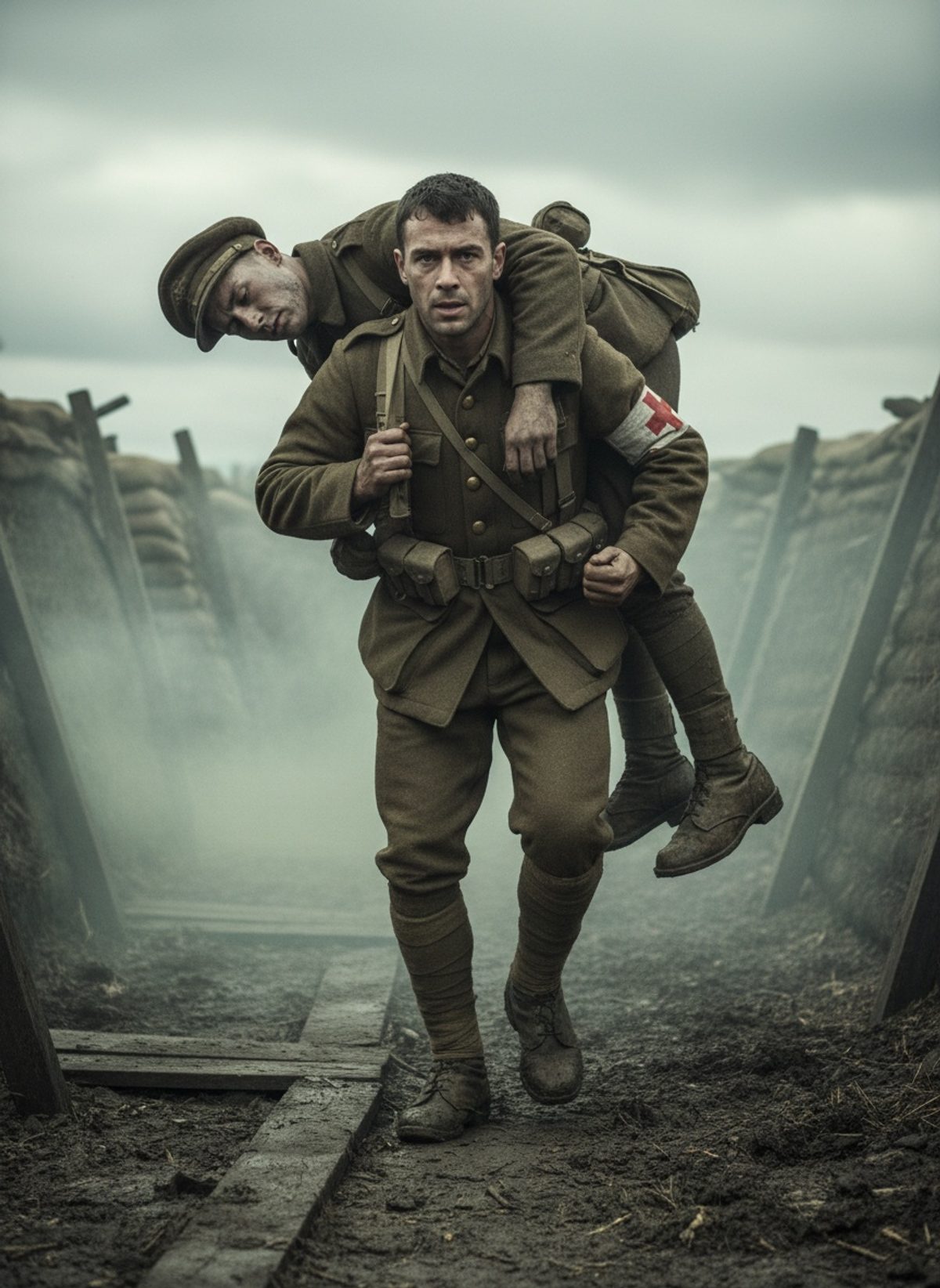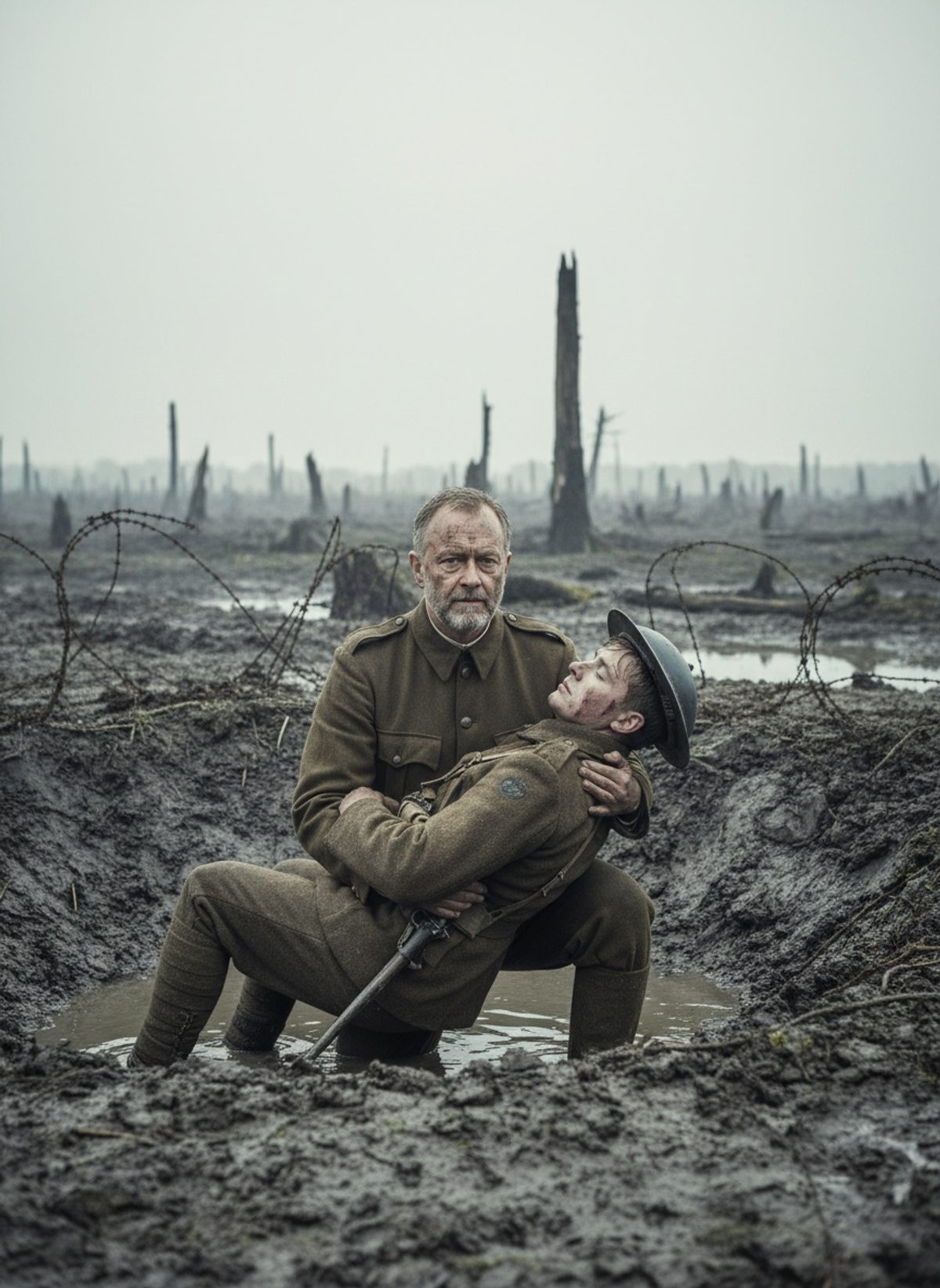
The bloody chaos of Passchendaele demands silence be left to the boom of artillery and cries of men. Yet, one man defied the roar, all too willing to step into the tempest.
Among the endless mire and treacherous barbed wire of the infamous battlefield, Theodore Bayley Hardy, a British army chaplain, carved a path through the destruction with acts of unspeakable courage. In the summer of August 1917, amidst the horrors of World War One, the Battle of Passchendaele became the epitome of hell on earth. Mud thick with blood and rain swallowed men whole. Trenches offered little solace; they were tombs without dignity, a feeding ground for desperation and grit. Hardy, at 52, might have been expected to find a quieter role behind the lines due to his age. His appointment as a chaplain no doubt seemed like a ticket to relative safety. But Hardy was cut from a different cloth.
Piercing shells surrendered silence to their devastation. It was a cacophony of violence where the living paid heed to instincts honed by urgency and terror. The calls of the wounded and dying carried above the orchestrated pandemonium. As others sought shelter, Harding donned his heavy wool tunic, steeled his gaze, and stepped into the inhospitable expanse of no man's land. It was considered madness. Perhaps it was divine intervention at work, an unseen shield guided by belief that would endow him with extraordinary bravery.
In the muddy theater where valor was currency and fear a constant tyrant whispering in terrified ears, Hardy refused to be one of those who watched the battle unfold from afar. He weaved between the shards of conflict, barreling into the ether, unarmed and ungloved, to shelter those languishing under the sky. Every journey into that haunted no man’s land could have been his last, as jagged barbs and hidden explosives waited with devious patience. Yet, he emerged, time and again, cradling soldiers torn by shrapnel as a mother cradles a child, leading them back to what semblance of safety remained, driven by an empathy that refuses the luxuries of self-preservation.
Read next: The Day a British Padre Walked Into No Man's Land Unarmed
Passchendaele was a war of attrition, a terrain dominated by mud that gnashed and snatched at the feet of all who dared traverse its bounds. In this forlorn landscape, Hardy became more than a chaplain; he was the flesh of legends not often inscribed in stone. His hands, marked by time and toil, could not be graced with the badge of rank or brandish a weapon. Still, what they held was far more potent—a compassion woven so deeply with courage it broke down the tethered shackles of human fear, pushing him ever forward into the unknown.
From the craters that scattered the battlefield like wounds in the earth to the barbed wire which caught at skin and fabric with relentless zeal, Hardy navigated each obstacle with the purpose of someone driven by more than duty. He wore plain garb, a testament of humility amidst the rattle of insignia and polished brass buttons that rallied men to the wrong side of eternity. He believed, with unwavering fervor, in the sanctity of life. As comrades faltered and succumbed to the overwhelming call of chaos, he asked not where to go, but where his spirit felt it could do the most good.
Striding alone, ignoring the menace of rifle sights and the perched agony of mortar mouths nestled on ridges afar, Hardy transported men beyond the grasp of death. Each venture was a dance with fate, where his footfalls spoke not of despair, but of resolved compulsion. From mud conglomerated with cast-off dreams and forgotten voices, he pulled men back into the realm of the living, restoring not just wounded bodies but weary souls.
There was no time to record the faces of those he saved, the myriad men whose lungs filled again with breath. Yet, the tales of worn, sweat-laden troops bespeaking Hardy’s exploits bestowed him an unspoken knighthood of valor and virtue unparalleled. While medals of sophistry decorated generals, Hardy’s standing became a touchstone for something far greater: the quiet courage which needs no embellishment, no recognition save the flickering acknowledgment of life continued.
Beyond the smokescreen of war and the enveloping grey, Hardy's silhouette became a beacon. His refusal to remain in sanctuary, electing instead for the stark vulnerability of the front line, speaks to a singularly profound defiance. It demonstrates a brand of bravery that neither dips nor holds other ageless companions of despair. While the ringing toll of conflict commands remembrance, so too must the stories like Hardy’s surge forth, urging whisper tones to rage eternal in appreciation.
With war’s garish palette painting history's tableau, Hardy’s walk into the snare of battle extends beyond mere anecdotal bravery. It compels reflection on the forms of courage, selflessness, and leadership whose echoes never fully fade. As the guns eventually fell silent and life found its shaky footing in the interwar years, Hardy's deeds carved a space beneath the surface of remembrance, holding lessons veiled by shadows yet illuminated by profound gratitude for humanity's grace under the weight of undying struggle.