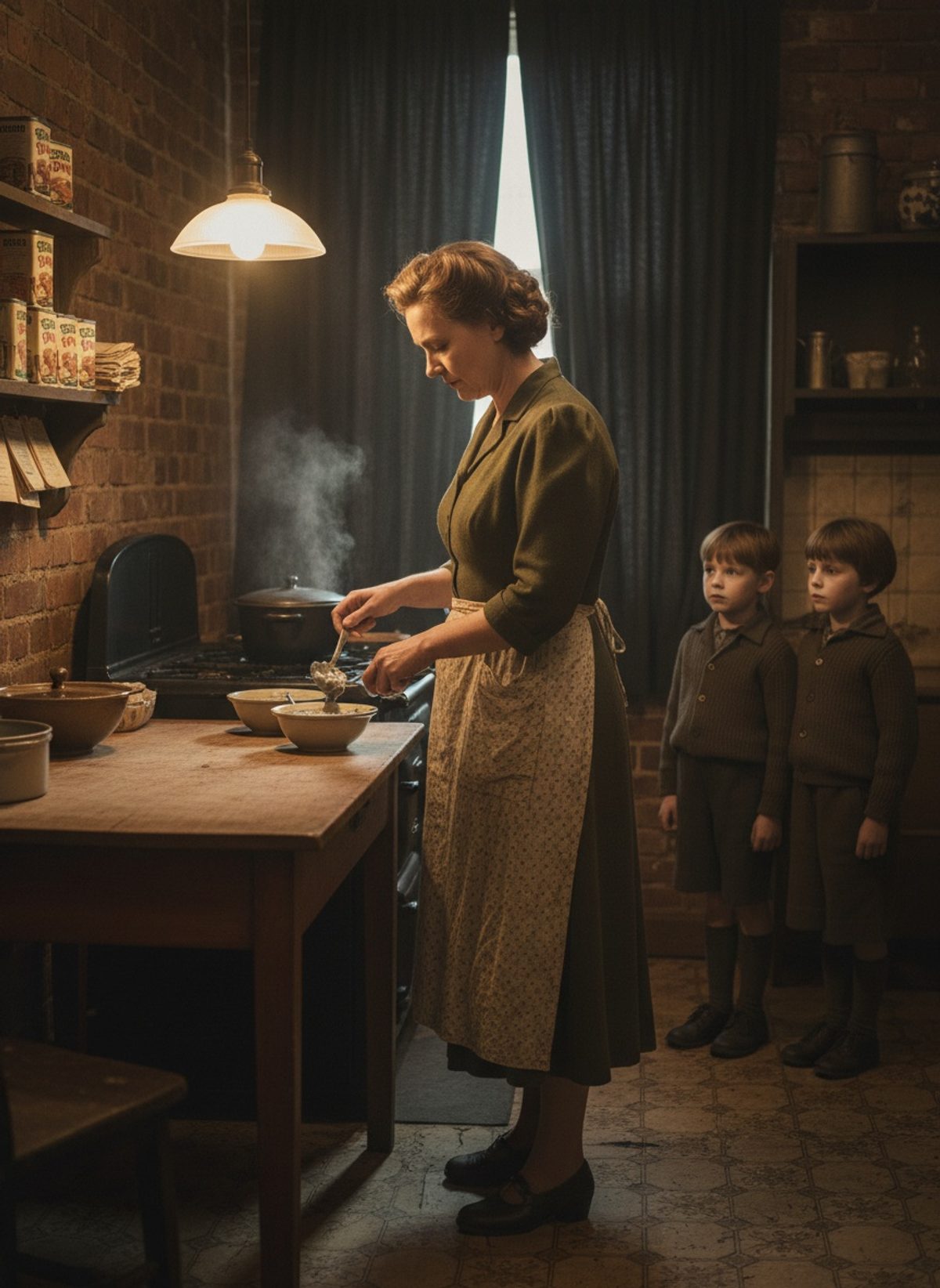
The aroma of frying onions filled the small kitchen, a comforting contradiction to the distant drone of air raid sirens. Ethel Saunders wiped her hands on her apron and peered into the pot where bubbling water threatened to overflow. It was a familiar ballet of sorts — cooking with scant supplies, while the sky outside set the stage for yet another ominous night in wartime Britain.
Rationing had stripped households across the nation to their barest essentials, but Ethel's ingenuity became legendary along Lavender Lane. Her neighbors whispered about the magic she could weave from a few ounces of flour and a ladle of gravy. The community fell into a hushed silence as they savored each spoonful of Ethel's precious dinners — mutton stew one week, potato soup the next.
Although the din of war loomed large outside, within Ethel’s cozy kitchen, something rare flourished — ingenuity. It was 1940, and with the memory of Dunkirk still fresh in Britain’s collective consciousness, feeding a family had become an act of resilience. Yet Ethel's recipes, shared and handed down, turned dried peas into feast-worthy purées and translated a wedge of cheese into enough Welsh rarebits to feed an army. Her kitchen was a crucible in which necessity and resourcefulness, already mother and daughter, led a dance of sustenance which transcended wartime scarcity.
Ethel's kitchen, cramped by modern standards, barely fit the neighbors who gathered in hopeful anticipation for the aromatic meal that defied their ration books. The 'grow-your-own' campaigns and national gardens had seen every spare patch of earth turned to vegetable plots, but Ethel coaxed more variety and flavor from her parse slice of the world. The velvet touch of her parsley sauce was like a benediction as it slid over yesterday’s still-warm roast — a second life for the modests of meats.
Read next: The Day 57,470 Men Fell Before Sunset on the Somme
For the children of the street, her canned milk rice pudding was the stuff of legends. Ask anyone who lived on Lavender Lane back then, and they’ll tell you how the dessert reclaimed dreams from empty larders. Through a deft hand and a hopeful heart, Ethel believed that a spoonful of comfort went beyond mere physical nourishment. It chiseled old fears into kind memories amid the nightly symphony of bombings that rattled their windows and their nerves.
Yet while Ethel was the maestro of this evenings' feast, she was but one among many wartime matriarchs who transformed the privations of conflict into gustatory triumphs. Housewives up and down the country learned to embrace the peculiarities of powdered eggs (their sulfurous stink notwithstanding) and to stretch just a dribble of cooking fat into a passer-by's delight. Such kitchens, small and large, were workshops of innovation for the museum of meals that none would willingly have chosen, yet none would easily forget.
The resilience that brimmed from these improvised meals was palpable. A cup of wartime tea, made with enough leaves to darken milk, became a ritual that stilled worry but left resolve unabated. The truly gifted — like Ethel — could wring civility out of shrapnel and a make-do attitude from air raid whistles. Community became a dish shared among all who dared to taste the marrow of life in turmoil.
As the night's blackout curtains were drawn and Lavender Lane took a collective breath, Ethel would be clearing up and plotting tomorrow’s culinary miracles, aided by an inner light that no blackout could dim. Word of her efforts warmed hearts and inspired whispers beyond the street’s confines, as tales of the 'feasts' spread further afield, like the echoes of sirens across darkened fields.
The smells of Ethel’s creations, mingled with the dusty fires of the street, seemed to impress a permanent timestamp in the children who supped there. Long retrospective, they claim sometimes to savor her bread and dripping again when winter’s drafts bring unbidden echoes of those years. Her food tasted more than good; it rooted them when the winds of war threatened to uproot their very souls.
Reflecting on these snippets of the past offers a poignant reminder of the infinite capability inherent within ordinary individuals to summon extraordinary courage. Ethel’s dishes were more than the sum of their parts; they were crafted from love and defiance against the darkness that threatened their everyday glow. Today, as we turn our faces to the future, let us recall the indomitable spirit of those war-time chefs who delivered not just meals, but ladles of hope for their communities.