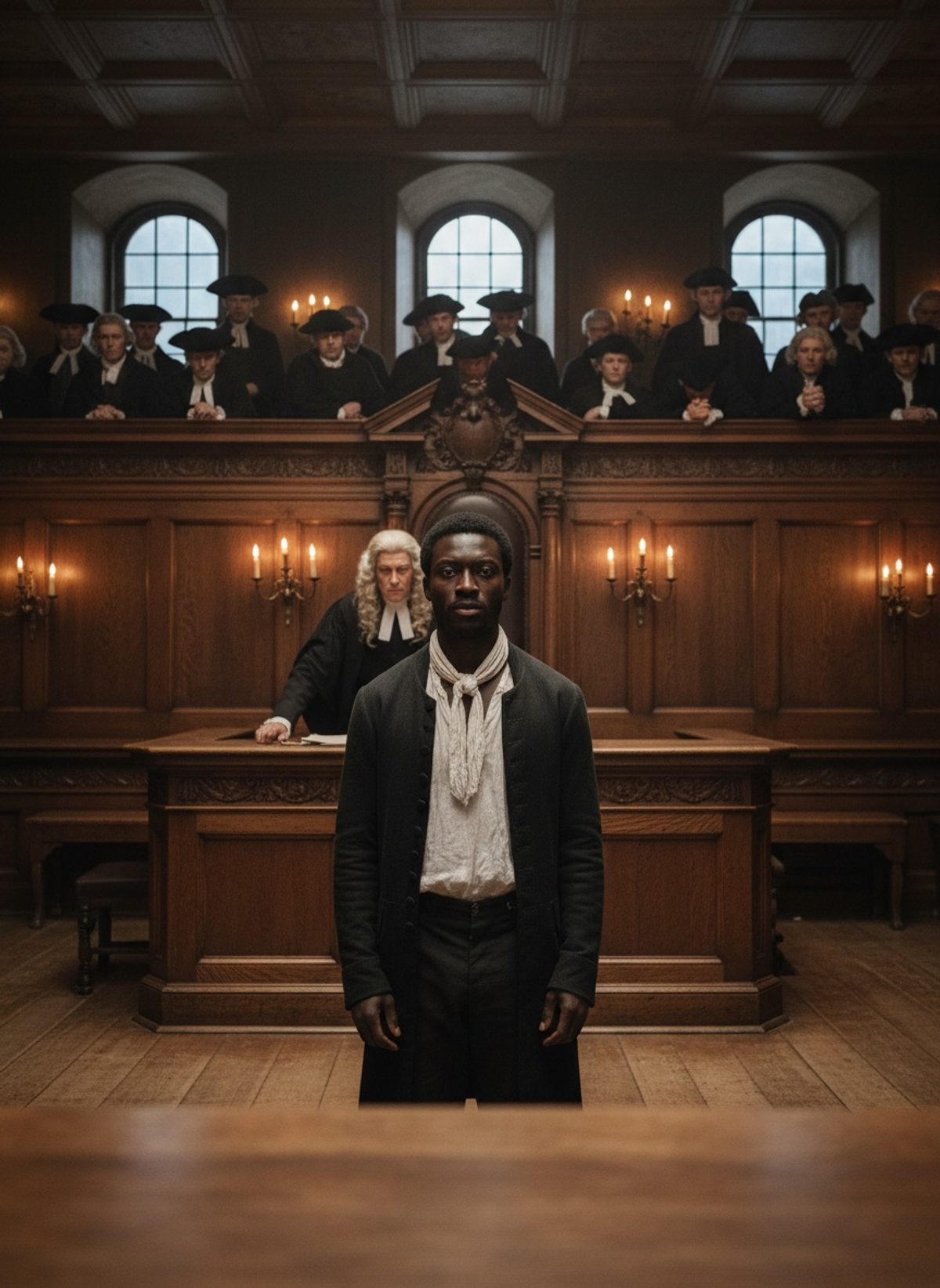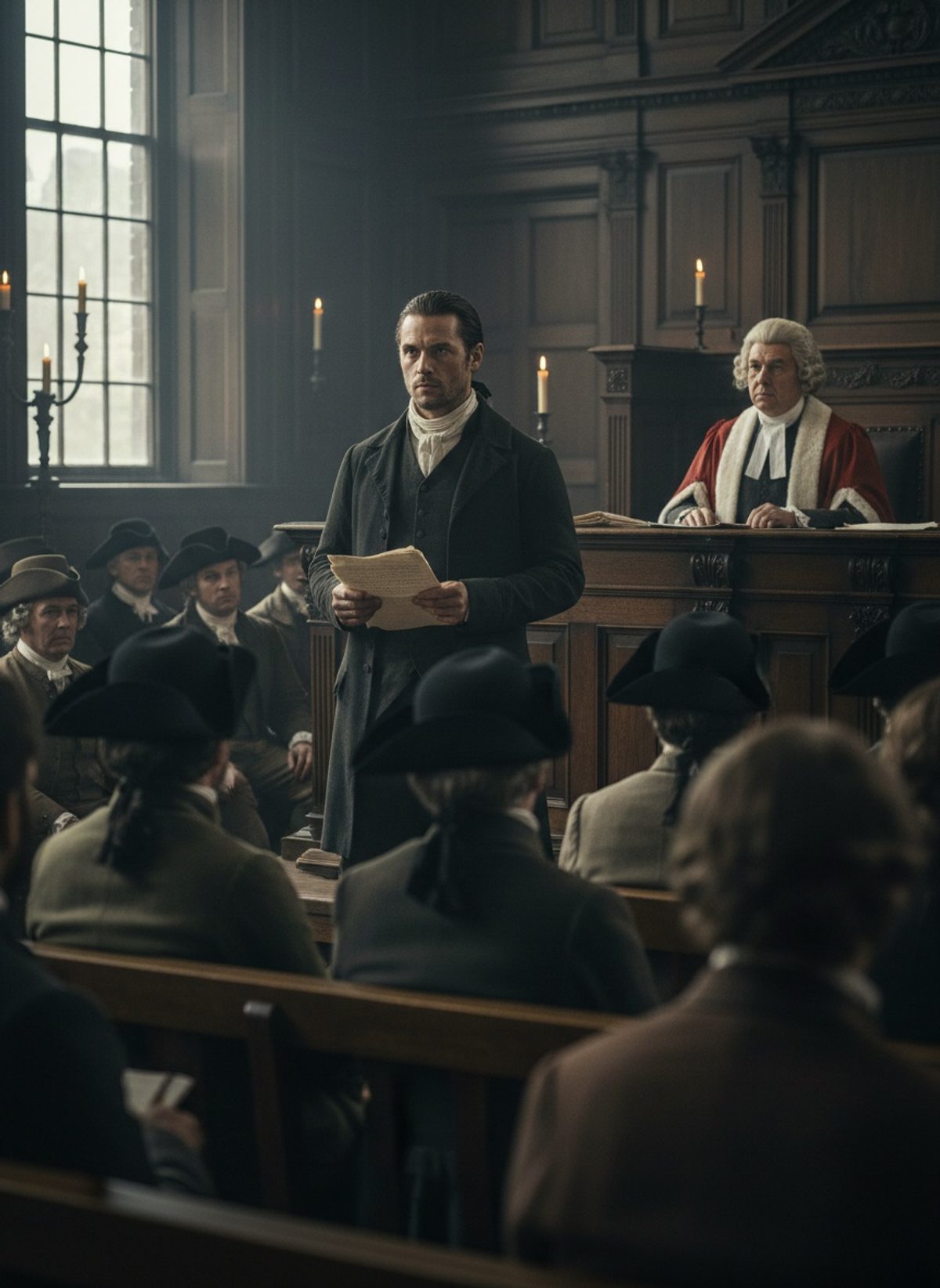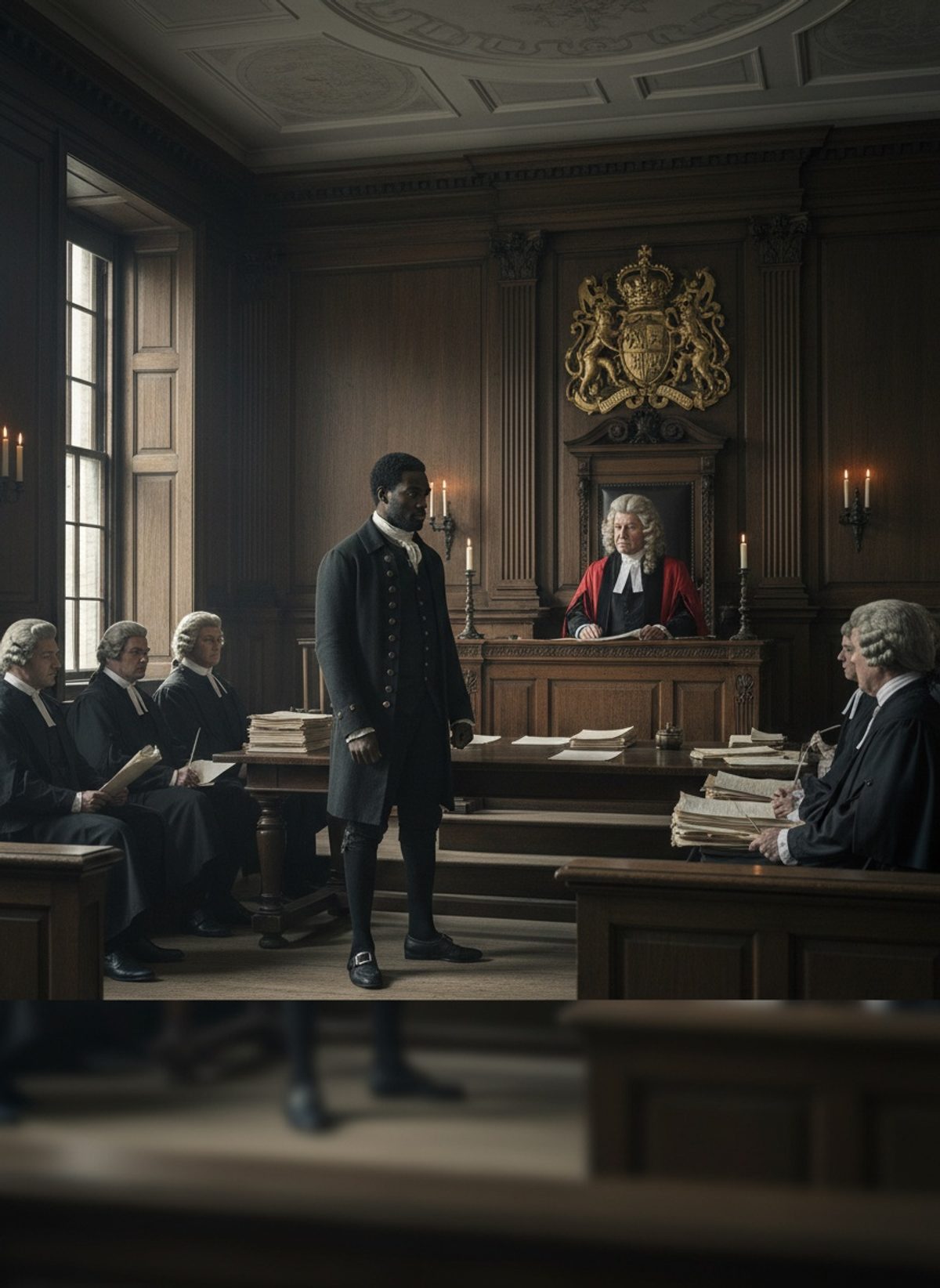
The heavy wooden door creaked open, and a hushed tension filled the air as figures shuffled into the dimly lit courtroom. The smell of damp wood mixed with the musk of wet wool coats. Eyes pinned to the figure standing at the center, pen poised above paper, James Somerset appeared both defiant and vulnerable as he awaited the unfolding of his future. Around him, the austere walls of Westminster Hall bore witness to proceedings that were anything but common. It was London, 1772, and the case that would challenge the very moral fabric of the empire had begun.
From the crowded confines of the courtroom, the sound of Somerset's breathing was barely audible, yet it charted the highs and lows of an existence born of tumult and survival. A heartbeat ago, he was a fugitive on these very streets, fleeing Lord Charles Stewart, who intended to ship him to the plantations of Jamaica, far from the freedoms whispered in the alleyways of London. In a city veiled by fog and reverberating with the pounding hooves of carriage-laden cobblestones, Somerset had glimpsed the promise of liberty, a dream threatened by chains and courts. And now, his fate lay in the hands of Lord Mansfield, a man grappling with the weight of progress and tradition.
It was Somerset’s abduction by Stewart that set the wheels of justice in motion, captivating the imagination of London's populace. The legal labyrinth they navigated had already seen highlights that defied the bleakness of the slave's status across the seas. The lifeline thrown by Somerset’s allies, a group of stalwart abolitionists and humanitarians, culminated in the courtroom's thinly walled world. Granville Sharp, a fervent advocate against slavery, stood resolute among them. His eloquence had previously unraveled the legal bindings that held men in servitude, and today would be no exception.
As arguments were launched with the precision of a fencer’s lunge, every carefully chosen word found a mark. The solicitor general's assertions bore the familiar sharpness of legal rights and ownership, invoking laws of constraint. Yet, with a ferocity seldom seen, Somerset's counsel countered by challenging not simply legal statute but the very essence of humanity and moral duty. Justice bore the visage of Lord Mansfield, seated like a wise overseer of fate. His eyes, living archives of countless decisions, surveyed the legal quagmire.
Read next: The Day a Bristol Merchant's Wife Shamed a Slave Captain
Westminster’s high ceilings trapped echoes of the exchanges below as if preserving the moment for posterity. Outside the building, a throng had gathered, murmuring in language that begged the question, soon to become the manifesto of free thought and human rights: "Can a man be owned under English skies?" The air vibrated with anticipation, with the potential of tradition yielding space to progress. And while Somerset's heart undoubtedly beat fiercely within his chest, history was on the brink of breathing new air.
Days bled into one another, each seeping with implications as proceedings continued. The captain poised to ship Somerset saw himself as merely a pawn, part of a bigger game of union and division among states. Yet, the trial’s consequences reached far beyond the courtroom. Mansfield, philosopher and judge, weighed these matters heavily, his legacy perched precariously atop the scales of justice. His verdict beckoned not just an emancipation in position but subtly scripted a foundational rethinking that would resonate beyond the British Isles.
The fateful day of judgment arrived as London stood still, poised to etch this moment into its consciousness. It was an unusually bright morning when the verdict cascaded throughout the courtroom, tethering silence in its wake. The air crackled with electricity, Lord Mansfield's voice cutting through the tension. The scales tipped in Somerset’s favor; the phrase “no man” could be distinctly heard. The edict pronounced null the power to forcibly expatriate a man born into slavery for tyranny elsewhere. A triumph not just for Somerset who stood steadfast, now enshrined with the breath of freedom.
Beyond the cold stone of the courtroom, the whispers of change had turned into roars. The seeds scattered here took root on distant shores, inspiring others in their quest for liberation. Across the Atlantic, it cast a foreshadowing line towards a future where the chains binding the human spirit would find inevitable dissolution. The ruling did not end all slaveries; it refrained from claiming that a slave could not exist in Britain. Yet, it insinuated that such claims could not continue unchallenged.
For all its grandeur, the courtroom performance was but one act of a broader societal playwriting emancipation's performance. Slowly but unmistakably, abolitionist ideals took hold, the ticking clock of oppression had a finite hand. Somerset, once a mere line item on a ledger, became a symbol suffused with the breath of change. His case served as kindling for the fires that would igniting across an empire built on the labor and lives of those shackled by chains and clad in the loss of freedom.
And so, as the throngs spilled from the courthouse onto London's cobblestone streets, a new chapter was inscribed into the annals of history. An audible shift hummed in the air, evident not just in the court's hallowed halls but reflected in the characters of all who witnessed it. What began as a runaway's desperate flight for freedom became a clarion call for mankind's assertion of dignity. As the day closed with amber hues kissing the stone facade of the Hall, it left behind the profound knowledge that sometimes, the laws bind us but also set us free—forever altering the course of nations, and echoing in the chambers of humanity's heart. It remains a story not just of legal triumph, but of a testament to resilience, courage, and the unstoppable march toward justice.