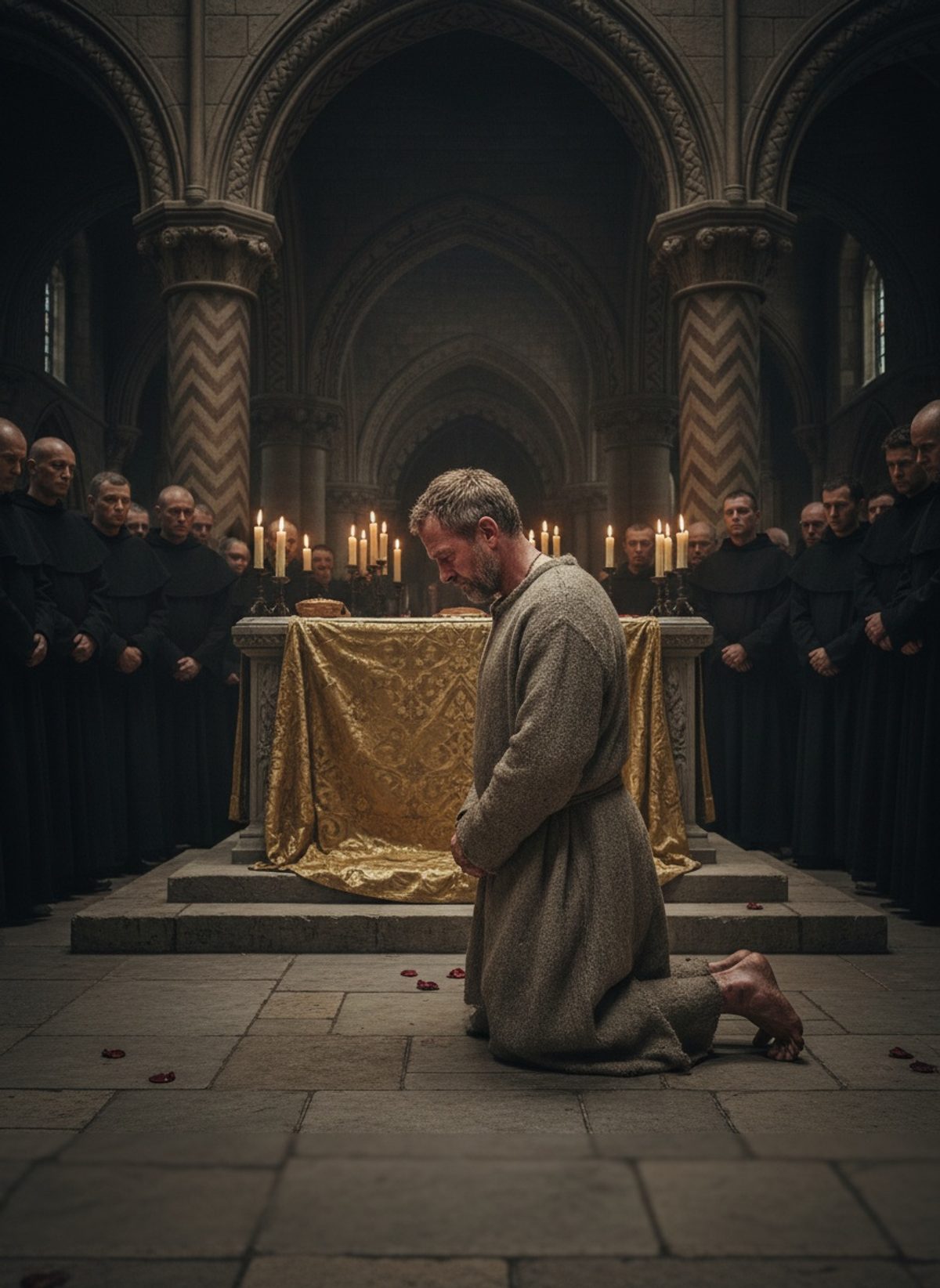
The cold cobblestones bit painfully into King Henry II's bare feet, their harshness a rare and humbling sensation for a man accustomed to the trappings of power. Each step seemed to echo defiantly against the silent procession of monks trailing behind him, their austere robes whispering in the brisk morning air of Canterbury. Dirt and small stones worked into the tender flesh of his soles as he approached the cathedral that housed the tomb of Thomas Becket, the man once his friend, now his victim.
The Wounded Friendship
Henry Plantagenet, a king both respected and feared, never intended for his reign to be marred by the bloodshed of such a close confidant. Yet his infamous outburst—an uttered frustration over dinner, half-desperate, half-angry—had set a chain of fateful events into motion. "Will no one rid me of this turbulent priest?" he had exclaimed, unaware that four knights, eager to curry favor with their sovereign, would interpret his vexation as a royal command.
Becket had been more than a clerical head; he had been Henry's companion, rising from humble beginnings to become Archbishop of Canterbury. Their friendship was a beacon in the choppy waters of medieval politics. And it was, in such turbulent waters, that Henry's words capsized that bond, leading to Becket’s brutal murder at the altar of his own cathedral. This act of violence tore at the fabric of Henry’s rule, leaving him publicly condemned and personally tortured by the consequences of those fatal words.
The Walk of Atonement
Three years hence, these memories bore heavy on Henry's crown. The king's somber journey through Canterbury was not merely penance; it was a physical and public manifestation of his guilt. No monarch before him had shown such vulnerability. Stripped of regal footwear, he bore the elements like any common sinner, a testament to the profound shift within the heart of this troubled ruler.
Read next: The Day a King Wept and Set His Own Hostage Free
As he trudged through the streets, pilgrims and townsfolk watched in hushed reverence. Here was their sovereign, laid low by the weight of his own conscience, each step a plea to the divine for peace within his tormented soul. The gesture resonated through the annals of Plantagenet England, a scene of both sorrow and redemption etched firmly into the collective memory of the realm.
Penance in the Crypt
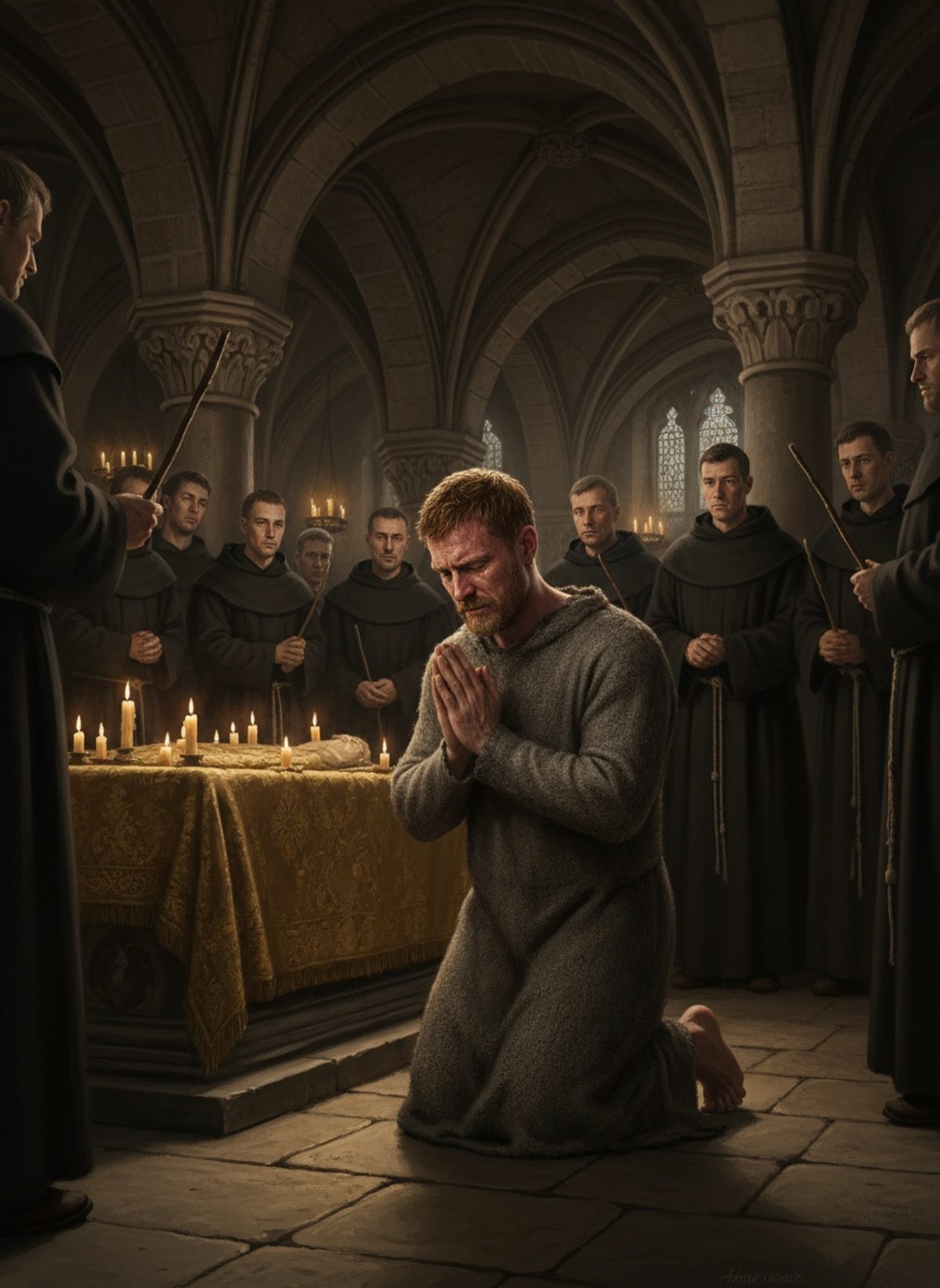
Upon reaching the crypt, the solemn air deepened with the faint smells of incense and stone—a sanctuary coated in the history of countless prayers whispered over centuries. Here lay Thomas Becket, his martyrdom transforming him into a symbol of religious fidelity and resistance against royal oversight. Henry knelt, his head bowed in the shadowed flickers of candlelight, whispering a litany of regrets and silent apologies not just to the ethereal plane but to the man whose life he had irrevocably shattered.
Eighty monks awaited their turn, girded with birches, to administer a symbolic flogging that would mark Henry's regret on his very skin. As the lashes fell, this king of England, ruler of vast territories, was for a moment none other than a penitent soul seeking absolution. The soft thwacks of the branches, each a forgiveness mingled with pain, reflected not only his personal penitence but an acknowledgment of his humanity wounded by pride and politics.
A Kingdom in Reflection
Henry's extraordinary act of contrition reverberated throughout England and beyond. He was a monarch who held more than nations; he controlled the destiny of whole realms. Yet, he knelt in humility to seek forgiveness from the God whose earthly representative he had wronged so grievously. For the people of his kingdom, this display was much more than a spectacle—it was a poignant reminder of the power and peril of kingship, of how the chains of command could lead from throne to sorrow.
The cathedral of Canterbury, already a site of pilgrimage, transformed further into a crucible of faith, visited not just for Becket but now for the remarkable story of Price and Penitence shared within its holy walls. Through the echoes of monastic chants and the scraping of sandals across cold stone floors, Canterbury became a prism through which the relationship between church and state was refracted, debated, and immortalized.
The Echoes of Forgiveness
The question persists, haunting the flickering shadows of history: what truly drove Henry II to such a profound act of repentance, to bear his soul and open his heart to forgiveness? Perhaps it was an earnest desire for the salvation of his eternal soul, or perhaps the weight of leadership had taught him the fragility of power when weighed against the fortitude of righteousness.
What remains undeniable is the story's ability to transcend time, speaking to the intricacies of redemption and the enduring struggle between duty and morality. It is a tale of a king brought low by his own commands, yet lifted by a courage many would fail to muster. In the crypt of Canterbury lies not just the memory of a martyred archbishop, but the whispers of a king’s path to redemption, a pilgrimage into the very heart of what it means to seek forgiveness.