He was the English king who laughed in the face of martial tradition. Yet in a quiet chamber, his face dappled with torchlight, King Edward III wept. This was not the tear-streaked grimace of an embattled sovereign but an expression wrought from the realization of human dignity amidst sovereignty’s burdens.
In 1357, London was a city poised between medieval splendor and everyday grime, with its cobbled streets buzzing under the diligent steps of messengers and the rhythmic clop of horses. Edward had cemented his rule through feats on the battlefield, his name intertwined with victories etched into history’s annals. One such triumph was the capture of the King of Scotland, David II, a consequence of Scotland’s ambitious invasion of England. At the Battle of Neville's Cross eleven years earlier, David had been plucked from the mists of war, ensnared by the clutches of English forces, and encircled by a fate few defeated kings would survive.
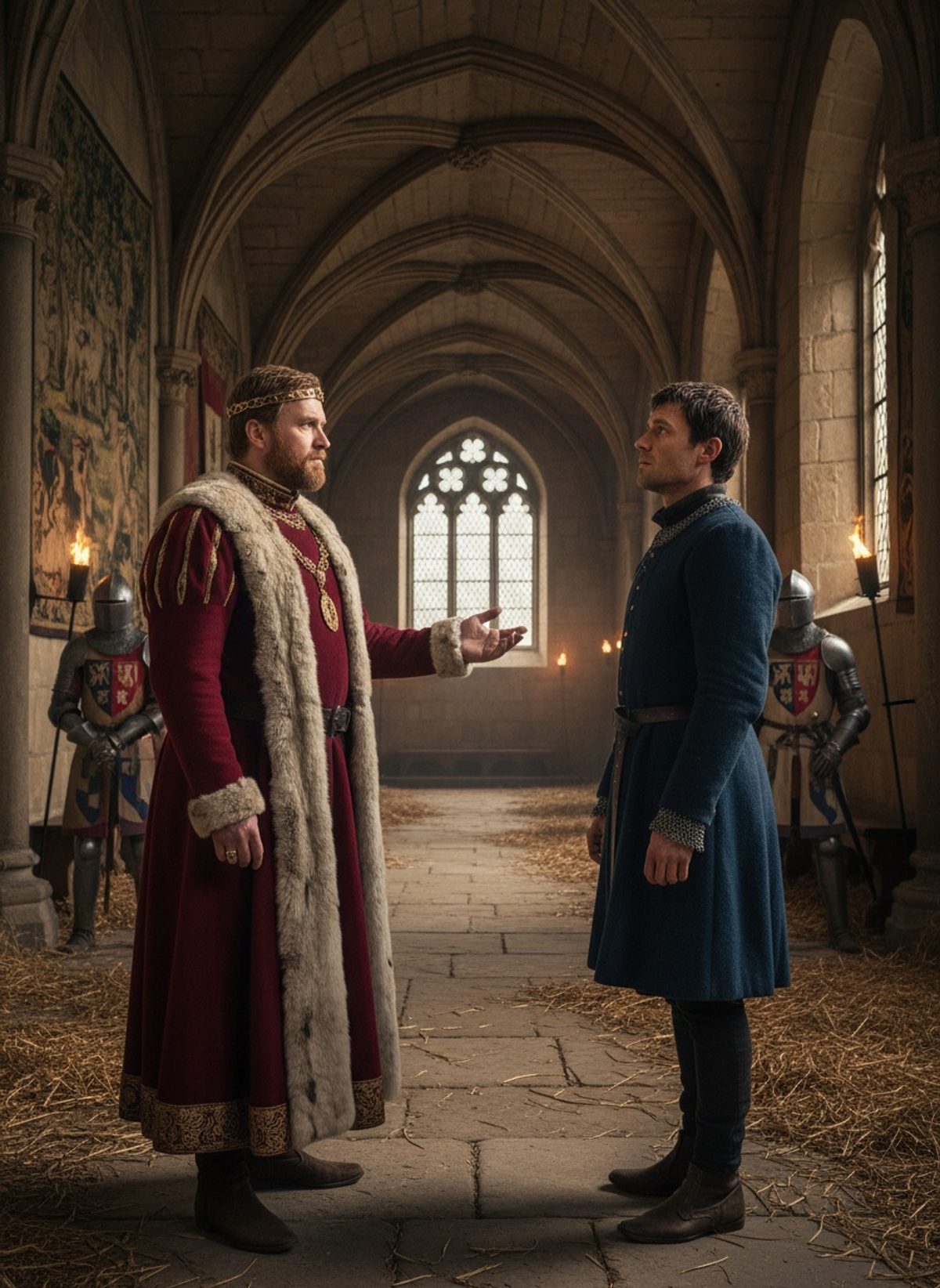
Now in the solemnity of the English court, David, a prisoner far longer than promised by fate, met the gaze of the very man who held the keys to his freedom—an enemy turned oppressor embodied by the resolute figure of Edward. England had the legal and traditional right to demand a king’s ransom, not only as a punitive measure but as a testament to Edward’s power and the might of his crown. Yet beyond the palpable tension of sovereign judgment, a softer note was struck.
King Edward III, known for his shrewd governance and relentless pursuit of the French crown, appeared more knight-errant than imperious monarch that day. His court, a place where the scent of lavender battled with the ephemeral stench of leather and human bodies, was the theater of an unexpected act: mercy over malice. With gray clouds swirling through the capital’s skies, Edward’s decision to release the Scottish king flowed from the desire for a peace that could outlast the turbulent tempers of reigns and rival states.
Read next: The Day a Queen Stood Alone and Refused to Run
The eleven years David spent in England had not been in dank dungeons, but rather, in a captivity befitting his station. As a king held hostage, David’s treatment was emblematic of the mutual recognition of royal dignity, even as he languished, distanced from his homeland and throne. This captivity, akin to a gilded cage, allowed Edward and David to glimpse each other's parallels—not just as kings, but as men deeply connected to their lands and to the brutal business of kingship.
In that defining moment, their encounter was less a ceremonial negotiation of political chess and more an intimate understanding of royal obligation. Edward’s tears, whether one saw them as mere droplets on a polished façade or deep wells of genuine, empathetic reflection, unveiled a core human truth. The compact sum of gold, land, and power paled against the weighty dream of enduring peace, wistfully envisioned above the echoes of clashing steel and relentless strife.
David II’s return to Scotland marked more than just the restoration of a king to his people. It symbolized a bridging of animosities between two nations that had long been at each other’s throats—lions and unicorns locked together on the crests of combat. Amidst a backdrop of courtiers who murmured their skepticism and chroniclers who reviled losses, Edward III’s gesture of release was an act of statesmanship designed not simply out of strategy but imbued with a recognition of shared humanity.
This moment, enshrined more in whispered legend and courtly anecdote than bold headline proclamations, sways us to ask: what is the worth of choosing mercy in the age of might? For Edward, who stood at the helm of an ambitious nation in a century of tumult and rare serenity, it meant understanding the far-reaching consequence of his choice. Both kings, though armored in titles and tradition, held a candle to common virtues: compassion, pragmatism, and the enduring belief that peace held a power that transcended crowns and conquests.
As the annals of Plantagenet England meld into the craggy peaks of Scotland, the day Edward III wept becomes a tapestry of lessons—with threads of restraint stitching a path that would influence generations. The echoes of peace and humanity, sometimes muffled and overshadowed by battles, call upon us to revisit these intricate histories. They urge us to remember the moments not carved in stone but woven in hearts: the choice to set a hostage free.