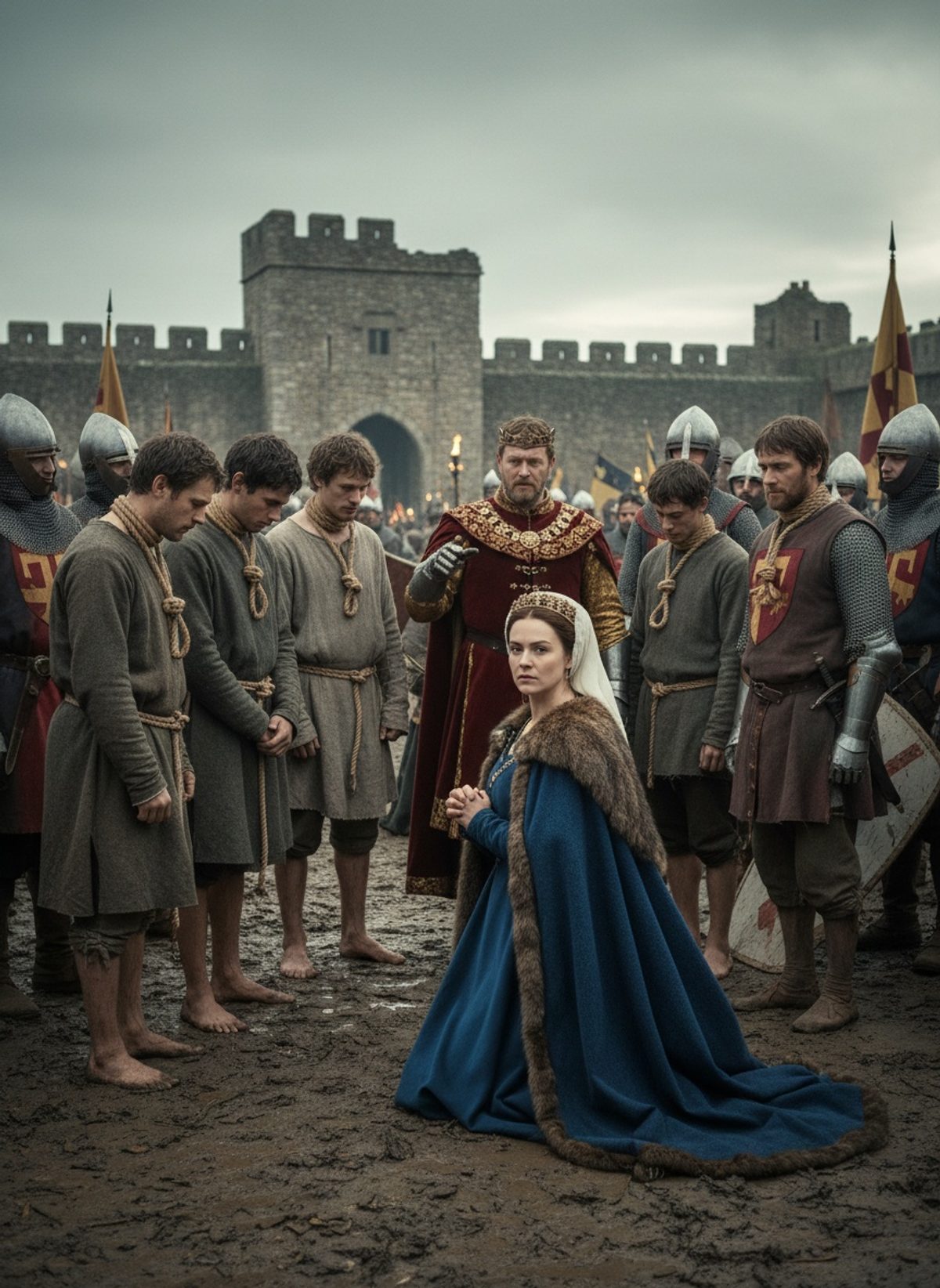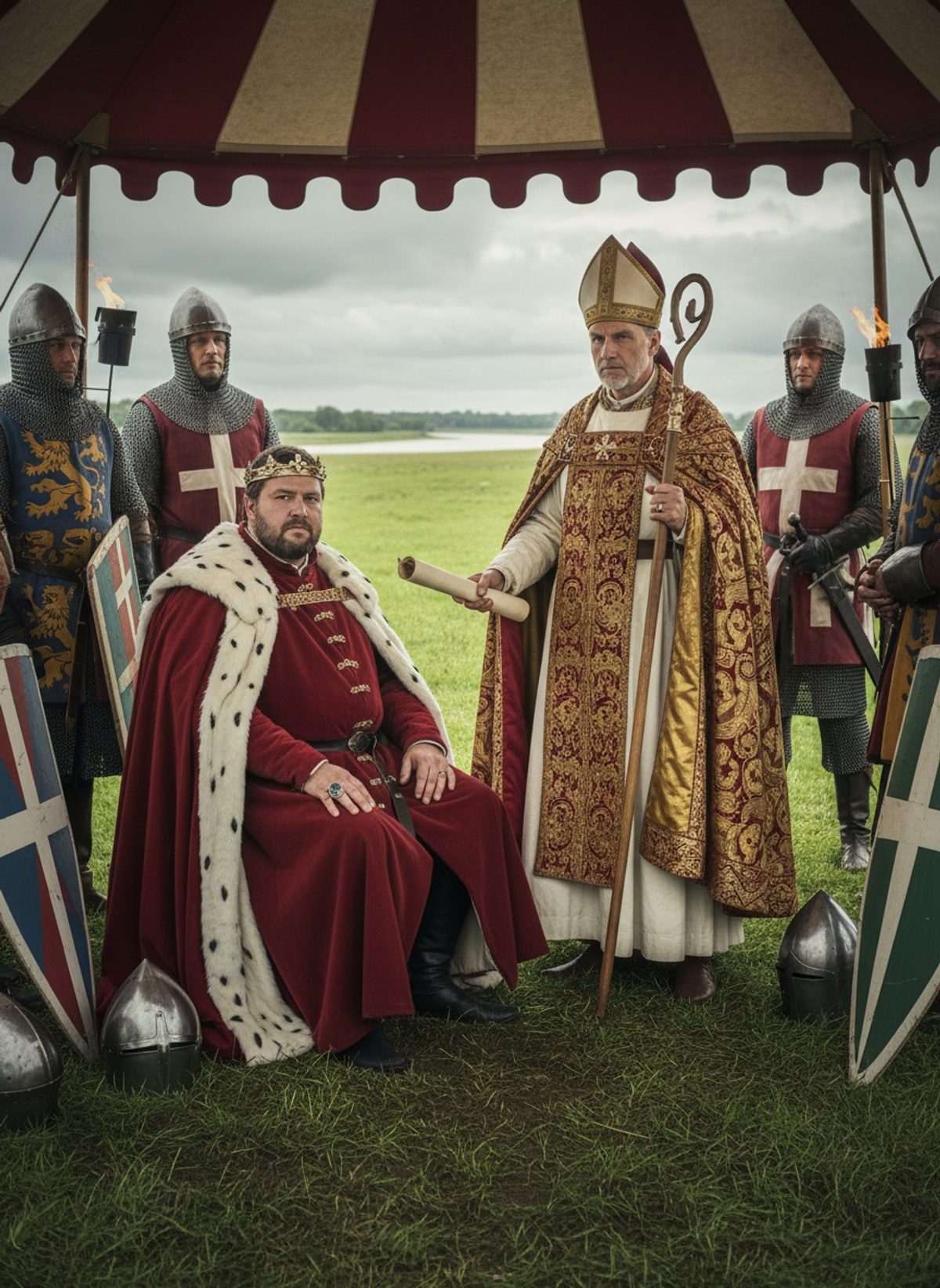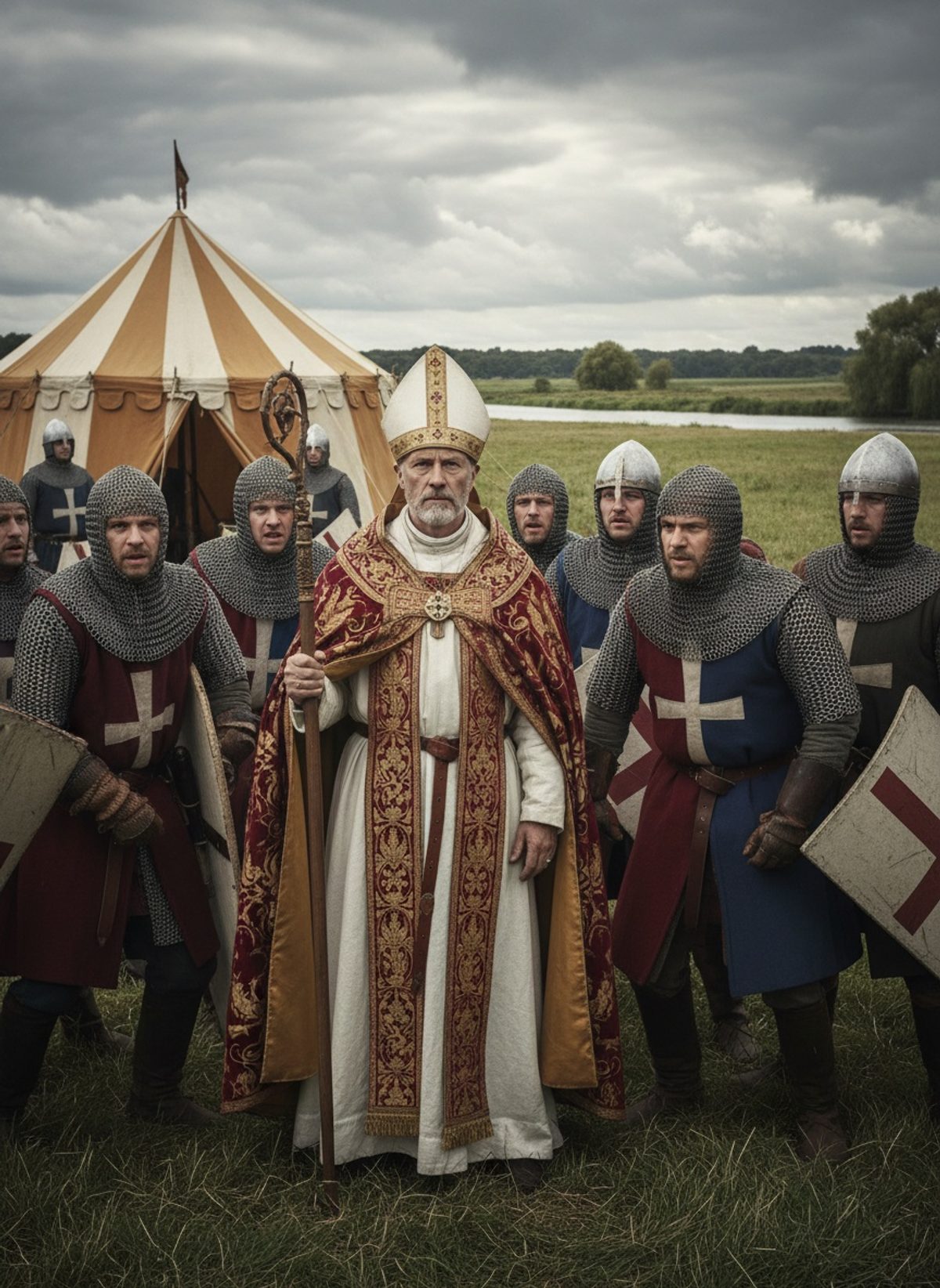
The air was thick with the salt of the sea, and the land held its breath. The echoes of a long-drawn siege seemed to whisper among the stone walls of Calais, a city teetering on the brink of ruin. The morning light was harsh, cutting through the sea mist like a knife. It was a fateful morning in 1347 when six of the city’s most prominent men emerged from the gates, the burden of their sacrifice reflected in the solemnity of their steps. They wore only their shirts, and around their necks hung nooses, a stark testament to the gravity of their doom. Each step towards the English camp was a step towards death, and King Edward III awaited with the resolve of a conqueror, demanding a satisfaction that blood alone could quench.
The Siege and the Symbol
Calais, a jewel of strategic importance on the northern coast of France, had endured eleven months of relentless siege under the iron will of Edward III. The English king, driven by the audacious ambition to claim the French crown, had turned his military might upon the city, cutting it off from any hope of salvation. Siege warfare was a brutal affair—supplies dwindled, and desperation seeped through every crevice. Yet, through hunger and despair, the city's spirit had held firm. Until that morning when the city could resist no more.
The capture of Calais was meant to be a resounding victory for Edward, a symbol of his strength and the unyielding English pursuit of dominance over France. To seal this victory, King Edward demanded that the city offer up six of its leading men as a symbol of their total submission and to quench the bloodthirsty expectations of his siege-weary troops. For these six men, members of Calais' most influential families, it was a death sentence. They would emerge from the gates as lambs to the slaughter, bearing the responsibility of their city's survival.
Past the meandering streets of Calais, under the pitiless eyes of their own townspeople, the chosen six walked a path that was both short and eternal. It was a procession of grim dignity. They knew their end would not be met with glory or honor, but with the brutal finality of a hangman's rope. On their exit from the city gates, an expectant silence fell over the gathered soldiers and spectators, an island of anticipation in the midst of the raucous sea of war. The scene was set for a spectacle of vengeance that would turn unexpectedly, through the intercession of a purity that could soften even a king’s heart.
Read next: The Day a Mayor Knelt in the Mud and Saved Six Lives
The Queen's Plea
Among the slumped ranks of the English encampment stood Queen Philippa of Hainault, Edward's wife, who had accompanied her husband on this arduous campaign. As the six burghers of Calais knelt before the king, awaiting their grim fate, the queen faced a heart-wrenching moral dilemma. Her presence that day would shift the course of events in a manner that no one present could predict.
The burghers' offer of life was symbolized by the heavy ropes around their necks, each a hangman’s noose that captured the fatal beauty of sacrifice. Yet in the grim tableau, there was a quiet dignity that touched the heart of the queen. She saw not traitors nor enemies but husbands, fathers, and sons caught in a web of politics and war that transcended personal enmities. Her heart, already heavy with the weight of many months of war, could no longer bear the sight of such noble suffering.
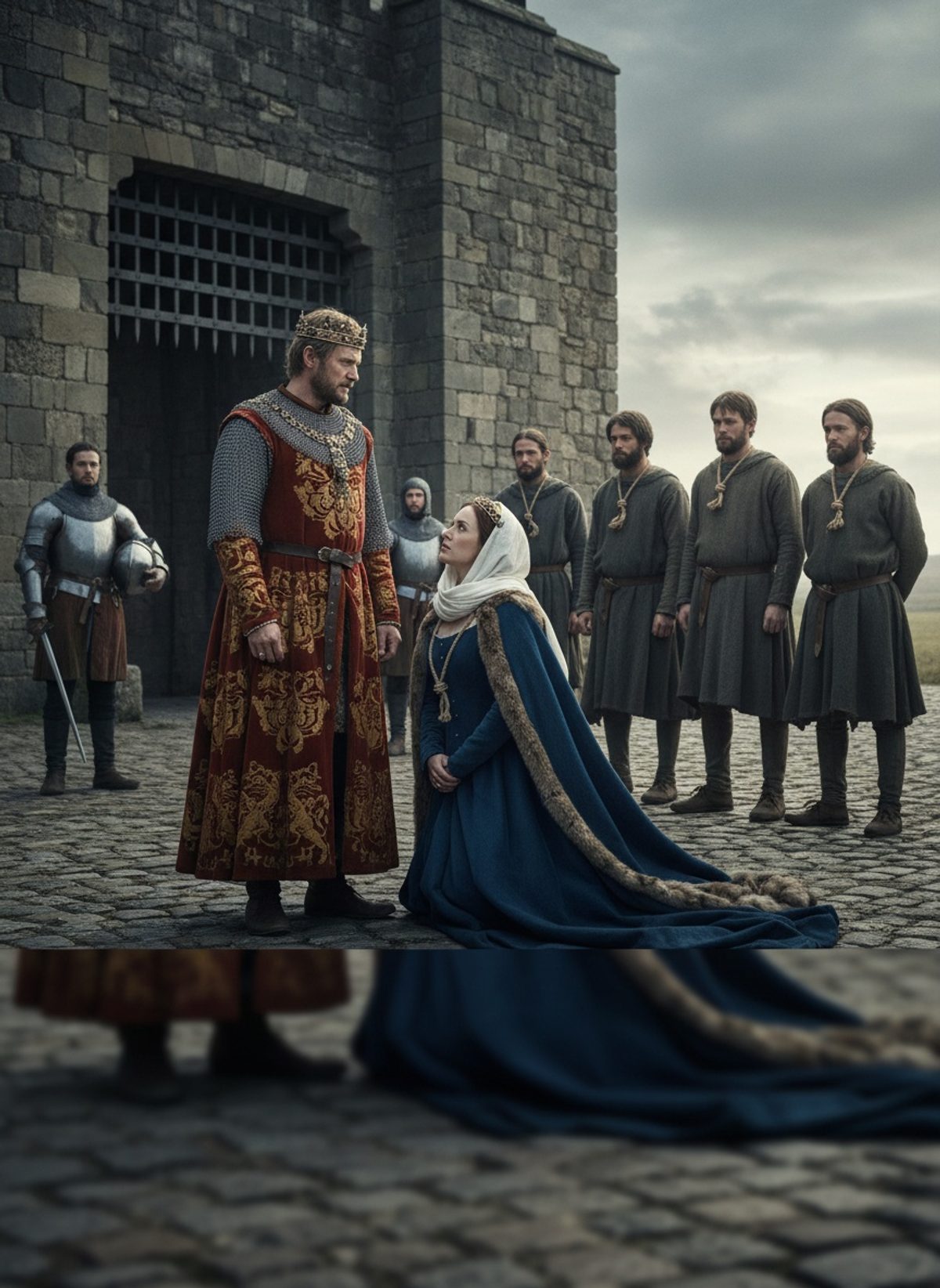
Queen Philippa approached her husband with the urgency of a mother pleading for her children. Falling to her knees on the cold, unyielding cobblestones, she implored Edward for mercy. Her words were a balm, her tears a testament to the profound empathy that transcended the harsh realities of medieval rule. The queen's voice was soft but insistent, reaching Edward not as a king, but as the man who shared her life and her heart.
Moved by the depth of her empathy, the soldiers and spectators watched with bated breath. Within them, perhaps a flicker of doubt arose about the harshness of their cause. The collective inhalation of the assembly mirrored the tension as Queen Philippa unleashed a torrent of humanity in a time accustomed to brutality. Her plea for clemency, rooted in the simplest yet most profound tenets of compassion, forced its way into the heart of the hardened king.
The Act of Compassion
Edward’s initial resolve to ensure a lesson was taught through blood was formidable. Yet here was his queen, a metaphorical anchor against the tide of vengeance. It was a moment of profound transformation, a tangible shift where the iron will of a medieval monarch collided with the unyielding appeal of compassion. The tension in the air was palpable, as if the entirety of the gathered throng exhaled in relief when the king finally relented.
The spectacle intended for public chastisement became a testament to clemency. The king withdrew his order for execution, his voice perhaps shocked by its own softened edge. The burghers of Calais, expecting no quarter, were granted life instead. Queen Philippa’s intervention had not merely saved six men from the gallows; it had altered the tone of conquest with an act of mercy so rare in that violent age.
This story, unfolding against the backdrop of bloody conflict, offered a glimpse of hope amid the brutality of a medieval campaign. The scene of a queen weeping for strangers, her heart insistent against the accustomed savagery of war, became an enduring moment of humanity's better nature rising through history's darker currents. So remarkable was the story that it passed into legend, layered with interpretations and embellishments, yet its core remained unchanged—a reminder that sometimes, a single act of compassion can ripple through time.
As the dust of Calais' siege settled into the annals of history, one wonders what the enduring impact of that day in 1347 has been. The memory of a king confronted by his own ruthless ambition, softened by the pleas of a queen, navigates through the past to offer insights for our world. In an age where power often trumps compassion, this tale whispers persistently of the strength that lies in mercy—a timeless reminder that empathy can break cycles of hostility as effectively as any sword. History, as it often does, leaves us with stories like these to ponder and perhaps to inspire a more humane legacy in an ever-complex world.