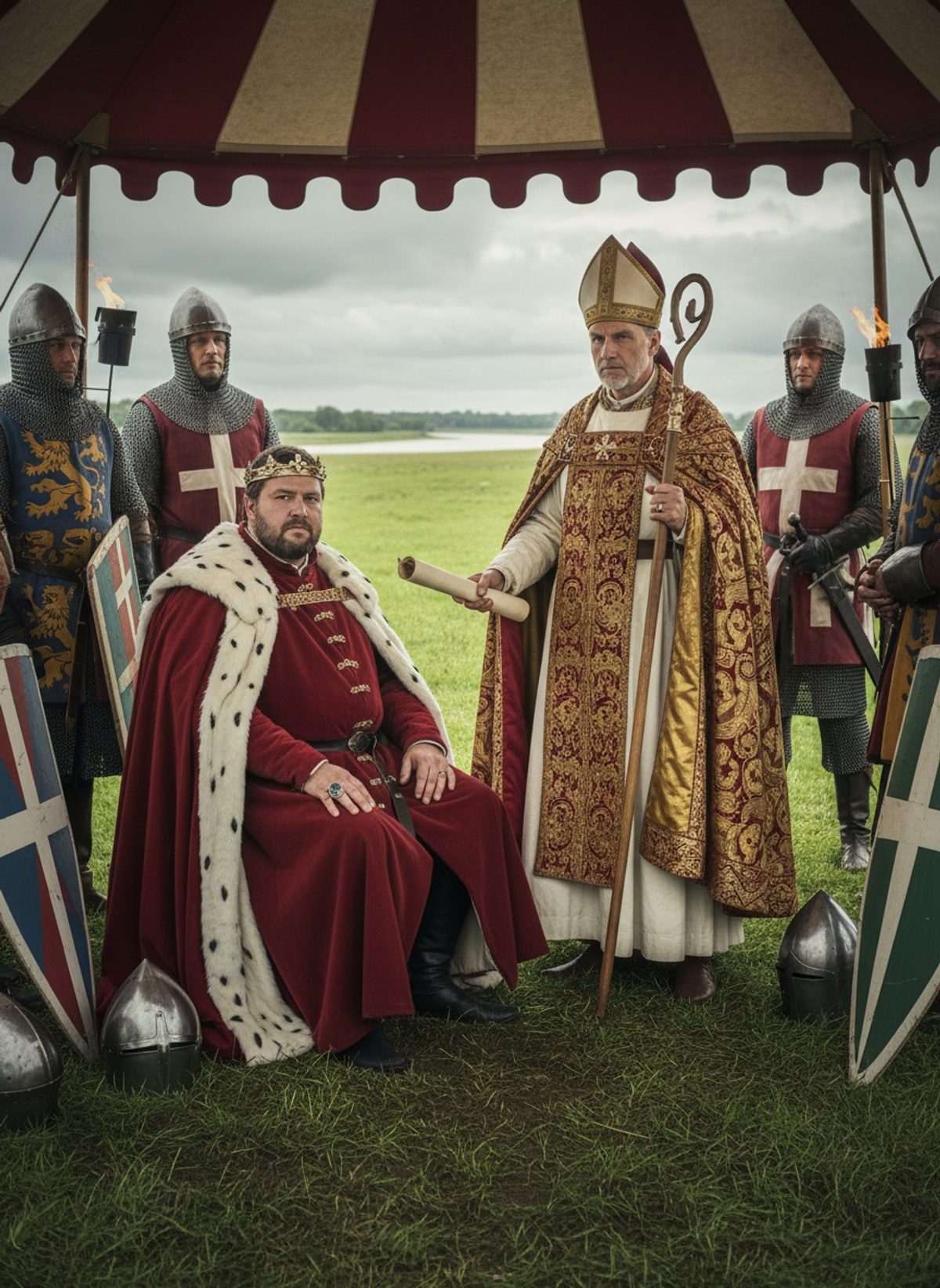
She was a medieval queen, accustomed to royal duty and diplomacy. But on one fateful day in August 1347, Philippa of Hainault dropped to her knees, barefoot in the mud, her crown momentarily forgotten.
The Siege That Bled the City
The eleventh month of the siege of Calais had stretched the city to its limits. The defiant town, buttressed by walls of stout hearts and stone, had held out against all odds since September of the previous year. King Edward III of England, relentless in his campaign to consolidate his power in France during the Hundred Years' War, had fixed his gaze on Calais. A vital port, its capture would deliver both strategic advantage and a blow to French pride.
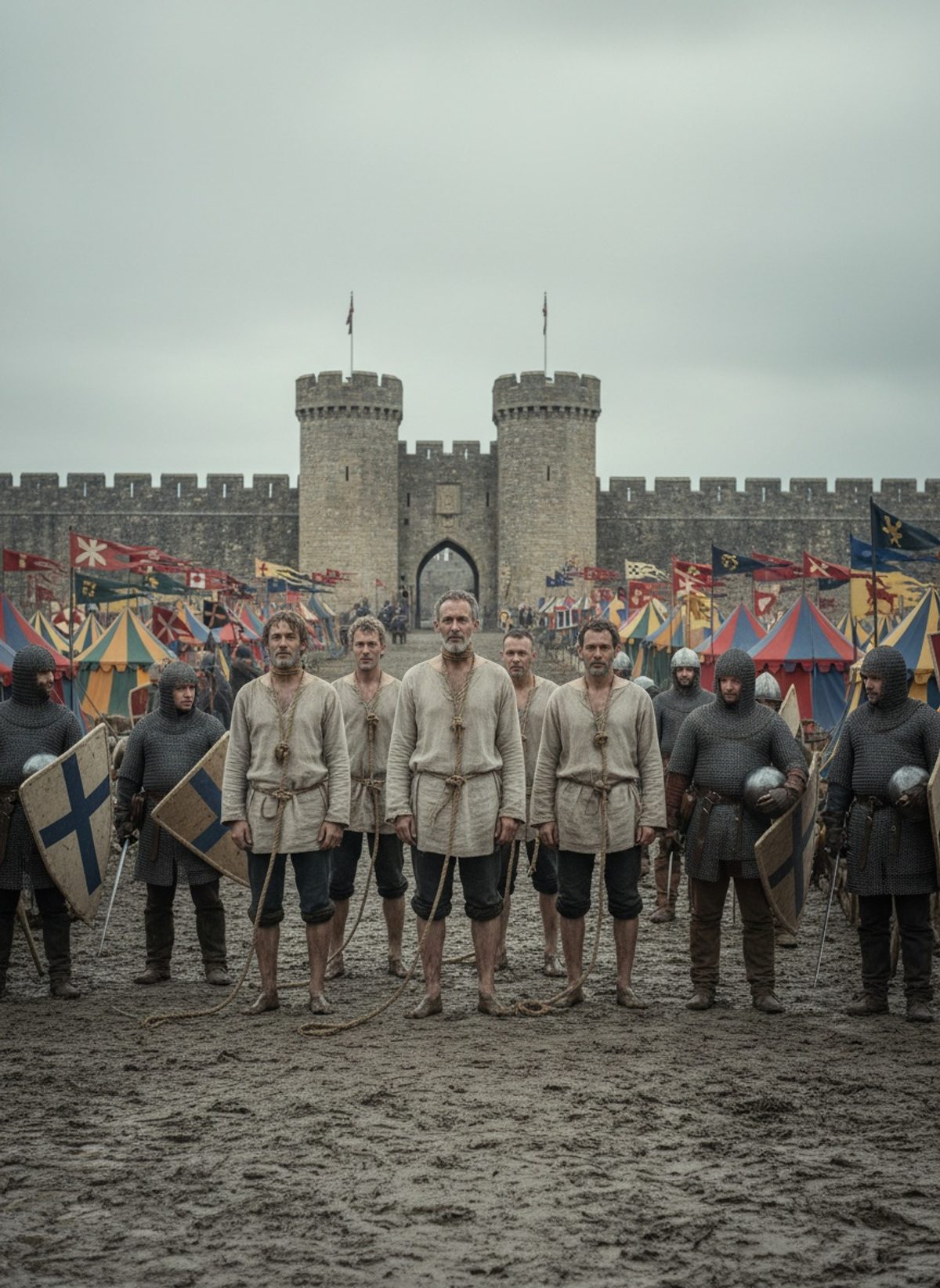
Calais stood battered, its people succumbing to the terrible hunger of a long siege. Starvation gnawed at their resolve, yet they refused to yield. When the city fell on August 3, 1347, it did so not in surrender, but in silent tribute to their unbreakable spirit. Edward, however, saw only defiance that needed quelling. To cement his authority, he demanded six of Calais' most significant citizens—barefoot and roped, their necks ready for the noose. Unyielding might would be met with unsparing justice.
The Parade of Sacrifice
In a somber procession, six burghers of Calais emerged from the city gates, embodiments of dignity draped in desperation. They walked silently, their feet seeking steady ground on the muddy path to their execution, faces somber yet unbowed. Each step echoed their acceptance of sacrifice, a tribute not just to their fellow citizens but to their city's indomitable spirit.
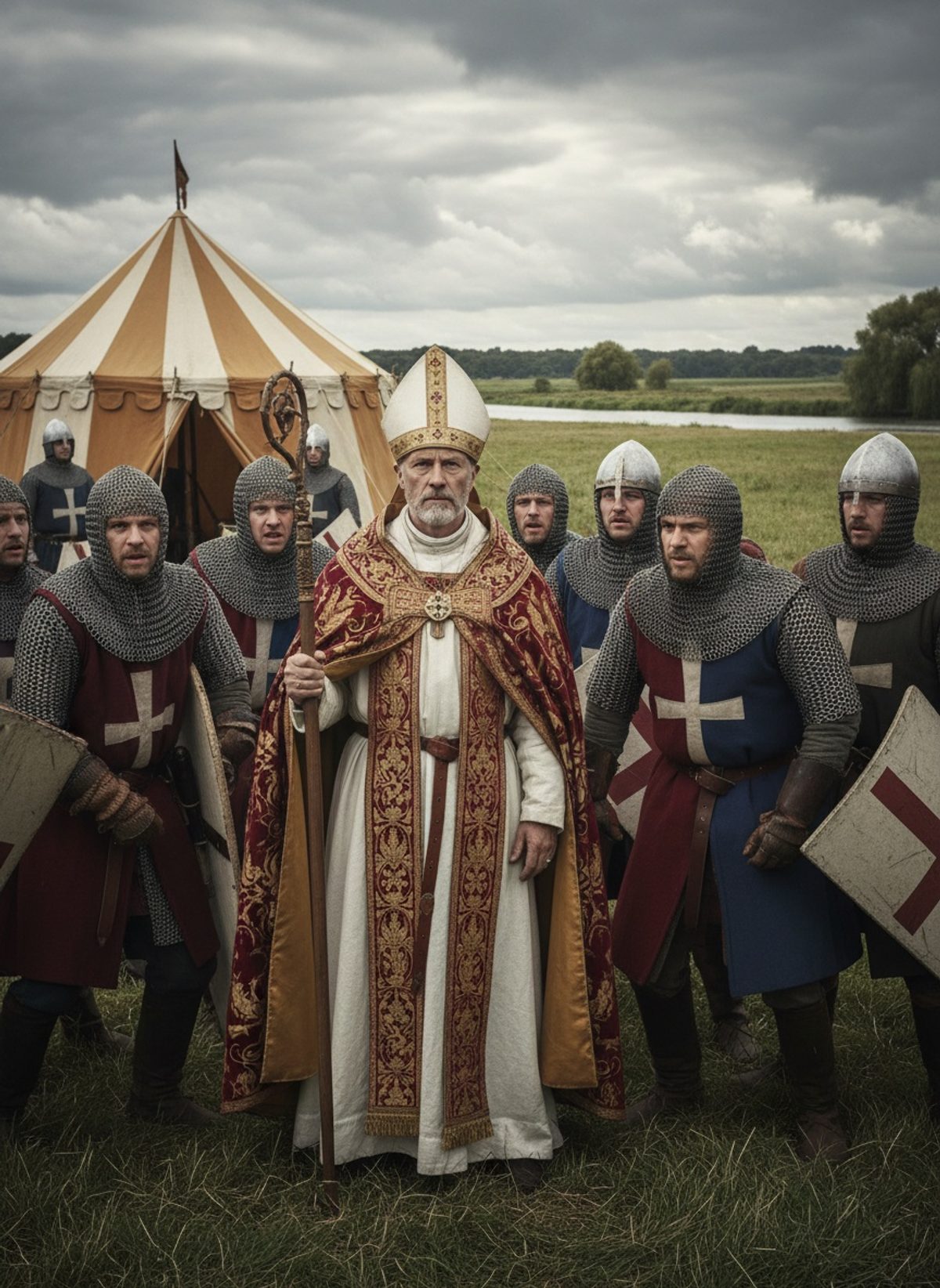
Read next: The Day a Bishop Knelt Between a King and His Prisoner
Among them, Eustache de Saint Pierre led, his name etched indelibly in the annals of time, not as a defeated foe but as a symbol of selflessness and courage. Edward's court watched in silent testimony, witnessing the embodiment of a city's honor walking toward an ostensibly unavoidable fate.
An Unexpected Plea
It was then that Philippa of Hainault, Queen Consort of Edward III, emerged from the crowd, each stride a contradiction to the cadence of impending death. With her long dress trailing through the sludge, she moved almost spectral amidst the living tableau of power, injustice, and sacrifice.
Philippa recognized a pivotal moment. Her compassion eclipsed the pageantry of royal decorum, a luminescent force against the shadow of looming violence. Kneeling before her husband, she entreated him with a poignancy that jolted elements of mercy from a stoic facade. Her voice, usually gentle as a spring's zephyr in courtly whispers, now carried the weight of human conscience.
Edward was caught unawares—not by the presence of his queen, but by the depth of her plea. It was a scene antagonistic to courtly expectation: the king flinched, the queen demeaned. Tears welled up in both the monarch’s and the observers' eyes, clouds breaking over the tumultuous waters of royal justice.
A King’s Change of Heart
As silence enveloped the fields outside Calais, the heart of a king wrestled with the clamor of duty, expectation, and the unexpected caress of mercy. Philippa’s words, woven with a tapestry of empathy and foresight, negotiated a path through his wrath, weaving strands of humanity amidst the armor of the warrior's resolve.
It is said that Edward’s heart softened, tears marking his rugged face. The ferocity of his resolve dissolved, and against the convention of medieval rule, he allowed mercy to reign. He acquiesced to his queen's request, calling off the execution of the burghers of Calais.
Their lives were spared, a testament to human decency rising against the harsh backdrop of medieval warfare. Their footsteps, once destined to be their last, followed a path back home, their trial by sacrifice illuminated not by a noose but by an angelic act of empathy.
A Legacy of Compassion
This event did not just alter the course of six lives; it refracted through the ages as a beacon of the enduring power of compassion. From Philippa's intervention emerged a narrative that history had favored once again—the foil of supreme power blunted by the subtle force of empathy.
Philippa of Hainault retained her position not merely as a queen, but as a figure who rose above the confines of her epoch, impacting the course of historical memory without standing armies or political treaties. Her name breathed life into the annals of time, a gentle reminder that the humanity within us all can bridge over the chasm of might and violence.
In medieval Calais, against the relentless backdrop of war and suffering, Philippa showed that sometimes, choosing to kneel is the strongest action of all. Her legacy, standing bridge-like between past brutality and future understanding, continues to whisper across history’s pages: true strength often wears the guise of mercy.