She was thirty-seven years old. She was the first woman to claim England's throne by right, not by marriage.
A Cold Summer of Treachery
The morning light of August 1553 barely pierced through the thick mists of East Anglia, a picturesque region now a boiling cauldron of unrest. In London, Lady Jane Grey sat precariously upon a throne that few believed belonged to her. Behind her ascent were powerful men cloaked in ambition, men who calculated that controlling a teenage queen would reinforce their own grasp on power. Yet, they made one critical error—they underestimated Mary Tudor, the woman they’d hoped would quietly slip into obscurity.
Mary Tudor, the daughter of King Henry VIII and Catherine of Aragon, was a royal seasoned by hardship. Raised in the royal court, she lived the intensely scrutinized life of a princess whose legitimacy had been contested since childhood. But it was this very adversity that steeled her, cultivating a resolute will that now burned with rightful ambition. As she heard whispers of Jane’s hasty crowning, Mary took a bold course of action. She would not plead for support from the Tudor lords gathered in London. Instead, she would go where no English woman had boldly gone before—straight to the heart of England herself.
The Ride to Framlingham
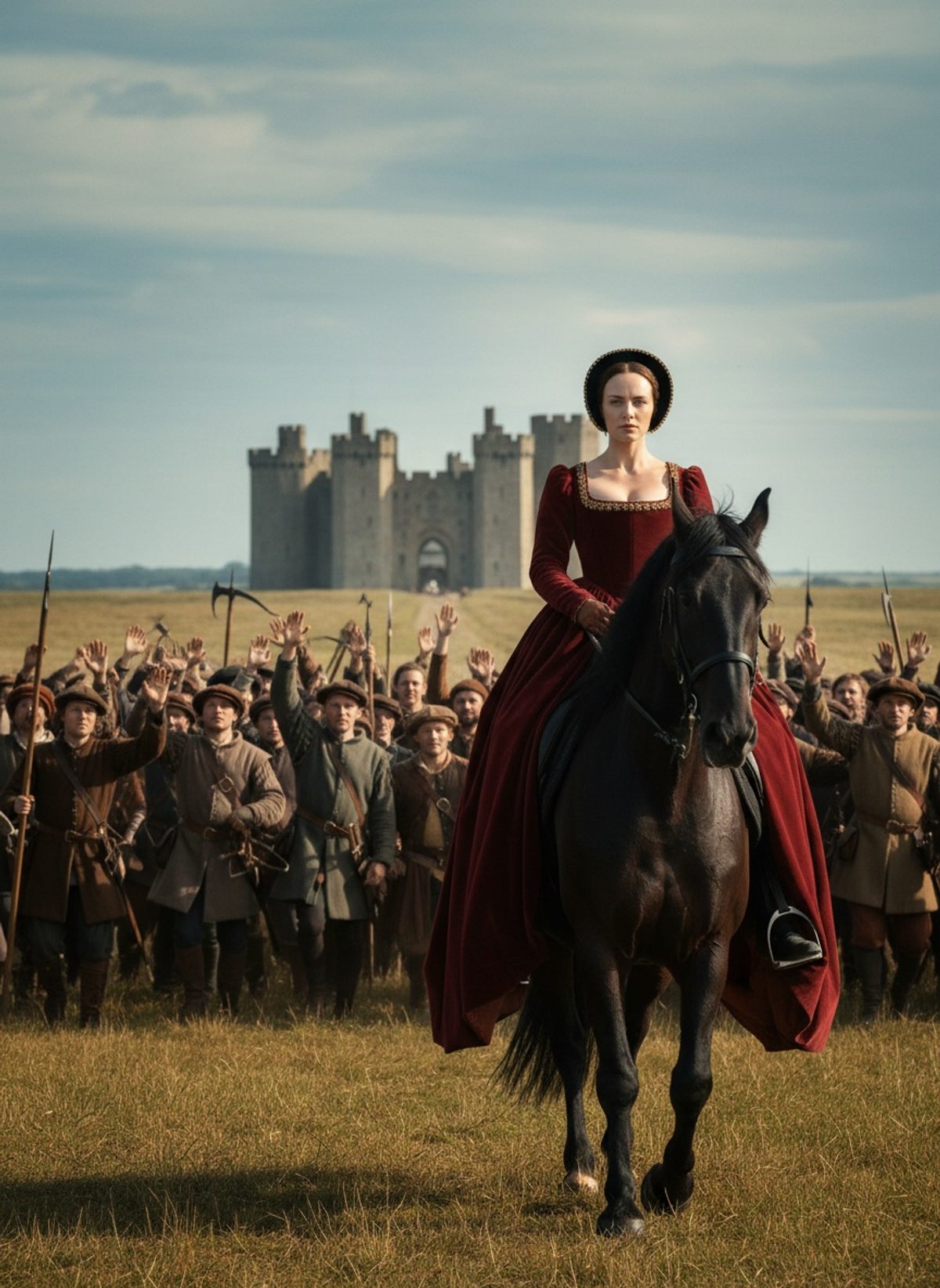
Mary's journey to Framlingham Castle was one undertaken with resolve and a heavy heart. Clad in simple attire, she rode virtually alone, save for a small retinue loyal to her cause. The journey was fraught with tension, the roads overgrown with mistrust and thickets of betrayal. However, at every stopping point, she found that the people came to her, pledging their loyalty and military support. From small villager clusters to seasoned country knights, the people of England saw not only a monarch in Mary but a preserver of their true royal bloodline.
Read next: The Day a King Walked Barefoot to a Dead Man's Tomb
With each turning wheel and steady hoofbeat, whispers turned to cheers and tens to hundreds. By the time she reached the stone walls of Framlingham, these echoes had turned into the fervent roar of thousands upon thousands who would forsake previous commitments to champion their rightful queen. Here, in the vast courtyard, ten thousand soldiers, a myriad of scarce resources assembled in defiance of Jane’s imposed reign. They pledged to march with her, loyal to her name, to ensure that the realm once again bowed to the will of the Tudor line.
From Castle to Crown
Framlingham's old stones bore witness to an unprecedented scene—one never depicted in royal portraits or epic tapestries. A woman, steadfast and unyielding, presiding over an army called not by force but by sheer belief and persuasion. Medieval warfare bore the expectation of male leadership, yet here stood Mary, unguarded by neither traditional warfare banners nor patriarchal limits. Her presence was an electrifying testament to a new kind of leadership, borne of understanding and heritage, not cunning calculation or inherited command.
The days passed with a feverish pace as Mary set about diplomatically fortifying her cause. Letters flew across the country, carrying her words in tones both penitent and commanding. By weaving together a narrative of rightful succession and religious unity, Mary garnered not only the loyalty of the commoner but the cautious support of the crown’s influential nobility. Watching growing unrest from afar, Jane’s backers hesitated—a palace intrigue unraveling before they could thread it whole again. It was not long before courtiers and soldiers alike defected, their allegiances shifting with the tides of destiny that Mary now commanded.
The Moment of Ascension
Thus, on that fateful August, under the vast skies of a kingdom torn by succession but united by faith, Mary Tudor secured not only the crown but the future of the realm. Like the meticulous weaving of a tapestry, she stitched back together the disbanded factions, using her sheer personal strength and lineage as the binding thread. England thus witnessed its first queen regnant, not an appointed figurehead, but a sovereign ruler of her own making. Her ascent was a masterclass in the power of legacy, played out on the grand stage of history.
What Mary achieved at Framlingham was not just a strategic win; it was a transformative moment for England. She demonstrated that monarchy could transcend the male-dominated confines imposed by tradition, heralding a future that recognized the potential of queenship. Her story is one of perseverance, a stark reminder of the complexities of power and the tenacity required to claim it. As the bells finally tolled for the crowning of Mary Tudor, they rang not only for the advent of England’s first queen regnant but for the possibility of womanhood in power.