Caratacus was a defeated man. Yet, in Rome, he became much more than a conquered chieftain.
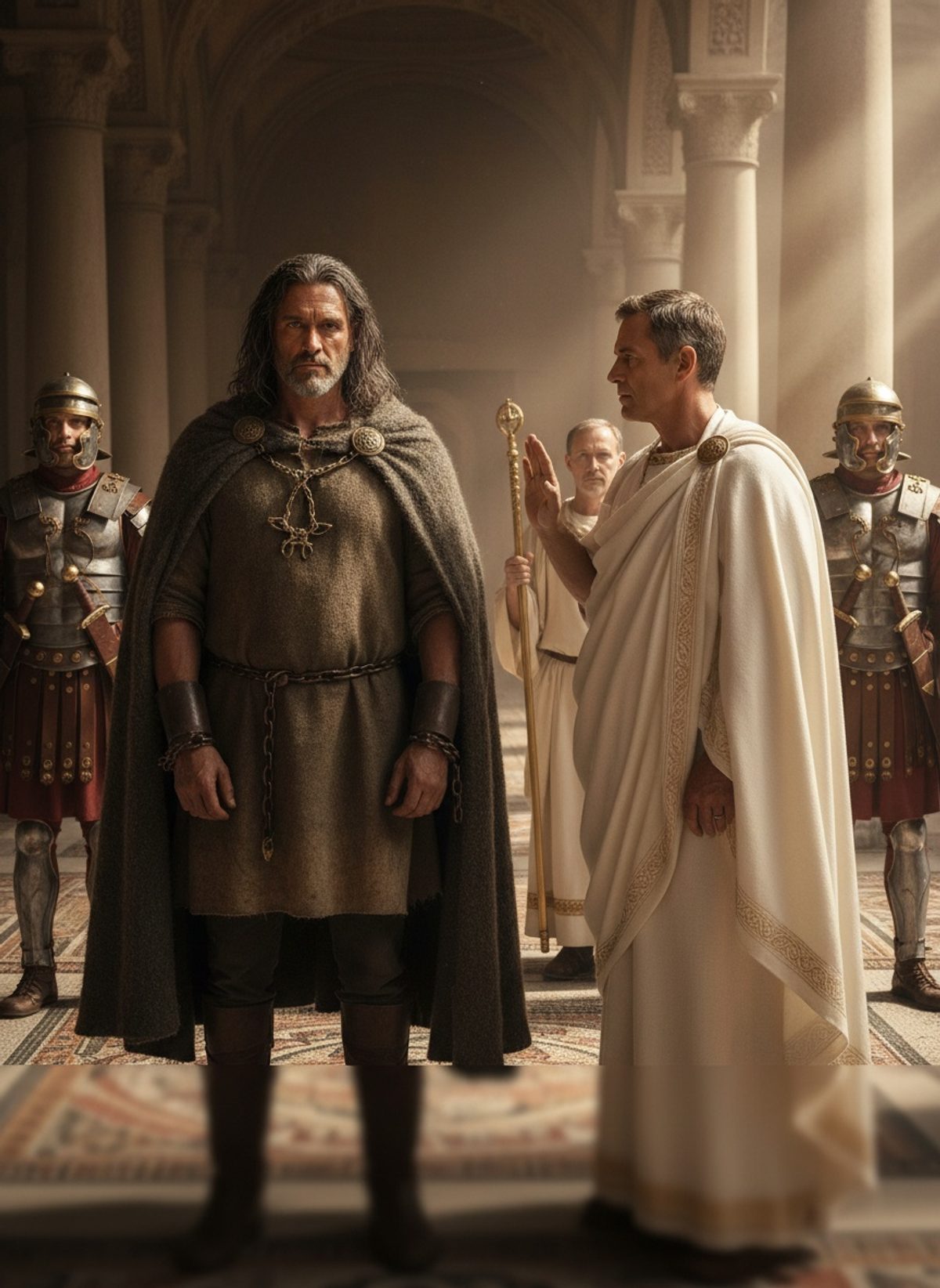
In a rare moment of political theatre, Caratacus stood in chains before Emperor Claudius and the Roman Senate around 51 AD, having been dragged from his homeland. He wasn't the first rebellious leader to be brought before the might of Rome, but what transpired was unlike any other encounter. After resisting Roman occupation of Britain for nearly a decade, Caratacus transformed his humble appearance into a spectacle of defiance and dignity that echoed through the marble hallways of Roman authority.
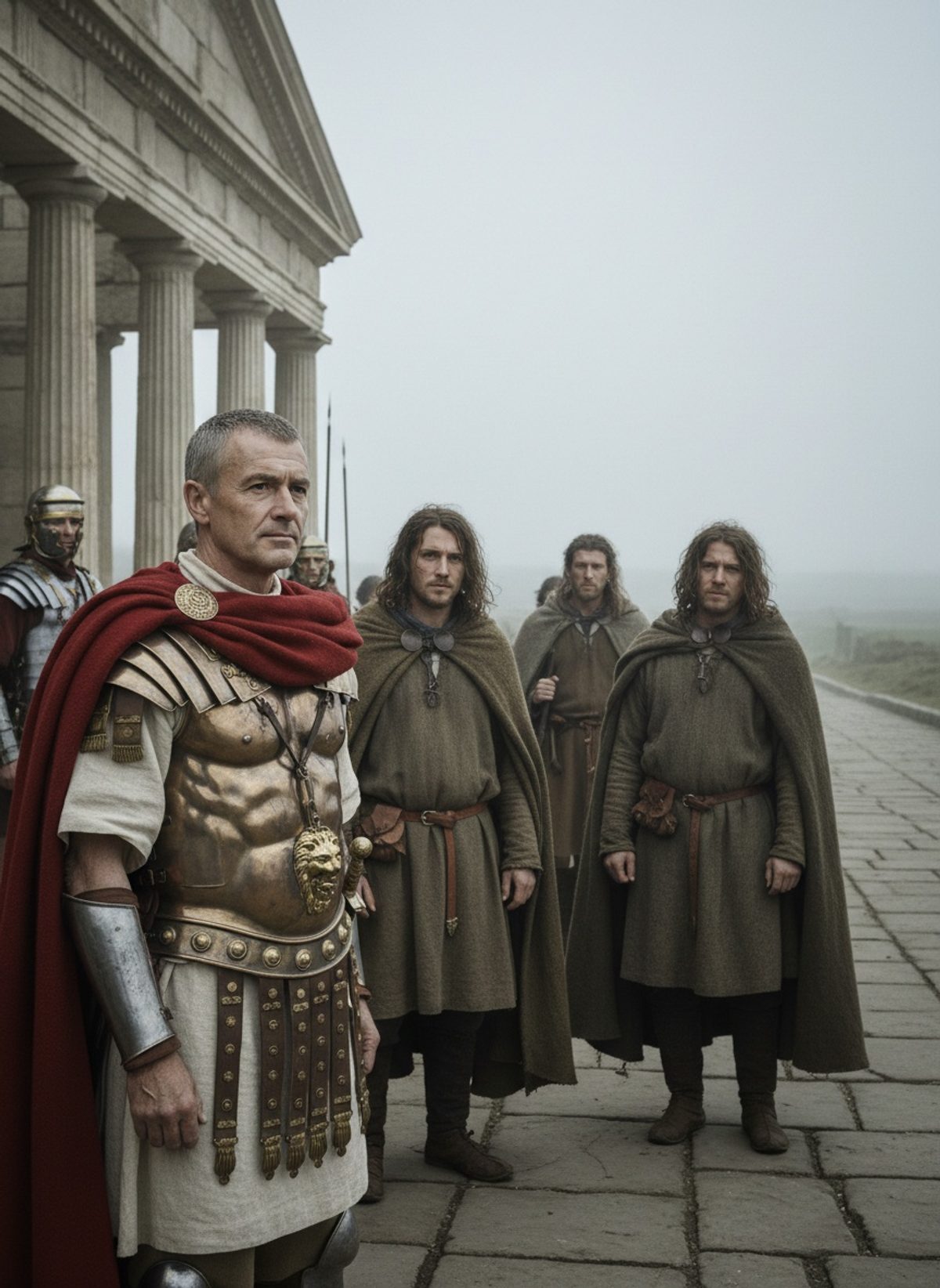
Born into the Catuvellauni tribe, which occupied large territories in what is now Southeast Britain, Caratacus was not merely fighting for survival but for an entire way of life. He and his people, bound to the land by generations of ancestry, viewed the expansionist claws of Rome as a mortal threat. In the long shadow of Julius Caesar's incursions a century prior, Roman forces were seen like a dark cloud enveloping the Isles. For the Romans, led by emperors like Claudius, Britain presented opportunity — rich in resources and strategic advantage. Under such circumstances, Caratacus emerged as a symbol of native resistance.
For nearly nine years, he employed guerilla tactics against the disciplined Roman legions, a testament to his astuteness in warfare. From dense forests to wide rivers, every natural feature of the land was utilized in a tireless campaign. By aligning various tribes with differing interests, he fostered an uncommon unity among the scattered clans of Britain. But this fraught alliance was eventually disrupted, leading to his eventual capture by the Romans after fleeing to the lands of the Brigantes, whose queen, Cartimandua, betrayed him to the invaders.
Read next: The Day a Roman Wall Stopped an Empire in Its Tracks
This chain of events brought Caratacus to Rome, joining a long line of resisting leaders paraded as trophies of Roman victory. One expects such a parade to be one of shaming—a demonstration of imperial might. Yet, Caratacus did not beg or plead. Instead, he addressed the Senate with a powerful oration, not of arrogance but of rugged dignity. He asked why he, who had no statues, palaces, or riches, should be ridiculed for defending his modest lands while Rome, possessing so much already, sought more. It was a rhetorical challenge that, through the ages, held a vivid resonance.
The impact of his speech was profound, leaving the audience awestruck and silent. Claudius himself, noted for his dependence on the counsel of his advisors, realized they were witnessing an extraordinary moment. In an empire used to crushing opposition, such an appeal not only was novel but inspired a rare mercy. Instead of being executed, Caratacus had his chains cut. He was allowed to live out his life in honourable Roman exile, transformed from foe to a figure of fascination.
This surprising turn of events highlights how even in the brutal annals of Roman conquest, there were narratives that broke the mold. This was more than the tale of a chieftain spared—it was one where respect transcended enmity. Caratacus's story is a lens on the complex human interactions amid the unrelenting march of empire. The Romans had previously mowed down opposition with efficient cruelty, but moments like these punctuated their storied history with glimpses of magnanimity that would shape their legacy in subtle, indelible ways.
Such encounters become stark reminders of the power of the spoken word—how it can sway hearts and alter destinies. Caratacus, in the streets of a foreign city that should have been his end, captured the minds of his captors and, with his eloquence, reversed the currents of his fate, leaving behind a lesson of resilience and the hope for a shared humanity amidst the harsh tones of conquest. In this manner, the shining halls of Rome found room in its story for the voice of a defiant Briton to echo, even centuries later, in the tales we remember and tell.