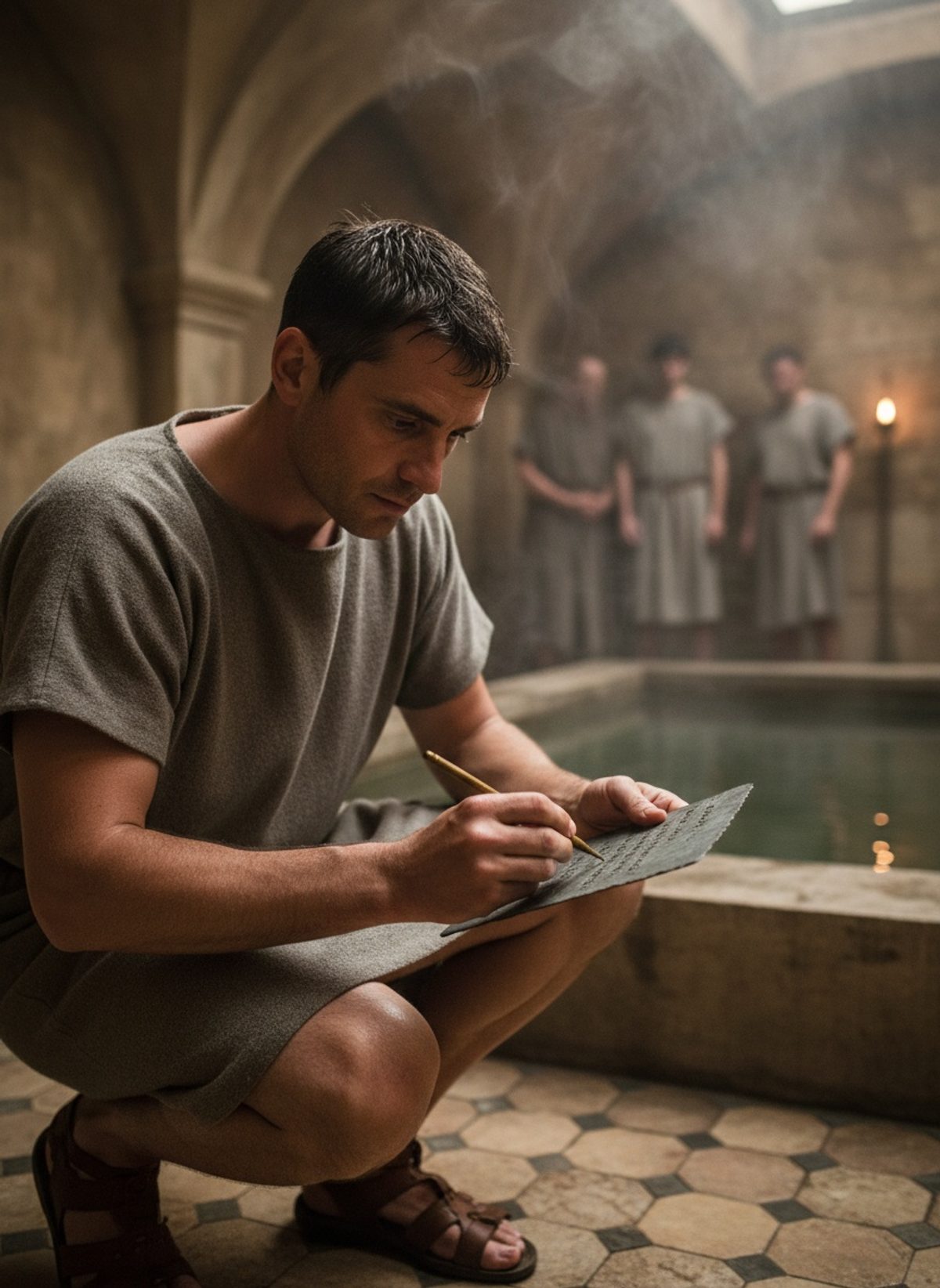
A sudden chill ran up Vegetus's spine as he realized his cloak was gone. The bustling bathhouse around him seemed to pull away, leaving him in a bubble of disbelief. The steamy air, heavy with the scent of oils and sweat, buzzed with the chatter of patrons and the rhythmic splash of water being scooped and poured. Yet, Vegetus, standing at the edge of the caldarium, was alone with his loss. His only possession of warmth and status, vanished in the shadows cast by the heated light of Londinium's communal baths.
Marks of a Helpless Anger
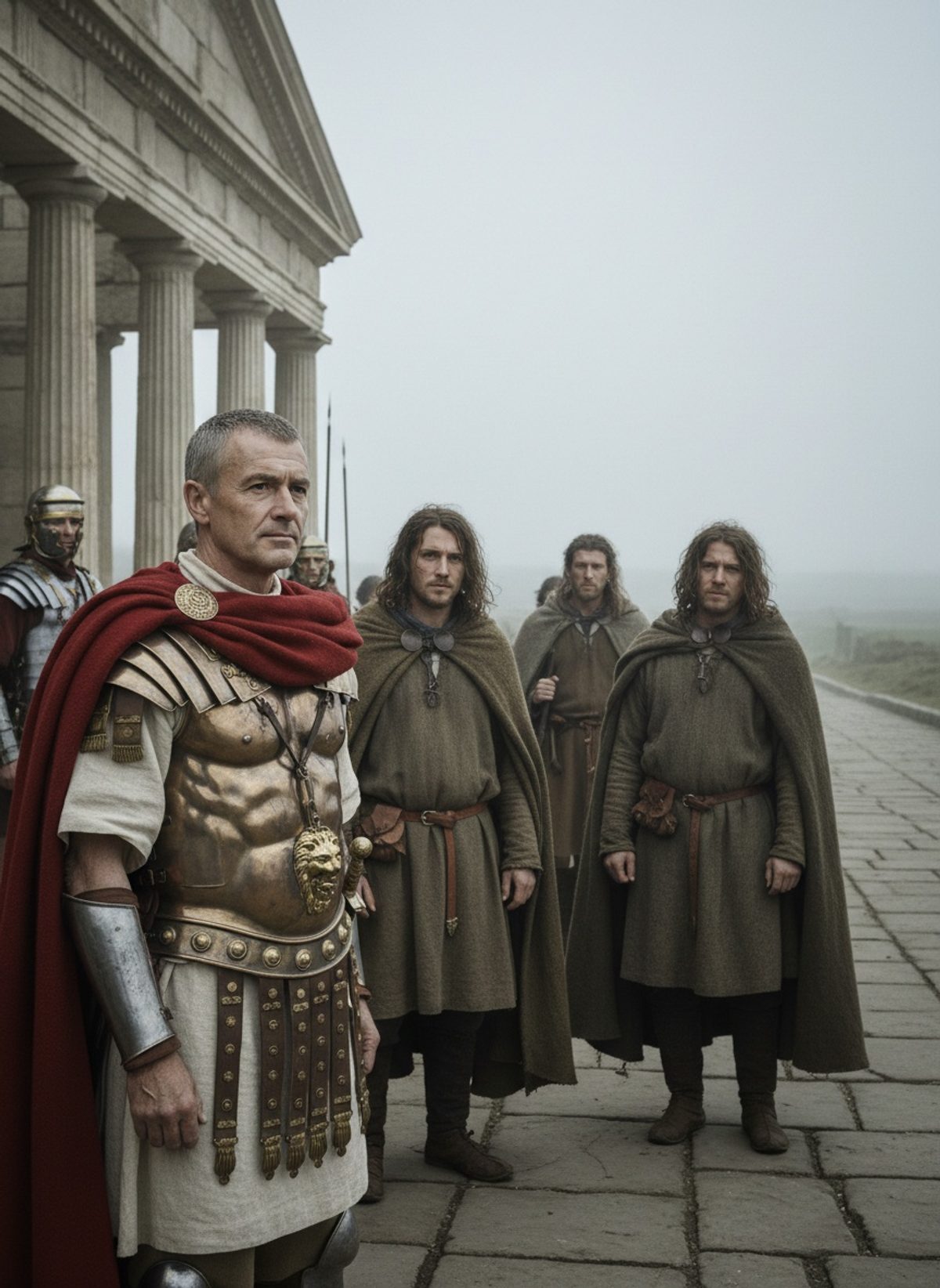
Clothes were more than mere garments in Roman Britain; they were a mark of one's identity, even for a slave like Vegetus. Enslaved but determined, Vegetus had saved enough to own a cloak, providing him with protection against Londinium's chill and a silent emblem of his struggle within the rigid social hierarchy. The theft ripped through Vegetus's scant assertion of control over his existence, simmering into a frantic, yet fruitless search through the bathhouse's labyrinthine changing rooms and echoing chambers.
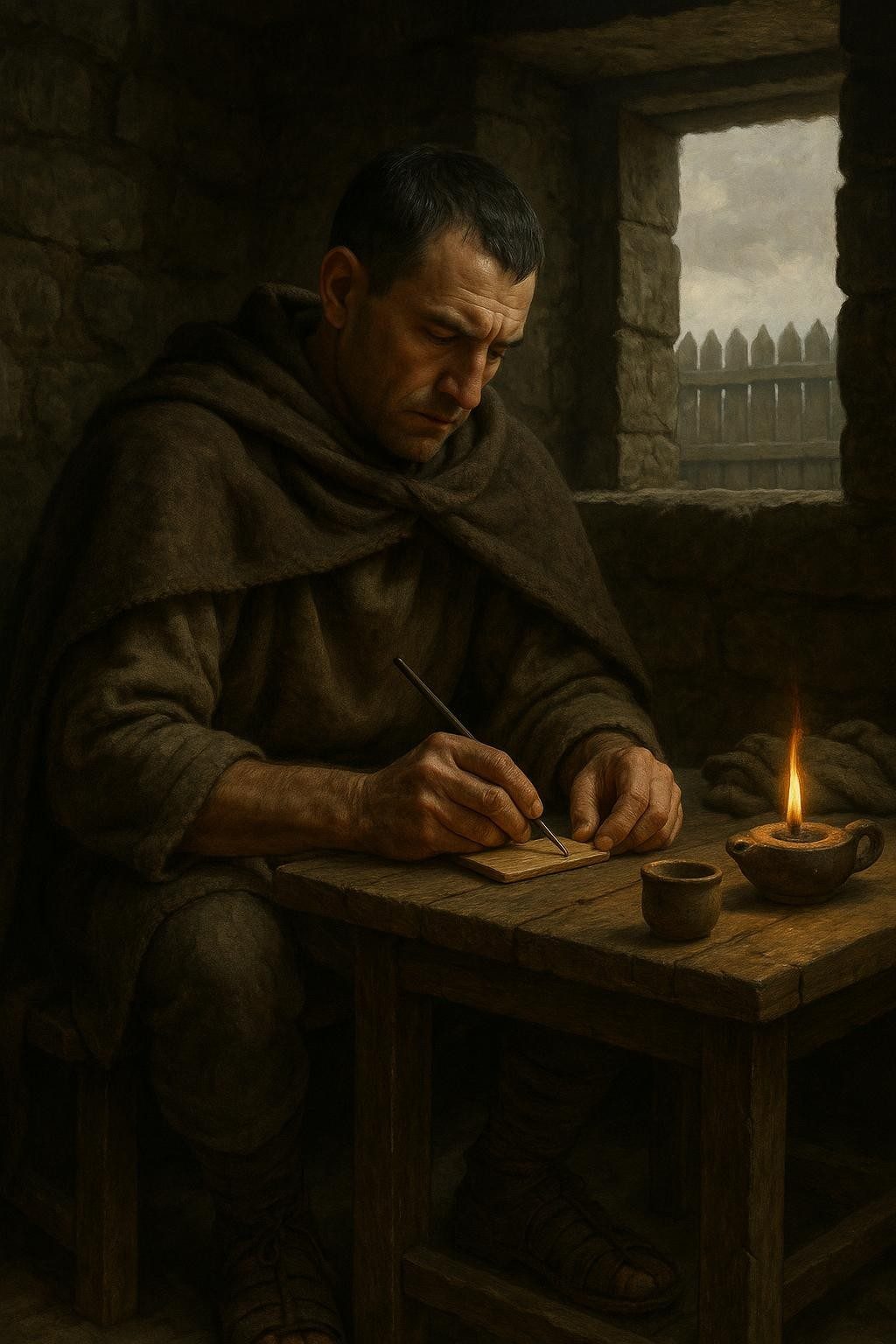
But Vegetus was not the type to let his despair swallow him whole. Instead, he turned to a peculiar custom of his times—writing a curse on a thin sheet of lead. This was a common practice among Romans, a strangely democratic recourse available to anyone who had been wronged. Regardless of his status, Vegetus could appeal to the gods, leaving his anguish etched into metal. It was primitive and powerful, a small act of defiance. Stealing moments in the calm after the baths had closed, he laboriously scratched his message into the pliable surface: a plea for divine intervention, a curse for his unknown assailant. From the murmur of the bathhouse to the secrecy of the night, Vegetus’s furrowed brow reflected the thin sheen of oil still slick on his skin, his resolve cooling as the air turned cold and still.
Into the Sacred Springs
With the makeshift curse in hand, Vegetus made his way to a sacred spring, the setting sun casting the city of Londinium in a dull, golden light. As the wooden pathways took him past rows of timber-frame shops and the faint smell of smoke from flickering hearths, he felt the weight of his mission. All around, the clash of cultures—Celtic and Roman, free and enslaved—met in the crowded streets, creating the peculiar harmony that was Roman Britain. At the spring, the water glistened with an almost supernatural clarity, a reflection of the heavens above.
Read next: The Day a Roman Soldier Defied an Emperor to Free a Province
Crouching down, Vegetus whispered his desires into the leden scroll before tossing it into the depths, hoping for retribution as the waters swallowed his voice into silence. Beneath the surface among hundreds of other curses and wishes, Vegetus’s appeal became part of the tapestry of human longing and injustice. In the bustling world of Roman Londinium, where life was precarious and ephemeral, this act served as a plea for permanence, for justice to transcend the fragile fabric of mortal existence.
Echoes Through Time
The centuries turned, empires crumbled, and Londinium evolved into the modern metropolis of London, yet some whispers refused to fade. Over time, the sacred spring, now buried deep beneath the city's relentless progression, held tight to Vegetus’s words. It wasn’t until the 20th century, under layers of mud and development, that Vegetus's tiny lead sheet was unearthed, capturing the imagination of historians and echoing the voice of a man whose life was thought long-since swallowed by history’s vast tide.
His message, grudging and poignant, persists as the oldest known individual from ancient London—a testament to the tenacity of personal narrative meeting historical upheaval. It’s an eerie bridge, connecting us with a forgotten world through an everyday story of loss and resolve. Vegetus’s curse is not just a window into Roman Britain’s daily life but also a reminder that amidst the grand chronicles of emperors and conquests, personal tales, even those scrawled on humble lead, refuse extinction.
Even in an empire renowned for its grandeur and legacy, it’s the mundane and the minor—a cloak stolen and a curse etched—that resonate across time, engaging us with echoes from an ordinary life transcending the ages. Vegetus’s story matters not simply for its antiquity but for its enduring humanity, his lost cloak a lasting testament to both life's fragility and the enduring quest for justice, however small it may seem. In today's world, where countless voices still struggle to be heard, Vegetus's quiet defiance is a whisper reminding us that however obscured their origins, some words endure far longer than the stones of an empire.