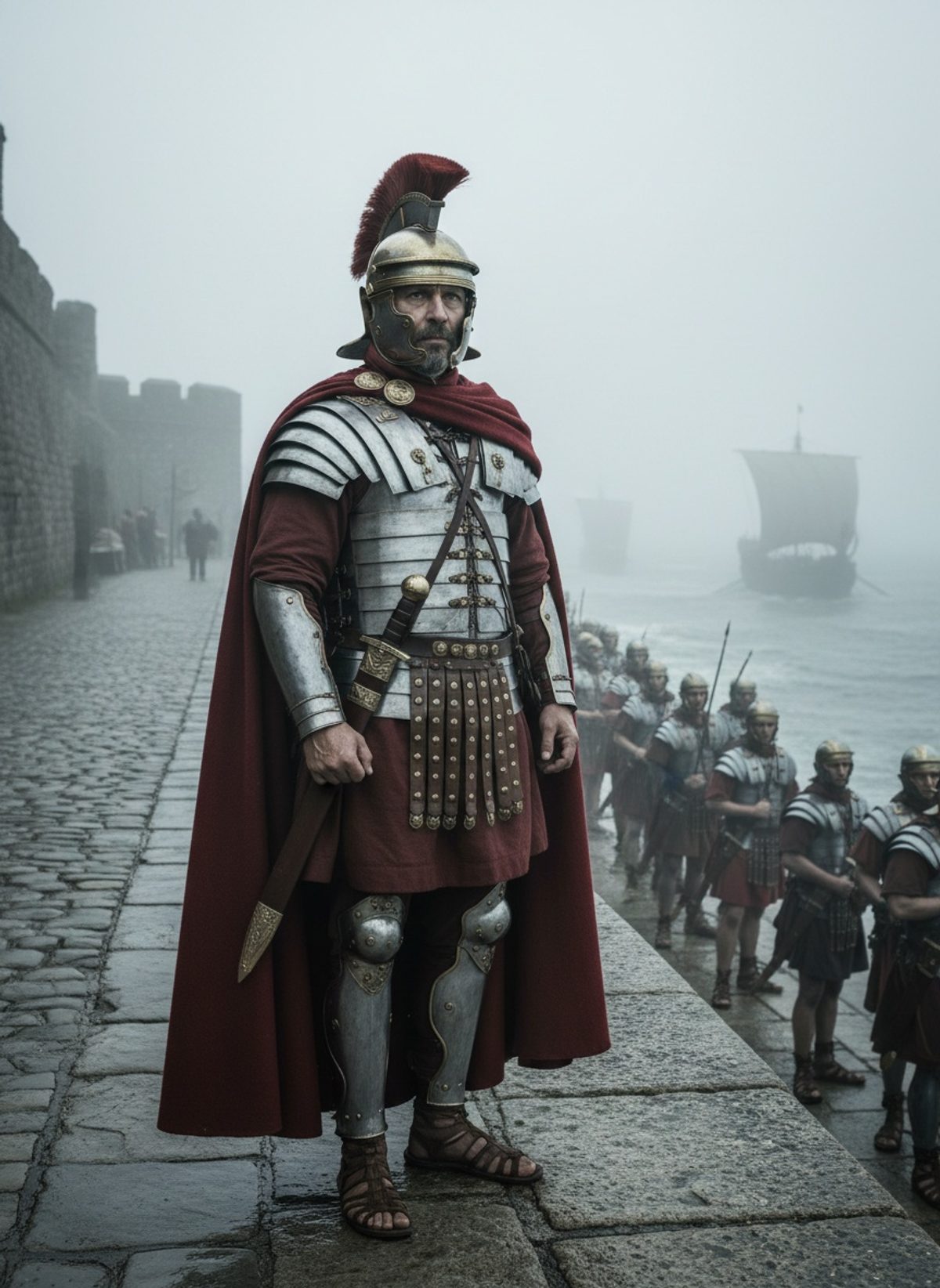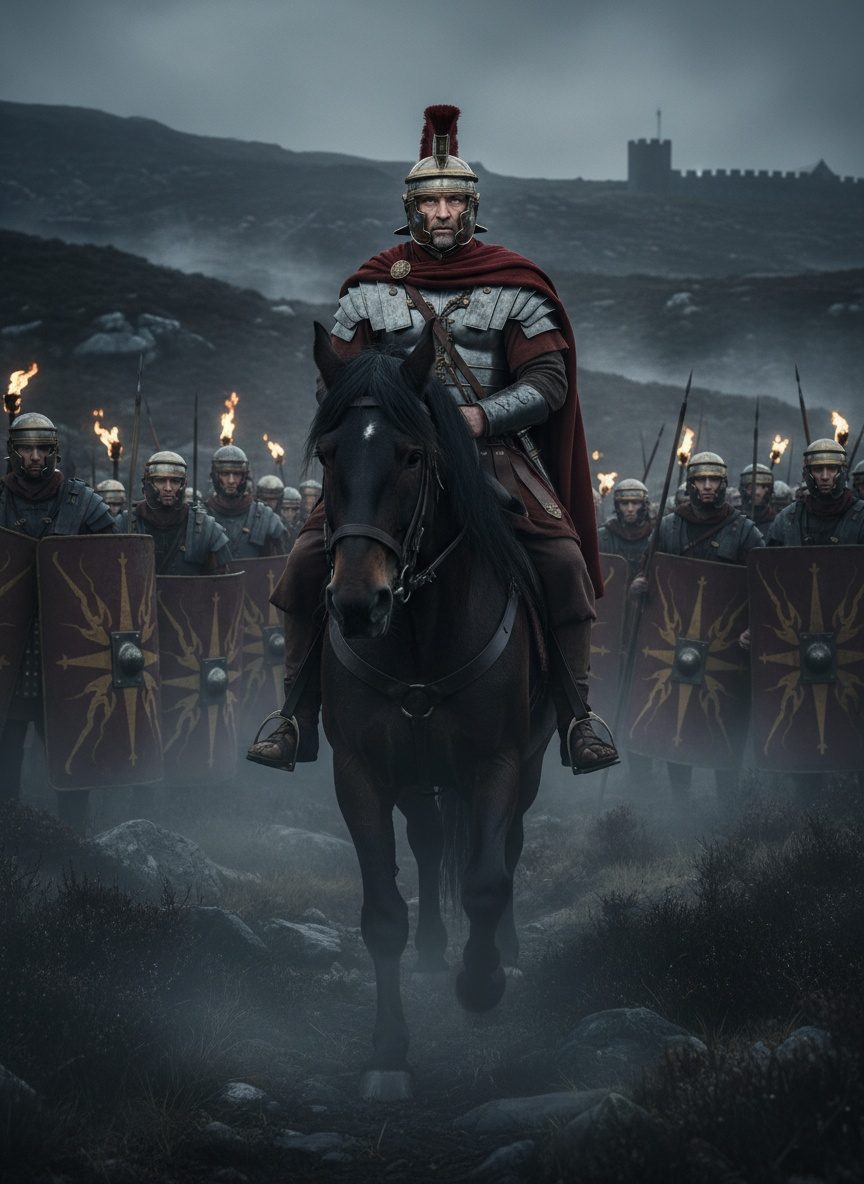
122 CE. A chill wind swept across the rugged landscape of northern Britain, rustling the sparse vegetation that dotted the vast expanse, a harbinger of what was to come.
The Emperor's Dilemma
When Emperor Hadrian set foot on the wild lands of Britannia, he inherited a frontier that had become a thorn in the empire's side. Rome, basking in the glory of its conquests, had broken the backs of numerous formidable foes; yet here, in the hinterlands of the northern territory, the empire encountered an enemy unlike any other: the unruly and indomitable tribes of the Picts—an alliance that proved elusive as the mist that blanketed their lands. The conventional Roman strategy of obliteration met its match in these cunning warriors who neither yielded nor sought the pax Romana.
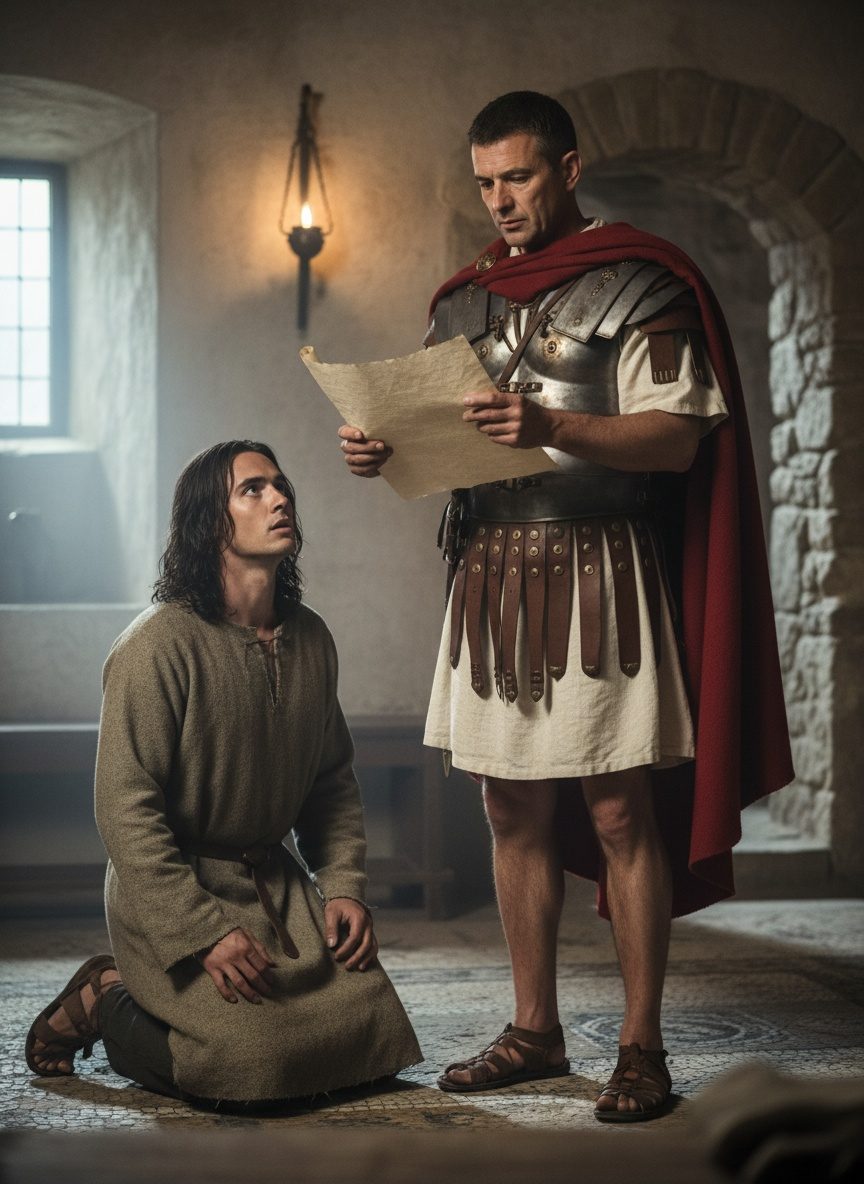
Hadrian, a ruler known as much for his intellectual curiosity as his military acumen, viewed the situation with pragmatic eyes. Rather than expend endless resources in a land that bled his legions dry, he made an unprecedented decision. In 122 CE, amid the bracing northern winds, he decreed the construction of a wall—an unyielding barrier that would slice across the breadth of northern Britain from coast to coast. Thus began the greatest defensive construction project ancient Britain would ever witness, with a purpose as audacious as its scale.
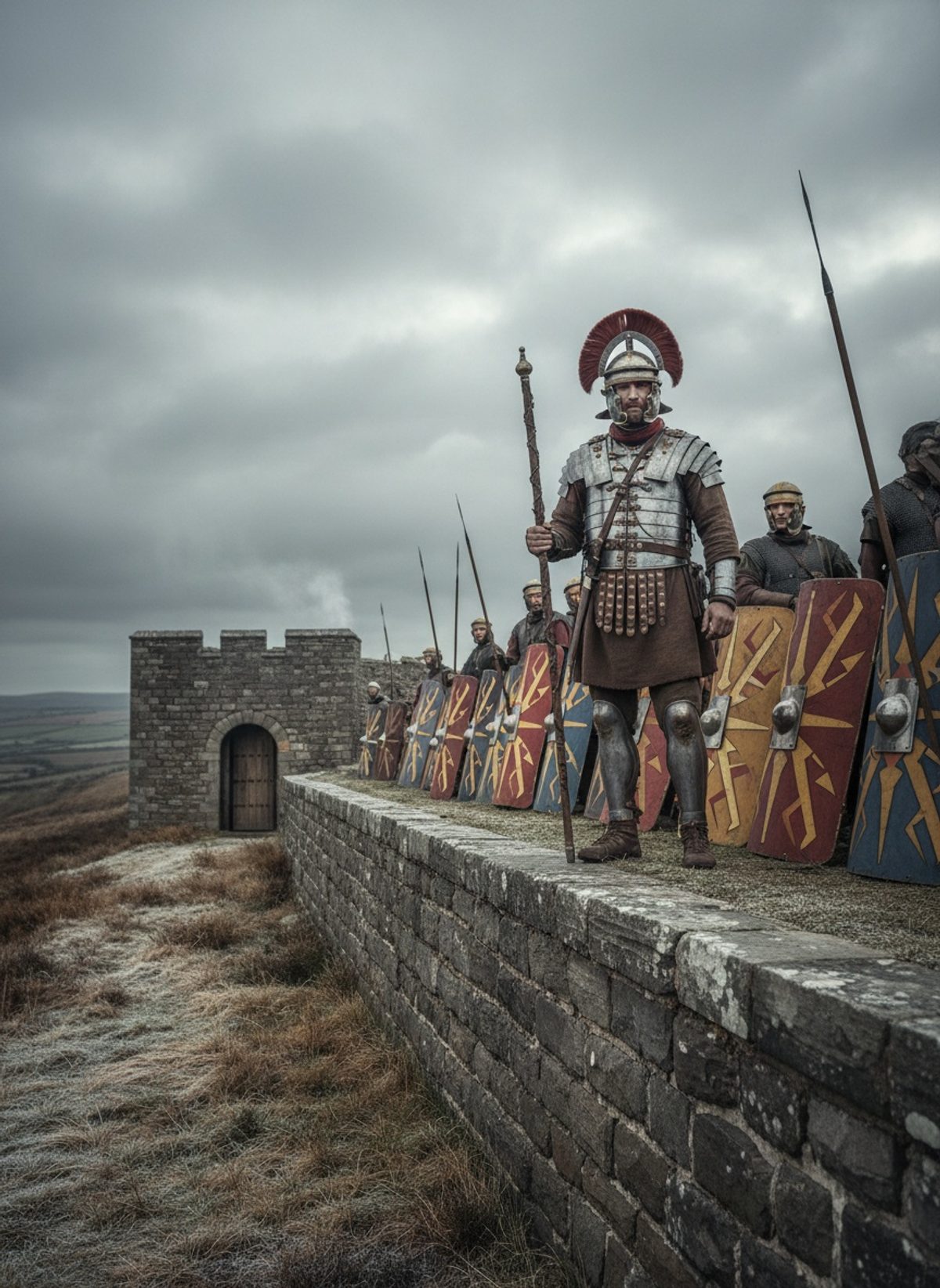
Seventy-three miles of stone and turf began to rise, not just as a physical barrier but as a psychological one. It was designed to fortify the edge of the known world, a testament to Rome's determination to pen and protect its frontier. The wall was not just a wall. Strategically spaced forts, bustling garrison towns, and signals between outposts ensured rapid communication and response in the face of incursion. Engineers, surveyors, and laborers—organized with the precision of a Roman military campaign—pushed through bogs and over crags to implement this grand design.
Read next: The Day a Roman Soldier Wrote Home and Never Came Back
Blood and Mortar
The construction was a feat of ambition and single-mindedness. Roman legions, with their renowned discipline, transformed the untamed landscape into a structured boundary. Their task was colossal: in just a few years, soldiers, slaves, and specialists labored tirelessly to see Hadrian's vision completed. As evidenced by the numerous remains found today, we know it was more than a mere wall. Fortified gates known as milecastles punctuated the structure, ensuring that it served as a checkpoint for trade and travel, but also a fortress ready to repel invaders.
Little is known about the experiences of those who built it, but it was an endeavor that tested mankind against nature's elements—rains that turned the terrain into mire, winds that howled through fortresses, and the ever-looming presence of hostilities from shadowy forests beyond. Despite the wall's stature, its real strength lay in the Roman soldiers themselves—men who hailed from across the empire's vast territories, now bound by duty to hold this lonely line.
Yet, paradoxically, as the wall separated lands, it also connected worlds. It became a melting pot where traders, soldiers, and indigenous peoples met—each transaction a story of cultural exchange and adaptation. The wall witnessed the fusion of diverse customs and dialects at its forts. For inhabitants on either side, it became a paradoxical source of division and contact. This intersection of the empire's heart and its periphery revealed the Romans' nuanced understanding that power was not merely projected through force, but fostered through interaction.
A Legacy in Stone
Through centuries, the fortunes of Hadrian's Wall waxed and waned with that of Rome itself. It stood firm against raids and rebellions, a stoic reminder of an era where stone served as both sword and shield. With Rome's eventual decline, Britannia's boundaries softened, and the wall's purpose eroded into myth and mystery. Fractured and pillaged, its stones became echoes whispering tales of where empires once dared to draw lines.
Today, Hadrian's Wall endures as more than an archaeological marvel. It invites us to ponder the complex calculus of human ambition, identity, and boundaries. It speaks to the limits of conquest and the permanence of legacy—how lines drawn in defiance of nature speak across millennia. In the stoic remains, we find stories that affirm a simple truth that spans the ages: true strength lies not in the walls we build, but in the meaning imparted to those walls by the humans who shelter behind—believers in both division and unity, might and negotiation.