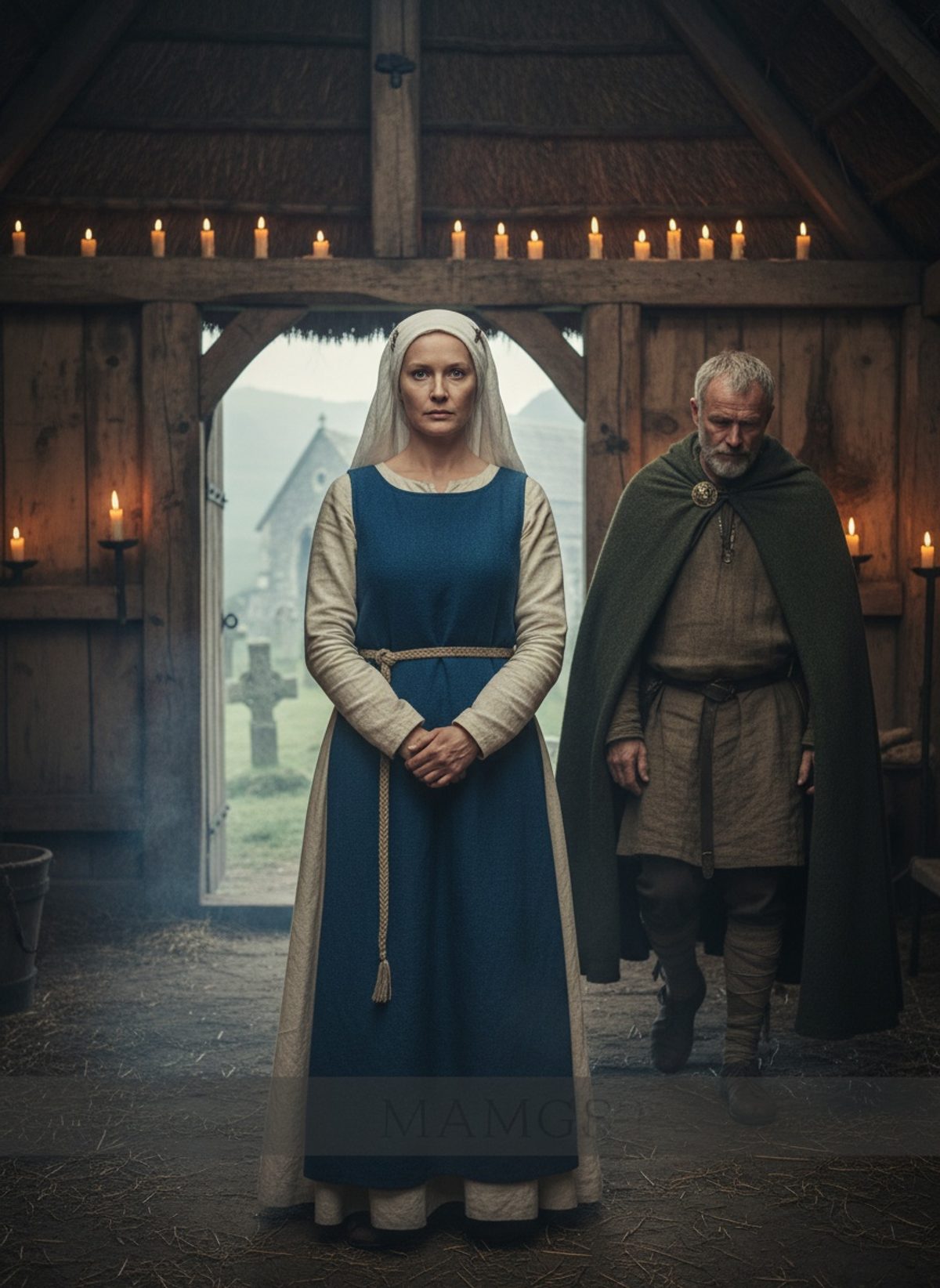
She stood five-foot-eight in an era when most women barely reached five-foot-three. Her stature wasn't just physical; it was a presence that commanded respect and quelled potential violence.
A Tower by the Sea
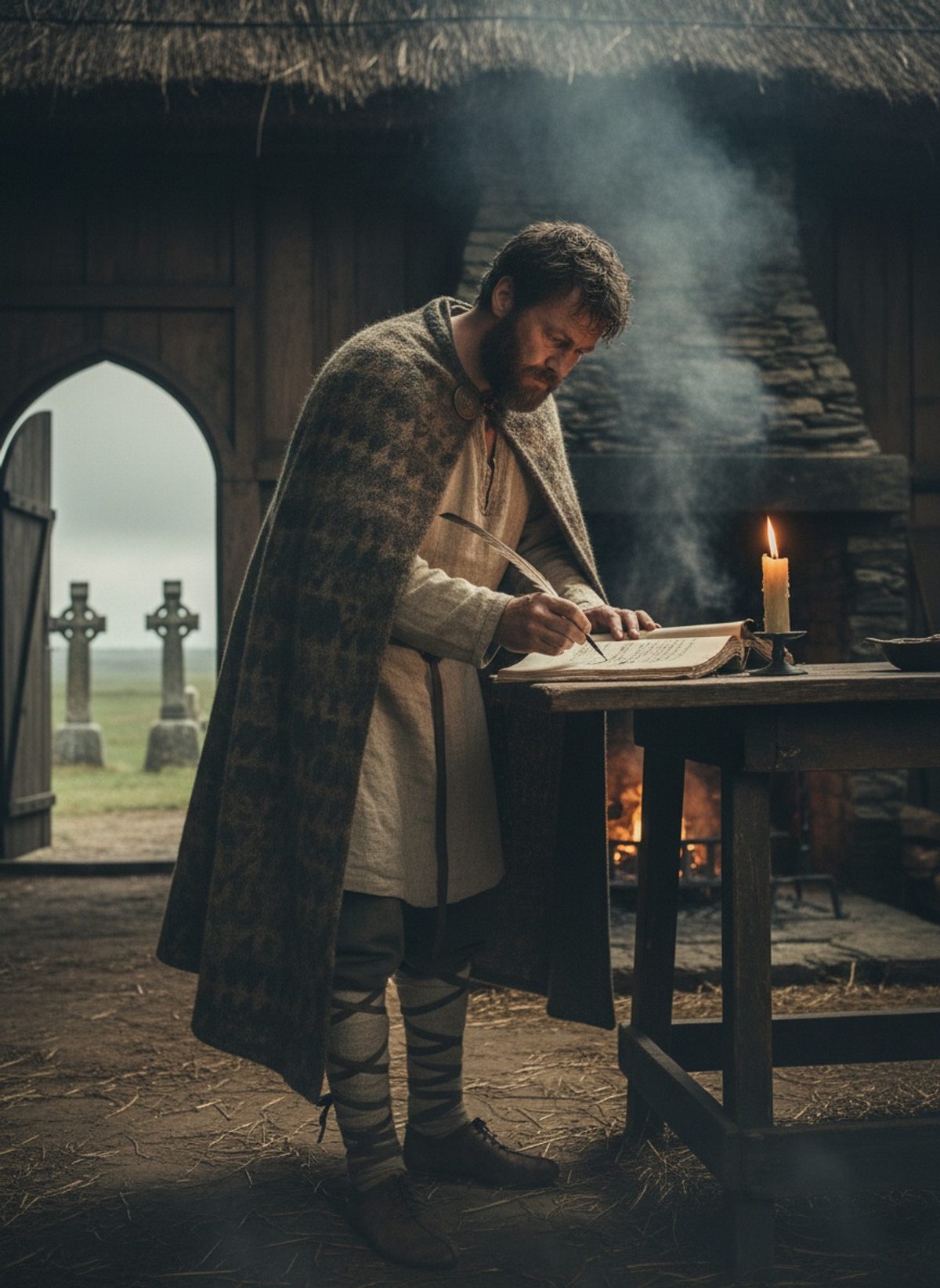
On the windswept coast of Northumbria, nestled between the roaring North Sea and the undulating hills of modern-day Yorkshire, lay the monastery of Whitby. This was no ordinary religious enclave, nor was it led by an ordinary woman. Hild of Whitby, a woman of towering intellect and spiritual conviction, had wrought something magnificent from seemingly inhospitable ground. In just a few short years, between sea foam and sky, she breathed life into a monastic community destined to shape history.
Whitby was a beacon for learning during the so-called Dark Ages. It attracted men and women, Saxons and Celts, who sought knowledge, solace, and perhaps most importantly, unity. Hild welcomed them all with open arms. Her abbey became a cultural nucleus, teetering on the brink between the old pagan ways and the burgeoning Christian faith, carving out pockets of peace in turbulent times.
Yet, in 657 AD, this haven of scholarship and sanctuary teetered on the brink of annihilation. At the heart of the emerging storm was King Oswiu of Northumbria, a man whose power was rivalled only by his impetuousness. When his military campaigns brought new lands under his control, Oswiu’s eyes turned to Whitby—its prosperity threatening to eclipse his own domains.
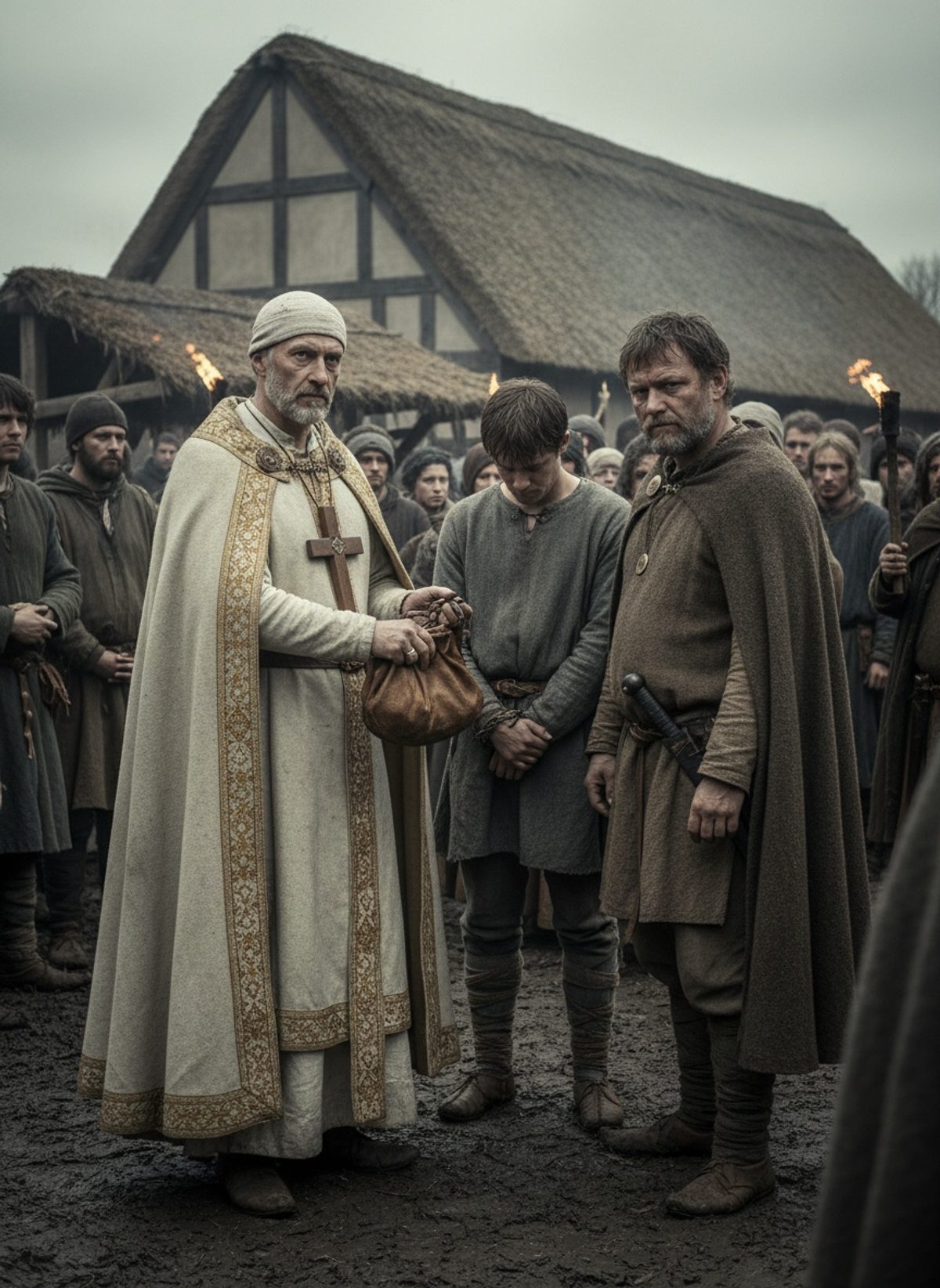
Read next: The Day a Saxon Abbot Walked Into a Slave Market Alone
The Reckoning at Whitby
Imagine the abbey's grounds on that day. The gray stone walls shone coldly under an overcast sky, the salty air electric with tension. Oswiu arrived at the head of a formidable host, banners snapping in the wind like impatient hounds. From within the abbey, cloistered chants mingled with the ominous sound of approaching hooves, knelling what many believed to be the monastery's final hours.
It was then Hild stepped forward, alone yet unbowed. She was a woman of God, yes, but also a royal herself, a descendant of the pagan Northumbrian king Edwin. Her lineage lent her a presence of authority tempered with the grace of her calling. Hild needed no armor; her faith was her shield, her voice her sword.
“What need has a king of monks and books?” she is said to have asked, her voice cutting through the wind's howl. Her question was both rhetorical and challenging. For Oswiu, the broader political strategy lay in the unification of a fragmented England, where monasteries weren't just religious hubs but centers of political power—and thus threats.
The abbess reminded him that power could not only subdue but also elevate. She spoke of peace that was durable, of kingdoms united not by the sword but by shared belief and learning. Oswiu listened as her words wove their magic, an incantation as powerful as any he had ever heard in battle.
The Eyes that Blazed
Hild’s impassioned discourse illuminated that cold afternoon in a more lasting way than the feeble sun could. She spoke not merely for survival but for the potential of a united realm where the virtues of wisdom, harmony, and faith outweighed brute supremacy. In those moments, she was not just an abbess but the very heart and soul of Saxon enlightenment, and for a fleeting second, she seemed enveloped in an otherworldly glow.
Perhaps it was this flicker of destiny that caused Oswiu to stay his wrath. His soldiers fidgeted, their fingers tight on sword hilts, but it was the king’s silence that spoke volumes. The tension fractured, not with a clamor of steel, but with the softest of whispers—Hild’s ardor had pierced through the monarch’s resolve.
What stayed Oswiu’s hand remains a subject of speculation. Was it his respect for a woman who wouldn’t bend, or did he see in her vision a glimmer of the future—a realm where Anglo-Saxon power and Christian teachings could coexist? Whatever the case, he acknowledged Hild’s courage and intellect, sealing a covenant that day that would allow Whitby to continue flourishing.
Echoes Across Time
Hild’s courageous stand and Oswiu’s startling retreat forged a precedent that rippled through the annals of history. Whitby would go on to host one of the most significant ecclesiastical councils in 664 AD, further dovetailing the spiritual and political landscapes of England. That society could progress not through war but through unity was a radical idea that took root, and it was Hild, with her rare combination of vision and tenacity, who helped to plant it.
In retrospect, the events at Whitby embody more than just a stand-off between a king and an abbess. They speak to a time when the power to heal was considered as mighty as the power to conquer. It's a legend often left out of textbooks: how Hild wove peace from potential violence, knitting together a fractured society by turning rage into reason.
As with many chapters of history, it is voices like Hild's—quiet yet resonant—that often hold the clearest truths. The day the Saxon abbess stood against a king was more than a tale of defiance; it was a narrative of transformation, mutual respect, and the untapped power within quiet conviction. And sometimes, the greatest victories are not those won on the battlefield but in the human heart.