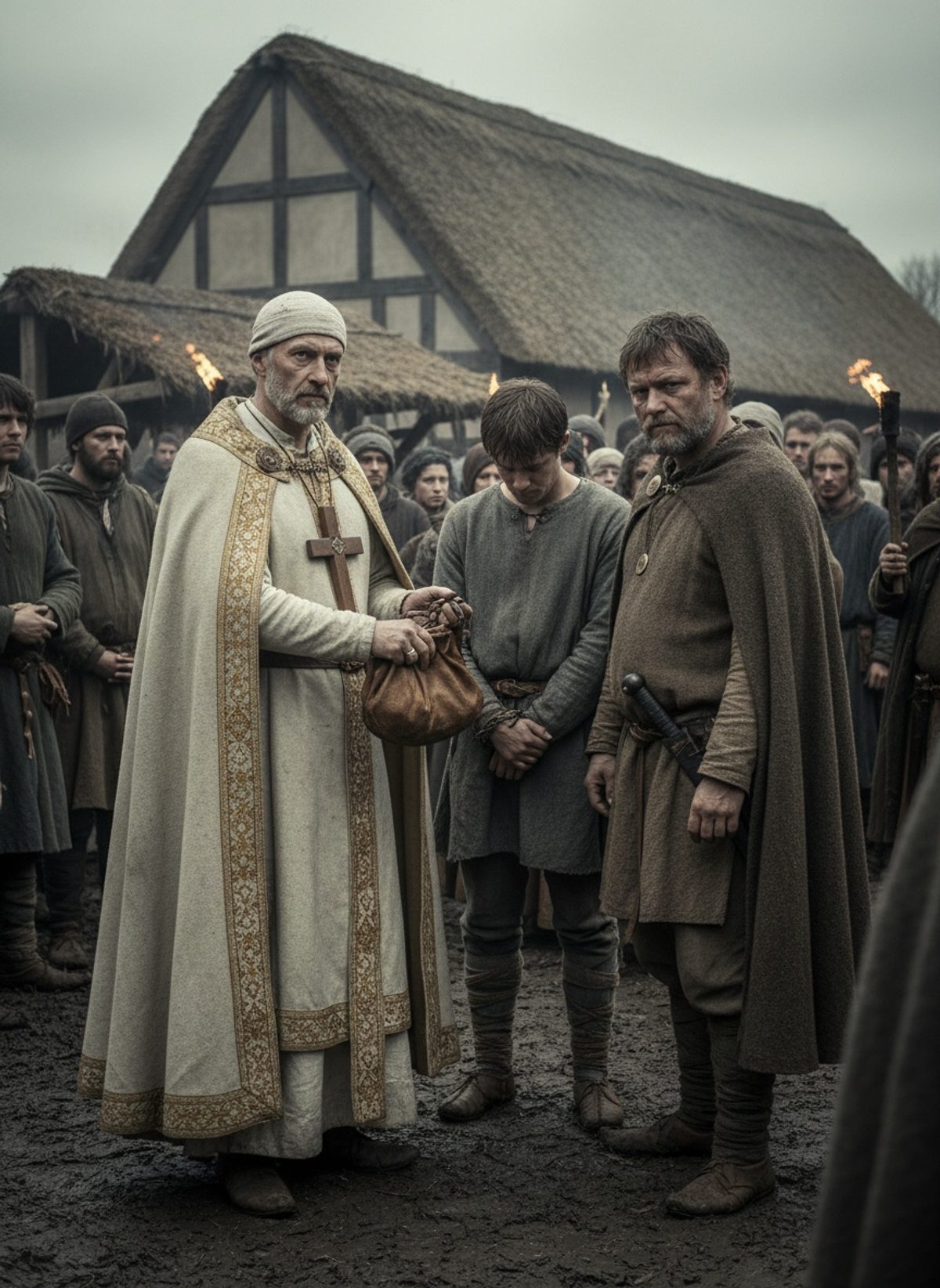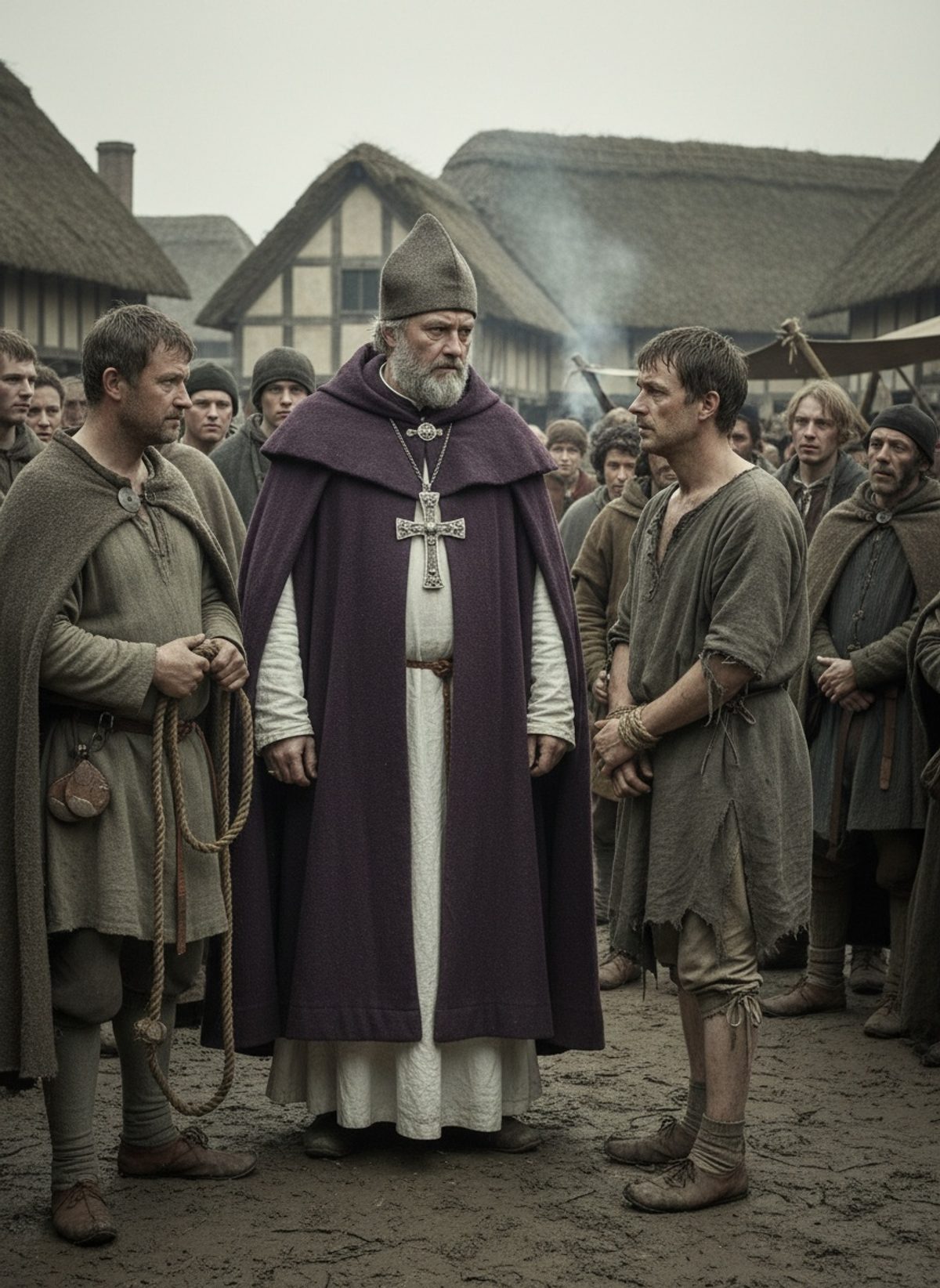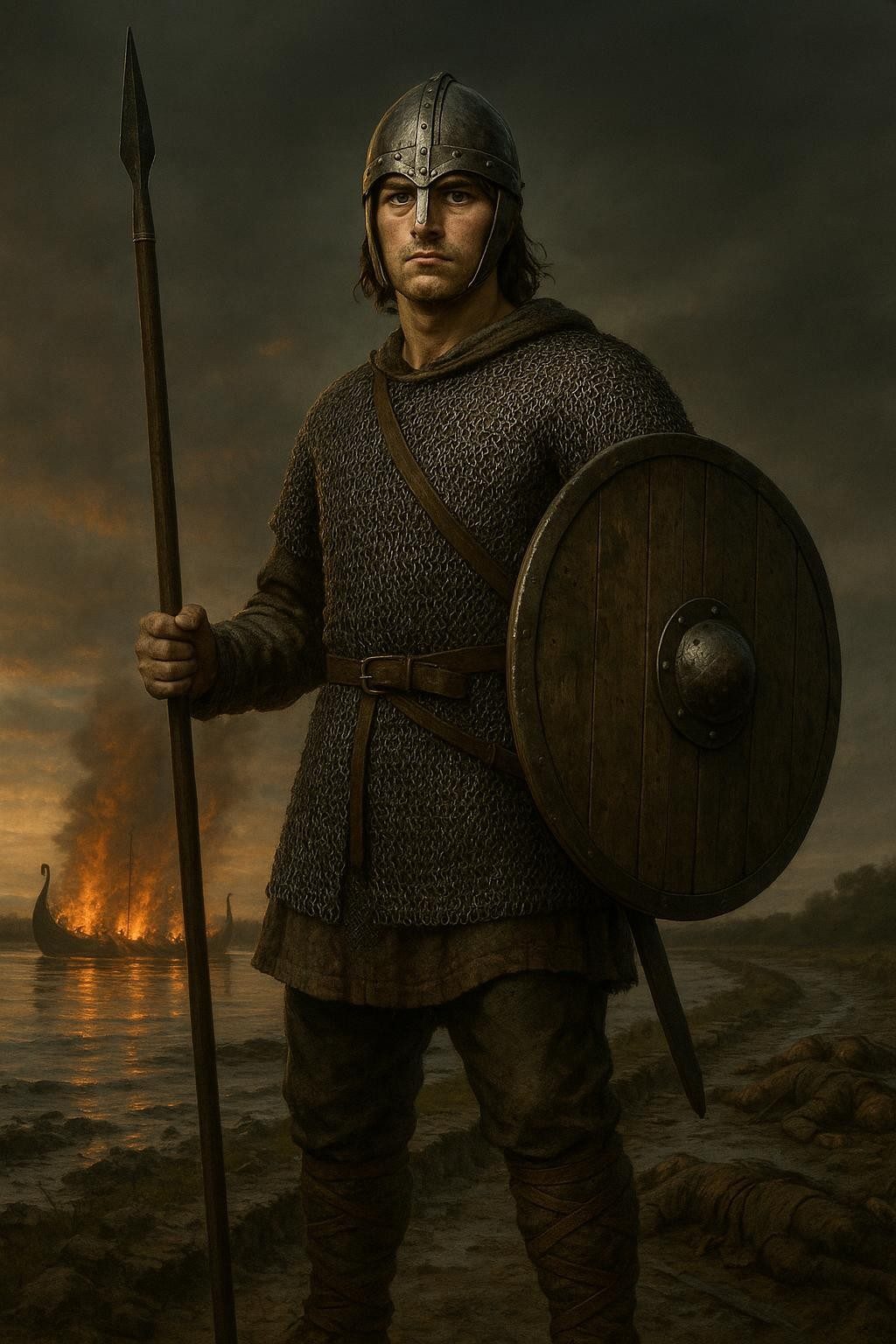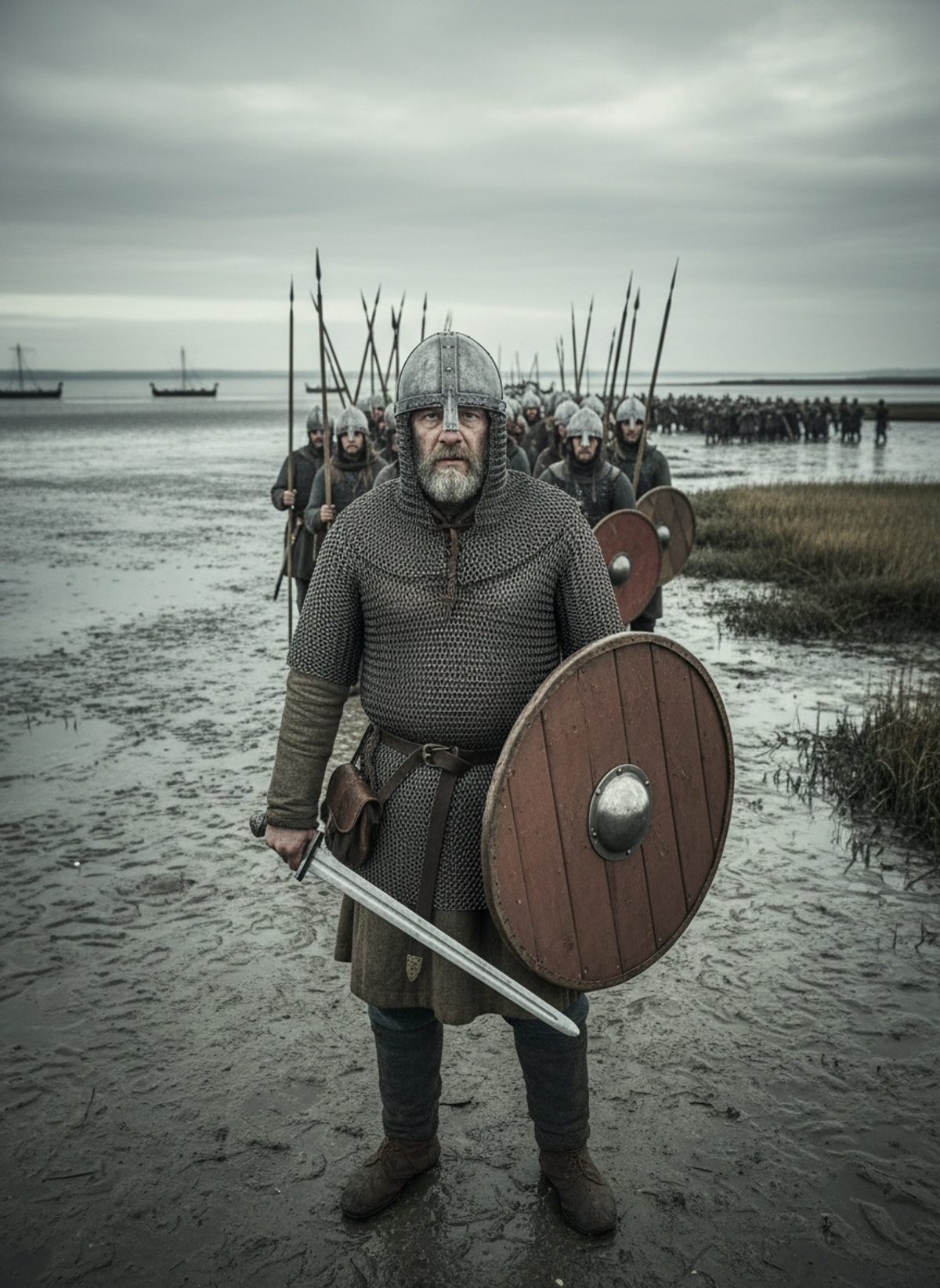
August 10, 991. The morning mist rose gently from the River Blackwater.
The Shores of Essex: A War Drum Echoes
On this fateful summer day, the Essex coast transformed into a theater of fierce determination and bravery—its unsuspecting marshes and modest villages the backdrop for an epic clash. The Viking menace had once again struck English soil, arriving with a formidable force of 3,000 warriors. Hardened by countless maritime raids, these Vikings descended upon the land with a calculated ferocity. The villagers, experiencing the dread of relentless raids, watched with fear as these invaders set their eyes upon the fertile lands of Essex.
Meanwhile, Byrhtnoth, Earl of Essex, steeled himself for what he knew was an impending battle. Word spread quickly of the threat approaching, and Byrhtnoth refused to entertain the idea of retreat. His resolve was a beacon of steadfastness—an unlikely hero determined to protect the innocent lives that clung to this patch of English earth.
Byrhtnoth’s Defiance: Harnessing the Causeway
As the Vikings bellowed demands from the other side of the River Blackwater, Byrhtnoth gathered his select band of housecarls and local levees. He met their offer of peace—a call for tribute, their else—by returning their messenger accompanied by a sword in gift. The audacity of this rejection reverberated through his ranks, catalyzing a fierce determination among them. But it was more than pride; Byrhtnoth aimed to protect and defend, knowing fully what was at stake.
Read next: The Day a Saxon Abbott Knelt and Bought a Stranger's Freedom
The River Blackwater was at low tide, revealing a narrow causeway that linked the mainland to Northey Island where the Vikings were stationed. This slim, exposed strip of land became a strategic focal point. In a move that defied common martial strategies of the day, Byrhtnoth positioned his men at the bridge and ordered them to hold firm. The narrow causeway would constrain the Viking horde, levying an advantage to his smaller force.
The Charge: Courage Found in Impossible Odds
As the tide rolled back, the Vikings prepared to storm across the causeway. Byrhtnoth, however, held the line, armed not just with weapons but with the indomitable spirit of leadership that inspired his men. It was a bitter clash, as men on both sides fell in the name of their causes—the shores of Essex drinking deeply of the mingled blood of Saxon and Viking alike.
But in the face of danger, a fateful decision was made. Byrhtnoth, in that moment of tension, decided not to wait for the full brunt of the Viking force. Stories tell of a rouse in the heart of the old earl, urging him to charge forward. He called for the causeway to be cleared, willing himself and his men into the jaws of the Viking force with a rallying cry that even today, echoes in tales of English gallantry. It was the kind of valor that languages and tongues remember, a reminder of a leader unwilling to cower beneath the fear of numbers.
The Legend of Maldon: Echoes Through Time
The Battle of Maldon turned into a melee—a moment where courage wrestled with inevitability. For Byrhtnoth, the rally forward was a moment of honor unmatched, seeking victory against all odds. Stone and soil were painted with the sacrifice of men who fought at his side, who gave their lives willingly in the name of a greater cause.
When Byrhtnoth fell to the enemy’s sword on that humble causeway, he ascended into legend. Reports tell of his final breaths spent urging his remaining men forward, into a battle they could not win, but perhaps now fully understood. Byrhtnoth and his men became woven into the very tapestry of English cultural heritage. This was not merely a battle lost but a promise of resilience that intermingled with the air and water of Essex, an integrity that would endure through the ages. The poem "The Battle of Maldon," though penned years after, immortalized their tale—it narrated more than defeat, but also the vigor of a heart unwavering in pretense of peril.
In a land later emerged from under Viking shadows, the tales of Maldon lingered as testaments to courage. Byrhtnoth’s stance is a raw exploration of spirit—the manner by which honor sometimes defines the legacy left behind, and how the echoes of history continue to resonate, urging us in the present to heed the lessons of valor past.