He was a cleric, not a warrior. Yet, on that day, his actions challenged the fabric of an Anglo-Saxon world fraught with contradictions.
A Scene of Chains and Redemption
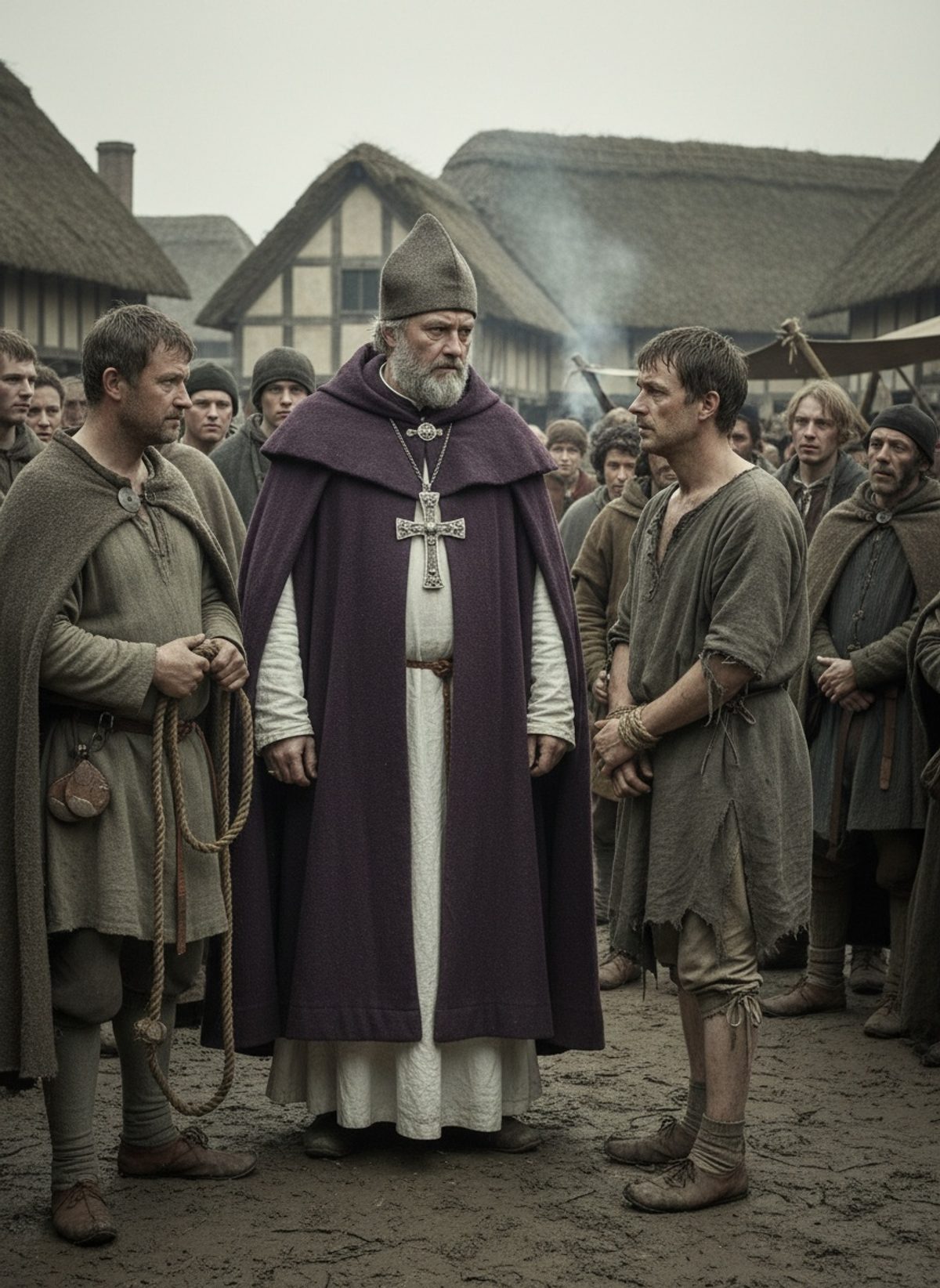
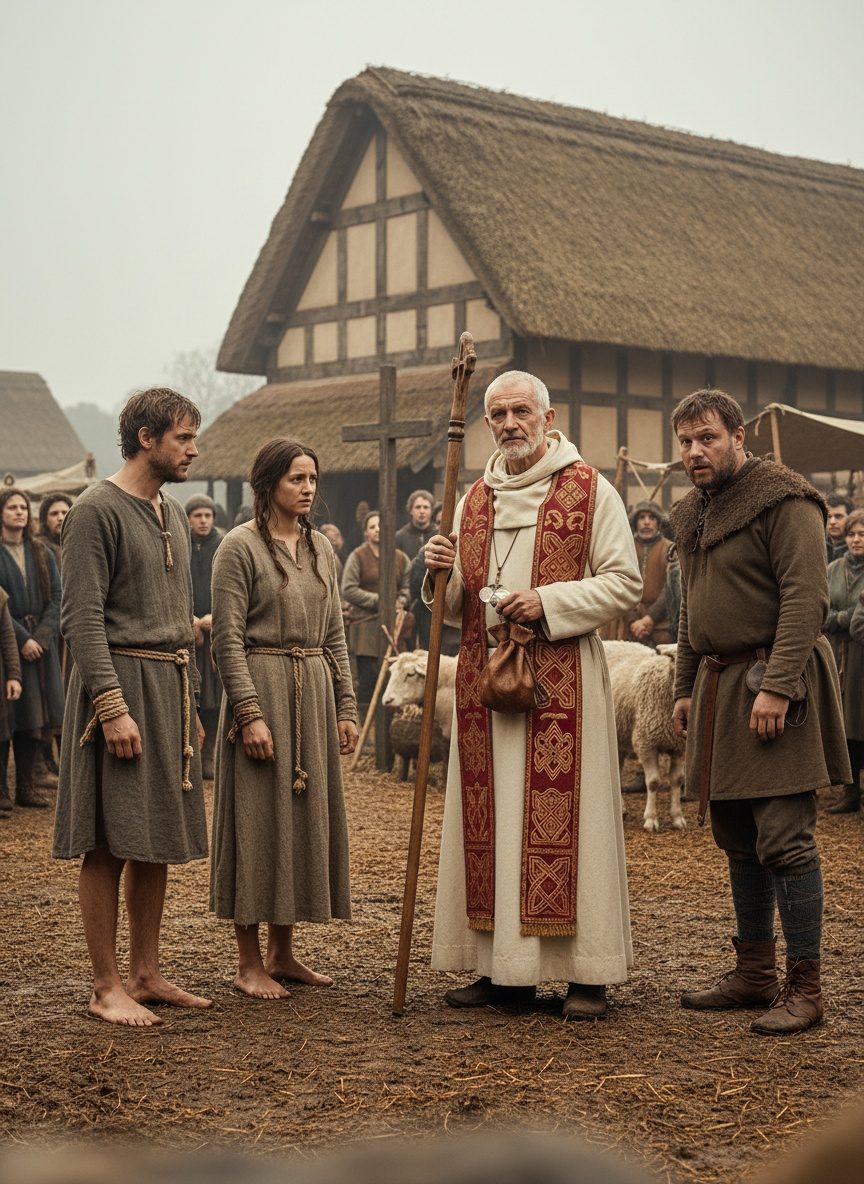
In the year 1000 AD, under the perpetual grey skies of England, one might find themselves in the bustling heart of a Saxon town. The market wasn't just a place for trading spices and wool; it also dealt in human souls. Slavery, a common practice rooted deeply in medieval society, saw men, women, and children sold like livestock, their fates sealed with the clattering of coins. This was the world in which Wulfstan, Archbishop of York, found himself.
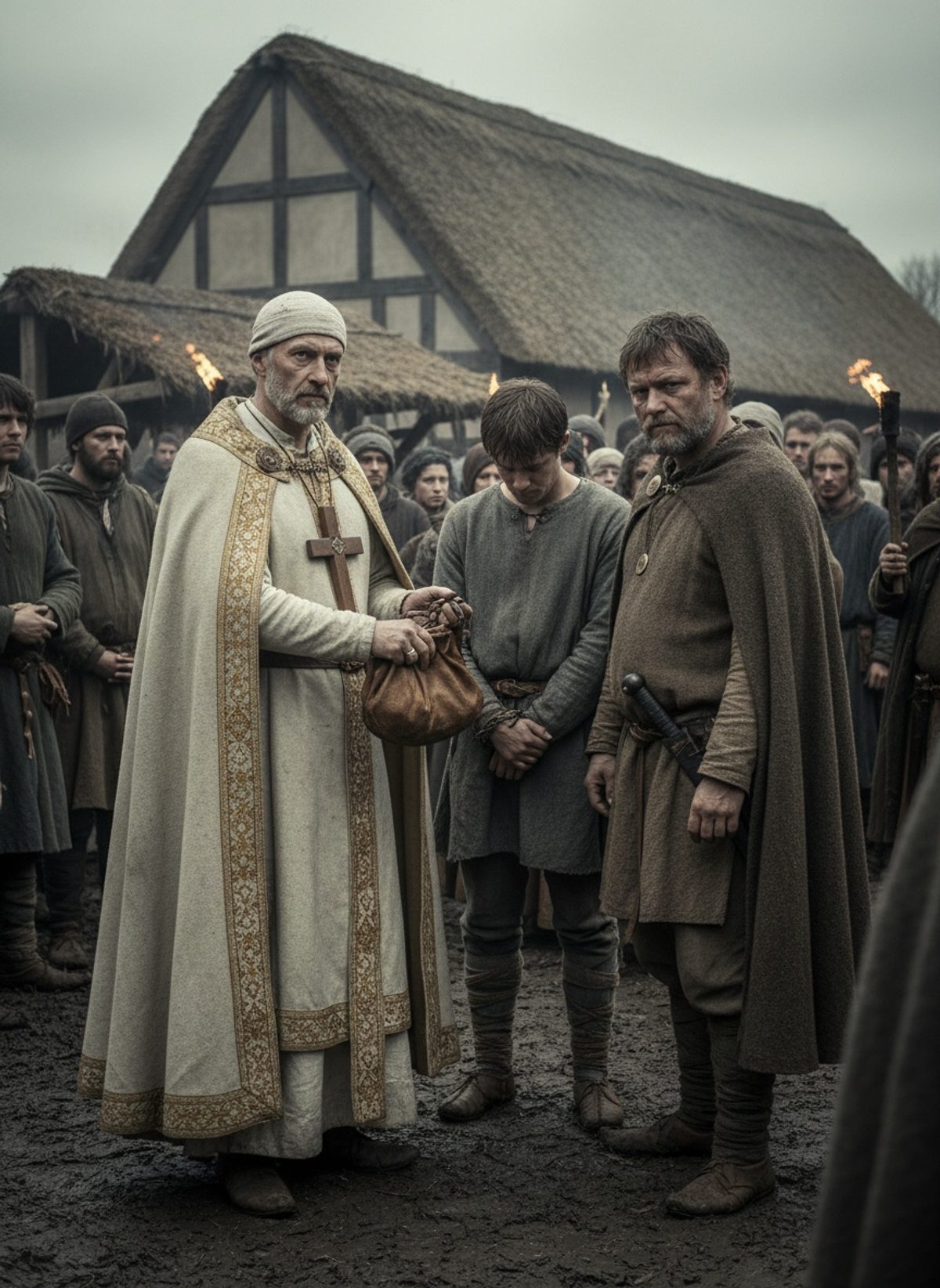
Clad in the simple but dignified robes befitting his position, Wulfstan cut an imposing figure as he maneuvered through the crowds with a sense of purpose. It was on this fateful day that he came upon a man in chains, his future hanging precariously on a balance, a price on his freedom. The air was thick with the cries of merchants and the metallic clang of shackles, a grim testimony to the inhumanity around him.
Wulfstan's gaze rested on the slave with a solemn intensity. In that moment, he extended not only his hand but his compassion. He purchased the man's freedom, a singular act that went beyond charity, challenging an entrenched societal norm that viewed humans as property. As the chains fell away, the significance of the act took hold, not just for the man who walked away free, but for history itself.
Read next: The Day a Saxon King Walked Into a Slave Market and Paid
The Preacher in the Marketplace
Wulfstan was no stranger to the inequities of his time. His sermons were rich with moral debate and ethical exhortation, echoing through the hallowed halls of churches and monasteries. Yet, those sermons took on new weight after the symbolic purchase of freedom in that market. To merely condemn slavery from the safety of a pulpit would not suffice; Wulfstan knew that words must be paired with tangible action.
Back in York, his voice carried a new resolve. "No Christian should own another," he would preach tirelessly. Gathering followers and skeptics alike, Wulfstan spoke of Christian brotherhood and divine creation, arguing that the tenets of their faith fundamentally contradicted the very concept of slavery. It was a bold stance, risking the scorn of those who saw the institution as a social and economic necessity.
Wulfstan’s eloquence and conviction stirred hearts. His words, more than just sermons, became a clarion call, with their echoes reaching even the ears of King Æthelred and his council. This would not immediately unravel the age-old practice, but it planted seeds of doubt, pushing the notion that perhaps the Saxon way of living needed reevaluation.
The Whispered Legacy of Unwritten Histories
In the annals of England's history, archbishops are often recorded for their theological achievements or political allegiances. However, Wulfstan's legacy was whispered, not written. His intervention in the slave market was an act of quiet rebellion in a turbulent era, penned not in tomes but in the lives of those he'd quietly freed.
The Anglo-Saxon Chronicle, the great recorder of this period, makes little mention of Wulfstan's deed. Its focus lay elsewhere, on kings and battles, treaties and betrayals. But in those neglected corners of history lie stories of individual courage and moral clarity—elements that gave human history its evolving texture.
Wulfstan's quiet crusade against slavery nudged England toward a greater moral consciousness, foreshadowing the changes that future generations would eventually adopt. In time, this stirring message, though initially an undercurrent, would resurface, amplified by others who shared his vision of a world without the stigma of human ownership.
A Legacy Carved in Chains Broken
Today, the smoky outlines of Anglo-Saxon England have long since faded into the past, yet Wulfstan's action in the market has not completely been lost to time. While his name may not headline the chapters of mainstream history, the impact of his defiance against the tide of slavery resonates in the principles we uphold today. His purchase of a man's freedom was far from a singularly transformative event in Anglo-Saxon England, but it was a starting point. It was a demonstration that against the clamor of societal norms, an individual's determined resistance could begin to carve a path toward a more equitable future.
In our modern retelling of history, the act of such a man serves as a quiet reminder of the value of human dignity. As much as it was a protest against an unjust system, it was a testament to the power each person holds to incite change. And in the moments we choose to act, we, too, become part of this enduring narrative—a legacy of liberation echoing across the ages, reminding us of the pathways illuminated by those who dared to lead with compassion.