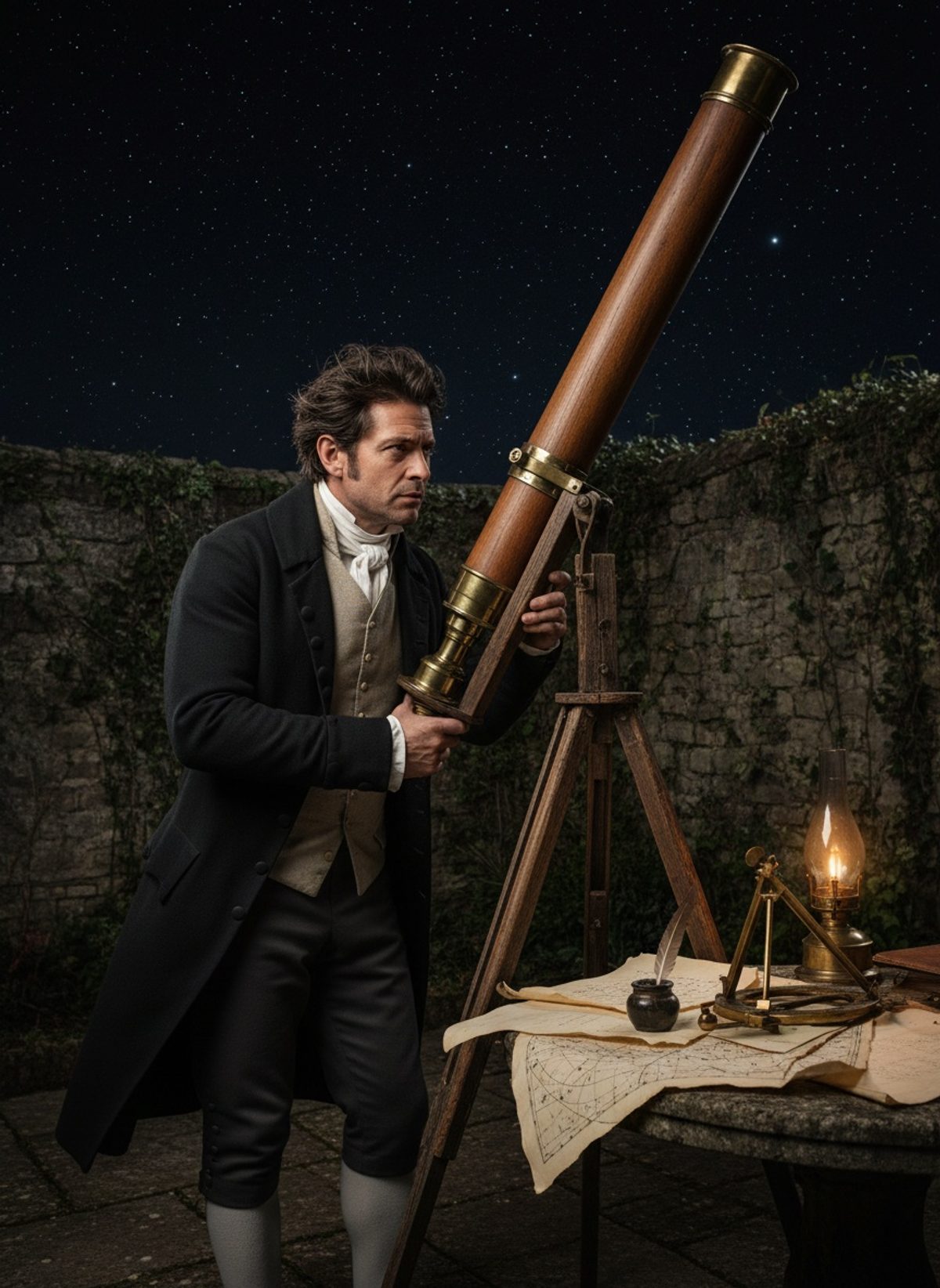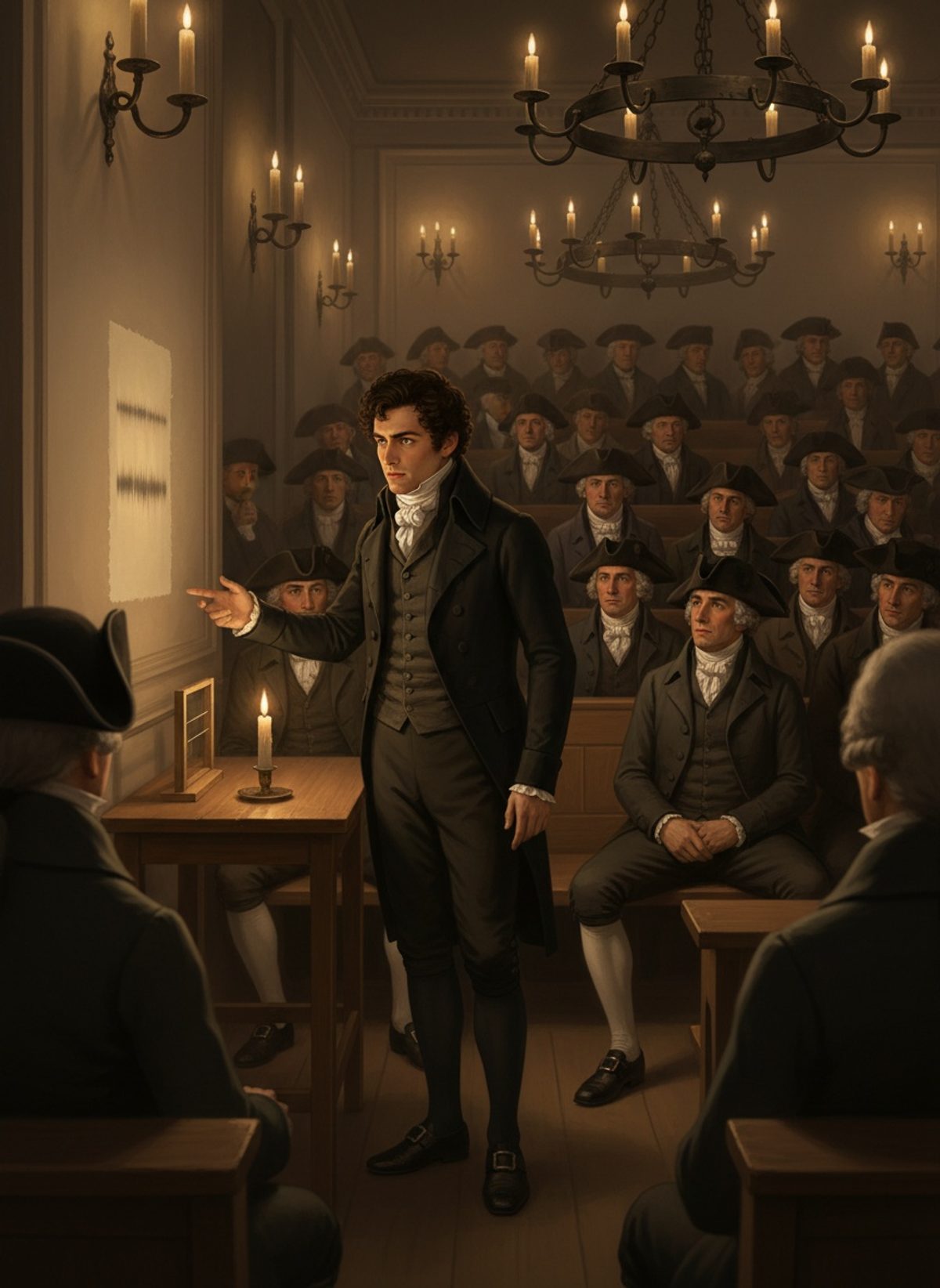
As James Hutton gazed at the curious faces watching him in the dimly lit room of the Royal Society of Edinburgh, he clenched the piece of rock in his hand, feeling its weight both literally and metaphorically. The scent of sheepskin-bound volumes mixed with the faint whiff of pipe smoke hung in the air. All eyes were on him as he cleared his throat. With each word, he shattered the boundaries of time: the Earth, he claimed, was far older than anyone had dared to imagine.
The Unassuming Origins of a Revolutionary Mind
Born to a Tanner's family in the bustling city of Edinburgh, James Hutton was destined for simple beginnings. His path could have easily led him to the dyes and hides of his father’s trade, yet an insatiable curiosity about the natural world pulled him elsewhere. The cobblestone streets and rolling countryside became his classroom as he pursued the ever-changing landscape with zeal. These youthful wanderings fed a passion for geology that eventually grew too big to contain within the city's limits.
The damp atmosphere of 18th-century Edinburgh offered little encouragement for revolutionary thought, trundling along comfortably within religious constraints on creation. But Hutton was no ordinary observer. He had the heart of a farmer and the mind of a scientist, two spirits that guided him towards exploring the deeper narratives whispered by the Earth itself.
Reading the Rocks: Hutton's Grand Tour of Time
Imagine Hutton, not in the dim austerity of a library, but out on windswept moors and aged cliffsides, the Scottish terrain his open book. He observed layer upon layer of rock, bending and folding in great sweeps and undulating strides. These stone formations captured Hutton’s attention as he discerned that what lay before him was not the mere product of some grand instantaneous creation but the result of aeons of transformation.
Read next: The Day a Blind Astronomer Measured the Distance to the Sun
To modern ears, the theories espoused by Hutton might sound modest, yet they were radical for their time. He rejected the belief popular among his contemporaries that Earth was no older than several thousand years, a number derived from the literal interpretation of the Bible. Instead, Hutton gathered evidence from the rolling sills and riverbeds, reasoning that such processes required a tapestry of time woven from millennia.
The Silent Shockwave: Hutton at the Royal Society
The Royal Society of Edinburgh was a sanctuary for intellects, a pantheon where debates sparked like flint on stone. Hutton’s ideas entered this constellation of brilliance charged with controversy. As he presented his findings, the atmosphere buzzed with silent tension, the skepticism palpable. He spoke of an Earth with no readily apparent beginning or end, a world shaped by relentless and gradual change.
His voice echoed softly in those hallowed chambers when he famously declared, “The result, therefore, of this physical enquiry is that we find no vestige of a beginning, no prospect of an end.” His pronouncement suspended in the air like the taut string of a bow, the implications embedding themselves in the minds of all present.
A Ripple through Cosmological Thought
The reverberations of Hutton's theories were seismic in scope, reshaping the intellectual landscape of both scientific and theological communities. Though not initially embraced, his work laid the cornerstone for a nascent field now known as geology. His influence exceeded that of mere academic curiosity, challenging centuries of accepted doctrine that rested on the notion of a young, divinely created Earth.
This shift was subtle and gradual, mirroring the very processes Hutton described. The silence that followed his presentation eventually gave way to a deluge of exploration and advancement. Scientists began to regard Earth not as a static sphere hanging in the cosmic void but as a dynamic and ever-evolving entity. These ideas eventually inspired the paths of future minds like Charles Lyell and Charles Darwin, triggering an unbroken chain of innovation that continues into our modern dialogue.
Why It Matters: The Vastness Beyond Our Comprehension
The story of James Hutton and his radical ideas about geological time is more than a dusty chapter in textbooks; it's a reminder of the extraordinary potential of human curiosity and the courage to challenge accepted truths. In an age where questions are only as hard as our willingness to ask them, Hutton’s vision demands we look beyond the surface to see the intricate tales time weaves beneath our feet.
In our fast-paced world, where seconds often overshadow centuries, Hutton calls us to patience — to embrace the slow, deliberate march of natural processes that shape and redefine reality. This relentless passage of time is not just a mechanism of our world but an unfathomable testament to the depth of its history. In a way, understanding the true magnitude of geological time is to momentarily touch the infinite, forever altering our place within it.