April 19, 1587. Eerie calm hung over Cadiz Harbor, a sharp contrast to the storms brewing in the hearts of men.
The Threat of the Invincible Armada
In the late sixteenth century, Spain was the master of the seas, the jewel in a Catholic crown that seemed destined to dominate Europe. King Philip II of Spain, pious and powerful, had set his sights on England, their Protestant adversary. Rumors spread like wildfire of the massive fleet being assembled: the mighty Armada. This "invincible" armada was meant to crush English resistance and restore Catholicism across the English isle.
As England faced an imminent threat, conventional wisdom suggested bolstering defenses and praying for divine intervention. But Sir Francis Drake, Elizabethan England's most daring privateer, thought differently. Known for his bold raids and circumnavigation of the globe, Drake was a man of action who believed that offense was the best form of defense. Rather than waiting for the storm to reach English shores, he decided to sail into its heart.
The looming danger was palpable. With each passing day, the might of Spain's fleet grew. If Spain succeeded, the balance of power in Europe would tilt irrevocably. Drake’s audacious plan was to delay this immense threat, and in doing so, give England a fighting chance.
Read next: When Richard Grenville Sailed Into the Storm, 1585
The Daring Raid on Cadiz
Cadiz, a bustling port in southern Spain, was the stage for Drake's daring exploit. On a fateful April afternoon, Drake and his fleet of nimble English ships approached the harbor. The wind was favorable, whispering encouragement to the crew as they prepared to carry out a mission that could alter the course of history.
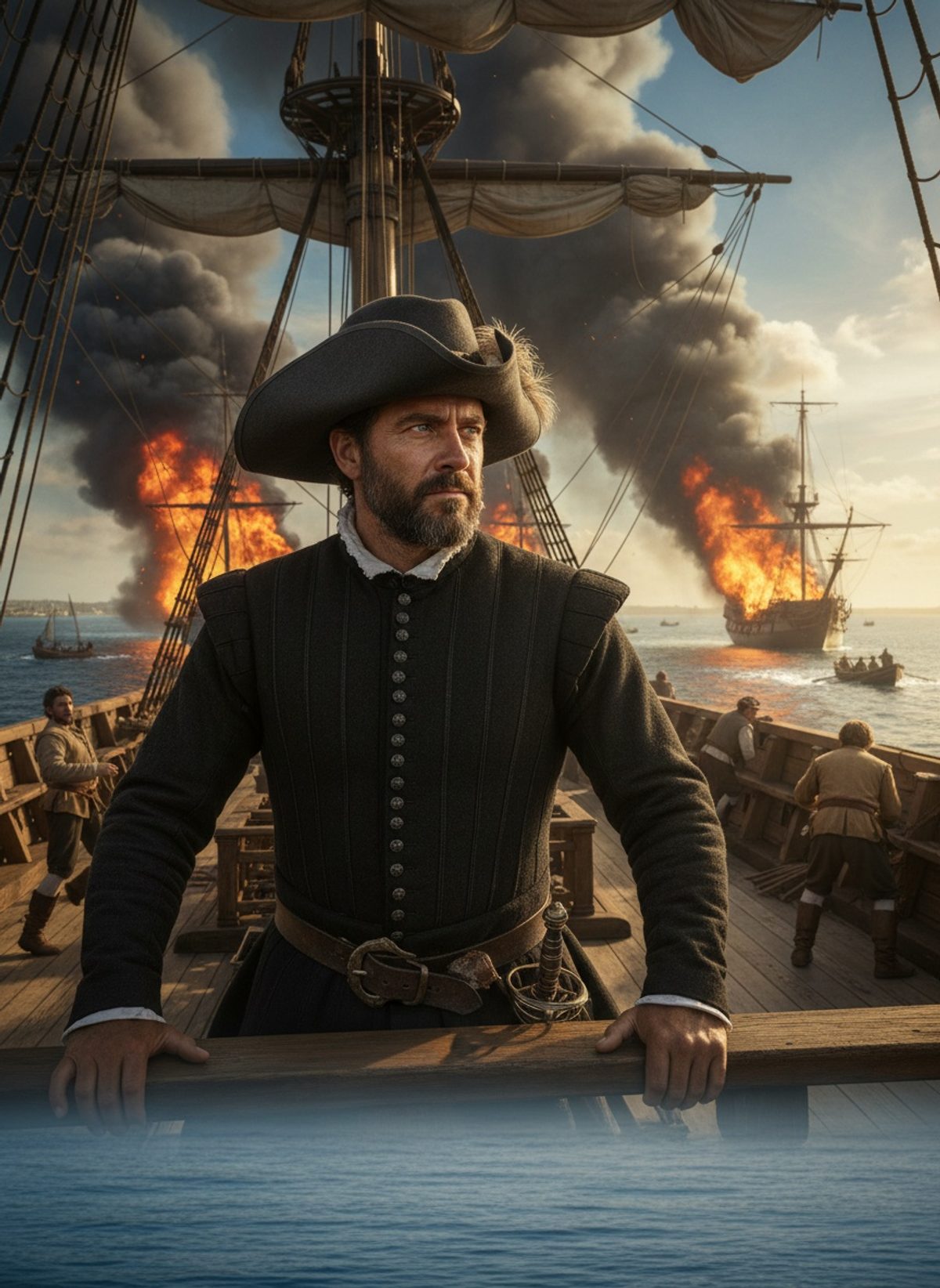
As his vessels sailed into the heart of the enemy's territory, the Spanish were caught off guard. The bustling port with its calm waters and idle cranes was soon to witness a spectacle that would be recollected for centuries. Drake unleashed his fury on the fleet, setting fire to thirty ships in a single afternoon. The flames that consumed the Spanish ships seemed to dance to the tune of chaos, making a mockery of Philip’s ambitions.
Drake facetiously referred to this action as "singeing the King’s beard." It was a playful jest to the deadly serious game of warfare, capturing his flamboyant and audacious spirit. The chaos he wrought put the Spanish preparations back by crucial months, striking a blow at their naval prowess.
The Aftermath of the Flare and Fury
As the smoke cleared from Cadiz harbor, the repercussions of Drake's bold act rippled across Europe. While the Spanish fleet was far from destroyed, the destruction of these thirty ships delayed their plans and allowed England precious time to prepare.
The psychological impact was as significant as the physical destruction. The Spanish, previously unchallenged on the waters, now faced a foe willing to strike at the heart of their might. Morale within the Spanish ranks wavered, sowing seeds of doubt that would bloom as their campaign progressed.
The delay allowed England to rally her forces and fortify her defenses. The English navy, inspired by Drake’s success, took bold steps to innovate and improve their ships, equipping them to face the might of the Armada when it finally sailed toward English waters in 1588.
This one daring raid, preemptive and disruptive, bought England a year that proved pivotal. A year to strategize, a year to prepare, a year that perhaps saved a nation.
A Turning Point in the Age of Empires
Why does this episode of maritime audacity matter? It is a story not just of ships and flames, but of strategy and spirit. Drake's raid was emblematic of a changing world where smaller, agile forces could challenge seemingly insurmountable power. His actions reminded the world that audacity and innovation could upend traditional assumptions of invincibility.
As we reflect on the sea battle before the more famous confrontation with the Spanish Armada, we see the seeds of what would become the British naval dominance. The raid into Cadiz was more than an attack on ships; it was a statement of resilience against a greater foe, a testament to the spirit of a nascent empire unwilling to surrender to the tides of stronger adversaries.
This daring act of 1587 reminds us of the power of the unexpected, the disrupting force of daring courage. Drake's sails into Cadiz did not merely singe a royal beard—they lit a fire that would eventually illuminate the vast reach of the British Empire across the globe.