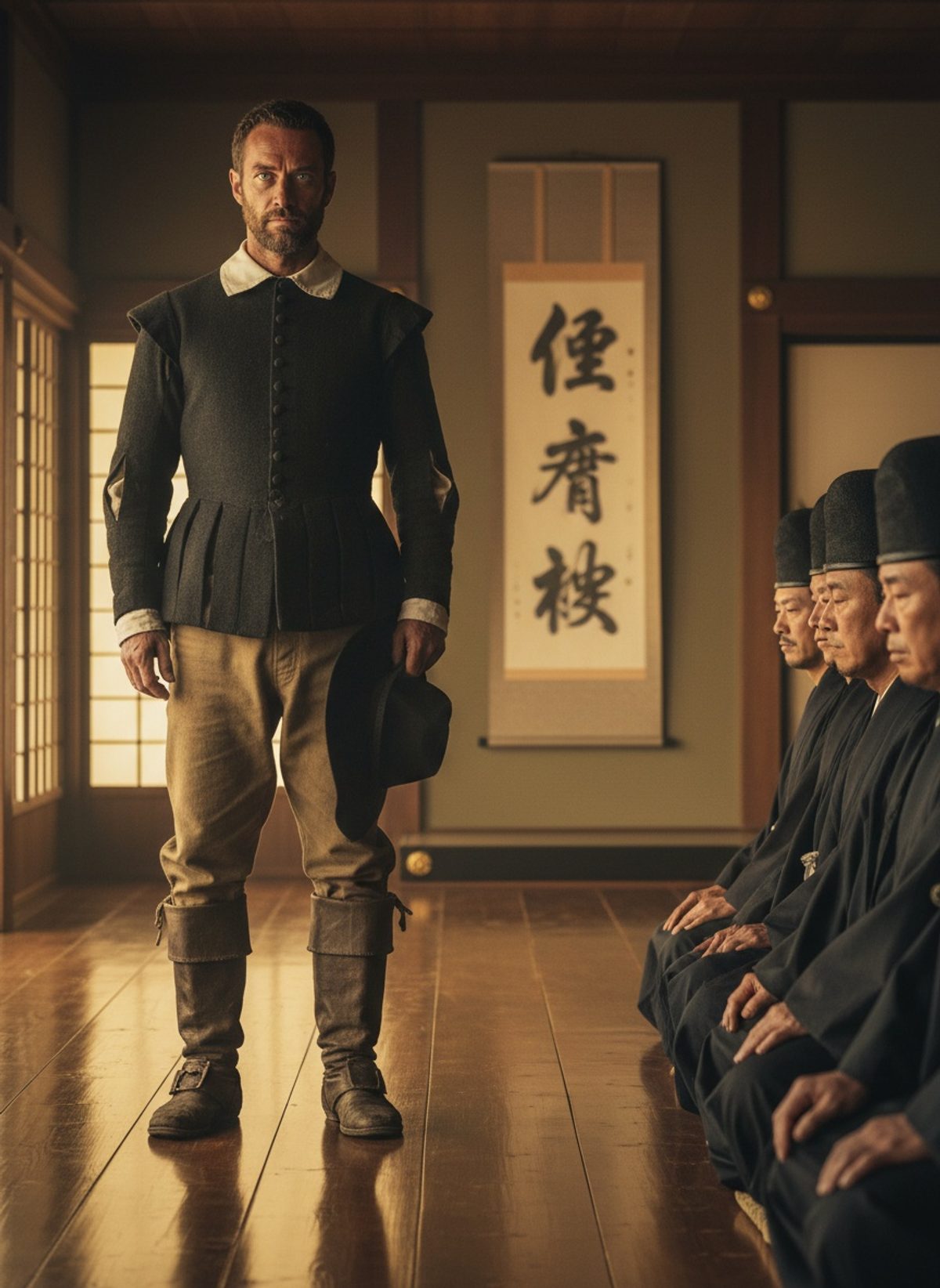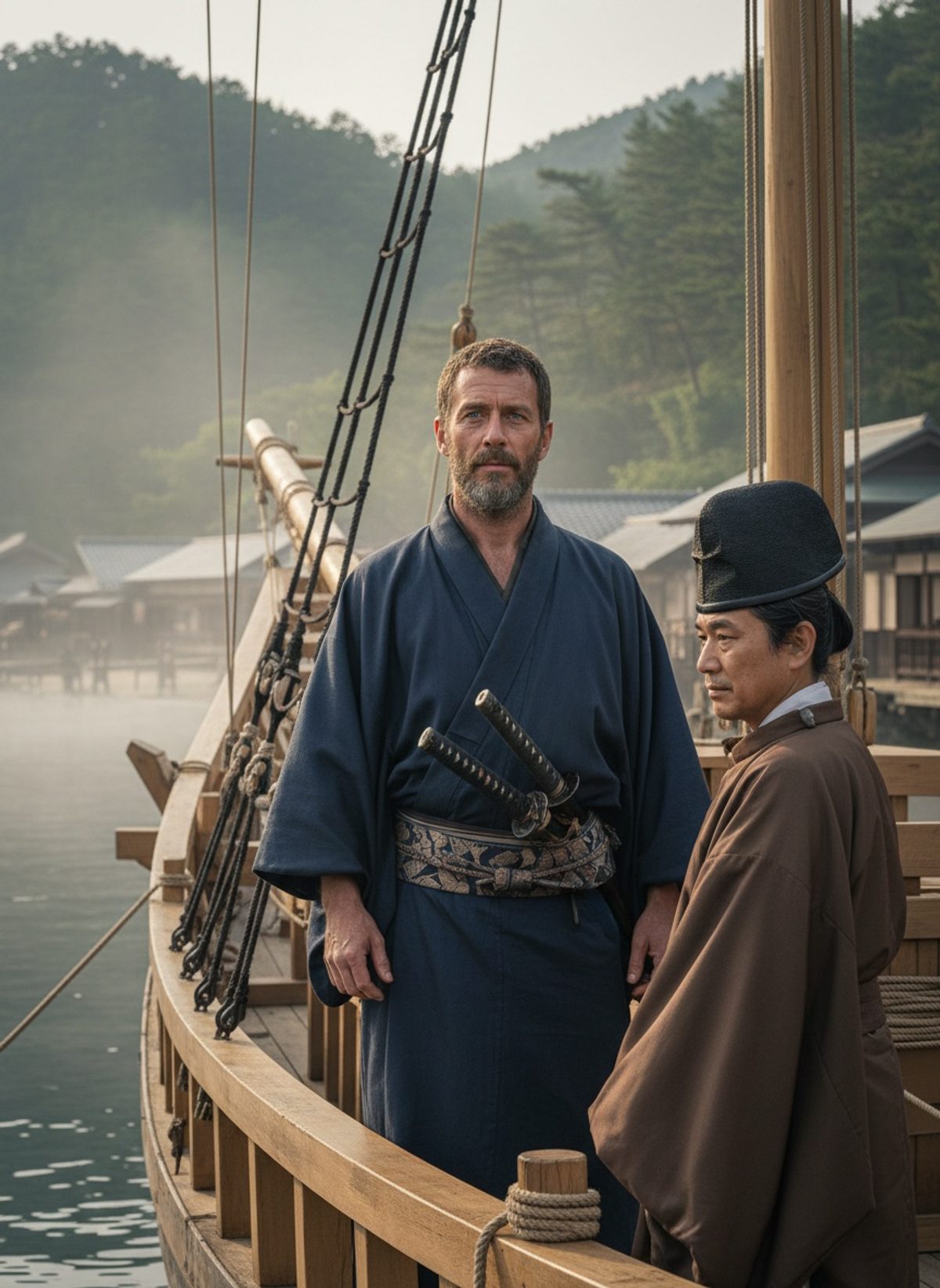
He was a samurai who never drew a blade in anger. Nonetheless, his influence stretched from the shores of England to the heart of Japan, changing the course of empires along the way.
A Stranger in a Strange Land
When William Adams set sail from Gillingham in the waning years of the Elizabethan era, his journey promised adventure but not the marvels and misadventures he would encounter. As a skilled navigator, Adams had contracted with a fleet of Dutch ships, their sails set for the East Indies—a region where spices equated to wealth and fortunes beckoned to the brave. Yet, destiny had charted a different course for him that would not end on sun-drenched Spice Islands but on the mist-laden coast of an isolated and enigmatic Japan.
Upon his unintended arrival in 1600, far from receiving accolades for navigating the treacherous Pacific, Adams and his crew were imprisoned and interrogated, their unfamiliar Western bearing mistrusted in an era cloaked in suspicion. But curiosity eventually eclipsed distrust, especially in the eyes of Tokugawa Ieyasu, Japan’s ambitious shogun who saw in Adams first the potential for innovation before the threat of conquest. Between them began a relationship built on mutual benefit, transcending the boundaries of language and culture. Adams, with his knowledge of Western science and shipbuilding, found himself in the unlikely role of advisor and confidant to the most powerful man in Japan.
Their alliance bore fruit almost immediately. Tasked by Ieyasu, Adams constructed Japan's first Western-style ships, using maritime technologies previously unseen in Asia. These vessels would not only bolster the shogun’s naval prowess but also serve as a bridge between two vastly different civilizations. It was an unprecedented feat, as Adams's hands became those of a craftsman, laboring wood into warships, while his mind wove threads of understanding across cultures still foreign to each other.
Read next: When Henry Every Sailed Into the Red Sea, 1695
The Gift of Land and Title
Tied by obligation and favor, Adams's fortunes extraordinarily reversed. Mere years after landing unceremoniously upon distant shores, he had been transformed from derelict to samurai—a knight in Japan’s feudal hierarchy. This was no mere token gesture; Ieyasu bestowed upon him the swords of a warrior, giving him the name Miura Anjin and providing lands to govern. It was a station that came with privilege, power, and respect, routes rarely traversed by outsiders.
Within the valleys and marshes of his new lands, Adams learned the rhythms and rituals that defined samurai life. Participating in the seasons of sowing and reaping, he engaged with his adoptees, absorbing not just language but their ethos—a world where duty was sublime, loyalty esteemed above all, and honor, the sun by which a samurai's life was navigated. His involvement in the day-to-day life of his assigned fiefdom only cemented Adams's integration into Japanese society.
The question of allegiance haunted Adams still. From lands across the globe, England extended its hand again, calling him to return, perhaps with wealth to rival his dreams of youth. But the man now dubbed Miura Anjin had found more than riches in Japan. He had found a life and identity that intertwined his fate with the burgeoning potential of a unified Japan under Ieyasu's vision. And so, the notion of returning to England slowly evaporated like morning mist on his patrons' sacred mountains.
A Samurai's Legacy Beyond History
Adams’s story is one etched not in steel but in the subtle ebb of influence—a narrative where adaptability overcame adversity and where a single life resonated beyond its immediate circle. In England, his disappearance was but a whisper against the continual rise of empire and exploration. Yet in Japan, Adams became an emblem of international collaboration, a forebear of the globalization that was to transform the centuries that followed.
His choice to remain in Japan reflects a profound truth not always acknowledged in the annals of history: the convergence of cultures can lead to the ignition of ingenuity. Though he walked the path of the samurai, Adams's greatest weapon was his profound ability to navigate and harmonize seemingly disparate worlds, cultivating a legacy not ruled by the sword but by the unyielding spirit of cooperation.
In refusing a king's fortune, Adams illuminated an alternative route of conquest, one driven by shared understanding and respect rather than subjugation. His story stands as a reminder of the myriad ways history can unfold—not merely through wars won or territories claimed but through the silent tides of human connection crossing oceans, real and imagined.