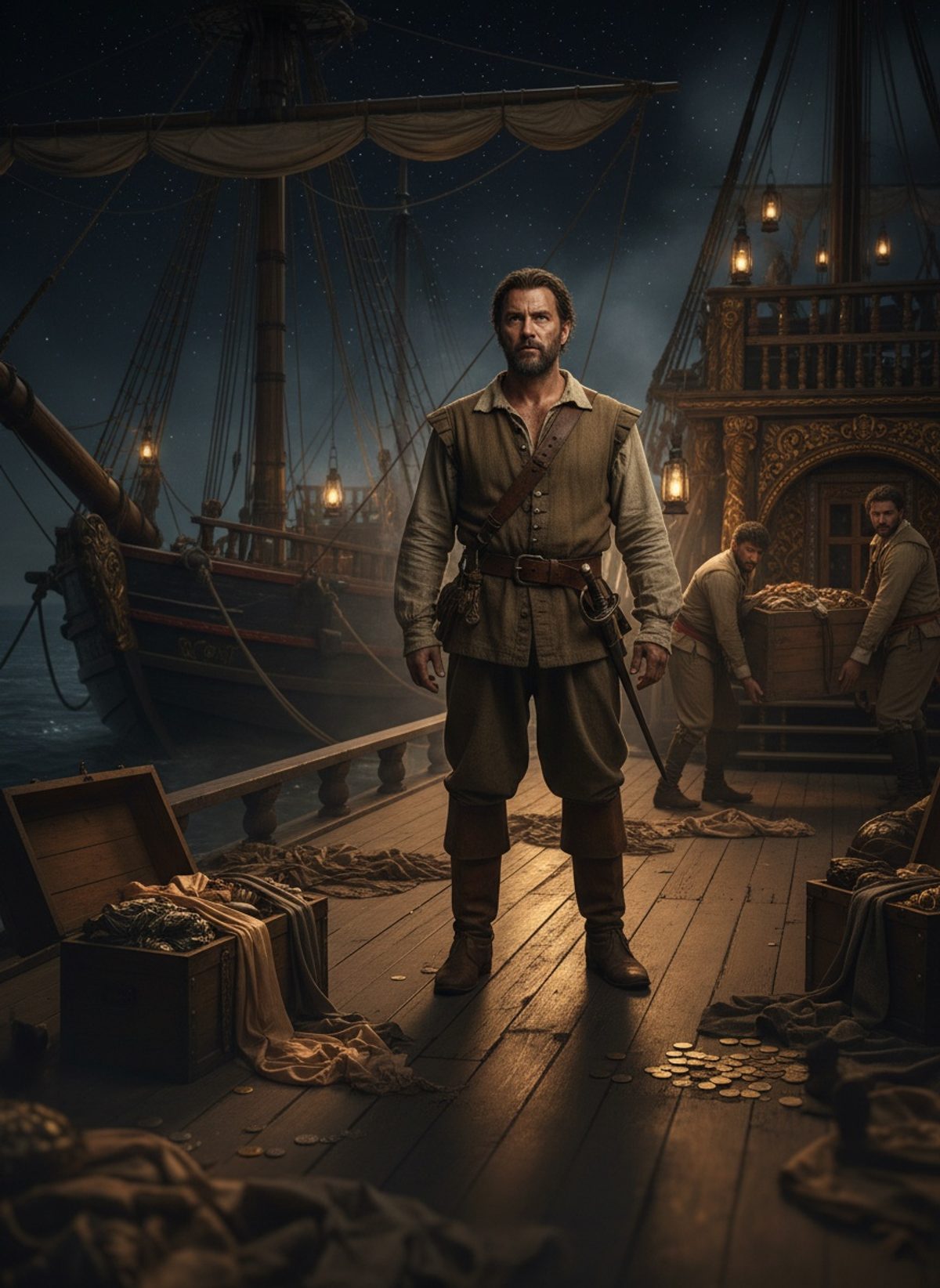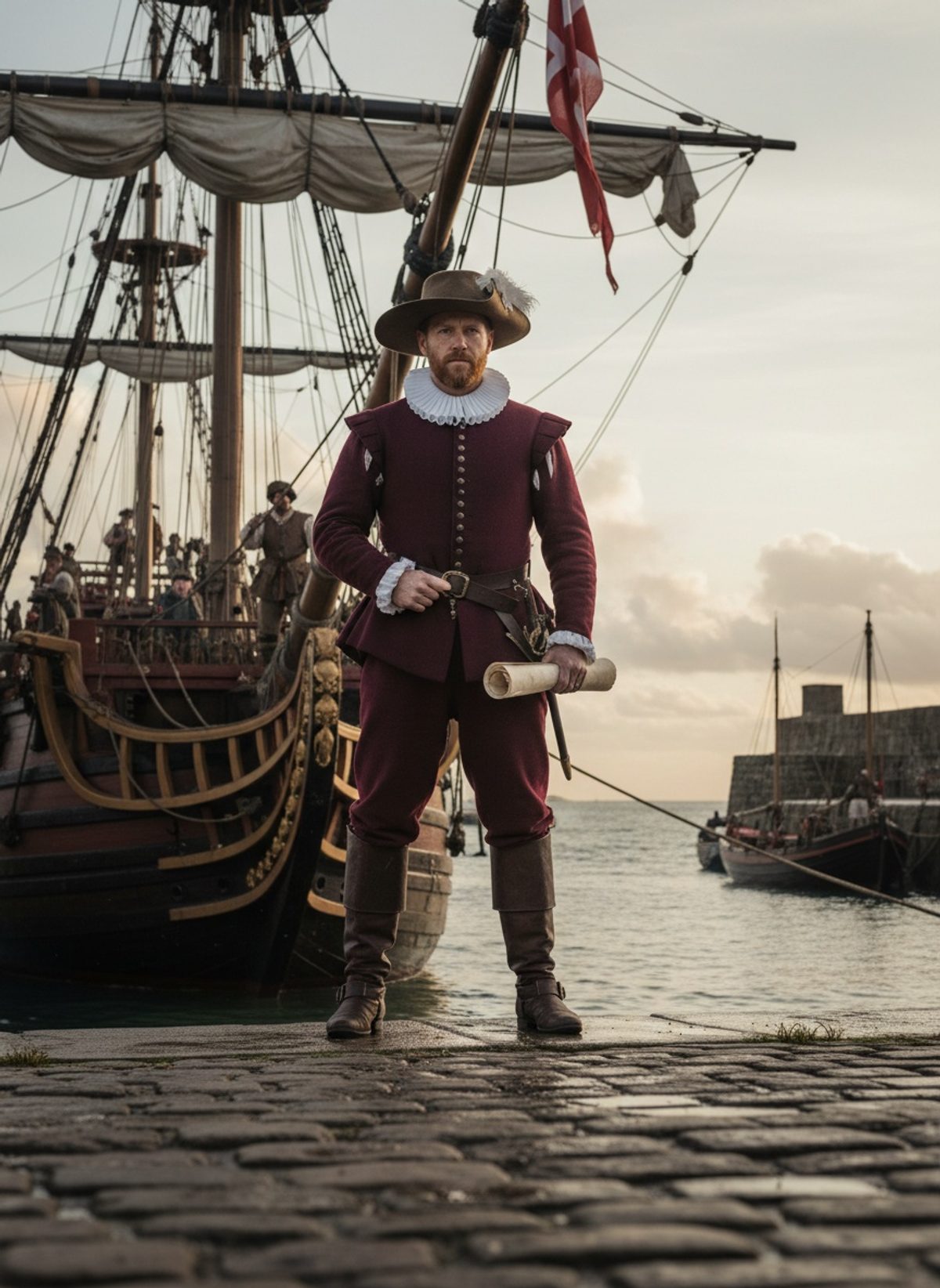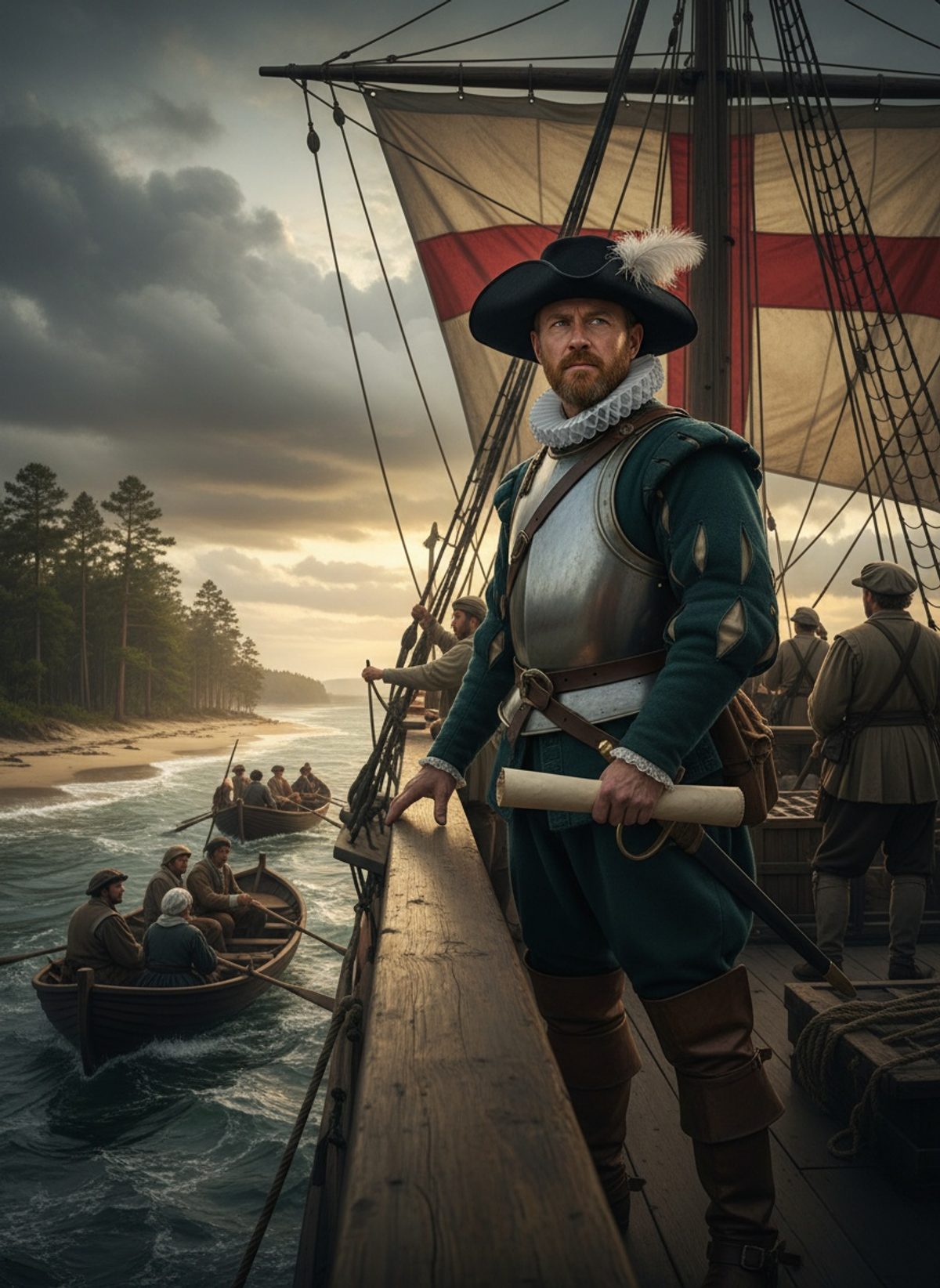
The deck pitched sideways under his feet as Sir Richard Grenville steadied himself against the relentless Atlantic, the smell of salt heavy in the wind. His eyes, stern and resolute, scanned the boiling sea around him. The storm had already thrown its fury upon the fleet, but the Tiger pushed defiantly onward. Grenville was a man undaunted by the perils before him, driven by a vision of what lay beyond the savage ocean tumult—a New World, waiting to be claimed for the English Crown.
The Unyielding Will of Sir Richard Grenville
Rugged and belligerent, Sir Richard Grenville was not a man easily dissuaded from bold ambitions. Born to a family with a legacy of service to the Crown, his life was marked by adventure and conflict. The expedition of 1585 was no different. Tasked by Sir Walter Raleigh with delivering the first English colonists to Roanoke Island, Grenville's mission was pivotal: plant a colony from which England could expand its reach into the Americas.
The fleet that set sail on this auspicious journey was comprised of seven ships, including the flagship, Tiger. From the onset, nature itself seemed to conspire against them. Storms lashed relentlessly, scattering the fleet and pushing tempers to the brink. Yet Grenville's determination was a force of nature in itself. Inspired by stories of Spanish gold and the promise of land, nothing less than the harshest elements of the sea would keep him from his task—though they nearly did.
Roanoke: The First Foothold
June 26, 1585, marked the moment when Grenville and his weary crew finally sighted the shores of Roanoke Island. After weeks of battling the wrath of the Atlantic, a solitary spit of land promised deliverance and destiny. The island, lush and inscrutable, bore the weight of many hopes, none more significant than Grenville's belief in an English future across the Atlantic.
Read next: When Henry Every Vanished and England Couldn't Find Him
With fortifications quickly constructed and relations with the indigenous populations momentarily amiable, the foundation of England's first foothold in America was laid. The colonists, a mix of artisans, soldiers, and explorers, set to their task of building and cultivating the unknown terrain. Every constructed palisade and planted crop represented a step toward a grand enterprise that was both perilous and promising.
Yet there were ominous signs. The Roanoke Island was not the Eden they had hoped for. The climate was inhospitable for some crops, and supplies were meager. Still, the colonists and their visionary leader harbored dreams of prosperity and expansion. Little did they know, this venture would stand on a fragile precipice, teetering between triumph and tragedy.
Bitter Winds and Unfulfilled Promises
The same seas that delivered these hopeful settlers also held the potential for their undoing. Grenville, understanding the precarious nature of their position, knew he had to act swiftly to ensure the colony's survival. With a resolute heart, he left Roanoke, promising to return with more men and supplies. He sailed back to England, his mind laden with thoughts of ambition—and perhaps, a hint of doubt.
A vast political and economic network in England awaited news of the American venture, and Grenville's reports would fuel further interest in the New World. However, his return was delayed by events beyond his control, including rising tensions with Spain that required his service elsewhere.
Meanwhile, the colonists left behind at Roanoke faced their own struggles. The reality of isolation and shortages contrasted sharply with their dreams of easily won abundance. A palpable tension settled on the island alongside them, whispering unspoken fears of abandonment and the encroaching shadow of the unknown.
Echoes Through Time: The Genesis of Empire
In the end, the Roanoke venture was a paradox—a remarkable stride towards imperial expansion, yet fraught with misadventure and mystery. Although the initial colonists of Roanoke would ultimately vanish into the annals of history as the Lost Colony, their undertaking marked the dawn of an era. The audacity of Grenville's expedition, landing on a foreign shore amidst the worst Atlantic tempests, showcased the tenacity and enterprising spirit that would propel Britain to empire.
The story of Sir Richard Grenville sailing bravely into the storm is more than a forgotten chapter; it is the prelude to a transformation that would reshape the world. Here, at Roanoke, beneath the tempestuous sky and against the backdrop of endless waves, England's first dreams of American colonies began to stir—dreams that would soon catch fire across a continent. The American dream might have started here, amidst the rain-lashed decks and the carving out of new beginnings, as Grenville and his companions laid the foundation stone of what was to become a sprawling empire.