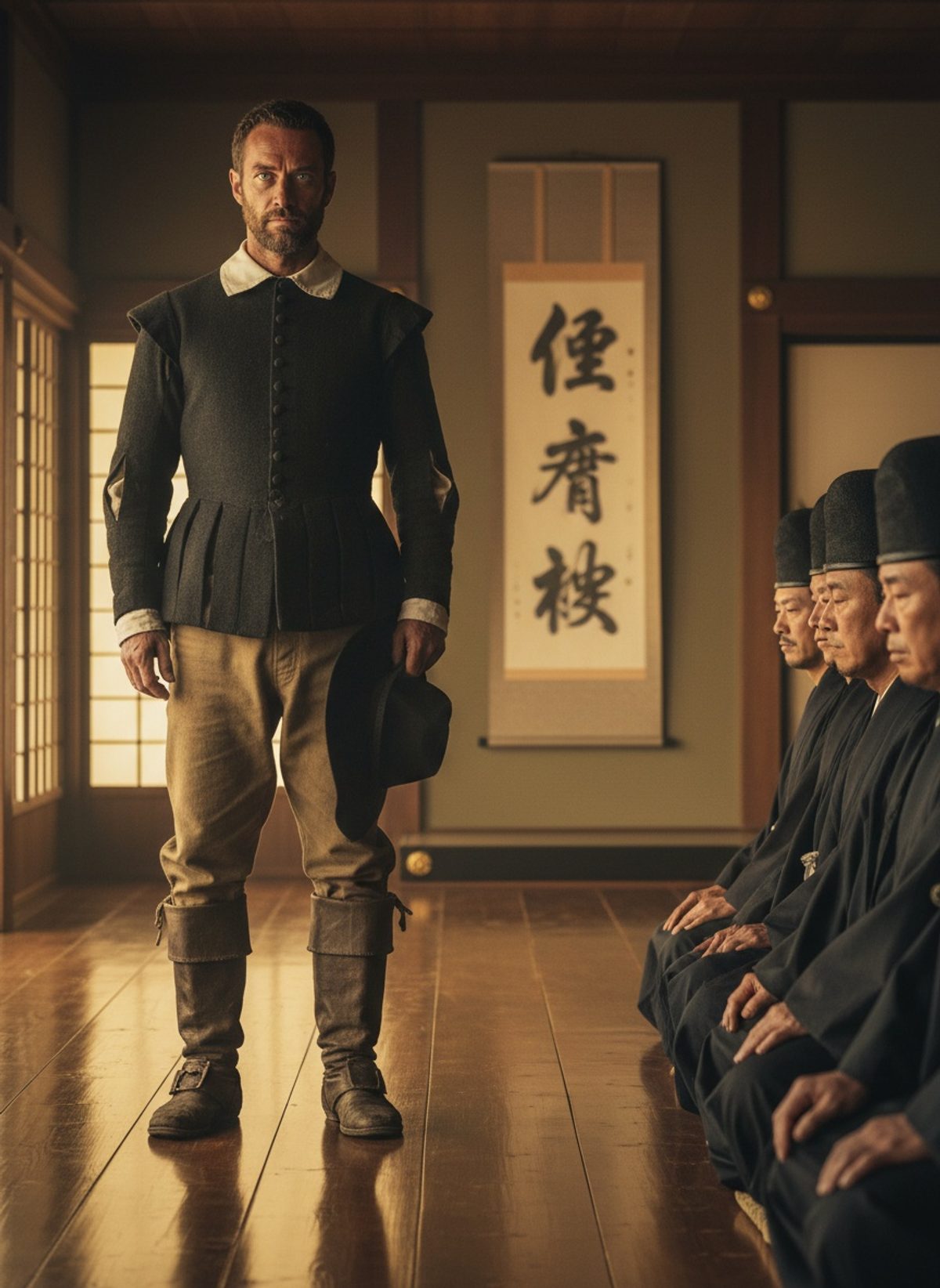
The air hung heavy with the scent of salt and the promise of rain as the ship tumbled through the choppy waters towards an unknown fate. It was April 1600, and the tempestuous sea was unforgiving, a mirror to the plight of its weary passengers. Huddled riddled with malnutrition and fatigue, the crew of the beleaguered Liefde strained their eyes against the drizzling gloom, trying to catch a glimpse of land. What lay ahead was Japan, a mysterious empire of rigid customs and iron power, ruled by the formidable Shogun Tokugawa Ieyasu. For William Adams, a sailmaker from Gillingham in Kent, this desolate arrival marked the threshold of an encounter that would alter the course of history.
Strangers in a Strange Land
The shores of Japan offered no warm welcome to strangers, especially those from distant lands. As Adams and his crew staggered onto the beach, they were met not with hospitality but with suspicion. Japan, at the turn of the seventeenth century, was a tightly controlled society, wary of the foreign, and often quick to execute the unfamiliar. The Dutch ship had been battered by storms, its crew decimated by disease, and the few survivors were in a pitiful state. By rights, their arrival might have ended in ignoble death, dismissed as another cautionary tale of maritime folly.
Yet, the Shogun Ieyasu, master of the land, saw opportunity where others saw peril. Summoning Adams before him, he demanded answers. It must have been a surreal sight: the Kentish craftsman, gaunt and battered, standing in the resplendent halls of Japanese power, a realm steeped in tradition and deadly authority. What did this bedraggled sailor have to offer? Adams spoke, not with the deference custom might require, but with the plain honesty of a man with nothing left to lose. Aware of his precarious position, he conveyed a unique knowledge — of navigation, of the sciences, and of the world beyond. In those moments, his words forged a link across vast cultural chasms.
Unlike many of his time, Adams had insight into the intricate dance of ocean currents and the stars that mapped the night sky. Remarkably, Ieyasu saw wisdom in these skills, sensing potential in knowledge that might strengthen his reign. In an unexpected stroke of fortune, the Shogun stayed his hand, opting for validation over execution. The trial of William Adams was no longer simply about potential execution; it became an unlikely trial of integration and influence.
Read next: When Henry Every Took the Mughal's Ship and England Trembled
Navigator to the Shogun
Under the tutelage of this foreigner, Japan discovered new routes of power. Ieyasu, a formidable leader of pragmatic vision, understood that global marvels were made not in solitude but through the sharing of knowledge. Adams became not merely a tolerated alien but an advisor, later known as Miura Anjin, meaning "the pilot of Miura." This transformation was both extraordinary and transformative.
Adams unveiled to the Japanese intricate aspects of Western navigation, shipbuilding, and astronomy. His insights into ship design revolutionized Japanese maritime endeavors, fostering trade routes that expanded the nation's reach. The Japanese constructed vessels capable of long ocean voyages, wielding influence beyond their immediate shores. What Adams brought extended beyond mere tools; he offered a bridge to a wider world of innovation and strategy.
Yet, his aid was not devoid of tension. For the resident Europeans, particularly the Portuguese entrenched in Nagasaki, Adams was a subversive force reshaping balances they favored. The Portuguese, with their cross-border mercantile interests, eyed him warily, concerned about the erosion of their commercial monopoly. Shrewd, Ieyasu capitalized on such rivalry, using Adams' expertise to maneuver his empire deftly amid international currents.
Contrary to other foreigners who diluted their identity to engage, Adams retained his core resilience. His embrace of Japanese culture was comprehensive but not complete assimilation. His position as Miura Anjin was one of delicate navigation, threading the line between revered honor and necessary restraint.
A Legacy Unscripted
Adams' legacy in Japan was profound, though subtle in the annals of Western textbooks. His influence during the Edo Period remained interwoven with the Tokugawa shogunate’s cautious diplomacy amidst foreign presences. The cross-cultural exchange embodied in Adams’ life offered Japan a conduit to early global networks. It enabled the Shogunate to muster resources and strategies not through conquest or brute force but via the collective mind of global insights.
This single man’s journey served as a catalyst for Japan's budding curiosity toward the world it cautiously scrutinized from afar. He showed Japan that to look inward does not preclude looking outwards, that strength can grow from understanding just as surely as from isolation. Adams might have seemed an unlikely agent of change — no prince or conqueror, but a craftsman, embracing a dormant empire at a crucial time of transition.
Why does the tale of William Adams resonate with gravity today? Because his trials highlight the enduring human capacity for connection across distances and the profound impact of an individual on the weave of history. His story compels us to ponder the unseen, personal dynamics behind large historical shifts — reminding us that the maps of empire are often redrawn in the quiet confrontations between remarkable people and their improbable opportunities.