It was said that Florence Nightingale was the uncrowned Queen of the Crimea. Yet, even she did not traverse an empire's worth of obstacles to serve on its battlefields. Mary Seacole did.
Doors Closed to a Determined Healer
In an era when the British Empire stretched its dominion across continents, it was both the best of times and the worst of times for those who dared to defy norms. London in the mid-nineteenth century was a bustling hub, not just of politics and power, but also of prejudice. As war loomed on the horizon in the distant Crimean Peninsula, the call for skilled nurses grew urgent. Yet, despite her proven expertise as a healer, Mary Seacole was met with rejection at every turn. The War Office dismissed her applications. Nursing committees, even those formed in the spirit of aiding wounded soldiers, shut the door in her face. Was it her age, her gender, or her Jamaican heritage? Most likely, all three. But rather than allowing this to daunt her spirit, Seacole conjured a bold plan: she would fund her own voyage to the heart of the conflict.
The journey from Jamaica to London was not just geological but ideological. Seacole had already won acclaim for her nursing skills during outbreaks of cholera and yellow fever in the Caribbean. Her knowledge was hands-on, informed by both traditional and indigenous medicines. Yet, standing before London’s bastions of authority, her skills were ignored. So began her self-sponsored entry into the Crimean War—a footnote in many a history book, yet a chapter of resilience and defiance against colonial attitudes.
The Journey Across the Black Sea
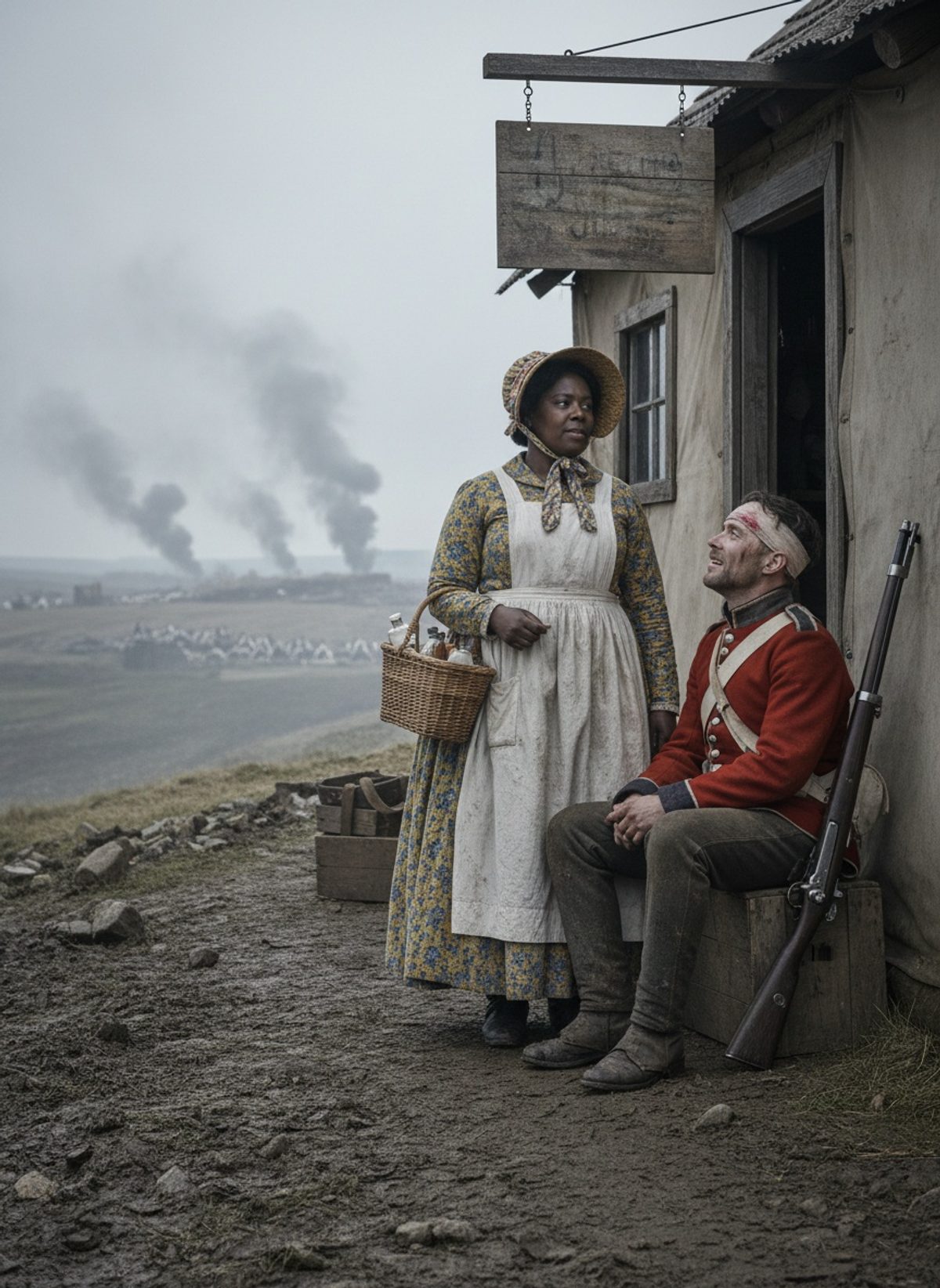
The Crimea was a far cry from London’s fog-choked streets—an inhospitable land where fierce winters gave way to summers scorched by relentless sun. Once Seacole reached the bustling port of Balaklava, she wasted no time. A woman of considerable energy and purpose, she assessed the chaotic environment, the cacophony of wounded cries, and the scarcity of medical supplies. It was war, in all its grim reality. The roadside inns, makeshift hospitals, and the tattered tents of weary soldiers screamed for her attention. But so too did the glaring inadequacy of the care available.
Read next: When British Intelligence Turned a Country House Into a Trap, 1940
Seacole worked rapidly, her hands as skilled with a saw as they were with a needle and thread. Her presence was a testament to an unyielding resolve, one that had seen her pass through storms both literal and societal. She found a strategic location on the far edge of the battlefield and there, seemingly by sheer force of will, erected the British Hotel. It was neither grand nor opulent, but alongside the rations and repair for the soldiers’ frayed spirits, it became a sanctuary. A place where the clatter of cutlery could briefly override the cacophony of war.
The Best Address in the War
“The Mrs. Seacole’s,” as some fondly referred to it, offered something that no other place in the war zone could—an intimate human touch. It was a hotel-hospital hybrid, a concept bafflingly modern for its time. Within its walls, Seacole served traditional Jamaican dishes that provided the warmth of home-cooked comfort. More than nutrition, these meals were a salve for homesick souls.
Despite never wearing the esteemed nurse’s badge under official sanction, soldiers revered her as a “doctress.” They knew her not just by the concoctions she brewed from local herbs and traditional remedies, but by her unwavering dedication. Here, a soldier knew he would find not just first aid, but a listener, an empathizer—a motherly figure devoid of rank but rich in compassion.
Even amidst the entrenched misogyny and racism of the time, tales of "Mother Seacole’s" bravery spread. She was present on the battlefield, undaunted by cannon fire, carrying her medical supplies into the heat of combat to tend the wounded. Her kindness turned the chaotic ebb and flow of war into more than just a sequence of survival. For many soldiers, it was Seacole’s formidable spirit that left as indelible a mark as any medal of valor.
A Legacy Beyond the Textbooks
The tale of Mary Seacole does not tidy easily into the narratives we often construct of the heroines of history. She navigated through corridors closed off by color and custom, determined to carve her own path where none was available. By the time the guns of the Crimean War fell silent, Seacole had created a legacy that whispered through the pages of time—a quiet, yet compelling tale of defiance.
Yet her story captures more than personal triumph. It serves as a lens into the obstinate structures of nineteenth-century society and their slow, inevitable transformation. In this tale of the Victorian Empire, wrapped in the complexities of war and service, stands a striking realization: Seacole was indeed an uncrowned queen—but of a realm built not of stone, but of heart. Her journey to the front, though omitted by some textbooks, whispers an enduring truth of courage that inspires futures. She is a reminder that history’s architecture relies not only on the bricks of those we know, but also on the mortar of those we overlook. What narratives lie ready to be unearthed, when we, as Seacole did, dare to dig beyond the surface?