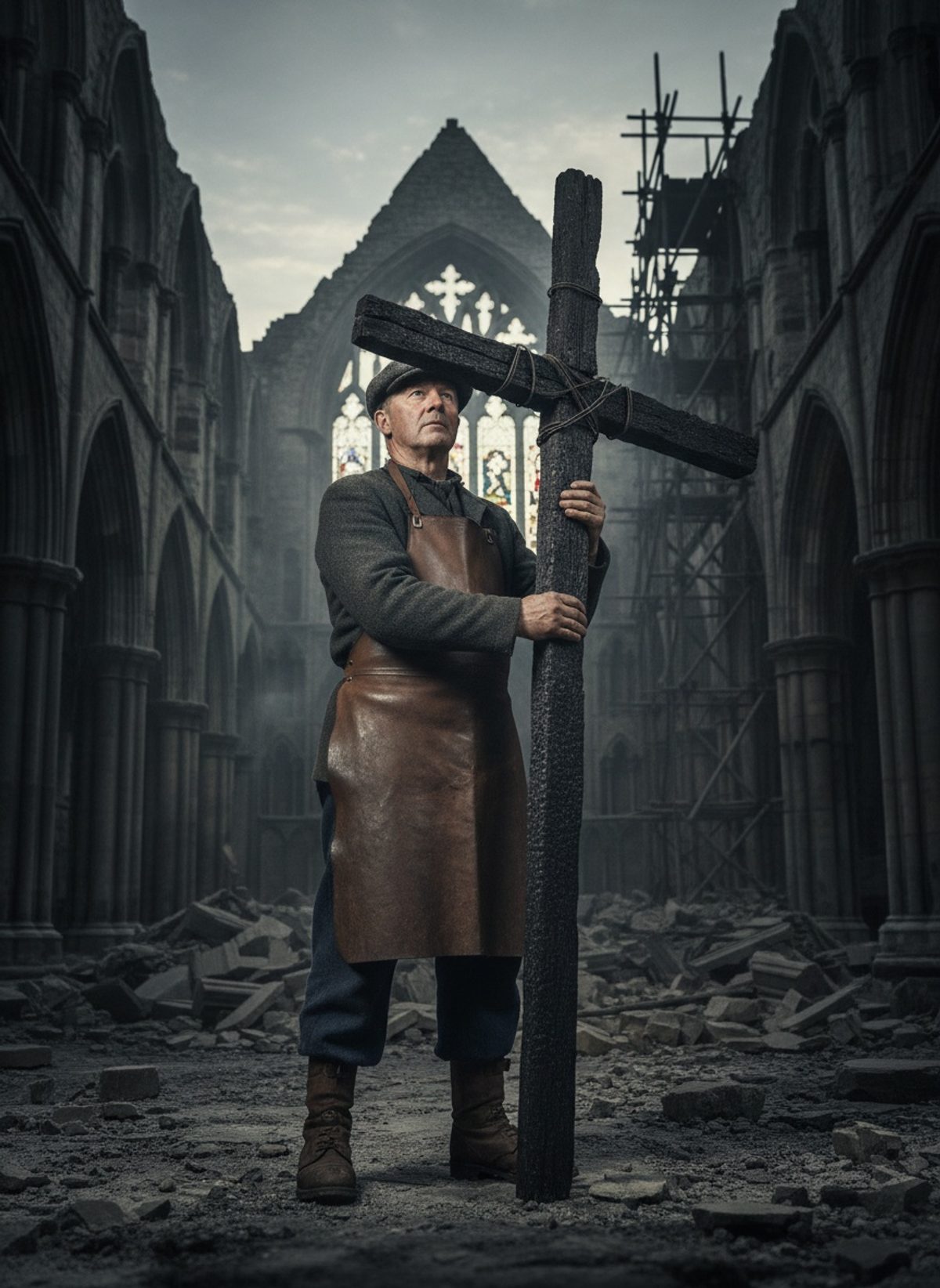
November 14, 1940. Flames danced through the night sky over Coventry, illuminating the city's cathedral as it succumbed to the devastation of war.
The Night of Destruction
The evening began as an ordinary one in Coventry, a city nestled in the heart of England with an industrious spirit and a history that stretched back to medieval times. As darkness fell on the 14th of November, its residents could hardly anticipate the inferno that was about to be unleashed upon them. Under a moonlit sky, the ominous drone of Luftwaffe bombers pierced the cold air—a sound quickly followed by the terrifying whistling and explosions of hundreds of incendiary bombs. Within minutes, Coventry was engulfed in chaos as fire and rubble lay waste to its streets and landmarks.
Amidst this catastrophe, Coventry Cathedral—a testament to centuries of faith and community—stood defiant against the assault. Known for its striking architecture and intricate stained glass windows, the cathedral was a beacon of the city's identity. Yet, on this night, it faced an annihilation that was less about physical destruction and more about the spirit under siege. Bombs rained down mercilessly, and the warmth of its wooden beams fed the growing inferno. By midnight, what had been a sacred space for worship was reduced to a hollow shell, open to the night sky and littered with the glowing embers that once comprised its walls and roof.
The Luftwaffe's raid was meticulously planned, designed not just to cripple the manufacturing hub of Coventry but also to break the British morale. This night of horror would become known as one of the most intensive bombing raids of World War II, with the city housing a strategic target—an example not only of wartime violence but the stark severity of human conflict. Yet, even in disaster's wake, a story unfolded that defied the very intentions of its attackers.
Read next: When One Shot at Sarajevo Killed Twenty Million Men, 1914
At the Heart of the Ruins
Dawn broke over a city transformed into an apocalyptic landscape, its once vibrant streets now ghostly and silent. The morning after the raid, an unlikely hero emerged amidst the ashes—a stonemason whose name would not be etched in history, yet whose actions would sculpt a legacy of its own. As the first light touched the blackened remains of the cathedral, this craftsman began a simple yet profound act of creation.
Sifting through the smoldering debris, he retrieved two charred beams—skeletal remains of the intricate wooden roof that had once soared above the cathedral's nave. With rough hands yet precise intent, he bound these beams together into a cross, an emblem wrought from destruction itself. This humble symbol of wood and ash became the embodiment of a city's steadfast faith in the midst of despair, representing a defiance that was as spiritual as it was human.
Though surrounded by devastation, this cross stood as a poignant symbol not of survival, but of rebirth. It captured something elemental and raw, a message of hope and forgiveness in the face of unspeakable loss. In that singular moment, the stonemason's gesture transcended the ruins—resonating with a world gripped by war, reaching into places that bombs could never touch.
A Cross That Bridged Divides
The cross soon captured the imagination of people far beyond Coventry. As stories of the bombing spread across wartime channels and echoed through radio broadcasts, the narrative of the cathedral's cross emerged as a beacon of reconciliation rather than revenge. An inscription often associated with the cross read "Father Forgive"—a plea not just for mercy but a commitment to a profound act of collective humanity.
This emblem, born out of tragedy, traveled well beyond its origins, fostering unity among disparate peoples. It transcended the usual wartime rhetoric of victory and defeat, offering instead a radical notion: forgiveness as a powerful force amidst a world enmeshed in conflict. This vision inspired many to see the war not just as a contest of arms but as a collective struggle of the human spirit.
The cross became a global symbol of peace and reconciliation, representing Coventry's message to the world—a message that reaches across time. It resonated with individuals and communities far removed from the destruction of the cathedral, speaking to universal themes of renewal and the strength that can emerge from victimhood. By transforming the narrative of ruin into one of hope, the cross continues to serve as an enduring call to break cycles of revenge and embrace the healing power of forgiveness.
The Endless Message of Hope
As Coventry began rebuilding, the symbolism of the cross endured. A new cathedral arose beside the ruins, not to erase the past, but to stand in concert with it—complementing memory with resilient faith. The skeletal remains of the original structure were not erased; instead, they were made everlasting, a poignant reminder of what had been lost and what was still possible. This conscious decision to repair but not replace the old cathedral was itself a testament to the ideals embodied by the stonemason’s cross.
Today, visitors to Coventry can still walk between the ancient stones of the old cathedral, standing harmoniously alongside its modern counterpart. The original charred crosses still hold a place of reverence, echoing their message to those who pause before them. Each visitor steps into not just a place of worship but an interactive history lesson on the power of renewal amidst despair.
The story of Coventry Cathedral and the improvised cross that rose from its ashes serves as an invitation—to reflect on the human capacity for forgiveness and the extraordinary power of renewal. At its heart lies a timeless truth: even in the depths of destruction, the seeds of hope can be sown, offering a vision where the scars of the past do not define the future, but rather empower it with lessons of endurance and human grace.