May 14, 1942. The soft whisper of the Atlantic turned menacing as four lifeless figures drifted ashore.
The Perilous Waters of Torpedo Junction
In the spring of 1942, the shadows of war had grown long over the waters off North Carolina. Here lay the infamous Torpedo Junction, where German U-boats prowled with lethal intent. Among the vessels combating this ominous threat was the HMS Bedfordshire, a humble converted British trawler tasked with hunting the very submarines that made these waters so treacherous. The Bedfordshire, like many others, had been plucked from its peaceful role and thrust into the chaos of war—a valiant adversary in a deadly game.
The Bedfordshire carried a crew of 37 brave souls, each acutely aware of the lurking danger beneath. As they patrolled these waters, the men adapted to the ceaseless tension of combat, learning to navigate the treacherous interplay of waves and warfare. Visualize, if you will, the deck of the Bedfordshire bathed in the light of the setting sun—a misleadingly tranquil scene, given the horrors that hid beneath the surface. Each voyage was a calculated risk, as silent and unseen observers like U-558 lay in wait—tireless, watchful, and lethal.
Fate took a cruel turn for the Bedfordshire. U-558, having spotted its prey, launched a torpedo that struck the ship with devastating effect. In an instant, the Bedfordshire transformed into a grave, swallowed whole by the dark depths of the Atlantic. On that day, the waters claimed 37 lives, leaving little but ripples in their wake. Yet, the story of HMS Bedfordshire was far from over. The ocean, in an act of quiet defiance, chose to share fragments of the tragedy with the world ashore.
Read next: When John Chard Held a River Crossing With Fifty Men
Ocracoke's Solemn Embrace
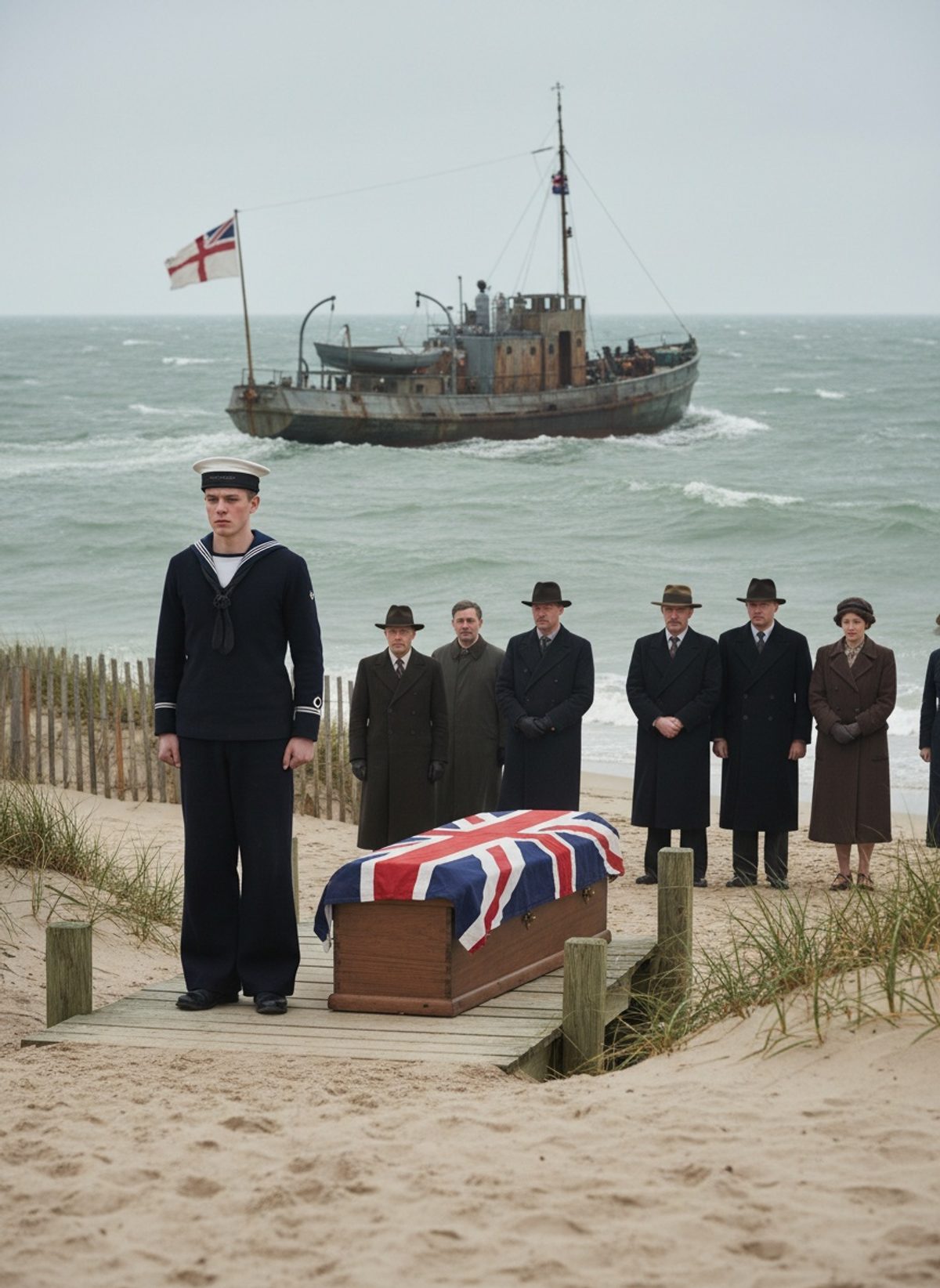
Days later, in a haunting return from the abyss, the bodies of four men from the Bedfordshire washed ashore at Ocracoke Island. The islanders, accustomed to the rhythm of the ocean yet shaken by this somber discovery, approached the scene with solemn dignity. No longer did they see mere casualties of war, but men—brothers, sons, and friends—claimed by the currents and delivered to their care.
Ocracoke was a small, close-knit community characterized by resilience and camaraderie. Its people were bound not only to each other but to the land and sea that sustained them. As the bodies of the sailors lay before them, the islanders resolved to honor these men with the respect and remembrance they deserved. In an act that transcended wartime enmity, the community came together to provide a proper burial, guided by the timeless understanding that humanity binds us all.
The ceremony, attended by locals and military officials alike, marked a poignant moment of unity amidst division. Wrapped in the Union Jack and adorned with the solemnity of their ultimate sacrifice, the sailors were laid to rest in a corner of Ocracoke's cemetery. It was an unassuming but hallowed ground, shaded by live oaks and caressed by the ocean breeze—a fitting sanctuary for those who had braved its depths. The markers bore no names, only numbers—a quiet nod to the anonymity of war's victims.
The Lasting Resonance of Sacrifice
Time never fully erases the echoes of such events, and the story of the Bedfordshire and her crew continued to resonate within Ocracoke long after 1942. The grave sites of the four sailors became a place of pilgrimage for residents and visitors alike—a testament to sacrifice and a solemn reminder of the ocean's duality as both giver and taker of life.
The story of the Bedfordshire speaks to the broader narrative of unheralded heroism and the myriad untold tales of war. In the turbulent depths of history, such stories surface to remind us of the human cost behind the statistics, the names absent from textbooks yet woven into the fabric of shared memory. The islanders’ genuine gesture exemplifies the enduring human spirit that bridges two worlds separated by water and war.
Today, Ocracoke stands not just as a memory of past conflict but as a unique emblem of compassion and unity amidst the devastation of war. Those four sailors, unknown to most, find themselves deeply remembered by a community that adopted them as their own. The quiet cemetery on Ocracoke Island holds a timeless lesson: that beyond politics and borders, shared humanity binds us even amid the darkest chapters of history.