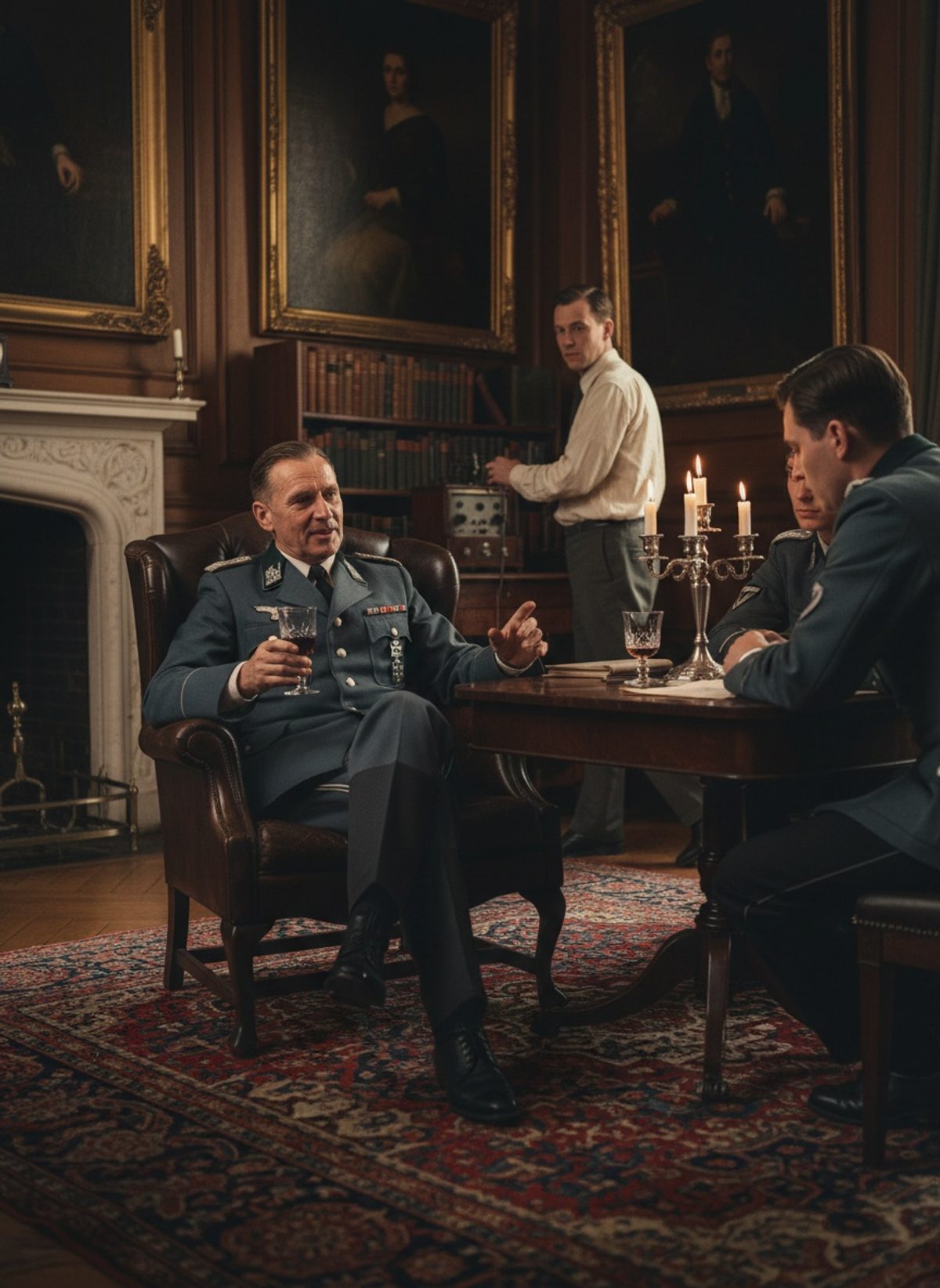
The fire crackled low in the grand fireplace of Trent Park, casting flickering shadows across the richly decorated drawing room. The sweet scent of aged Cognac mingled with the musky aroma of leather-bound books lining the shelves, as the clock ticked steadily in the background. Major General Gerhard Bassenge, once a fearsome commander in the Luftwaffe, settled deeper into the plush armchair, his mind mellowed by the evening’s rich repast. He was speaking animatedly, though he didn’t appear to notice the way the so-called servant hovered just within earshot—or the faint hum of the hidden wires that relentlessly captured every treacherous word. Trent Park was no ordinary country house; it was a covert trap meticulously laid by British Intelligence, and they were only just beginning to reap the unwitting secrets of their distinguished captives.
The Lure of Comfort: A Decoy Par Excellence
Amidst the turbulence of 1940, as the world reeled under the relentless advance of Hitler’s forces, British Intelligence enacted one of the most intricate and ingenious operations of World War II. MI19, a department of the War Office, requisitioned Trent Park, a stately Georgian mansion located in North London. With its aristocratic flair and serene gardens, it was the perfect setting for a deception so elaborate that even the cunning minds of captured German officers would overlook entirely.
The operation, known top-secret as the Combined Services Detailed Interrogation Centre (CSDIC), was deceptively simple yet psychologically profound. Rather than harsh interrogations, the British crafted an environment of illusionary freedom and comfort. Within the opulent confines of Trent Park's drawing rooms and dining halls, senior Luftwaffe pilots and high-ranking generals were treated as honored guests. They enjoyed gastronomic extravagance and casual luxury, all the while believing themselves beyond the clutches of war’s harsh realities.
The staff at Trent Park were no mere domestic servants but fluent German speakers, trained to adopt their roles convincingly. As officers reclined in the assurance of privacy and respect, every room resounded not with polite conversation, but with the unguarded confessions of men who had let slip their masks of defiance. Each word spoken, from tactical discussions to personal reflections, was fastidiously recorded, stored, and analyzed—a treasure trove of intelligence gleaned with not a single interrogative demand.
Read next: When John Simpson's Donkey Carried the Dying at Gallipoli, 1915
Where Eavesdropping Became an Art Form
The technology embedded within the walls of Trent Park represented the cutting edge of wartime espionage. Meticulously installed microphones lurked beneath tables and behind paintings, their presence a secret weapon in Britain's arsenal. This high-stakes game of subterfuge allowed MI19 operatives to decipher the true state of German military operations, often revealing pivotal insights that shifted the course of the war.
Captured conversations unveiled much about Germany's strategic movements and internal conflicts. For example, officers unwittingly divulged details of troop deployments and the flaws within the Luftwaffe’s operational strategies. Every slip of the tongue was a valuable thread, pulled from the tapestry of Germany’s war rhetoric, offering British military planners priceless navigational tools in the murky waters of conflict.
Moreover, these recordings divulged more than military minutiae; they opened windows into the psyche of the German military elite. The arrogance, desperation, and occasional dissent revealed intra-military discord that hinted at weaknesses within the Nazi ranks. Such knowledge of psychological conditions within enemy leadership provided the Allies with a powerful edge, one that couldn’t be replicated on the battlefield.
The Unseen War Room
The success of the Trent Park operation lay not in sheer technological marvel but in its understanding of human nature. By creating an atmosphere seemingly devoid of malice or interrogation, MI19 provided their captives with a deceptive sense of security. This covert approach relied heavily on the assumption that the German officers, accustomed to strict military decorum, would forsake caution within the plush security of what felt edges of hostile territory.
These efforts did not go unnoticed within British Intelligence. Reports from this clandestine eavesdropping were disseminated among the highest echelons, directly informing strategic decisions. The information extracted from these elaborate sessions of artful listening contributed to the shaping of pivotal military campaigns, such as those in North Africa, and offered insights into new German technologies that might have otherwise caught Allied forces unprepared.
It's said that the greatest battles are often won in the mind. The operation at Trent Park serves as a poignant reminder of the intricate machinery that fuels war beyond the battlefield. This tale of artifice and intelligence reveals the nuanced battles fought by unsung heroes operating in the shadows. Amidst the clamor of conflict, Trent Park’s quiet victories remind us that knowledge—and the cunning to extract it—can turn the tides of history.