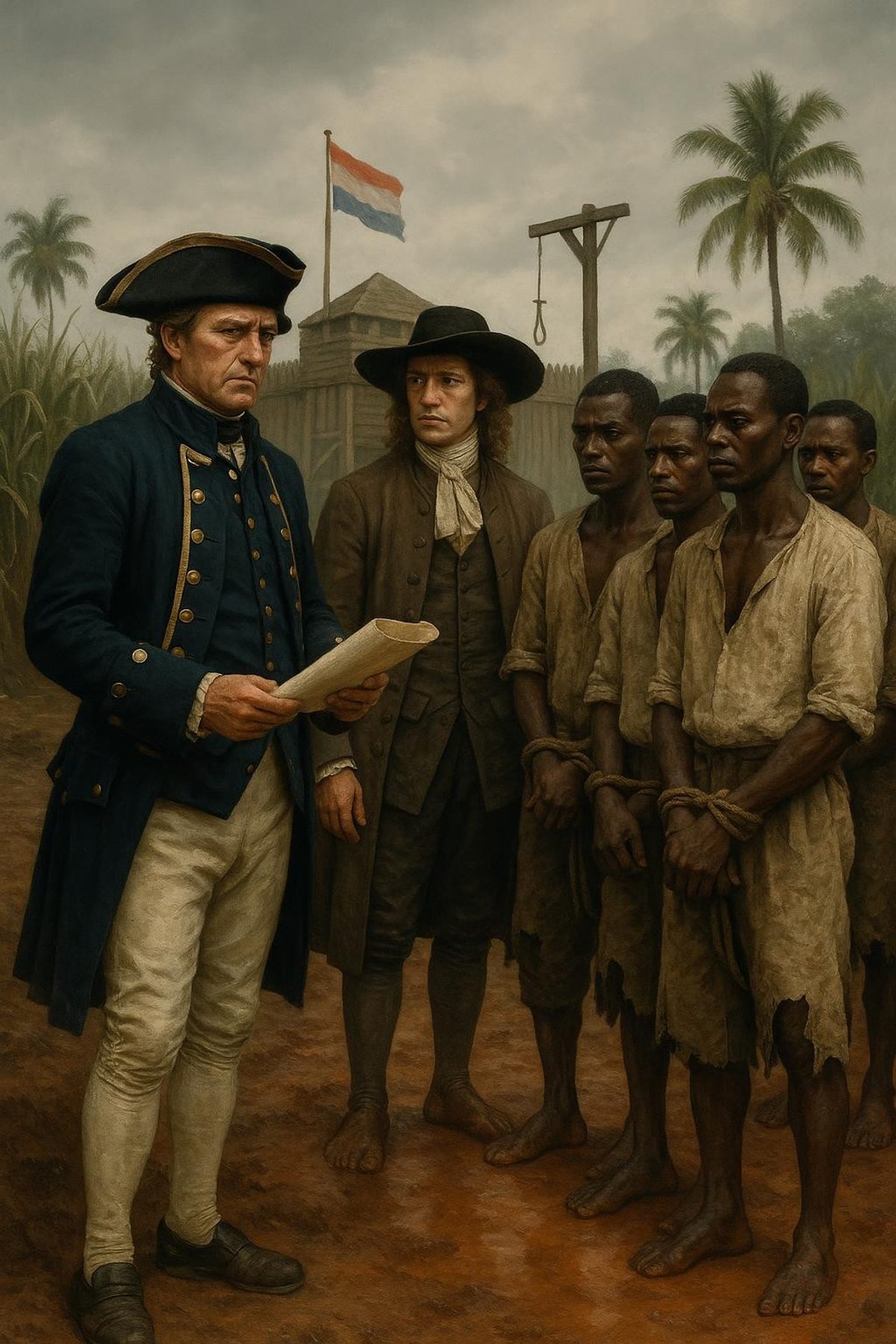
The air over Berbice was thick with both heat and tension in early 1763. The tropical sun spilled across the colony, baking the packed earth into a patchwork of dust and shadow. Beside the Demerara River, the air hummed with the sound of insects, and occasionally, the distant crack of a whip would disturb the oppressive calm. It was a lush world filled with contradiction: serene in its natural beauty, yet brutal beneath the surface of its human scape. This was a land of oppression, one teetering on the edge of rebellion. And, in this torrid landscape, a singular unrest was brewing — an uprising that was about to upset more than just the colonial rulers of Dutch Berbice.
February 1763 marked a moment when the enslaved population of the colony did something unexpected to those who had long believed they could be contained in their subjugation. The Dutch, who controlled this coastal sliver of land in what is now Guyana, had long relied on enforced labor to cultivate its riches. Plantations stretched as far as the eye could see, tended by men and women whose identities had been erased by their enslavers, reduced to mere units of production. Their lives were measured in output, endurance, and obedience. Yet beneath their forced acquiescence lay fires ready to blaze.
Leading the charge were men of immense courage, determined to shake off the heavy shackles of their bondage. The orchestrators of what would become known as the Berbice Slave Rebellion were not merely reacting to the present hardships; they also sought to reclaim a lost autonomy, a chance to redefine their identities beyond servitude. Within weeks, they seized control of most of Berbice, overturning the trappings of colonial power within their grasp. For a brief stretch, it seemed that they may have won their freedom.
As news of the rebellion swept across the Atlantic, it raised alarm among European powers with vested interests in maintaining the status quo of their overseas possessions. The sprawling empires of the age, built upon conquest and exploitation, could not afford such a defiant precedent. England, keen to assert its own claims and influence in the region, dispatched naval forces in coordination with the Dutch to quash the rebellion. This act of alliance revealed the complex international entanglements that colonial territories represented — layers upon layers of exploitation and opportunistic politics.
Read next: When Bhambatha Rode Into the Valley and Defied the Crown, 1906
Amidst the chaos that ensued, captured rebels faced judgments that exemplified the peculiar cruelties of imperial justice. Trials were swift, yet confusion colored their proceedings. At the heart of these interrogations was a question that no colonial court seemed equipped to answer: had these men betrayed a master to whom they owed nothing, and if so, by what right were foreign forces trying them?
For many of the men awaiting judgment, the Dutch had been their immediate oppressors, but it was a shared European framework that perpetuated their bondage. Thus, the scene before them was Bristol's hangman's rope, but the executioner's hand bore Holland's laws. Many rebels were caught between national lines, standing in shadows where the arbitrary divisions of colonial powers combined to create a new, terrifying reality. Could they be hanged for deserting a master within a colonial setup that had arbitrarily claimed them, never consulting them? The trials smacked of injustice, their proceedings mired in the ethical quandaries of a world where humans were commodities swapped among foreign vessels.
Among the British and Dutch forces amassed to suppress the rebellion were those who saw only strategic and economic ramifications, blind to the humanitarian implications. Their focus on quelling resistance revealed a fear not solely of losing a specific territory, but of allowing the ideology of resistance to spread. Their dominance depended upon the notion that rebellion was futile, discouraged, punished without remorse, and such coordinated attempts to grasp freedom were perilous to their established order.
As the colony drew back under colonial control, the executions of rebel leaders were swift and public, meant to serve as a warning to those who survived. In these dark final acts, when bodies swung limply on the scaffold, the question lingered like a ghost amid the humidity — a haunting reminder of the paradoxes inherent in colonial justice. Whose allegiance did the enslaved owe, and more pressingly, in what order of laws had they transgressed?
While many hoped the suppressive actions would quell future uprisings, the rebellion reverberated through time and across borders. Beyond its immediate outcome, it shed light on the arbitrary power dynamics that defined colonial rule. It became a silent testament to the interconnectedness exploited among empires, their shared appetite for domination, and the common humanity of those suffering beneath their yoke. In the eventual quiet of the colony, themes of resistance and autonomy grew in invisible arcs over the hemisphere, forecasting waves of change that would break over the next centuries.
In modern retellings, the rebellion in Berbice elicits reflection on the nature of allegiance and the humanity denied to entire people traded as possessions. The legacy of these calculations of power, often absent from textbooks, offers contemporary audiences a valuable examination of imperial relationships and those deemed voiceless within. It serves as a potent reminder that lines drawn by slave masters — with ropes or borders — can never truly bind the spirit of justice, one that hums quietly alongside the rivers of change, ready to rise with the tides of history itself.