The June sky over London was a patchwork of grey clouds, casting a muted light on the hundreds of makeshift tents and campfires dotting the fields of Smithfield. The hum of voices, punctuated by the clanging of metal and distant shouts, filled the air.
It was here, amid the lively chaos, that Wat Tyler approached destiny. As the leader of a peasant army, he strode out to meet the young King Richard II with a heart full of hope — and demands that could alter the very fabric of medieval England.
The Unrest that Shook a Kingdom
To understand the volatile scene at Smithfield, one must first explore the tensions brewing across England. By the year 1381, the Kingdom teetered on the brink of chaos.
Decades of harsh taxes imposed to fund the never-ending wars against France had taken their toll on the peasantry, their burdens further exacerbated by the devastation of the Black Death. With much of the population already decimated, surviving peasants found themselves under oppressive demands from landlords seeking to bolster dwindling revenues through increased dues and restrictions.
Read next: When Mau Mau Prisoners Sang Into the Dark, Kenya 1952
The seeds of rebellion took root, spreading swiftly from Kent and Essex, drawing together labourers and townsfolk alike under the banner of reformation. They flocked to London with fervour and force, ready to demand better wages, fairer laws, and the abolition of poll taxes — an audacious ambition that would come to a head in the summer heat of Smithfield, where Wat Tyler, a figure of indomitable spirit, sought to make history.
Jousting with Royal Power
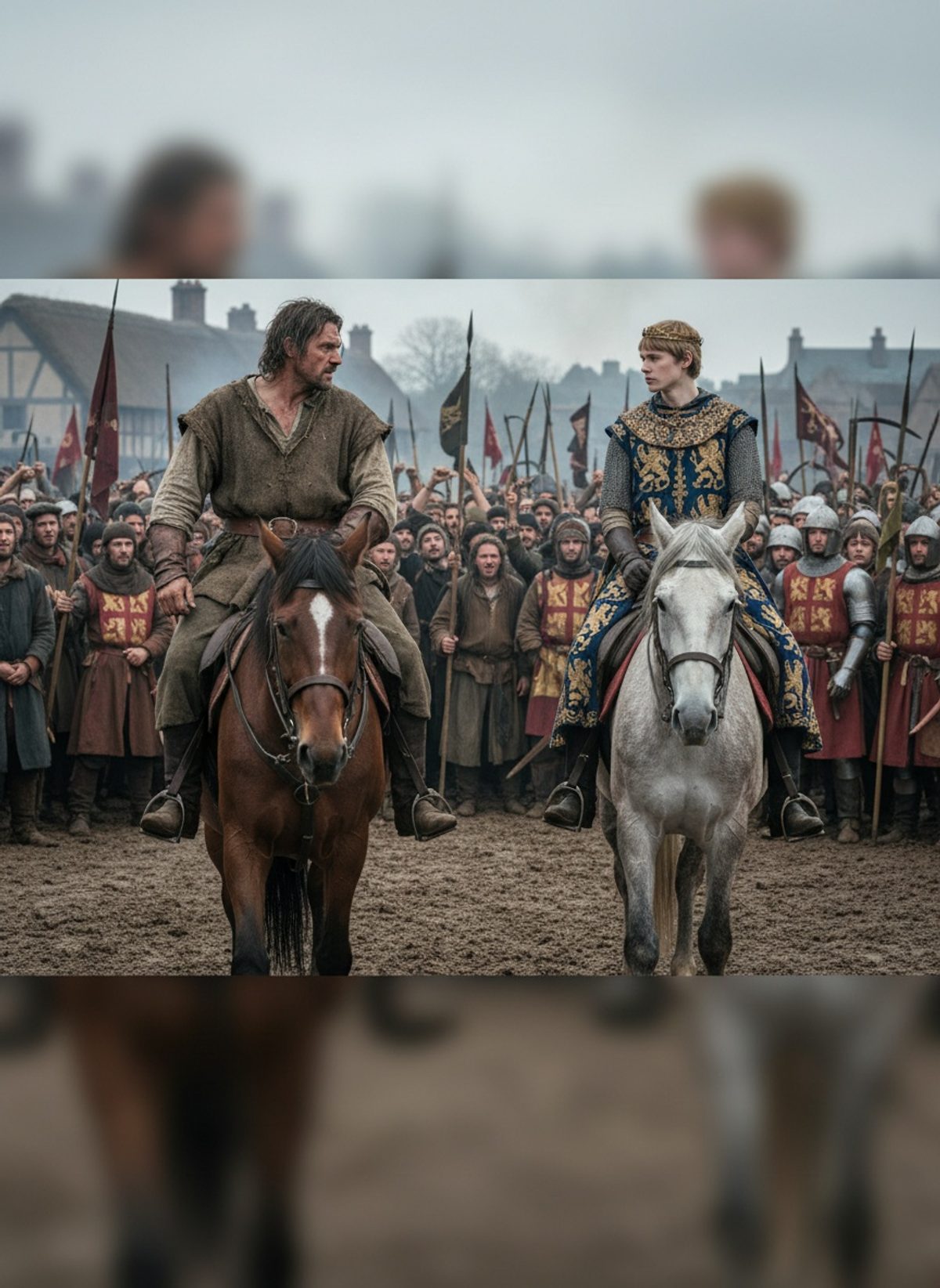
The clash at Smithfield was both a battle of wills and a theatrical display of medieval pageantry. Amidst the expectant hush of the crowd, Wat Tyler, armourless yet defiant, rode alone to parley with the young king. Richard II, at merely fourteen, was thrust into a moment that would test not just his mettle but the very strength of the crown.
With eloquence and confidence, Tyler put forth the rebels' demands before the monarch. They sought the freedom to work at fair wages and the abolition of the oppressive feudal serfdom that had bound them like shackles. It was a brave new vision for England that Tyler championed, speaking not just for himself but for thousands who watched, breath held, from the nearby throngs.
The Moment That Changed Everything
In what seemed like the heartbeat between history and legend, the encounter spiralled into chaos. Sir William Walworth, the Lord Mayor of London, took matters into his own hands, his sword flashing through the air. Wat Tyler was struck down, mortally wounded. Gasps rippled through the crowd as the rebel leader lay dying, the prospect of their newfound freedoms bleeding out on the ground beside him.
Read next: When Birsa Munda's Arrows Stopped an Empire, 1900
Richard II, however, seized the turning point with unexpected poise. Alone, he rode forward towards the rebel ranks, a mere boy confronting the echoes of a fallen leader’s rallying cry. With surprising calm, he urged them to follow him away from violence and toward negotiation, promising to address their grievances with justice. For a brief, extraordinary hour, the revolt held its breath, teetering on the edge of possibility.
The Legacy of a Defiant Hour
In the aftermath of that day at Smithfield, the full force of royal authority reasserted itself. Promises made were quickly rescinded, and the ringleaders of the revolt faced harsh reprisals. Yet, the echoes of their insurrection reverberated far beyond the iron grip of retribution. Peasant unrest lingered, punctuating the reign of Richard II with sporadic flare-ups of defiance and a growing awareness that the status quo could be challenged.
The Peasants' Revolt of 1381 marked a pivotal moment in English history, a reminder that for a shining hour, the voice of the common folk had reached the ears of the king and reverberated through the halls of power.
Their bold actions planted the seed for future reforms, whispering the possibility of change to those bound by oppressive systems. While the revolt did not win the day, it undeniably set a stage where the scenes of social evolution would play out for centuries to come, shaping a more equitable England for future generations.