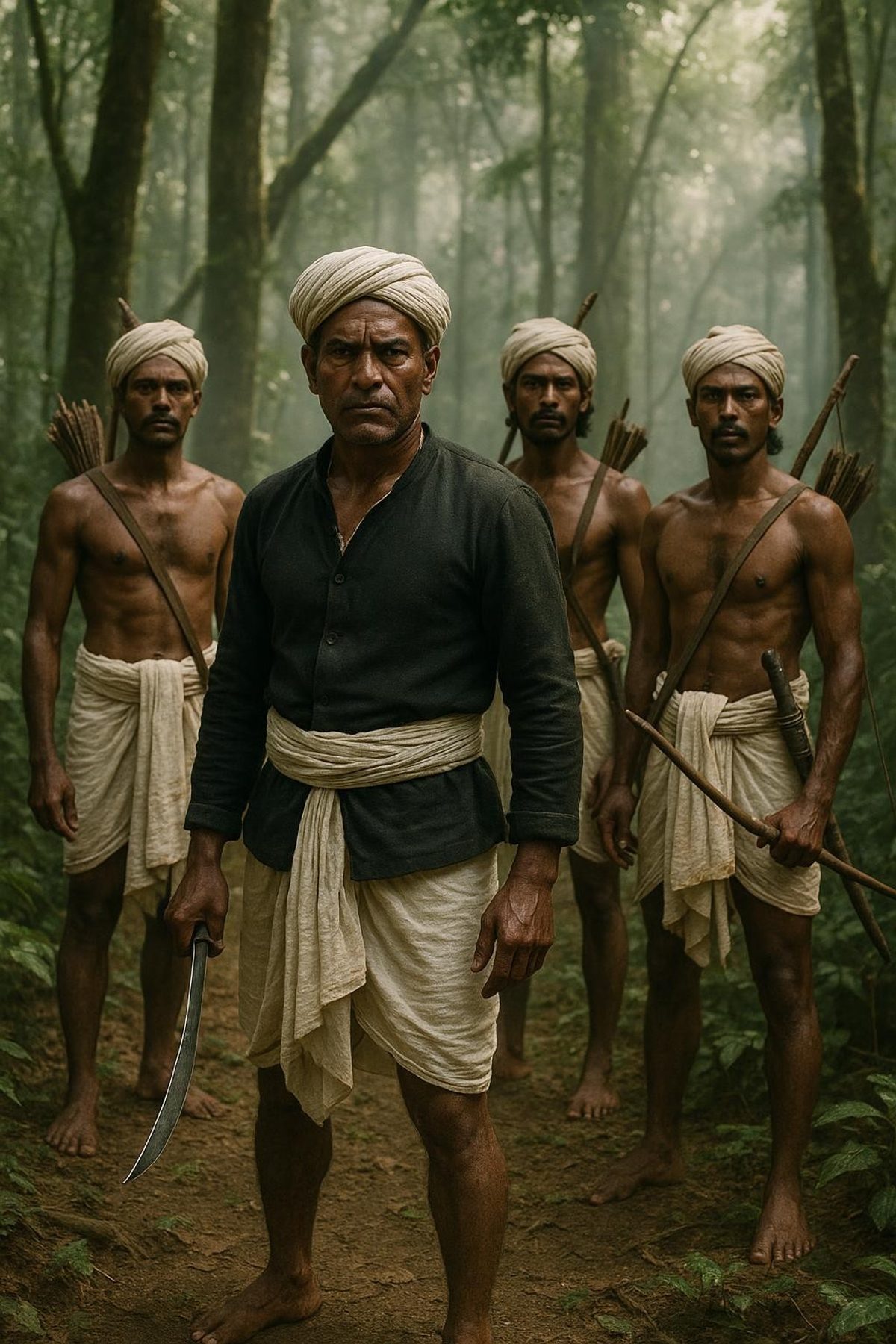
The dense foliage of the Western Ghats enveloped them, each leaf a silent witness to their stealthy passage. The air was thick with humidity, an invisible cloak of discomfort that clung to every surface. Veera Pazhassi Raja, known as the Lion of Kerala, moved soundlessly through the shadowed underbrush, his Kurichiya archers following with an agility and grace that belied the age-old familiarity of these lands. Around them, the jungle whispered its secrets, a guardian keeping their movements hidden from the prying eyes of their British adversaries.
The Lion Retreats
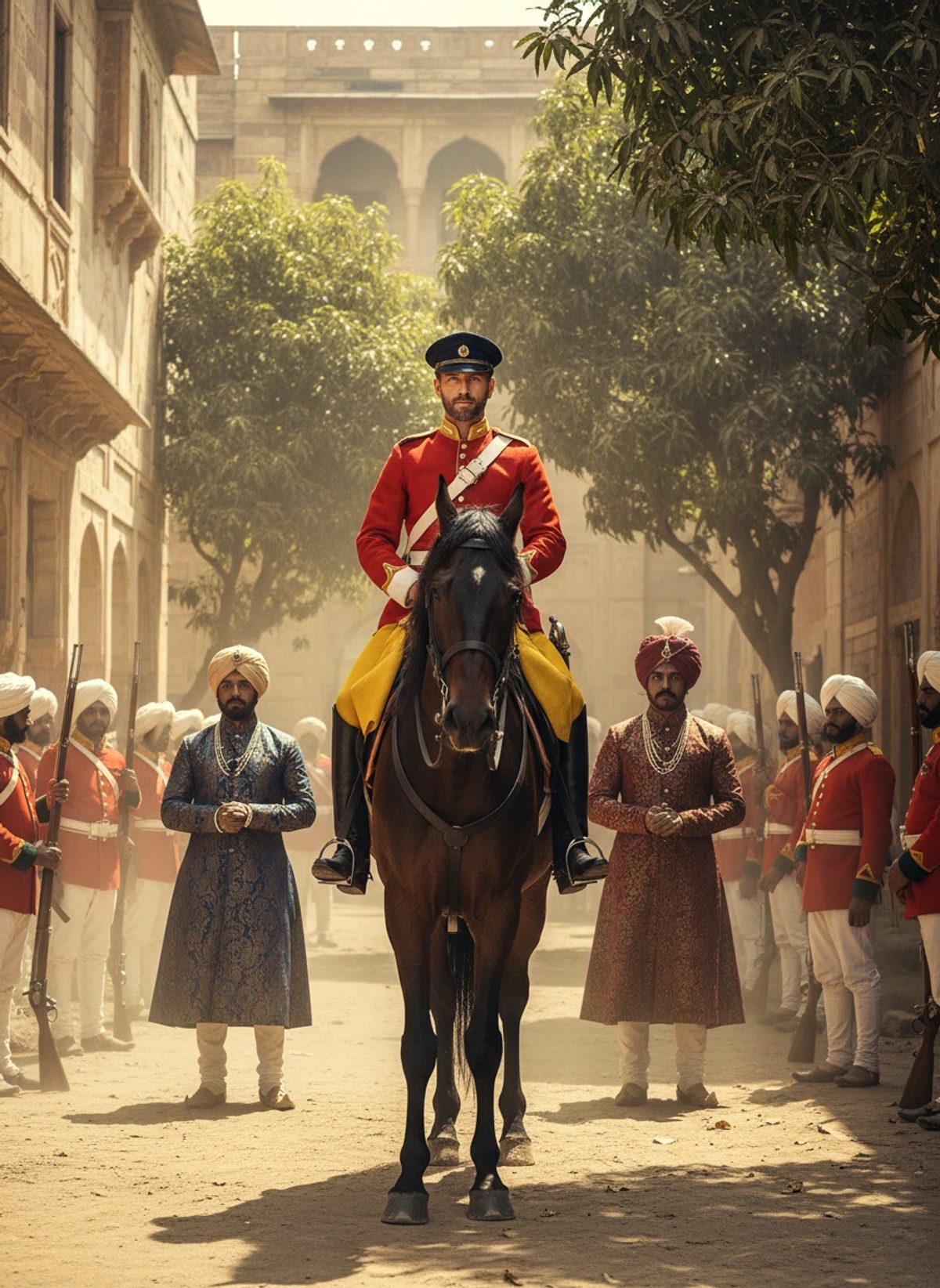
In 1797, the British East India Company dominated the coastal regions of Kerala, extending its imperial reach into the very heart of the land. Yet, amid this seemingly unyielding grip, one man dared remain defiant. Pazhassi Raja, unwilling to yield to British control, retreated from the overtures of surrendered monarchs who had accepted foreign dominance. Instead, he vanished into the Western Ghats, a formidable range of mountains that stood as both a refuge and a resistance against colonial encroachment.
Pazhassi's strategic withdrawal into the jungle was not a surrender, but rather a calculated move to wage a relentless guerrilla campaign against the British. His men, comprised of loyal hill tribes like the Kurichiya and the Kurumba, were skilled archers whose intimate knowledge of the terrain turned the thick forests into persisting ambush sites. The jungle, with its labyrinthine pathways and towering canopies, became an impenetrable fortress that held the resolute spirit of rebellion within its depths.
Guerrilla Warfare and Jungle Camouflage
British forces, used to orderly battlefields and structured warfare, found themselves disoriented in the elemental chaos of the jungle. The familiar rumble of regimented marches was replaced with the unexpected; the sudden whistle of an arrow, the fleeting glimpse of movement before the specter of death followed. The Kurichiya warriors, with their stealth and mastery over the bow, became phantoms in their own lands.
Read next: When Abd el-Kader Surrendered and Shamed His Captors, 1847
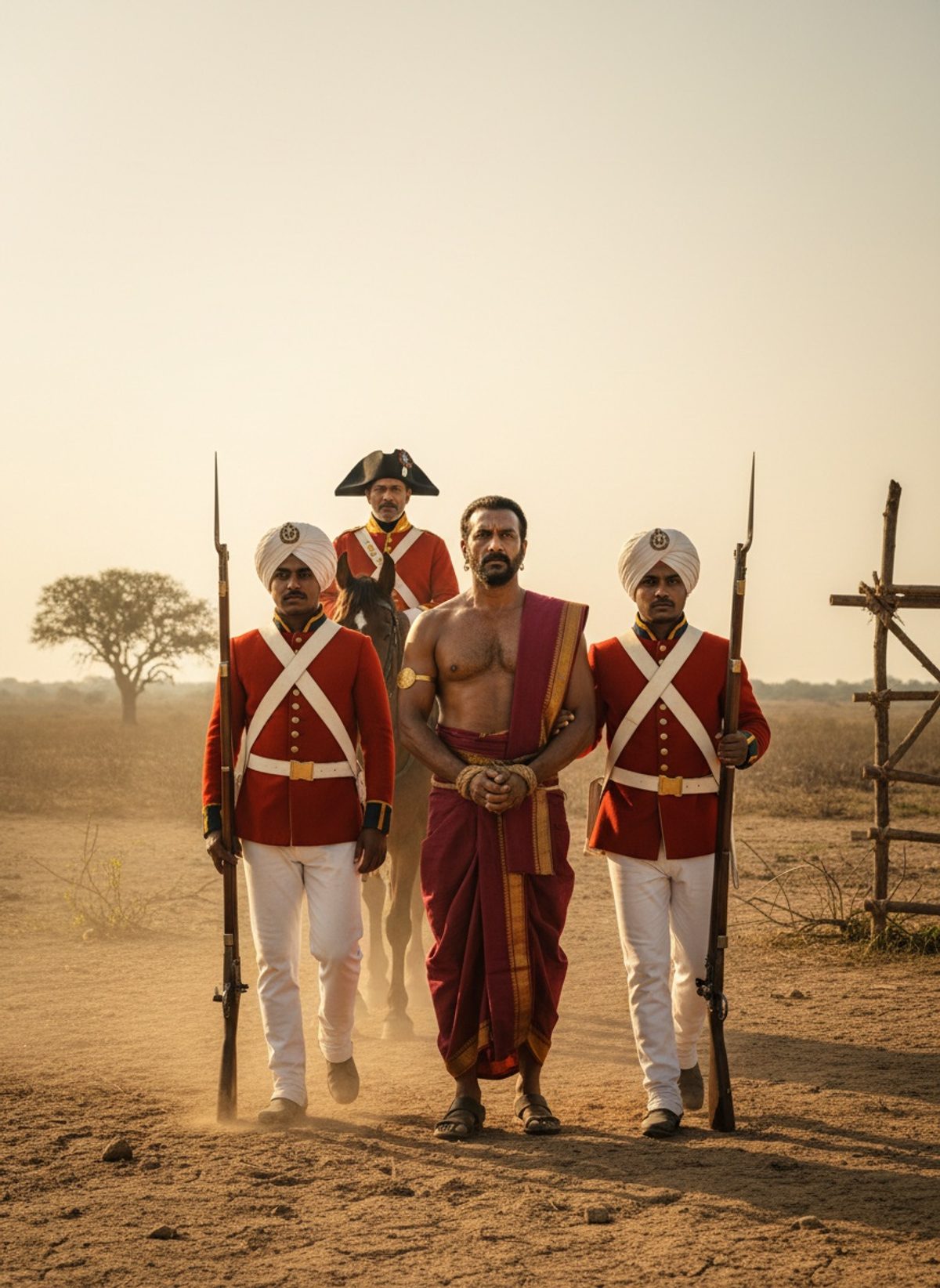
Every encounter was an intricate dance of strategy and survival. The British, trapped in their red coats, struggled against the elements and an unseen enemy. The thick humidity blunted musket powder, and the dense underbrush seemed to swallow entire platoons whole. Pazhassi Raja employed hit-and-run tactics, striking swiftly before melting back into the verdant shadows. His strategy was not just to fight, but to exhaust and exasperate, to exploit every misstep and miscalculation of his opponents.
The Heart of Resistance
Within this relentless campaign, Pazhassi Raja became a symbol of hope and national pride for many indigenous communities. His leadership was not merely about military might, but about the spirit of self-rule and the preservation of autonomy. The jungle, often viewed as untamed wilderness by the British, was a revered guardian in the eyes of the local tribes. It sustained them, providing both material and spiritual sustenance, while empowering them in their struggle against an empire.
Despite the hardships, the Raja's resolve never wavered. Stories abound of his keen sense of justice, his accessibility to the common people, and his strategic genius that consistently thwarted his mighty adversaries. The British, perplexed by his elusiveness and tenacity, poured resources into an ever-escalating quest to capture or kill the elusive ruler. Yet, year after year, he slipped through their grasp, a ghost in the mist-laden valleys of the Ghats.
The Unrelenting Spirit
In the annals of history, the resistance led by Pazhassi Raja is often overshadowed by the larger-than-life characters of colonial narratives. However, the grit and determination of this ruler and his followers paint a vibrant picture of relentless spirit against insurmountable odds. Their struggle is not just a tale of military defiance, but a significant chapter in the broader quest for Indian sovereignty.
As the years wore on and the jungle campaigns became legendary tales of courage and resilience, Pazhassi Raja's legacy as the Lion of Kerala grew stronger. His fight reminds us of the power of indigenous knowledge and the enduring strength of local resistance movements that have dotted human history. It is a story of not just territorial battles, but of a cultural landscape defending its identity amidst the rising tide of empire—a timeless lesson in resistance and the unyielding pursuit of freedom.