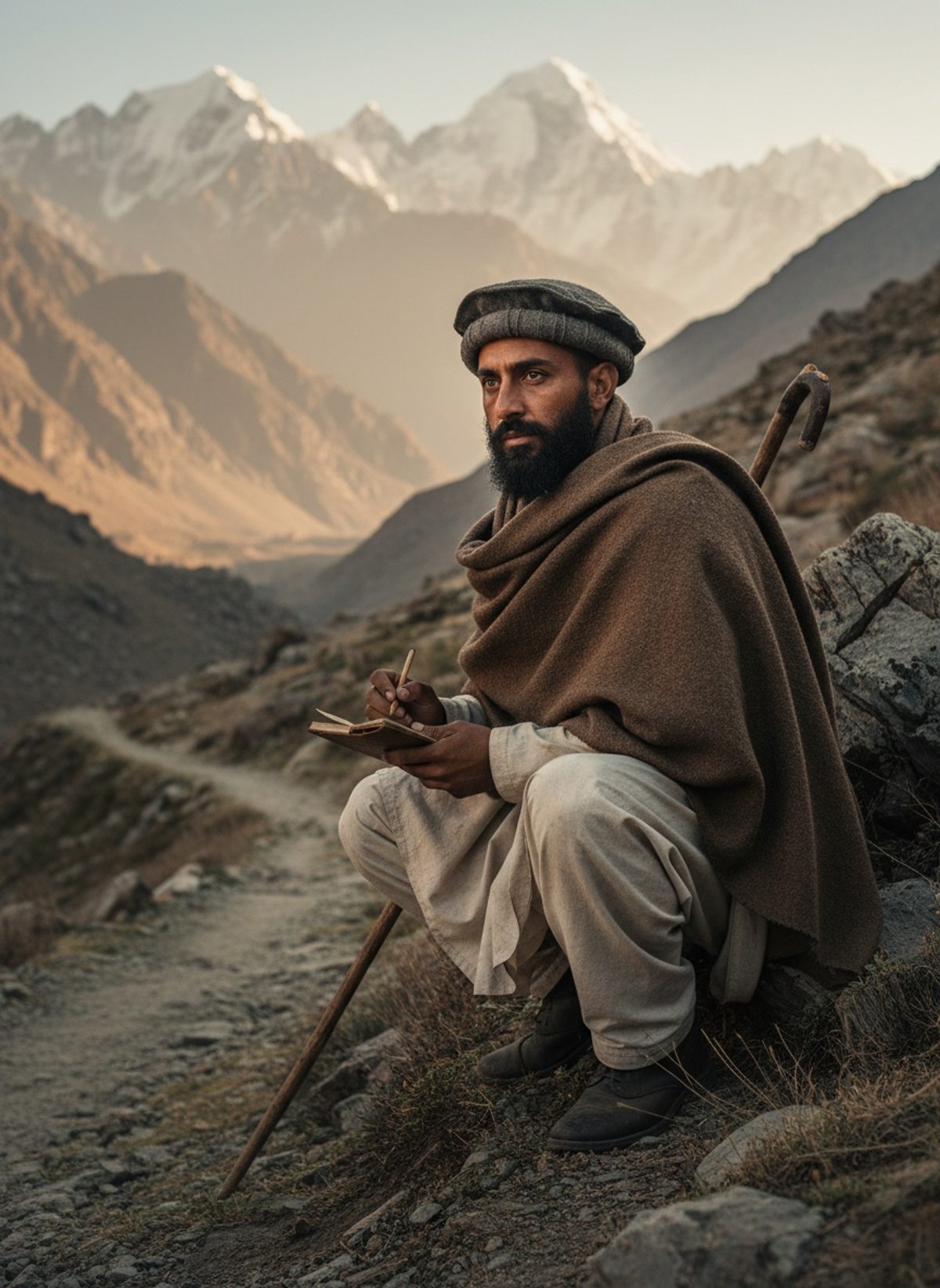
The wind over the North-West Frontier in 1897 carried with it the chill of the coming winter, swirling around the barren hills and rocky outcrops that dotted the landscape. The sun, hanging low on the horizon, cast long shadows that danced over the terrain. It was a harsh, unforgiving place, where every angle seemed to hide potential threats, and the silence was heavy with anticipation. Here, at the edge of the British Empire, where the lines between civilization and the untamed wilderness blurred, a single figure moved quietly, wrapped in the nondescript clothes of a Pashtun tribesman.
Prithipall Singh, a Sikh officer in the British Indian Army, understood all too well the stakes of his clandestine mission. Swinging astride a sturdy, dust-coated horse, his heart beat steadily against the layers of foreign fabric he wore, concealing both his identity and his intentions. Dressed in Afghan garb, he carried no papers that bore even a hint of his true allegiance. Disguise was his only ally, and he knew that if captured, the Empire would disavow any knowledge of his existence or purpose. It was a perilous gamble, but the information he sought was crucial—maps that would lay bare the secret passages and hidden routes of these treacherous lands, reshaping British military strategy for a generation to come.
Infused with a quiet determination, Singh appeared to blend seamlessly with his surroundings. It was a skill honed through years of disciplined service, his sharp, intuitive sense of observation molding him into a formidable agent of reconnaissance. The harsh beauty of the rugged frontier was not unknown to him; indeed, it was part of the very fabric of his being. The air was filled with the scent of crushed sage and dry earth, every step of his horse muffled by the thick carpet of dust underfoot.
Singh was not unfamiliar with danger. He had been trained in the art of war, versed in the cultural masks he now wore. The British Empire, in its relentless quest for dominion, required men like him to venture where most would not dare. It was an Empire that plotted its expansion with cold precision, ever hungry for the strategic advantage offered by understanding the uncharted wilds of its frontier. Singh's mission was hazardous not merely because of the threat of discovery by the many tribes fiercely protective of their autonomy, but also because the terrain itself was an enemy, its rugged peaks and hidden valleys a perilous labyrinth.
Read next: When Mangal Pandey Fired the Shot That Lit India, 1857
The tension of secrecy mirrored the very fabric of the land around him. On his solitary journey, Singh carefully collected details—the contours of the land, the hidden paths snaking through valleys, the strategic passes that could funnel armies. His eyes, ever watchful, missed nothing, for he knew that each observation could mean the difference between ambush and safety, victory and defeat.
Yet as he journeyed deeper into these lands, Singh could feel the weight of history that hung silently over him. These mountains had seen countless armies pass through, witnessed countless struggles for control—Afghans, Persians, Mughals, all had sought to leave their mark here. The British attempt was just the latest chapter in a story as ancient as the hills themselves. This understanding lent a sense of gravity to Singh's undertaking, an awareness of his place in the grander scheme of things.
Much of Singh's journey was undertaken at night, where the cool shadows offered a welcome cloak against unwanted eyes. By the wan light of the moon, the landscape assumed an ethereal quality. The ghostly shapes of trees stood sentinel, while the song of unseen night creatures filled the air, harmonizing with the rhythmic clip-clop of hooves—a lullaby of the wild. And through it all, Singh pressed on, driven by the knowledge of the importance his mission carried for his superiors back in India.
Days turned into weeks, and Singh continued his solitary trek through hostile territory. His ability to read the landscape with precision allowed him to sketch mental maps—the rivers and mountain passes, villages and camps that would later unfurl as secrets of strategic relevance on the tables of British High Command. Familiarity with local dialects and customs was crucial, for the slightest misstep could mean discovery. Every friendly greeting or unobtrusive inquiry was a calculated dance, a tightrope walked on the edge of survival.
Often, Singh would seek refuge in the homes of the very people who, unknowingly, held his fate in their hands. Here, seated around modest fires, sipped tea would become the beverage of bridging cultures. Stories were shared, laughter occasionally burst forth—a reminder that beneath layers of politics and conflict lay layers of shared humanity.
Finally, his task complete and with the precious knowledge he had gathered safely committed to memory, Singh began his cautious return journey. The very same landscapes he had so carefully documented seemed almost to bid him farewell—a final glimpse of their secrets entrusted to him alone. Emerging once more into the relative safety of British-controlled territory, his heart lifted not just with a sense of relief but with a profound recognition of his role in a much larger game.
The maps Singh provided upon his return would alter the topographical understanding of the region. They would become integral in the strategic maneuvers of the British military, an unseen yet vital guide in future campaigns across a volatile border. Though few would ever know his name, Prithipall Singh's legacy was inscribed upon the very backbone of Empire strategy—the quiet work of an unsung hero navigating the intersection of two worlds.
Reflecting on Prithipall Singh’s daring journey, one is reminded of the age-old dance of empires and the individuals who operate within their shadows. His story, hidden from the public eye yet pivotal in the annals of history, serves as a reminder of the often overlooked role of the seemingly insignificant in shaping destinies. The frontier he crossed was more than a physical boundary; it was a space where cultures and ambitions clashed, and where those like Singh could change the course of history without ever firing a shot.