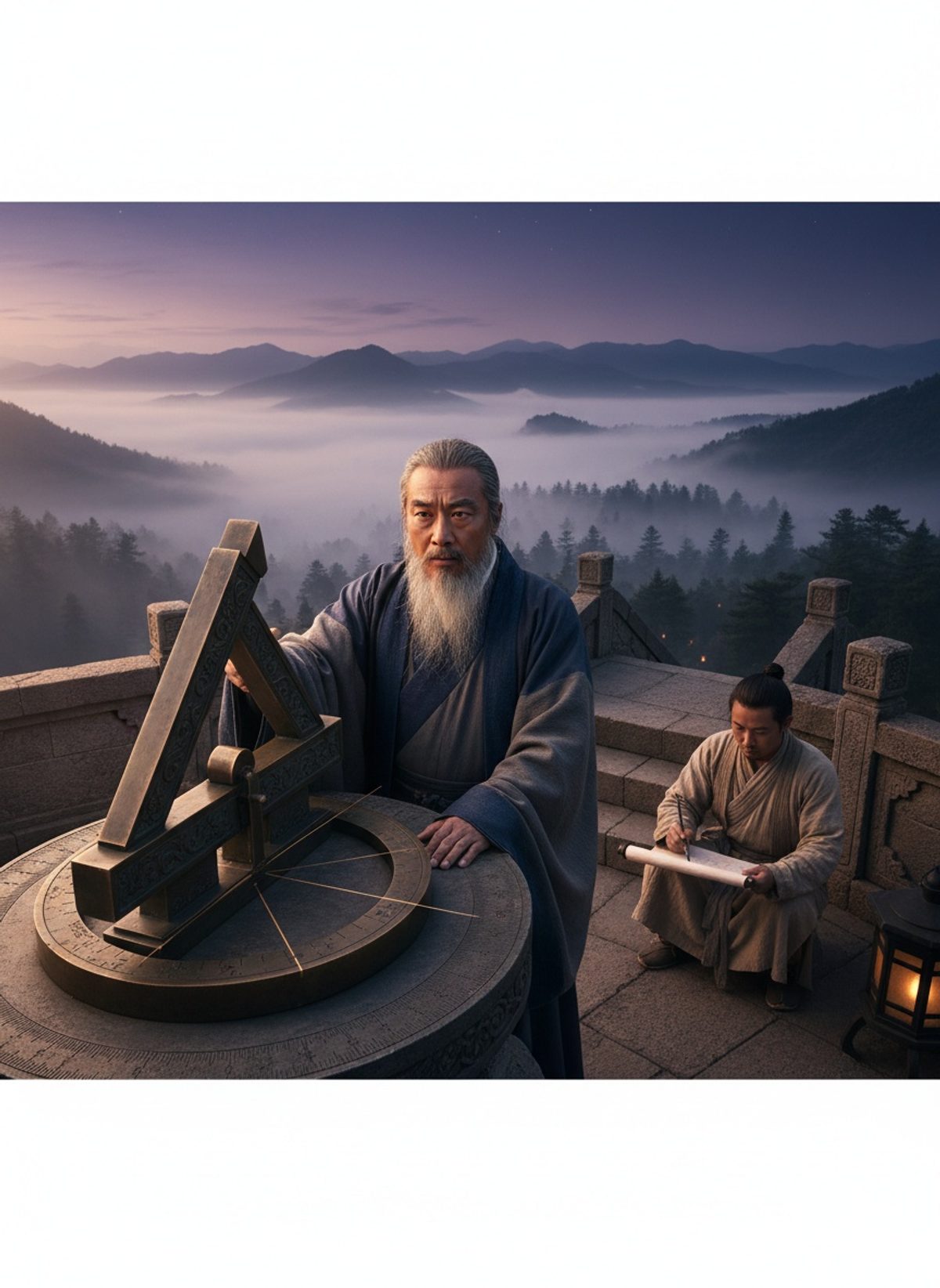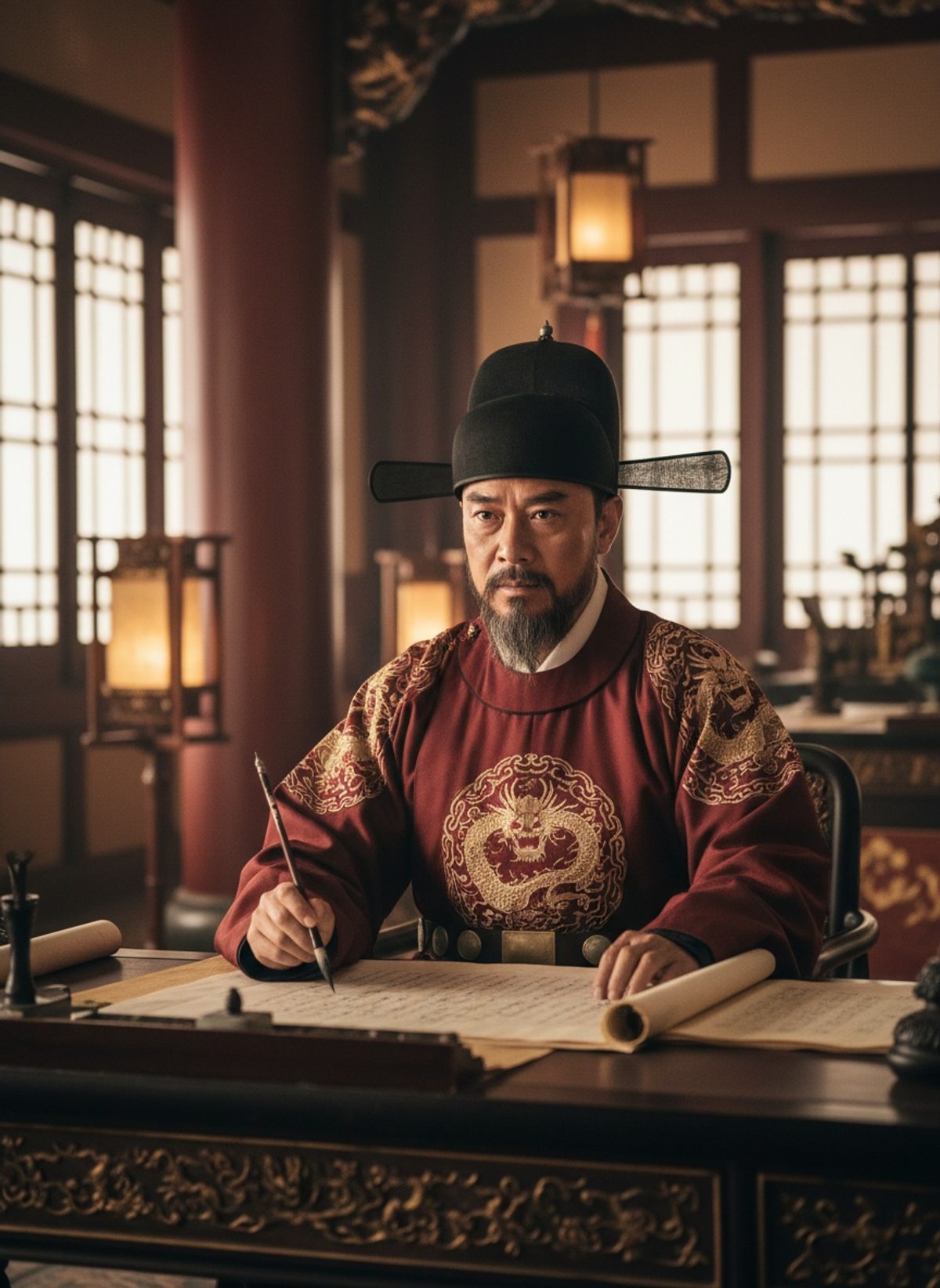
The courtyard of the Forbidden City was cloaked in the first light of dawn. The air was still, the only movement a haze of mist curling around the sprawling, imperious silhouettes of the imperial complex. It was July 1582, and the early summer heat already pressed heavily against the intricately carved beams of the crimson palace halls. Silence reigned, broken only by the distant calls of unseen birds. Within those imposing walls, a seismic shift had just occurred: Zhang Juzheng, the architect of the Ming dynasty's revival, was dead. Though his reforms had breathed life back into a faltering empire, his passing set off a chain of events that would unravel his legacy and doom his family to disgrace.
The Rise of a Scholar
Born in 1525 in Jiangling, part of the Huguang region (present-day Hubei), Zhang Juzheng's life was destined to be extraordinary. From his youth, Zhang exhibited a keen intellect, mastering the complex doctrines of Confucianism. His scholarly promise bore fruit in 1547 when he passed the rigorous imperial examinations and earned the coveted jinshi degree, a feat marking him as one of the empire's most promising talents. By 1567, his ability to navigate the convoluted corridors of power had elevated him to the position of Grand Secretary under the Longqing Emperor. Yet, it was not until the reign of the Wanli Emperor in 1572 that Zhang's influence reached its zenith.
More than just an administrator, Zhang became the de facto ruler of China, alongside the young Wanli Emperor, whose tender age made him reliant on Zhang's sagacity. While the boy emperor learned the ropes of governance under his tutelage, Zhang wielded power with a blend of pragmatism and vision. His pivotal role in centralizing the administration and limiting the privileges that had drained the imperial resources garnered the support of key figures such as Empress Dowager Li, the emperor's mother, and Feng Bao, a powerful eunuch who forged an alliance with Zhang within the palace's shadowy power structures.
The Reformer Who Revitalized an Empire
Zhang Juzheng's tenure was marked by a series of reforms that reversed the decline of the Ming dynasty and laid the foundations for a rejuvenated imperial order. By revising land tax exemptions, he bolstered the state's coffers, transforming an emaciated treasury into a robust reservoir of wealth. His innovations in fiscal policies ensured that the benefit of land ownership was equitably shared between the state and its people. Under Zhang's stewardship, millions found relief from the crippling cycles of famine that once ravaged the countryside.
Read next: Hai Rui Sold His Coffin. Then He Wrote the Letter.
His military reforms were equally pivotal. In the decades preceding Zhang's ascension, the threat from the Mongols and regional unrest had left the empire's defenses in disarray. Zhang meticulously rebuilt and re-equipped the armed forces, asserting a competitive edge that secured the dynasty from external threats. His foreign policy, characterized by strategic diplomacy and calculated military fortitude, secured a period of peace, granting the Ming dynasty the stability needed to thrive and flourish after decades of strife.
Fall from Grace
Yet, power, as intoxicating as it is fleeting, can often turn against its wielder. Zhang Juzheng's death on July 9, 1582, initiated a swift decline from grace. Pivotal to this reversal was the same emperor he had mentored, who had come of age and sought to wield authority unencumbered by the shadow of his former mentor. Influences within the court, resistant to Zhang's reforms and discontent with his iron-fisted hold on power, found an eager audience in the Wanli Emperor. Two years after Zhang's death, in 1584, a scathing investigation led by his detractors accused him of corruption, resulting in his family being stripped of their immense wealth and cast into destitution.
The emperor ordered the confiscation of everything Zhang owned. In a cruel twist of fate, the very man who had once ensured the prosperity of millions saw his family forsaken and desperate. His name was expunged from official records, as an ardently forgotten chapter of history, erased by the keystrokes of a vengeful court.
The Irony of Legacy
The story of Zhang Juzheng is one of irony, poignantly illustrating the ephemeral nature of power and influence — a force at once formidable and fragile. As Zhang's name was vilified and his reforms systematically dismantled, the Ming dynasty itself began a slow descent into obsolescence. It would take more than half a century before his legacy was officially rehabilitated, acknowledged as vital to one of the dynasty’s most successful epochs. Yet, by then, the Ming dynasty itself teetered on the brink of collapse, a shadow of its former grandeur.
In reflecting upon Zhang Juzheng’s life and legacy, we unravel deeper insights into the intricate dance of power, reform, and human nature. His story underscores the powerful influence a single individual can wield over history, yet it also serves as a stark reminder that progress often comes at the cost of individual sacrifice. Even after his death, Zhang's shadow loomed large, both in the triumphs he orchestrated for his empire and the personal tragedy that ensued. His tale raises a timeless question of what historical memory retains and what it chooses to forget. Zhang Juzheng — the man who forged an era — remains an indelible figure, teaching us that even the faintest evanescent echoes hold the power to influence time.