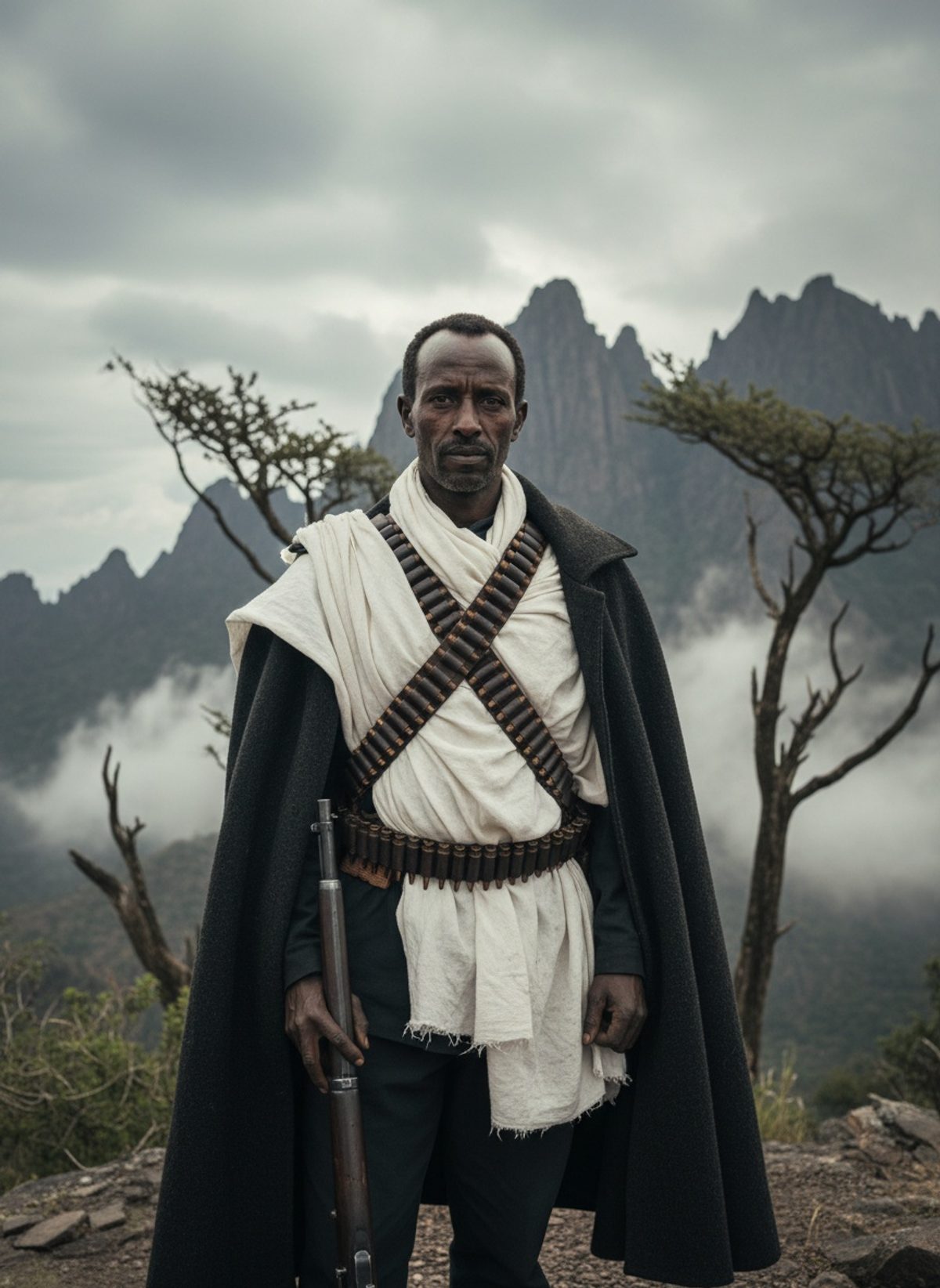
He was thirty-three years old. Italy's army had just invaded his homeland. But when most Ethiopian leaders decided to lay down their arms, Abebe Aregai chose a different path. While formal resistance crumbled, he took to the mountains, determined to fight on — alone, forgotten, relentless.
The Spark of Defiance
Abebe Aregai was not born into a life of privilege. On August 18, 1903, in the village of Woira Amba-Jirru in northern Shewa, he was brought into the world to parents of diverse ethnic heritage, drawing strength from both Amhara and Oromo cultures. Rising through the ranks to become the chief of police in Addis Ababa, Abebe's career was interrupted abruptly by the Italian invasion in 1936. With Emperor Haile Selassie in exile and the capital overrun, many Ethiopian leaders surrendered their forces. Abebe, however, saw opportunity amidst chaos.
Initially, he stayed in the capital after the Emperor's departure, a calculated risk that allowed him to observe the occupying forces up close. As tensions escalated and the fate of the nation hung in the balance, Abebe made his move. Gathering just ten men, he headed northeast, launching an audacious but ultimately unsuccessful attempt to reclaim the capital. How any modern outsider might dismiss his effort as futile would miss the larger picture. It was an act of resistance that kept the flame of hope alive for a besieged nation.
Struggle in the Mountains
By the spring of 1937, Abebe found himself with a meager force of just 40 men, confined to the rugged terrain of Menz. Yet it was in these mountains that he would lay the groundwork for his long campaign of resistance against the Italians. Despite being vastly outnumbered, Abebe’s strategy revolved around agility, surprise, and intimate knowledge of the land — an asymmetric warfare that wore down the Italian occupiers.
Read next: Yaa Asantewaa Stood Before the Chiefs. They Looked Away.
These hills became a sanctuary and a battlefield, and from them, Abebe directed guerrilla raids effectively. The resistance was more than just military action; it was a psychological struggle aimed at maintaining Ethiopian morale and undermining Italian control. The enemy found themselves stretched thin, burdened by the task of rooting out an ever-elusive foe in hostile territory. Numerous encounters, such as the joint attempt with Lij Haile Maryam Mammo and other key figures to attack Addis Alem, showcased Abebe’s tenacity — even when faced with superior numbers and modern artillery.
Symbol of Unyielding Resistance
Abebe's role was not merely that of a military leader; he was a symbol. After a brief and intense collaboration with Meleke Tsahai, the young aspirant to the Ethiopian throne, Abebe continued to resist even after Tsahai’s untimely death from illness. His ability to persist allowed the resistance to carry on the fight as others around them faltered. In a time when many were quick to accept Italian rule or even collaborate, Abebe stood firm, setting an unyielding example that inspired the Arbegnoch, or 'Patriots', who admired his determination to reclaim Ethiopian sovereignty.
The Italians, like vultures circling a wounded animal, attempted repeatedly to close in for the kill, encircling Abebe in early summer 1937. Attempts to breach the tightening circle were met with fierce retaliation and deadly accuracy, yet still the mountains of Menz shielded Abebe and his men. These strategic retreats are often overlooked in the grand narratives of larger battles, yet they illustrate the small victories that fueled a national resurgence.
The Turning Tide
As the years rolled by, the resistance seemed a futile endeavor seen through the lens of military might alone. But every skirmish, every whispered plan in the mountains, culminated in a collective spirit that refused to die. By 1939, the death of another leader, Olana Dingili, left a vacuum that Abebe was more than willing to fill, emerging as the principal rebel figure who refused to see Ethiopia kneel. For much of the world, the particulars of his exploits remained shrouded in mystery and perhaps, too, overshadowed by Europe’s burgeoning conflicts on the eve of World War II.
Eventually, with the support of allied forces who recognized the strategic importance of Ethiopia, the tide began to turn. Abebe’s years of grueling activism laid a foundation that helped facilitate Emperor Haile Selassie’s return, empowering the formal efforts to restore Ethiopian sovereignty. Abebe had not only kept a vital corridor of resistance alive but also helped ensure that Ethiopia was ready to rebuild when their colonizers were driven out.
A Legacy of Persistence
Abebe Aregai’s life journey did not end contentedly or without further trials; he continued to serve his country after the World War II-era struggles finally saw Ethiopia restored. As the Prime Minister of Ethiopia from 1957 until his untimely death in 1960 during an attempted coup, Abebe never wavered in his commitment to his homeland's development and self-sustainability.
Resilient in the face of overwhelming odds, Abebe's story is not one just to be admired from the pages of history but also a testament to the enduring power of the human spirit. In the grand tapestry of world events, it's easy to lose sight of individuals like Abebe Aregai who fought relentlessly for values and identity. Yet his tale reverberates through time, an enduring whisper that if you refuse to surrender, even the greatest of forces can be resisted. The mountains of Menz may have served as his fortress, but it was a heart unfaltering in its pursuit of freedom that fortified Ethiopia's soul.