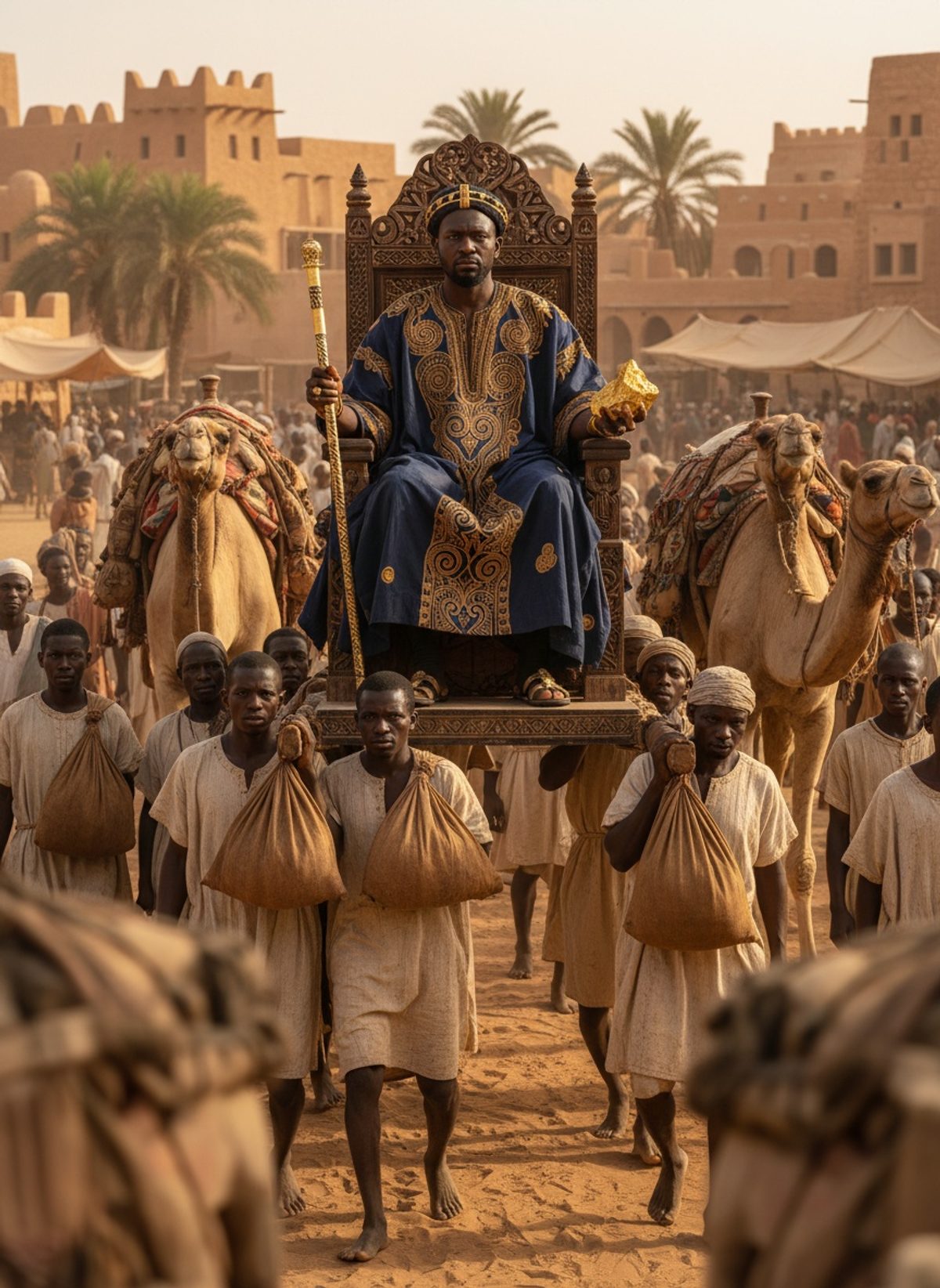
The Golden Stool was just another throne. Or so the British thought.
The Ashanti Empire and Its Sacred Symbol
At the dawn of the 20th century, far from the bustling streets of London's empire, a sacred throne represented the heart of the Ashanti Empire in what is today Ghana. The Golden Stool, or Sika Dwa Kofi, was much more than an ornate seat; it was the embodiment of the Ashanti people's soul and unity. Crafted from gold, it was said to have descended from the heavens into the lap of the first Ashanti king, Osei Tutu, under the guidance of the spiritual leader Okomfo Anokye. For the Ashanti, it wasn't just a symbol of authority; it was the very essence of their nationhood.
However, to British colonial officers embroiled in the scramble for Africa, the stool held less mystical appeal. For them, it was a symbol of wealth and power to be acquired in the name of the Queen. In 1900, Sir Frederick Hodgson, the British governor, made a grievous miscalculation. He demanded that the Ashanti turn over their sacred stool, unintentionally igniting a crisis that would lay bare the fierce independence and resilience of the Ashanti people.
The Unyielding Spirit of Yaa Asantewaa
As the chiefs of the Ashanti kingdom pondered their options, Yaa Asantewaa, the Queen Mother of Ejisu, stepped into the spotlight. Born around 1840 into the Besease royal family, Yaa Asantewaa had witnessed the trials and tribulations of her people, including a devastating civil war between 1883 and 1888. Appointed Queen Mother by her brother, Nana Akwasi Afrane Okese, she was entrusted with safeguarding the stool and was a formidable political figure in her own right.
Read next: Ahmad Baba Was Dragged in Chains. He Taught Anyway.
When the British exiled King Prempeh I and other leaders to the Seychelles in 1896, Yaa Asantewaa became regent of the Ejisu-Juaben district. Her keen political mind and unwavering resolve made her a natural leader. In a secret council meeting held in Kumasi, Yaa Asantewaa stood before a room of silently deliberating chiefs. Her fierce words struck like lightning: “The Golden Stool only means money to the white men; they have searched and dug everywhere for it. I shall not pay one predwan to the governor. If you, the chiefs of Asante, are going to behave like cowards and not fight, you should exchange your loincloths for my undergarments.”
She loaded a gun and fired a shot in defiance, a tangible promise of resistance. Her bold stance convinced the chiefs to appoint her as a war leader—a role unheard of for a woman in Ashanti history.
The War of the Golden Stool
The conflict that followed came to be known as the War of the Golden Stool, the Yaa Asantewaa War, or more simply, the Ashanti Uprising of 1900. Asantewaa inspired thousands, with her compositions rallying her people against what seemed to be insurmountable odds. Her leadership during the war was as strategic as it was impassioned, marshaling the Ashanti warriors to fortify the city of Kumasi and laying a siege that trapped Hodgson and his troops for months.
The British, armed with modern weaponry, found themselves facing guerilla tactics from fighters deeply motivated and armed with little more than the unyielding spirit that Yaa Asantewaa imbued in them. The siege of Kumasi marked one of the last attempts by an African state to resist colonial domination through military means.
Despite the courageous resistance, this war was not without its hardships. The British, determined not to lose their colonial grip, eventually broke the siege with reinforcements. By March 1901, following intense fighting and severe depletion of Ashanti forces, Yaa Asantewaa was captured. Her capture marked the decline of centralized Ashanti resistance and the complete British annexation of the region.
The Echoes of Defiance
Though Yaa Asantewaa's uprising did not halt colonial expansion, her legacy persisted far beyond her capture and eventual death in exile in 1921. She became an enduring symbol of resistance, an emblem of the determination to preserve cultural sovereignty against foreign imposition. Her story continues to inspire modern-day movements for independence and rights within Africa, highlighting the indomitable power of traditional leadership aligned with the people's will.
Yaa Asantewaa's legacy is a powerful reminder of the often-overlooked narratives in history—the tales of those who defy the expected roles, rise amidst adversity, and pave pathways for future generations. Her story matters not only because it showcases resistance but also because it compels us to rethink assumptions about leadership, courage, and the history of African peoples. At a time when the world continues to grapple with the vestiges of colonialism, the story of Yaa Asantewaa resonates more than ever, urging us to respect and protect the culture and spirit of indigenous peoples, lest we make the same mistakes as those who sought to claim the Golden Stool.