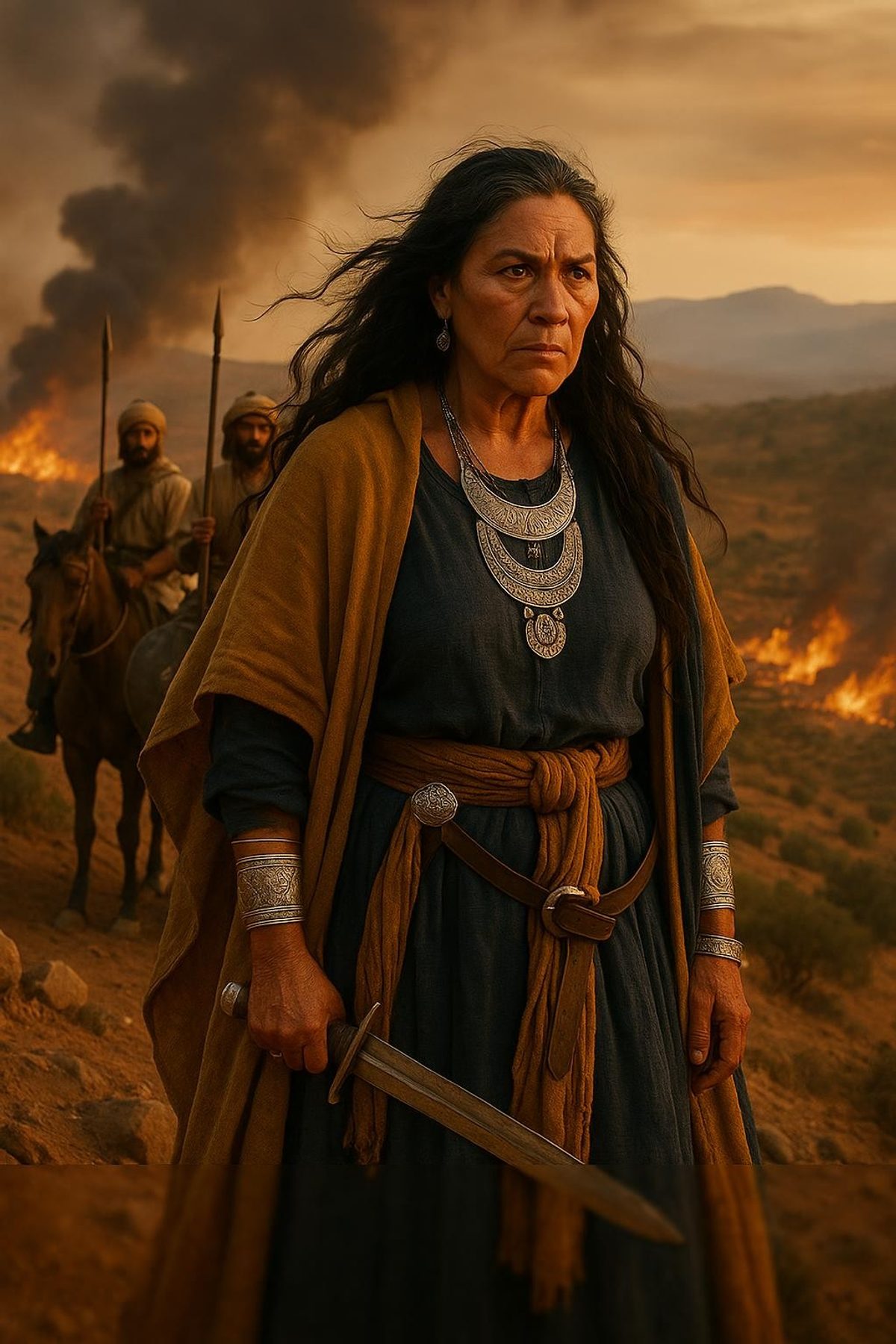
He was fifteen years old. Abu al-Hajjaj Yusuf ibn Ismail entered the world of power and politics with the rank of a sultan, yet burdened by the delicate dance of surviving medieval Granada's deadly intrigues.
The Contender Sultan: A Kingdom in the Balance
Granada, the last bastion of Islam on the Iberian Peninsula, glimmered under the searing Spanish sun as the cultural heart of the Nasrid dynasty. When Yusuf ascended to the throne in 1333, he faced a world where allegiances were as brittle as ancient parchment. Yusuf’s earlier years were defined by turbulence. His brother, Sultan Muhammad IV, had fallen victim to a conspiracy, setting a grim precedent. Yet, Yusuf was destined to emerge, not just as a ruler, but as a harbinger of a cultural renaissance.
With the initial oversight of his ministers and the guidance of his grandmother Fatima, Yusuf matured into a shrewd leader. At fifteen, he was expected to wield the scepter yet remained under tutelage—a frustrating limitation for one bearing the title “al-Muayyad billah,” or "He who is aided by God." His early reign was marked by diplomatic maneuvering, securing peace with the powerful neighbours of Castile and the Marinid Sultanate of Morocco. However, these treaties were as ephemeral as a morning mist in the Sierra Nevada.
The Scholar Sultan: Carving a Legacy of Stone
Beyond the skirmishes and changing alliances, Sultan Yusuf's true passion lay not on the battlefield but in the corridors of knowledge and beauty. His reign witnessed an extraordinary period of cultural efflorescence, cementing his legacy as a patron of art and intellect. It is said the Alhambra's brilliance reflects the artistic zenith he aspired to reach—a palace where stone seemed to dissolve into fine lace.
Read next: Shaka Asked One Question. Africa Was Never the Same.
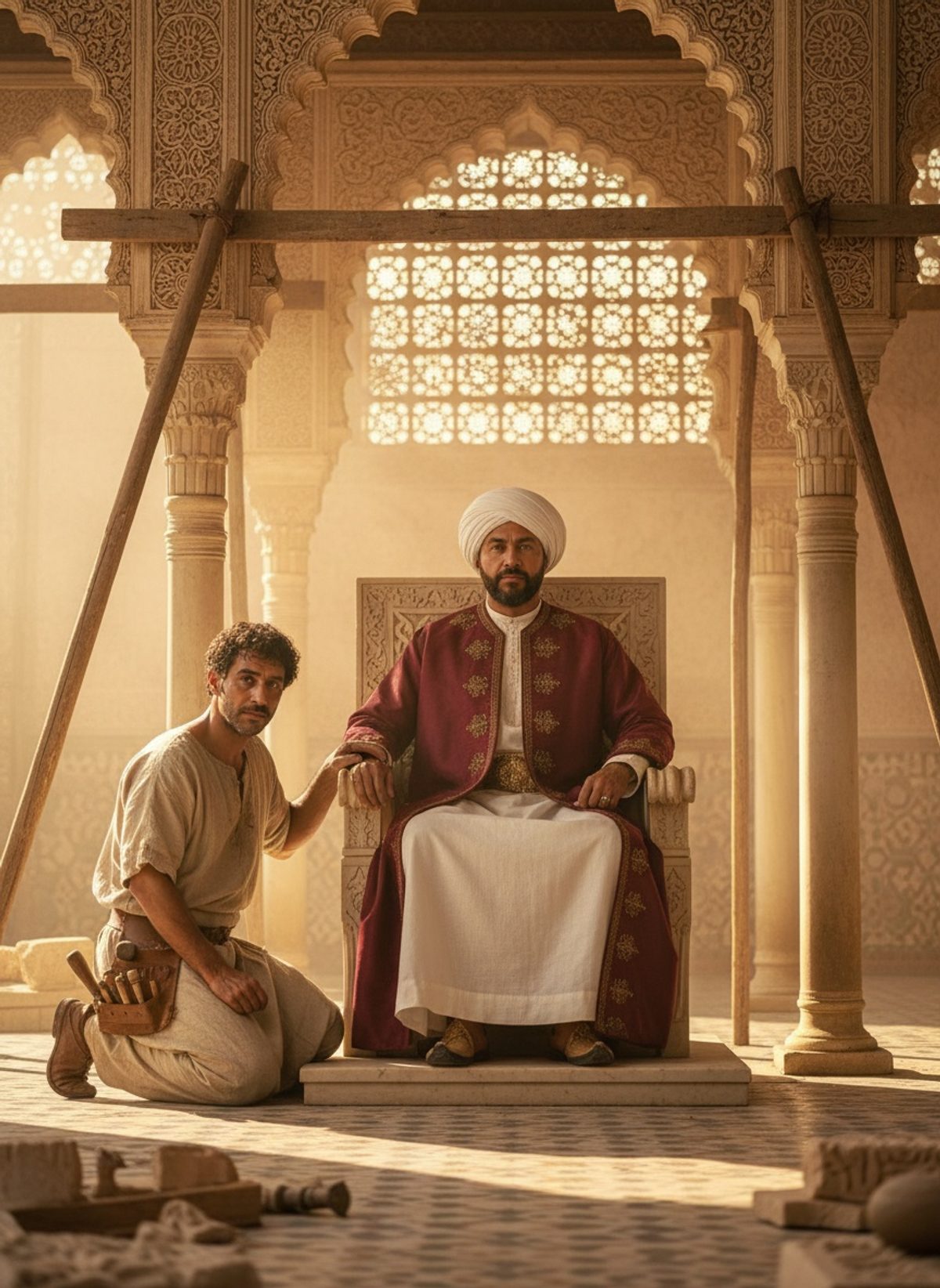
The twilight of Yusuf’s life saw an intimate scene: he lay dying, surrounded by the beauty only he could envision. At his side was Muhammad el-Attar, the enslaved architect bound by a pledge from Yusuf himself. Yusuf's promise of freedom upon completion of the Alhambra-bound this craftsman to a work that would defy time. The Sultan fulfilled his word, gifting the architect the joys of liberty before death snatched him away. The Alhambra remained unfinished, a testament to a dreamer's illustrious yet incomplete vision.
The Diplomat Sultan: Games of Thrones and Faith
Yusuf’s Granada was not isolated from the larger turmoil of the Iberian Peninsula. It was a chessboard of faith and power. After the initial peace treaties expired, Yusuf found himself in alliance with the Marinid sultan, Abu al-Hasan Ali, against Castile’s formidable Alfonso XI. The 30th of October 1340 marked a turning point at the Battle of Río Salado, where the Granadan and Marinid forces were decisively defeated. The chaotic aftermath saw the slow erosion of Yusuf’s defensive holdings, as town after town fell to Castilian control.
Yusuf’s leadership was tested continually, notably when the Castilian siege of Gibraltar threatened to sever key trade routes. Despite the adversities posed by Alfonso XI, Yusuf showed magnanimity at perhaps his most poignant military moment: allowing the Castilian funeral procession safe passage as they withdrew with their deceased king, who succumbed to the Black Death in 1350. This action revealed a sultan who understood honor beyond warfare.
The Creator Sultan: Symbols and Structures
In Yusuf's capital, intellect and craftsmanship flourished amidst the tensions of a warrior state. The Madrasa Yusufiyya, a center of learning, and the Tower of Justice were both erected during his reign, symbols of the cultural vitality he so cherished. In a court that boasted luminaries such as the poet Ibn al-Jayyab and the polymath Ibn al-Khatib, Yusuf's Granada strove to harmonize faith and reason in an ever-hostile world.
Yet it was the Alhambra, the crown jewel of Yusuf’s ambition, that captured his spirit. The hues of the Comares Palace, begun under his directive, embody the sunlight distilled through countless hours of skilled labor. Above all, this was not merely opulence; it was an expression of a world view, a cosmology enshrined in brick and mortar. Through its intricate designs, the Alhambra's arches whisper tales of universal beauty, drawing not just the eye but the heart into the depths of Andalusian splendor.
The Visionary Sultan: Legacy Beyond Lifetimes
On 19 October 1354, as prayers rose into the ether on the day of Eid al-Fitr, a madman's blade struck down Sultan Yusuf in the Great Mosque of Granada. This senseless act was a stark reminder of the volatile human landscape upon which Yusuf had endeavored to etch his legacy. In death, as in life, Yusuf I remained a figure straddling two worlds—one of temporal power and another of timeless beauty.
In an era where might often extinguished intellect, Yusuf’s Granada stood defiantly bright. The structures he commissioned endure as monuments not just to their builder but to a civilization’s enduring quest for eloquence. The Nasrid dynasty's twilight years remind us that even in the face of oblivion, the arts and sciences possess a transcendent power. The Alhambra, with its walls that hear whispers of the past, allows Yusuf’s legacy to echo even when empires fall, urging us to ponder what it means to be truly remembered.