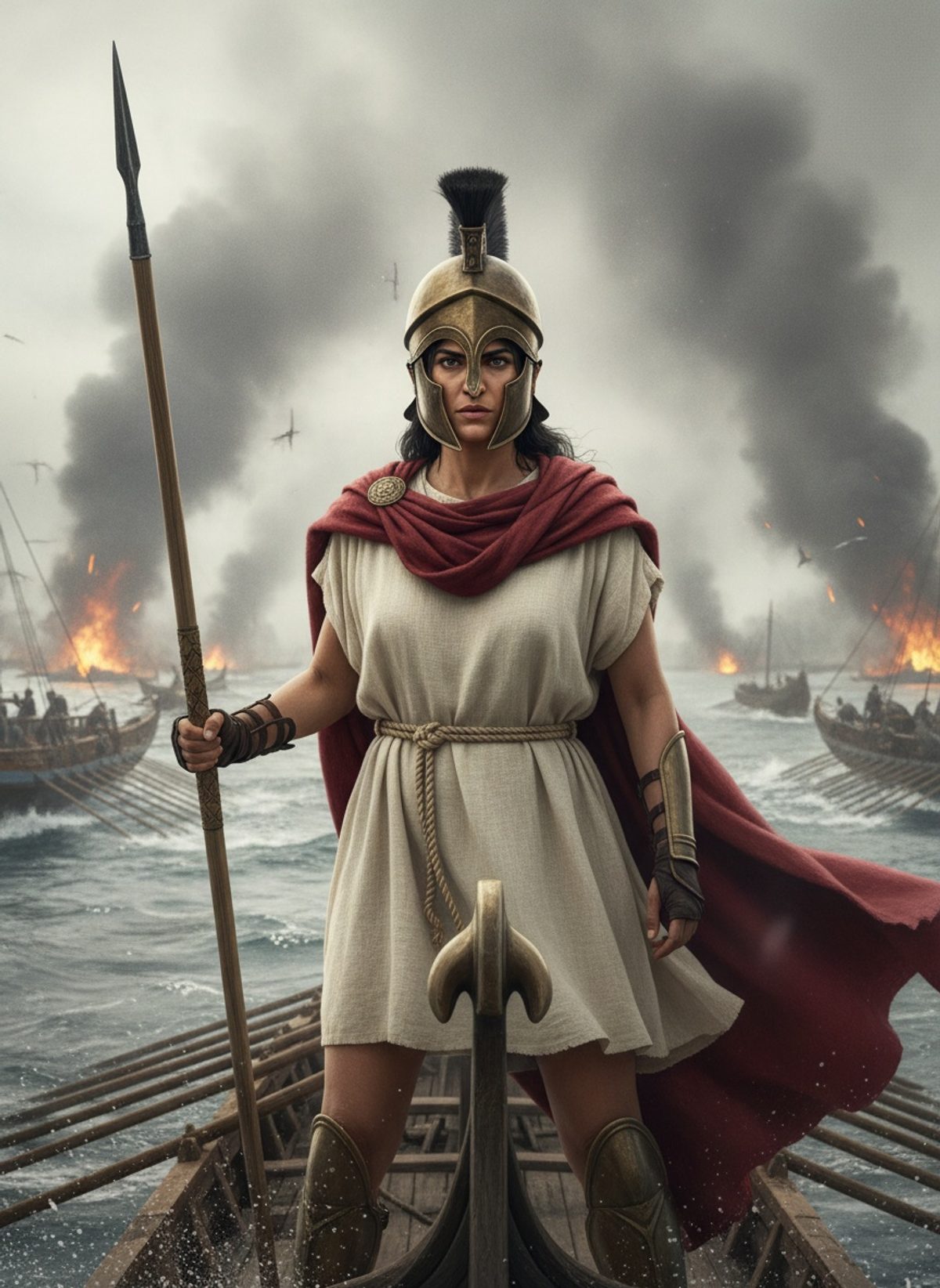
The salty sea breeze mixed with the coppery tang of blood as the crash of battle echoed across the straits. Queen Artemisia of Halicarnassus stood at the helm of her ship, eyes narrowed against the glare of the Aegean sun, as her five triremes cleaved through the waters of Salamis. Despite being Greek by blood and birth, she had thrown her lot with Xerxes, the Great King of Persia. The burning question lingered: what drove this Greek woman to fight against her own kin?
The Unusual Rise of a Greek Queen
Artemisia I of Caria was no ordinary woman by the standards of both her time and ours. In an era when women were rarely seen in positions of military command, she stood apart not only as a queen but as a cunning strategist. Ruling as regent for her young son, Pisindelis, she governed the city of Halicarnassus, now in modern-day Turkey, which was under Persian rule. It was this critical position that granted her favor in the court of Xerxes and eventually led her to the battlefields of history.
Artemisia displayed a remarkable capacity for leadership. Her status was unusual, commanding respect and fear alike. She navigated with wisdom the delicate balance of maintaining power in a male-dominant society. Despite the potential of being remembered merely as a footnote, Artemisia carved her name into the annals of history with her bold decision: to side with Persia during the Greco-Persian Wars.
Xerxes' Influential Ally
Persia's second invasion of Greece in 480 BC was a calculated campaign, marked by the grandeur and might of Xerxes' forces. Among his varied ranks was perhaps his most enigmatic ally, Artemisia. Her decision to support the Persian king was as much political as it was personal. She saw the alliance as an opportunity to secure and strengthen her position and her city’s ties with the powerful Persian Empire.
Read next: Cambyses Stood Over the Sacred Bull. He Stabbed It.
The Greeks feared her, not only because she was one of them but also because of her reputation as a formidable commander. Her tactics and strategies punctuated the concerns of her estranged compatriots. Her presence at Salamis was a stab in the heart for many Greeks, a reminder of the divided loyalties and politics that characterized much of the ancient world.
The Battle of Salamis: A Dire Warning
In the throbbing heart of the battle, Artemisia's foresight and strategic acumen became ever more evident. She had advised Xerxes against engaging the Greek navy at Salamis, foreseeing the narrow straits working against the massive Persian fleet. "Fight not in the channels," she urged, her words laden with the wisdom of experience. Xerxes, however, driven by confidence and urged on by other advisers, ignored her counsel.
The Greeks, led by Themistocles, carried the day. Their smaller, more maneuverable ships turned the tide in these constrained waters, leaving the vast Persian armada disordered and vulnerable. Amidst the chaos, Artemisia distinguished herself. She famously ordered her own ships to ram an ally's vessel to trick the Greeks into believing she was on their side—a ruse that saved her fleet from destruction. Xerxes, witnessing her clever ploy from the shores of Mount Aigaleos, is said to have remarked, "My men have become women, and my women men."
The Aftermath and a Legacy Forged in Iron
The failure at Salamis marked a turning point in the Persian invasions, and Xerxes withdrew with his navy back to Asia. While the Persian king's ambitions had been crippled, Artemisia's reputation soared. Despite her advice being initially disregarded, her strategic prowess was undeniable. Within the shelter of Persian accolades, she left a legacy of intelligence and courage.
Artemisia's post-war years remain largely undocumented, but the tales of her savviness and survival continued to be recounted. Her story is not just one of military aptitude but of astute statecraft. She represents a dynamic and often overlooked influence in a male-dominated era, hinting at the complexities of Greek and Persian relationships beyond the battlefield.
Reflecting on Choices That Defy Time
Artemisia’s journey from Greek queen to a Persian commander is a testament to her strategic brilliance and adaptability. The choice to side with Persia was a calculated risk that spoke volumes of her identity and her vision. She navigated through the tides of conflict, demonstrating that loyalty was not always to one’s birthplace but sometimes to one's foresight and position.
Her story resonates with timeless themes of identity, allegiance, and courage. Artemisia reminds us that history is a tapestry of individuals daring to defy their circumstances, seizing roles that others would deem impossible. In the shadows of ancient strife, Artemisia’s narrative glows as an emblem of the power and complexity of individual choices that shape the course of history.