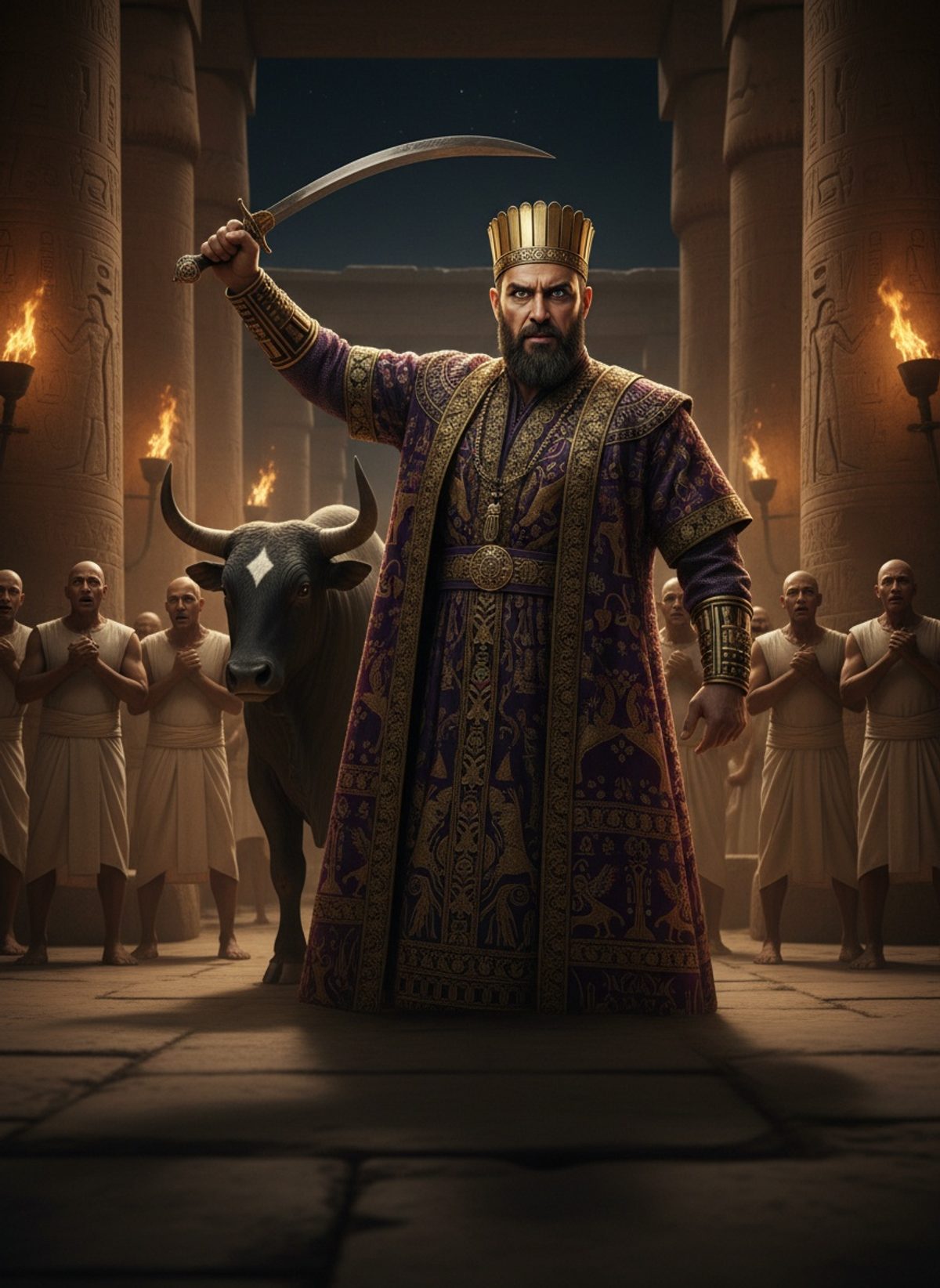
The blade gleamed under the relentless sun as Cambyses II's grip tightened. The sacred bull, Apis, stood before him, a creature of hefty significance and divine reverence for the Egyptians. Its brown eyes mirrored the bewilderment and fear of the priests gathered around it, whispering prayers to avert disaster. Yet, the Persian king's laughter pierced through the solemnity like a sharp dagger. With a swift motion, Cambyses drew his sword, and in that moment, the sacred flesh was stained crimson. Egypt gasped, and centuries of tradition lay butchered at his feet.
A Clash of Worlds: Persia Meets Egypt
In the annals of history, few encounters were as foreboding as the one between Persia and Egypt. At stake was not only the ownership of land but an epic clash of cultures bathed in centuries of myth and tradition. In 525 BCE, Cambyses II, the enigmatic son of Cyrus the Great, marched into Egypt, defeating Pharaoh Psamtik III at the Battle of Pelusium. Such conquests often brought with them a momentary silence—an eerie calm before the cultural storms set in.
As Cambyses stood triumphant, the Egyptians were desperate for a strategy that would preserve their identity amidst Persian dominion. Apis, the sacred bull, symbolized continuity, a living deity incarnated from the heavens. It was paraded through Memphis with hopes that even a god-king would bow before divinity. The priests believed in the bull's sanctity with a firm conviction that transcended fear, clinging to rituals that bridged their earthly realm with the celestial. Cambyses' desecration of this vessel of worship was not merely an act of brutality; it was a direct strike against the spiritual linchpin of the Egyptian world.
Yet, the attacking sword was not Cambyses' only weapon. As governor of Babylon, versed in the delicate dance of politics and religious rites, he understood the powers of propaganda and dominance. His act was as much a demonstration of authority as it was a message: innovate the conquered lands, burn the structures of their ancient faith, and enforce the will of the Achaemenid Empire. In misrepresenting Cambyses' intent as devilry, subsequent Egyptian accounts painted him as mad—a reputation amplified by Greek historians like Herodotus, whose writings about his supposed irrationality and religious sacrilege have persisted, shadowing Cambyses through time.
Read next: Tiridates Knelt Before Rome. Then He Changed the Terms.
Ruinous Reverence: The Sacred and the Profane
What Cambyses might have dismissed as one more tale to conquer masked an intricate tapestry of symbolism. The episode in Memphis was never merely a rebel's temper, but a profound episode dripping with religious iconoclasm that altered the region's cultural landscape indelibly. The Apis bull was an embodiment of Ptah, a god of craftsmanship and creation, and embodied promise and fertility. Cambyses' sword did more than slit flesh—it challenged the tenets of divinity itself.
This act resounded throughout the Nile, reaching the farthest provinces, more so than any herald could have achieved. Defiling Apis was akin to challenging the gods and breaking a dam of long-held beliefs under pressure. The ripples grew into waves that reverberated in lunar cycles, showing there were limits to imperial power. Enforcing dominance was easy; commanding respect was not.
Another layer to Cambyses’ act lay in its mystical implications and political missteps. The desecration angered Egyptian populace who were known for their devotion to their gods. Insurrections simmered beneath the surface, brewing discontent that would have future Persian rulers, including Darius the Great, understanding the profound error in not aligning governance with respect for local traditions. It was a story retold with whispers that possessed the gravitas of divine gospel, transferring the whispers of betrayal through generations.
Though brief, Cambyses' Egyptian narrative reflected his strategic oversight—a ruler whose comprehension of warfare exceeded his grasp of cultural harmony. His wound on the way to Syria in 522 BCE and subsequent death in Agbatana left an empire shaken and the adventure unfinished. The mythos of Cambyses remained intact; a tale of conquest unfinished, a regent who had grasped the scepter but failed to wield it wisely.
Lessons Intertwined with Legacy
The story of Cambyses II’s conquest is far from being a mere footnote in the historical records of the Achaemenid Empire. It encapsulates an elemental truth about the power and peril of crossing cultural lines without reverence or understanding. The ancient Persians demonstrated magnificent tactical brilliance and a ground-breaking geopolitical reach. Yet, Cambyses’ run-in with the Egyptian ethos showcases an endemic vulnerability to hubris—a lesson seasoned by time itself.
The legacy of Cambyses echoes through the pages of history, not as a mere artifact but a pivotal lesson: conquer not just by arms but by entwining hearts. The unyielding moment when he chose desecration over dialogue instilled a distrust that persisted even as Darius and his successors sought to mend relations. In ancient Egypt as in today's worlds, resilience stems not only from a land or its rulers, but from the interplay of belief, the respect for traditions, and the intricate dance of power and faith. His story serves as a stark and poignant reminder that conquests etched in forgetfulness are more perilous than battles fought in arms.