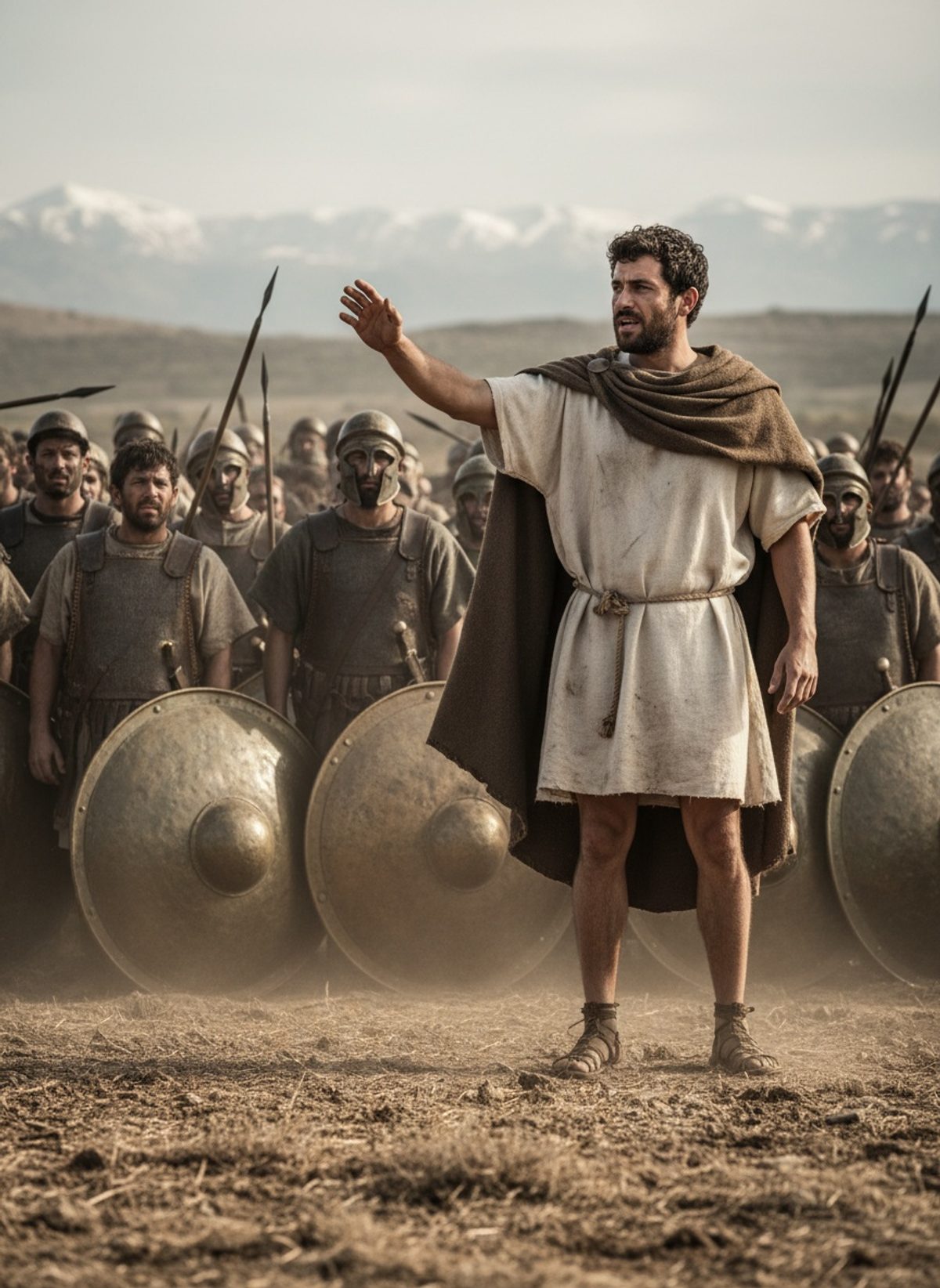
The clamor of shields and the clatter of swords echoed across the battlefield as the Athenian forces stood victorious over the crumbling might of the Persian Empire at the Eurymedon River. Cimon, the seasoned general, surveyed the aftermath with a gaze as sharp as a falcon's. The ground was littered with the detritus of war—the broken remnants of what had once been the pride of Persia. The smell of saltwater mixed with sweat and blood lingered in the air, a pungent reminder of the fierce battle fought just hours before. Thousands of Persian soldiers, their eyes hollow and their bodies exhausted, shuffled into makeshift camps, prisoners of a war they never dreamed they would lose so thoroughly.
The sun was beginning to set, casting a golden glow over the scene that belied the brutality of earlier events. Cimon knew that he had achieved the kind of victory that legends were made of, defeating not one, but two formidable Persian forces in a single day. For any other leader, there would have been little question of what to do next: sell the prisoners into slavery, bolster the city's coffers, and further weaken an enemy that had long tormented the Greek states. Yet, as Cimon watched these defeated men, he found himself contemplating a different path, one that seemed as radical as it was merciful.
The custom of the day was to exact heavy ransoms or consign prisoners to a life of servitude, swelling the riches and economy of Athens at the expense of its foes. But Cimon, son of the famed Miltiades who had commanded Athenian forces at Marathon, was not one to blindly follow tradition. He saw an opportunity not just to enrich Athens materially, but to elevate its standing as a moral and cultural beacon among the Greek states. In his view, the measure of a polis was not just in its military might or economic power, but in the wisdom of its leaders and the justice of its actions.
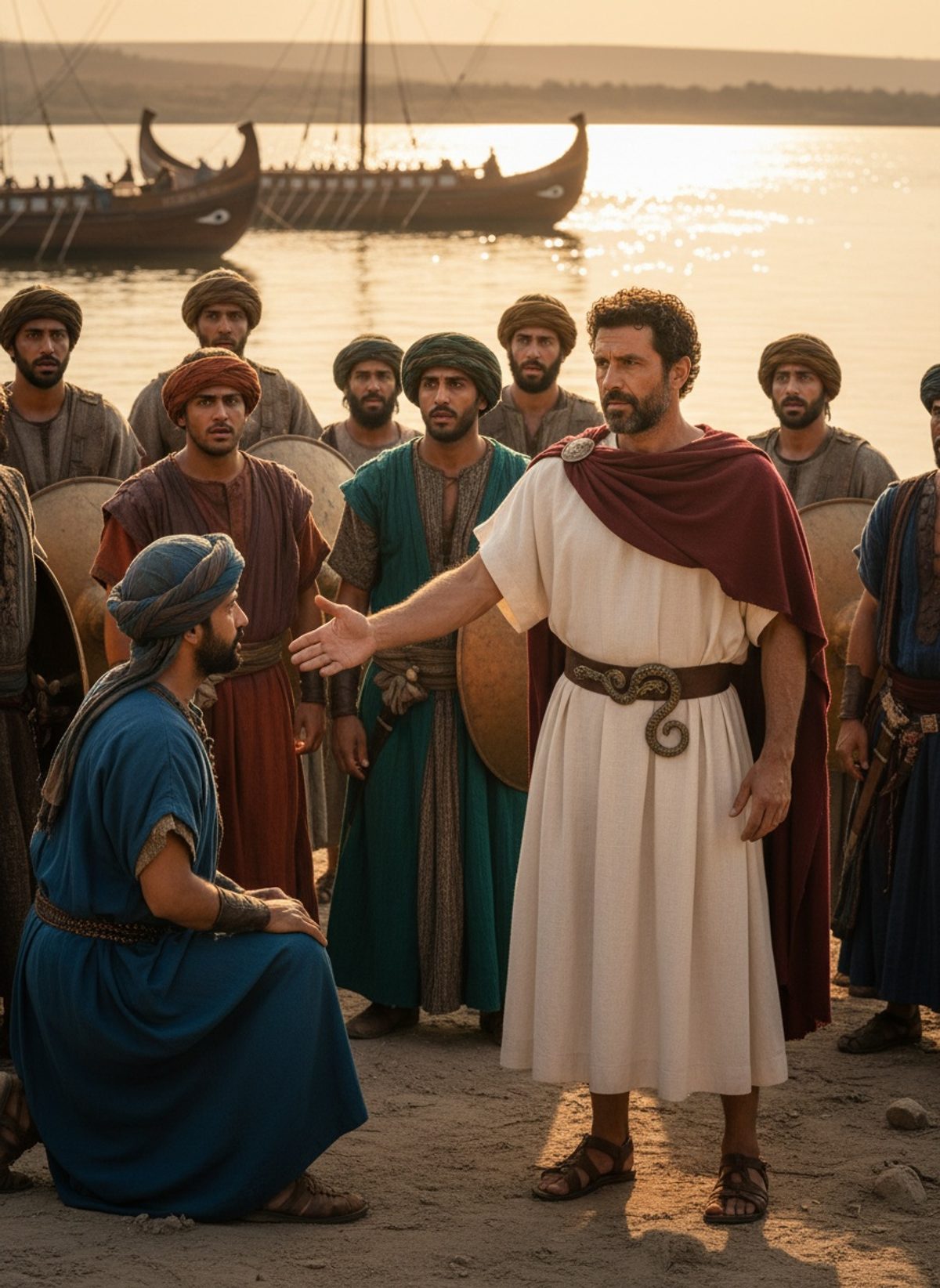
With the sounds of mourning and strife still echoing, Cimon convened his advisors under the tent that served as his command post. The proposition he laid before them was as audacious as any military maneuver: rather than enslaving the captured, he would allow them to purchase their freedom. The price? Surprisingly low ransoms, calculated not to ruin these defeated men but rather to send them home with tales of Athenian honor and magnanimity. His advisors, men seasoned by years of war and diplomacy, exchanged skeptical glances. Was this a sign of folly, of a general who had lost his edge following the heat of battle?
Read next: Phocion Was Sentenced to Death. He Paid His Own Fee.
Yet Cimon's influence was undeniable, forged by his lineage as much as his achievements. His ancestors had carved a place in history, and he was determined to do no less. Athens wore its victories as a shield, but in this act, Cimon intended to fashion it into a bridge. Some saw it as a gamble—the risk of appearing weak or inviting retribution was real. However, Cimon understood the delicate dance of power and perception. Even the most hardened warriors could be swayed by the call of home, the promise of life beyond the chains of servitude.
As the days passed, word of Cimon’s offer spread throughout the ranks of the captured Persians. Initially, disbelief dulled their responses. How could they trust the promises of their conqueror, especially one as famed for his military prowess as Cimon? Yet as the first among them began to leave, lighter in soul if still weary in body, the truth of the offer was undeniable. For the Athenians, the sight of the once-proud Persian soldiers departing, shadows of their former selves yet humbled and free, was a peculiar spectacle.
Cimon's strategy was shrewd as much as it was kind. By allowing these men to return home, he planted seeds of respect that might one day bloom into full-fledged peace. In their homeland, these soldiers would recount tales not only of the ferocity of Athenian arms but also of the surprising compassion shown by a leader who could afford to squander neither coin nor reputation. This act of mercy had the potential to shift the geopolitical terrain more subtly than any fortress or fleet ever could.
The aftermath of Eurymedon thus presented a dichotomy: while many focused on the spoils in tangible wealth, Cimon invested in something less tangible but potentially more enduring. His decisions would reverberate through the diplomatic channels between Athens and Persia, influencing acts of statecraft and diplomacy for years to come. Beyond all this, the episode offered a lesson that echoed through time, a tale sometimes overshadowed by grander narratives of conquest but no less profound in its implications.
The story of Cimon's decision at the Eurymedon River endures not simply as an account of military brilliance but as an exploration of leadership and its degrees. It prompted discussions about the legacy of war, the weight of decisions made in the heat of victory, and the possibilities that arise when power is wielded with restraint and empathy—in lessons as pertinent today as they were in the thundering heart of the ancient world. In letting those Persian men return home, Cimon wielded the greatest tools at his disposal: wisdom and the hope for a future where enemies could find peace not just in submission, but in shared humanity.