She wielded no scepter, managed no armies, and yet, in the twilight of an empire, a simple conversation in a royal chamber sealed the fate of what was once the world's most powerful kingdom. That woman was Atossa — daughter of Cyrus the Great, wife of Darius the Great — who walked into her husband's deathbed chamber and with mere words, redirected the flow of history.
The Shadow of an Empire
In 486 BCE, the Achaemenid Empire sprawled across vast and diverse territories, boasting lands from the banks of the Indus River to the fertile Nile Delta. Established by the visionary Cyrus the Great, the empire found its strength in the unifying reign of Darius I, commonly known as Darius the Great. Under his rule, the empire flourished, an intricate tapestry of cultures entwined within imperial infrastructure and innovations. Yet, even the greatest of kings are subject to the inexorable march of time.
Darius had extended the Persian Empire to its territorial zenith; however, his life was drawing to a close. Susa, Persepolis, and the splendid halls of Babylon had all borne witness to his grand projects. Now, the question of succession loomed like a specter over the empire's heart, a question that only the sagacious Atossa seemed ready to answer.
Atossa: The Silent Influence
Born into royalty, Atossa was not just the daughter of the empire's founding patriarch, Cyrus the Great. Her life was inextricably linked with the destiny of the Persian monarchy. As wife to Darius, her presence was felt across the kingdom, though seldom formally acknowledged. In a world shaped predominantly by male authority, Atossa's intuition and influence were quietly monumental.
Read next: Artabanus Warned the King. The King Smiled. Then He Marched.
Atossa's life embodied the blend of power and diplomacy, a bridge between the old ways and the burgeoning new order. She understood the tangled web of loyalties and rivalries better than most, for she had nurtured the future of Persia in the palace corridors. Her sons had a potential claim to the throne, and it was time for Atossa to guide that legacy.
A Moment in the Chamber
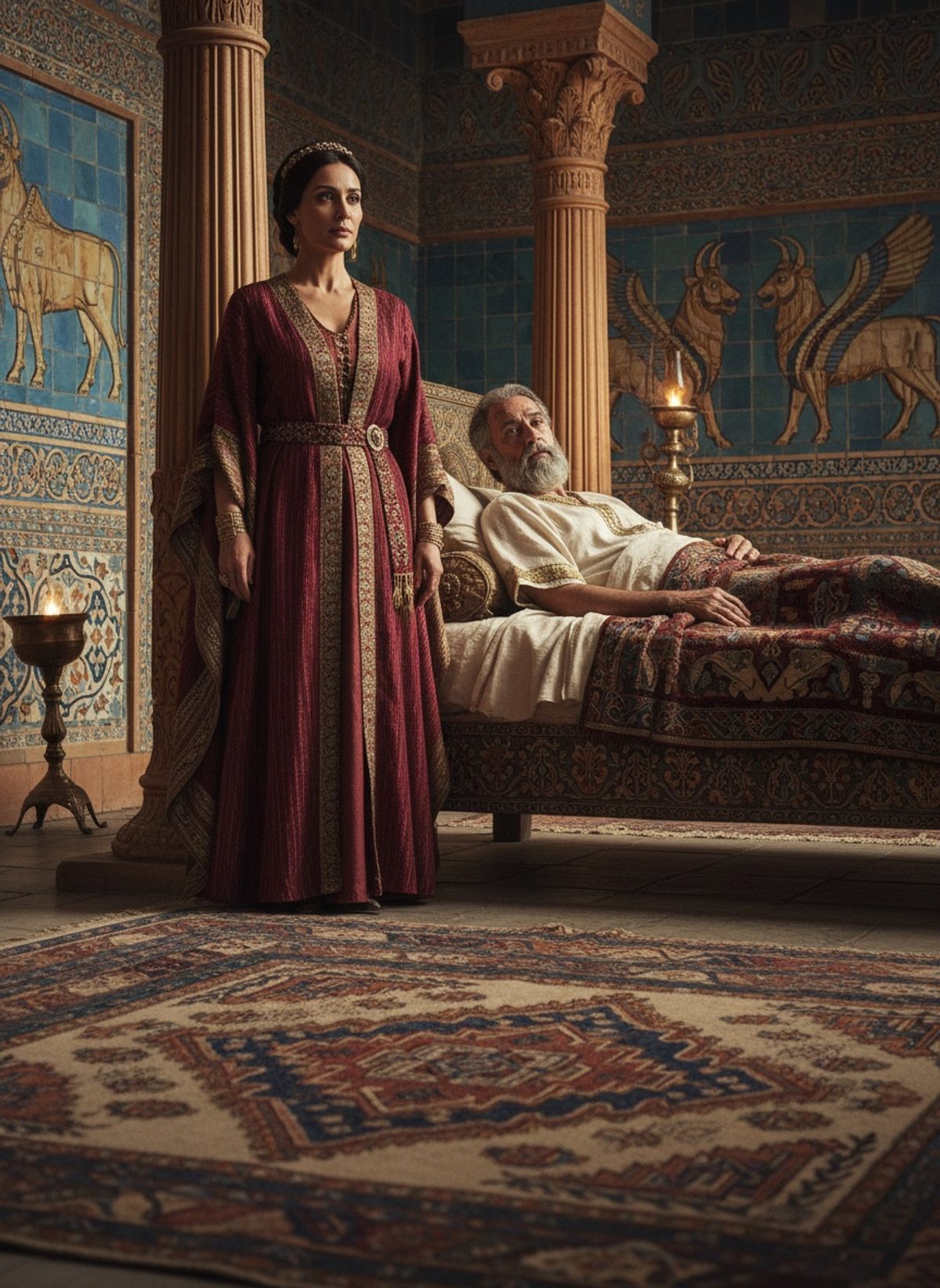
Two sons desired the throne: the ambitious Artobazanes, eldest by birthright but born before Darius was king, and Xerxes, the son of Atossa and grandson of Cyrus, the emblem of continuity and lineage. It was a matter not just of familial contention but of imperial consequence. As Darius lay dying in the suffocating but opulent silence of his chambers, the question of succession had the power to unravel the tapestry he had so meticulously woven.
Into this tense setting walked Atossa. Her mere entry was enough to reshape expectations. Here was a woman without armies, without a title beyond her ancestry and marriage. Yet, she carried the weight of Persia's future. Arguably the most significant decision of Darius's reign awaited; his body weakened, but his mind, ever-sharp, comprehended the stakes through Atossa's careful counsel.
With eloquence and foresight, Atossa articulated what others could not. Her advocacy for Xerxes was more than a plea for her son; it was a strategic move to ensure the empire's stability and continuity. She spoke of legacy, of a lineage that could command loyalty not through mere claims but through the bloodline—a lineage that reached back to Cyrus the Great himself.
The Unseen Legacy
With Atossa's intervention, the path was cleared. Xerxes ascended to become the King of Kings, embarking on his own ambitious rule, one that would bring the empire both glory and challenges. His reign would be marked by the grandiose, as well as by the cataclysmic, including the infamous attempt to conquer Greece. Yet, the transition was secure, the empire stable — an empire held together by one woman's decisive counsel during the uncertain hours before a great king passed.
Why does the story of Atossa matter? Her narrative illuminates the profound impact individuals can wield within structures of power that seem impermeable. Atossa's life challenges our perceptions of agency in history, serving as a timeless reminder of the quiet yet potent influence one can possess. In a world where the written records often prioritize the battles and exploits of men, her story offers a whisper of the unrecorded legacies forged in the shadows, a testament to the enduring power of a conversation that changed everything.