He didn't wait for orders. Instead, Commander Amos Mahoney charged headfirst into the jaws of certain death with only a sputtering engine and sheer resolve to keep him afloat.
The Unthinkable Decision
The Battle of Cape Engaño in October 1944 presented one of the most lopsided confrontations of World War II. American naval forces, despite their technological advantages and superior numbers, faced a relentless Japanese fleet. It was in this maelstrom of conflict that Commander Mahoney, captain of a beleaguered destroyer, made the choice that would etch his name into naval lore. As his ship limped forward, battered and weary, the Japanese forces loomed large on the horizon like a harbinger of doom.
Mahoney was faced with an impossible decision. With one engine crippled and a skeleton crew, his destroyer was not meant to be at the forefront of any assault, let alone against a heavily armed opponent. Yet, the inherent audacity of his choice is exemplified by the stark contrast to typical naval strategy, which prioritized calculated maneuvers over reckless abandon. Mahoney's decision was unorthodox — a desperate gamble underpinned by the latent belief that sometimes audacity trumps caution.
A Combatant Not Fit for Battle
The destroyer, though named for duty, was anything but ready. Navigating the high seas with one working engine was akin to a lion with a clipped wing — formidable yet diminished. Other commanders might have sought orders or waited for reinforcements, but Mahoney knew that waiting was a luxury he couldn’t afford. It was a miraculous feat that his ship even reached the frontline; battered from previous engagements, it barely resembled its once-proud form.
Read next: They Chained the Hudson. Britain Never Dared Test It.
As the storm of metal and fire bore down upon them, Mahoney commanded his men with a reassuring yet resolute presence. The crew, bracing for the worst, took solace in their captain's unwavering determination. It wasn’t just bravado or desperation that drove them; it was a shared spirit, a bond forged in the crucible of war. Against all odds, the crippled ship charged forward, a solitary beacon in a sea of chaos.
Facing the Typhoon
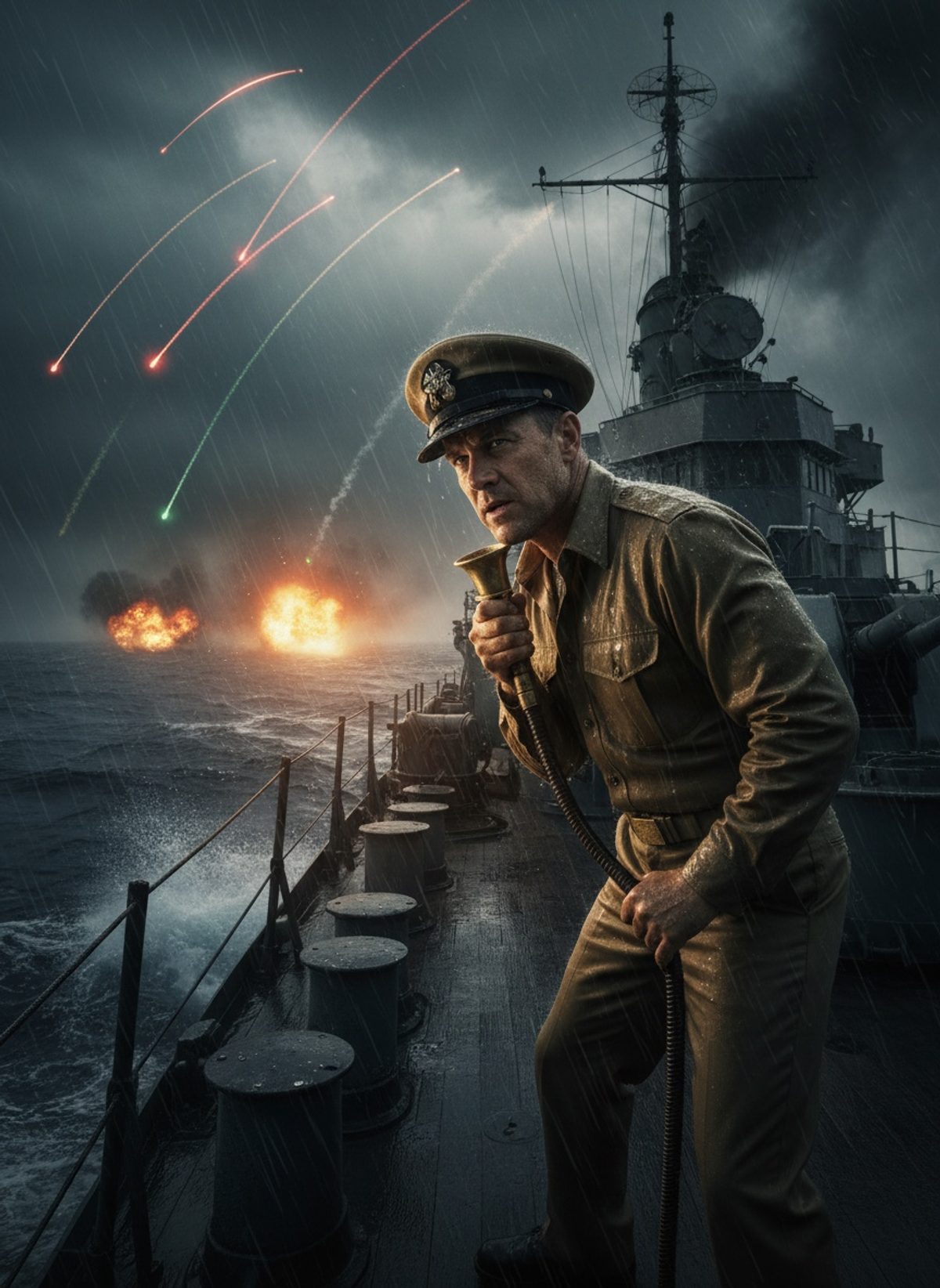
Nothing could have prepared them for the visceral reality of the battle. As Mahoney's destroyer cut through the waves, the Japanese armada unleashed a barrage befitting mythological wrath. The sky was painted with streaks of fire, the ocean churned with fury, and the air was thick with the sound of shells ripping through the air. Yet Mahoney remained undeterred, steering his vessel through the tempest and into the heart of the Japanese formation.
The crew manned their stations with an unflinching dedication reminiscent of ancient mariners charging into uncharted waters. They were grossly outmatched, yet the sheer boldness of their advance bewildered their opponents. The Japanese, perhaps expecting a retreat, were taken aback by the audacity of the maneuver. It was a suicide run, yet it paralyzed the enemy, if only momentarily.
The Sea Claims its Due
The sea, unpredictable and unforgiving, has always held ultimate dominion. For Mahoney and his men, it was a testament to their resolve that they held on as long as they did. As smoke enveloped the battered ship and the ocean hungrily lapped at its sides, reality was undeniable. A direct hit, then another and another, sealed their fate. In the cacophony of battle, the stoic acceptance among the crew was a final, silent nod to their captain's resolve.
In another world, another time, perhaps the crippled destroyer might have been salvaged or Mahoney’s charge heralded as a turning point. But as fate would have it, the sea claimed the ship and nearly all her crew. Their desperate sacrifice may have been overshadowed by the broader sweep of history, yet it quietly shaped the perception of what it meant to fight, to lead, and to defy the inevitable.
Why Their Story Endures
Historians sift through the debris of the past, searching for the tendrils of truth in sweeping narratives. Commander Mahoney’s charge, though a single thread in the vast tapestry of war, unravels a compelling lesson hidden beneath the layers of tactical analysis and strategic discourse. It challenges the timid calculation of odds and asks instead for an appraisal of character, bracing against the currents of fear dictating survival.
Their story matters not because of its triumph but because it resonates with the essential human quality to rise above despair in the face of overwhelming adversity. It exemplifies the courage demanded by extraordinary circumstances and commemorates those moments when human spirit pierced through the shadows of history, leaving a lasting legacy on the often overlooked footnotes of war. In the annals of naval lore, Mahoney and his men achieved an unwritten victory: they did not falter, even as the sea reclaimed their steel and the world nearly forgot their names.