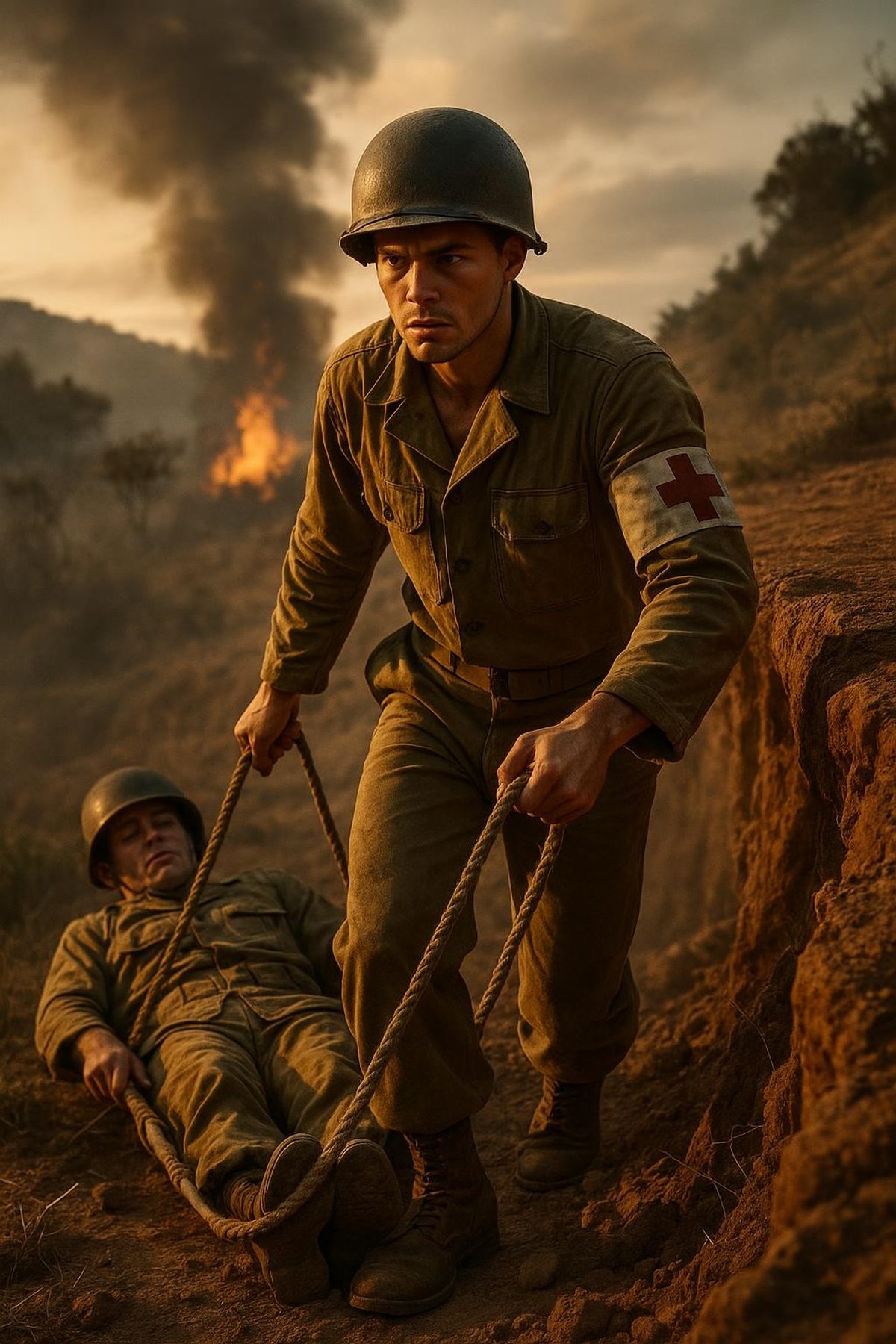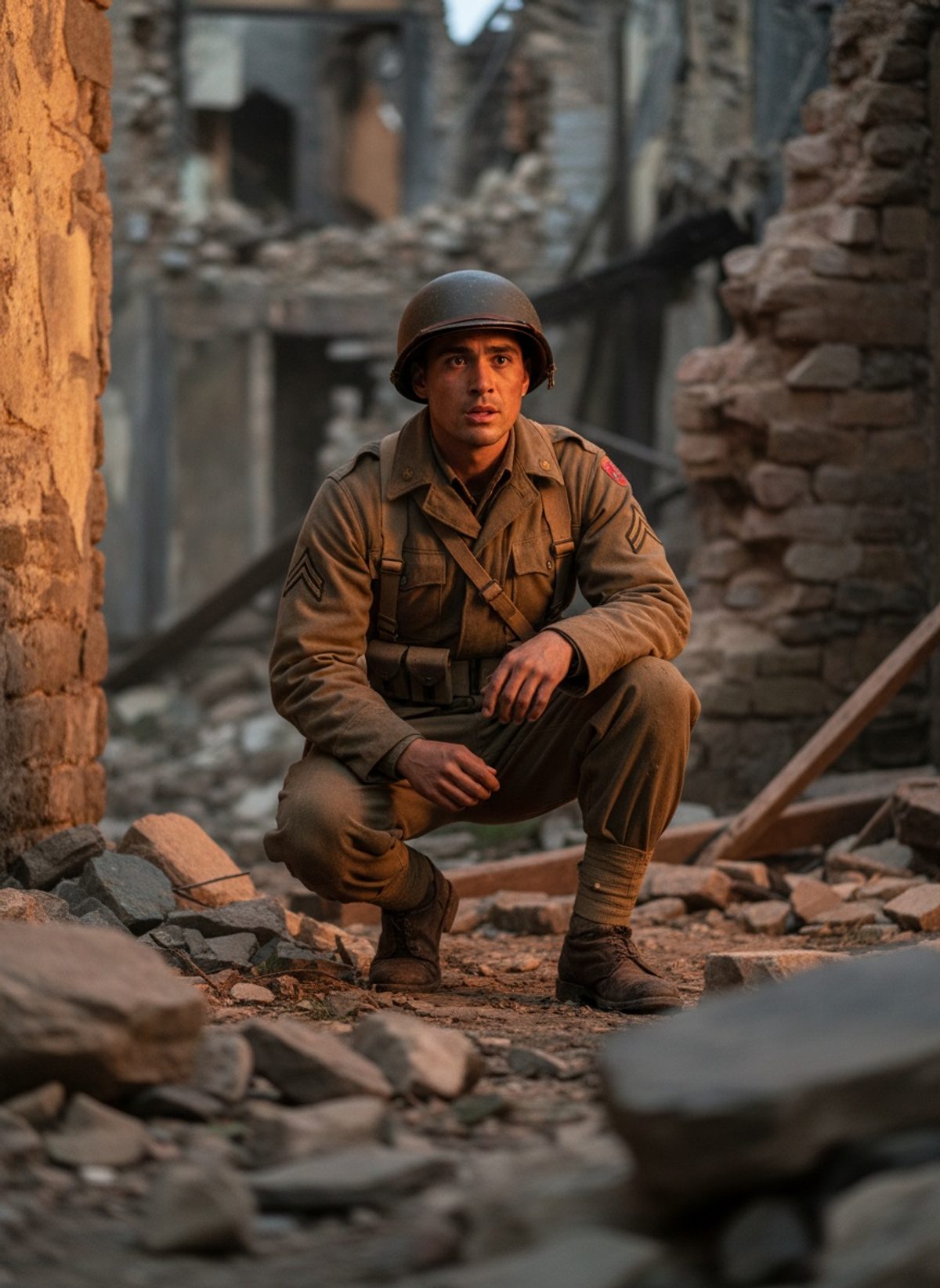
Joe Medicine Crow crouched behind the half-crumbled stone wall, his heart pounding in his chest as German machine-gun fire rained overhead. The air was thick with the acrid scent of gunpowder and fear, yet amidst the chaos, he found clarity. Here, thousands of miles from his Montana home, in the thick of Nazi Germany in 1945, Joe was on a quest. Not for glory or medals, but to fulfill an ancient calling that connected him to his ancestors, a calling that would transform him from a university graduate into a full war chief of the Crow Nation.
A Legacy of Warriors
The Crow Nation, an indigenous people of the Great Plains, defined leadership through acts of courage and service. Historically, to be recognized as a war chief, a warrior needed to complete four traditional deeds: counting coup by touching the enemy without killing him, taking an enemy's weapon, leading a successful war party, and stealing an enemy's horse. These were not just acts of valor but rites of passage that linked a warrior to the history and spirit of his people. For years, these deeds seemed to belong to a bygone era, but World War II brought unexpected opportunities for a young Crow with big ambitions.
Born in 1913, Joe Medicine Crow grew up enveloped in the oral histories of his people. His grandfather, White Man Runs Him, had been a scout for the legendary General Custer. Joe's upbringing was saturated with tales of bravery and resilience, but it was his pursuit of education that set him apart. In 1939, he became the first member of the Crow tribe to earn a degree, graduating from Linfield College in Oregon. But when conflict erupted across the globe, he left behind his academic aspirations to serve in the U.S. Army, driven by an innate sense of duty and the legacy of warrior ancestors echoing in his veins.
Deeds of Valor in a Modern War
In the European theater of World War II, Joe Medicine Crow found a battlefield unlike any told in the stories of his predecessors—yet full of opportunities to fulfill the ancient deeds. His chance to count coup came amid a fierce encounter, where he stealthily closed in on a German soldier, disarming him with nothing but his bare hands. The act required not just courage but a calm nerve and a belief in his warrior spirit. As Joe squared his shoulders, he had no doubt about his purpose. More than just disarming an enemy, he was claiming a victory that transcended the moment.
Read next: Tōgō Had One Fleet. He Bet Everything on One Turn.
The second deed happened on the battlefield, Joe seized upon a rare opportunity during a disorganized retreat. With quick reflexes and an eye for survival, he managed to grab a German soldier's rifle and carry it back to his unit. His comrades fought beside him for the success of the mission, seeing in Joe not just a fellow soldier, but a leader guided by traditions far older than any nation-state or military campaign.
The quest for the remaining deeds saw Joe leading a war party across Europe. He inspired his men through his fearlessness, rescuing them from perilous situations and managing successful reconnaissance missions. In the heat of battle, he carried out these missions with the precision and strategical insight that came as naturally to him as the stories he had grown up with.
Returning a Hero
As the war drew to a close, Joe Medicine Crow completed the fourth deed in the heart of Germany—a daring nocturnal raid on a Nazi camp where he liberated fifty horses. Among them was a prized stallion, and as Joe leapt onto its back, bare-chested and shouting a traditional Crow war cry, the image left an indelible mark on every soldier present. In that moment, amidst foreign lands and foreign enemies, Joe performed in a fashion unmistakably and uniquely his own, his horse stealing a deed as storied as any from centuries past.
When he returned to Montana, Joe Medicine Crow was celebrated not just as a decorated war hero, but as a war chief, esteemed in a lineage that spanned generations. The deeds he achieved in Europe embedded him as a stitch in the fabric of his people's history—a man who bridged generations by bringing ancient traditions to the modern age of warfare. His story provided inspiration and a profound connection to the past for his people, affirming the enduring strength and adaptability of indigenous culture.
Joe Medicine Crow didn’t just return from World War II as another soldier; he came home carrying the narratives and histories of his people, enriched and validated by deeds of courage in a distant conflict. His life is a reminder that even in the most tumultuous of times, the threads of heritage and tradition can find their way into the present, leaving legacies that inform the future. Through his story, we learn that history is never just a page in a book but an ongoing narrative, a living tapestry waiting for its next stitch.