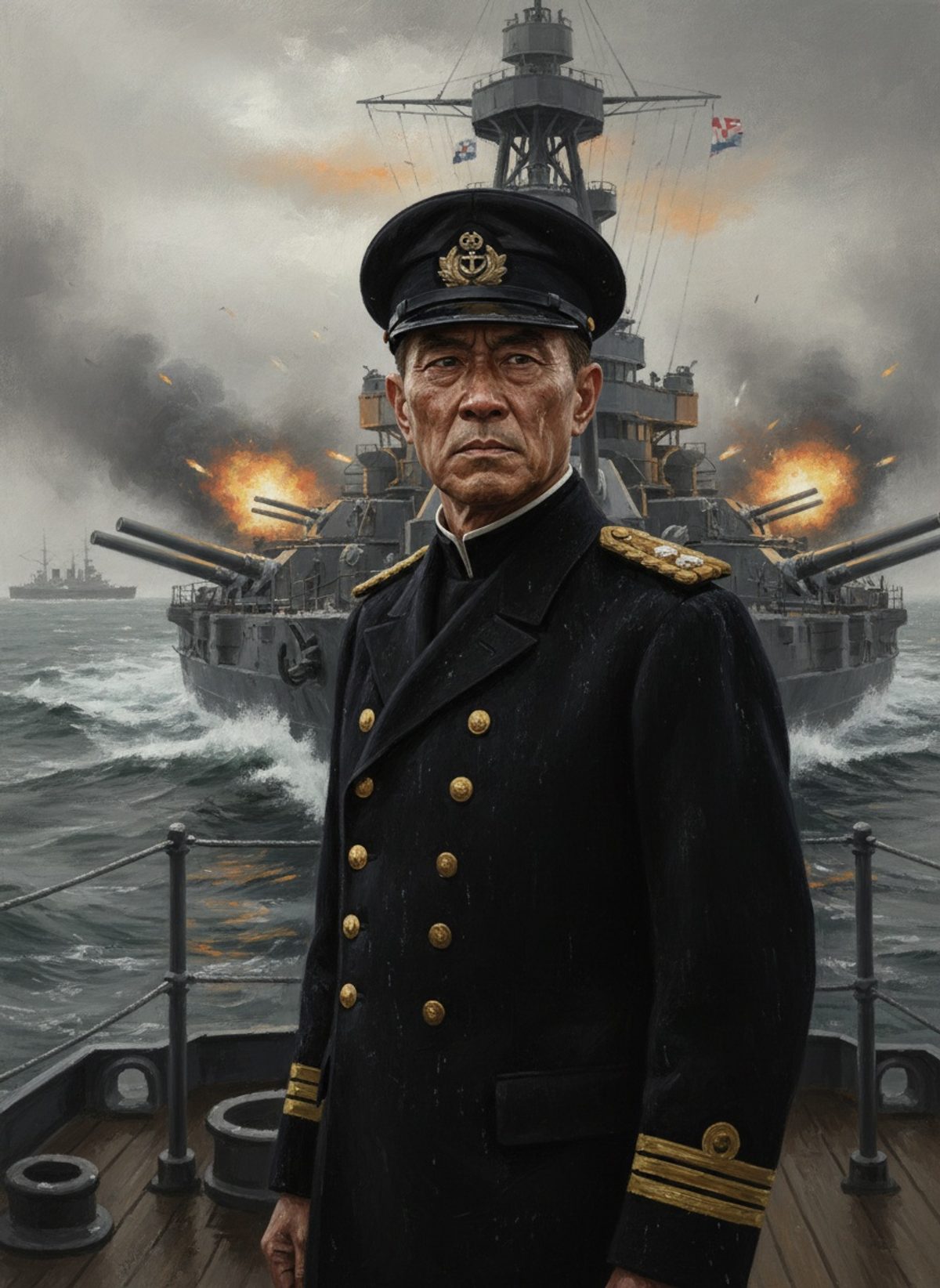
May 27, 1905. The mist hung thickly over the waters of the Korea Strait.
The stage was set for one of the most audacious naval battles in history—in the narrow passage of the Tsushima Strait, Admiral Tōgō Heihachirō faced the might of Russia's Baltic Fleet. It was a moment poised between victory and disaster. The stakes were monumental: for Russia, a crushing defeat could spell the end of its naval supremacy; for Japan, success could herald its rise as a formidable global power. Admiral Tōgō, known as "the Nelson of the East," had one chance to alter the course of history, and he was not about to let it slip away.
The Relentless Russian Armada
The journey of the Russian Baltic Fleet was nothing short of epic. In October 1904, the order came from Saint Petersburg to dispatch the fleet to the Pacific—the aim was to break the siege of Port Arthur and secure a decisive victory against Japan. Led by Admiral Zinovy Rozhestvensky, the Russian fleet surged forth, covering nearly 18,000 nautical miles, braving the tempestuous waters of the North Sea, the Equator's scorching heat, and the French colonial ports’ hospitality from Madagascar to Vietnam. Yet, despite their intimidating repertoire of battleships, cruisers, and destroyers, their passage was fraught with misfortune, miscommunication, and mechanical failings. With each grueling mile, the fleet became a floating arsenal of entropy.
Tōgō was no stranger to adversity either. Born as Tōgō Nakagorō in Kagoshima in 1848, he rose through the ranks of the Imperial Japanese Navy amid Japan's rapid modernization. His formative years were spent absorbing Western naval strategies and technologies, notably during his studies in Britain from 1871 to 1878. This experience served him well as he spearheaded Japan's efforts to stymie Russia's Eastward ambition. His strategy against the Russian fleet was a masterpiece of precision and daring; he understood the stakes and the peril of the impending confrontation at Tsushima.
Read next: The Fireboat They Scrapped Saved New York on 9/11
The Crossroads of Destiny
As dawn broke over Tsushima on May 27, 1905, mist and drizzle hung over the narrow strait. Unbeknownst to the Russians, Tōgō’s fleet waited, concealed in the shadows. At the critical moment, Tōgō made his daring move—one that had never been attempted under live fire before. As the Russian formation loomed ahead, Tōgō ordered his fleet to make a sharp turn. This maneuver, known to history as "Crossing the T", placed his ships perpendicular to the Russian line, allowing Tōgō's fleet to bring all their guns to bear, while minimizing the Russians’ capacity to return fire effectively.
The Russian commander Rozhestvensky, caught off-guard by the boldness and precision of Tōgō’s move, found his formations in disarray. The battle quickly escalated into a frenzied exchange of artillery fire. The sea echoed with roars of cannon and cries of chaos as smoke and fire engulfed the air. Tōgō had placed Japan's fate on this roll of the dice, and he played it to perfection. Within mere hours, the heart of the Russian fleet was shattered. Ships that had traveled halfway across the globe sank beneath the waves, while others were captured or scattered in retreat.
Ripple Through History
By the evening of May 28, the battle was decisively concluded. Russia’s naval pride lay in ruins—the fleet that had once dominated the Baltic was reduced to wreckage. Out of 38 Russian ships, only a handful managed to limp back to safety. The ramifications were profound; the victory not only secured Japan's position as an emergent military power but also shifted the balance of power in East Asia. The world looked on in awe—a new player had emphatically announced its arrival on the world stage.
Tōgō's triumph at Tsushima became an enduring symbol of strategic genius and audacity. His bold gamble paid off, reshaping perceptions of naval combat and setting a template for modern naval engagements. Back home, Tōgō was heralded as a national hero, imbued with near-mythic status that etched his name into the annals of Japanese history.
The story of Tsushima is not just about a military maneuver or a fortunate turn of fate, but a testament to the nuances of strategy, preparation, and sheer determination in altering definitions of might and control on the global stage. As the ripples of Tōgō's achievement spread worldwide, they invigorated debates about modernization, naval tactics, and the evolving geopolitics of the 20th century—an era where the mastery of the seas continued to chart the course of empires.