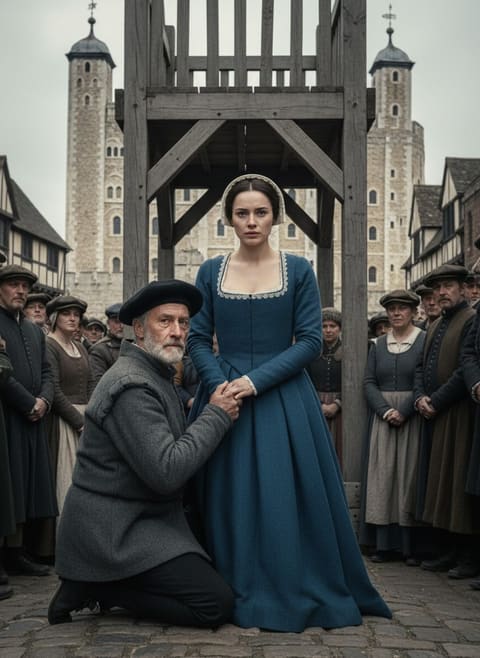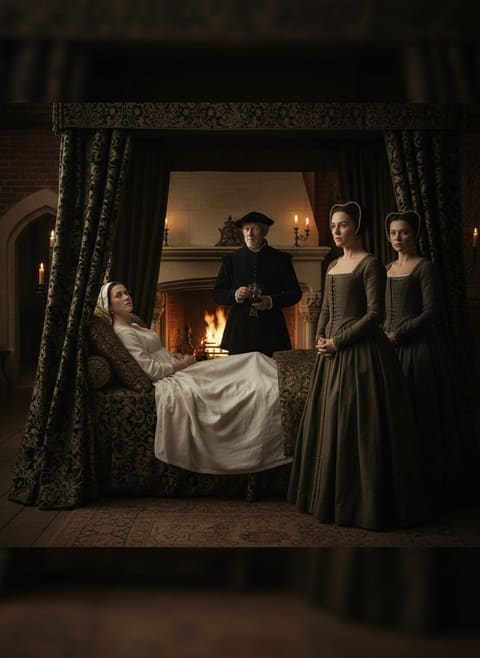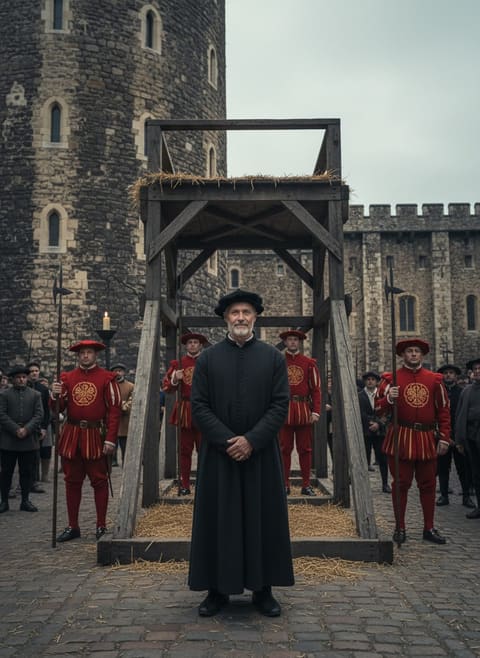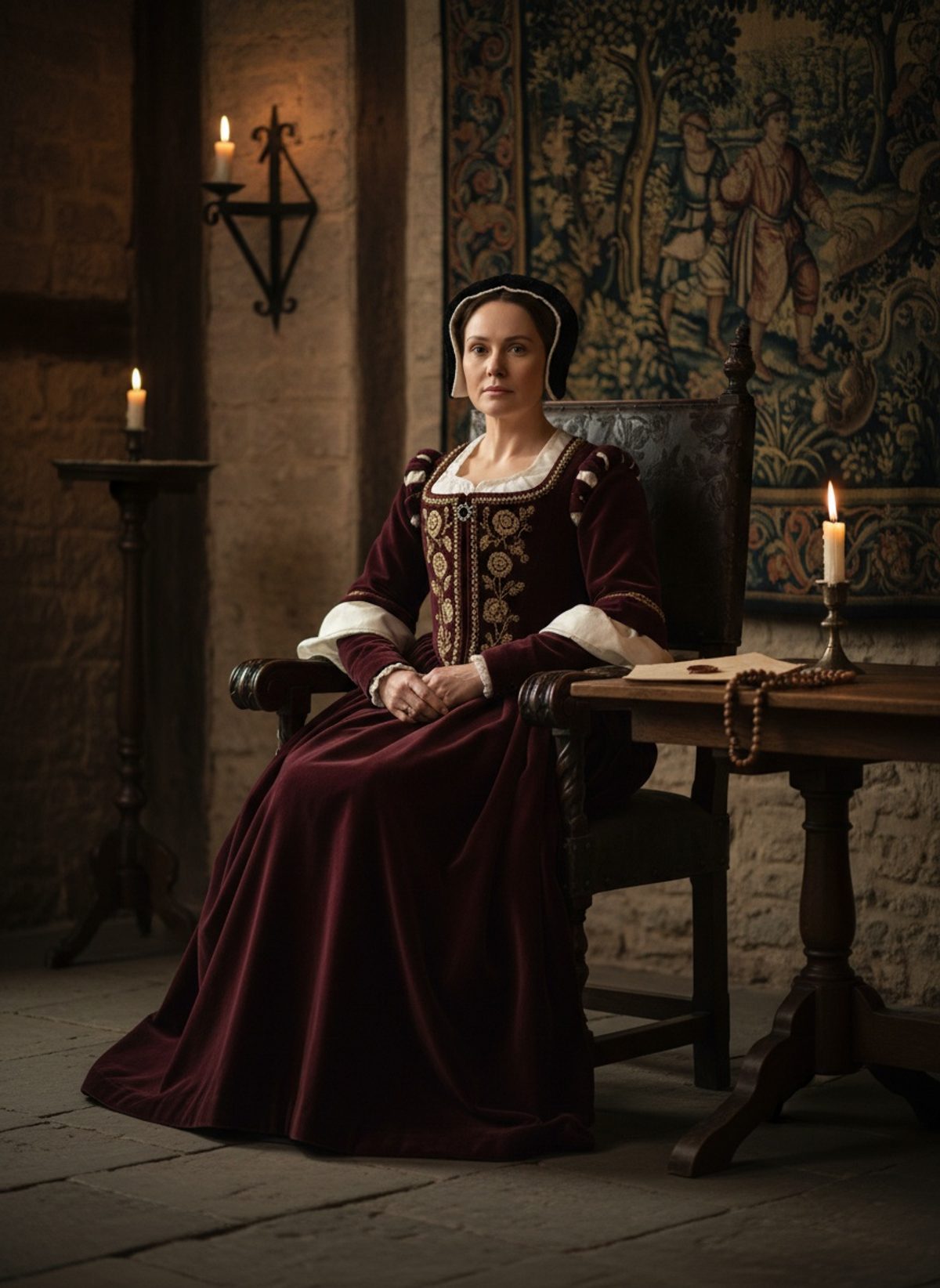
The cold stone floor of the Tower of London pressed against her knees as Katherine Pole clutched the prayer book in her hands. Every breath she took seemed loud in the hushed, somber air, where whispers of dread and mourning lingered like a spectral presence. She had seen the road to the scaffold too many times before — a path worn by the footsteps of her own kin, buried deep within her memory, stitched with the echoes of her grandmother Margaret's and her father's last moments. With a determination infused by the will to survive, Katherine understood one crucial lesson that stood between her and the axe: discretion could be as powerful as any crown.
The Tudors, with their insatiable appetites for power and purification of the royal lineage, were no strangers to the bloodshed that punctuated their rule. Katherine's grandmother, the venerable Margaret Pole, Countess of Salisbury, had borne witness to the treacheries of court and succumbed to its brutal verdict at the age of seventy-seven. Her crime? Simply being the last significant figure of Plantagenet blood, a grim symbol of resilience to an insecure monarch, Henry VIII, who had no tolerance for potential rivals shrouded in the ancient bloodlines of another dynasty.
The echoes of Margaret’s downfall reverberated through the family, reverberations that turned allegiance into a delicate dance upon a knife’s edge. Katherine's father, Sir Geoffrey Pole, had initially walked a treacherous path of intrigue but found the noose tightening around his neck due to whispered accusations of treason. The Pole family bore the indelible mark of being too close to power, a dangerous tightrope that Katherine deftly learned to navigate. When her father succumbed to the executioner’s fate, Katherine learned it was indeed wiser to adopt the shadows — where ears listened but voices remained silent.
Katherine's life was a tapestry woven with memories of loss and tenacity, her existence a subtle defiance against the draconian edicts of the Tudor monarchs. Through her uncle Reginald Pole, who sought refuge from the tidal waves of accusations in the safe harbors of exile, she absorbed lessons in discretion and political astuteness. The Tudors saw England as a realm to reshape to their whim, sweeping away ancient families and redrawing the map of privilege and power. Yet, Katherine had quietly readjusted the contours of her path, staying sufficiently removed from direct influence while ever aware of the network of eyes watching noble bloodlines.
Read next: The Portrait That Told Elizabeth I's Enemies She Would Never Break
She lived through reigns marked by the fervent reformations of the church, which reversed with each new monarch. Henry VIII's dramatic shifts, Edward VI's Protestant dominance, and Mary I's return to Catholicism — each change was a storm Katherine navigated with calculated calm. Her ability to adapt was her saving grace, hidden behind her veil of modesty and dutiful decorum. Even when accusations or suspicions might brush against her door, Katherine knew how to let them drift away like unremarkable leaves from a tree.
Katherine's tenacity lay also in her understanding of legacy and place. As castles and fortunes were torn from her family's grasp, her prerogative became a quieter survival, prioritizing family stability over public influence. She watched as the lineage she once belonged to was cast asunder, yet resolved to maintain her place on the periphery of the Tudor maelstrom, unyielding in the face of silent threats. It was a commitment to outlive turmoil, a vow to preserve life despite a family history marred by executioners' blades.
Read next: The Vault Beneath Windsor That Henry VIII Never Finished
Through calculated alliances and an unwavering adherence to the tides of the time, Katherine navigated Tudor England, bearing the Pole name yet carefully remaining out of the reach of Henry’s rage, Edward’s dogma, and Mary's flames. Each monarch's reign carried its own perilous paradoxes, which Katherine hedged with veiled prudence, perpetually sewing the threads of her family’s survival in the frayed fabric of Tudor politics.
Decades of vigil paid off as Katherine passed quietly in 1571, a testament to discretion and endurance amid a century when few dared dream of such a victory. As wars of religion and power consumed peers, consumed brothers and sisters in arms, Katherine Pole lived, enduring beyond kings and queens that had decimated her kin. Her life was not just one of survival but of an unseen triumph against the tumultuous vicissitudes of her time.
In reflecting upon Katherine Pole’s story, we encounter much more than a narrative of one woman defying the fatal grip of the Tudors. Her existence challenges us to perceive history beyond a tapestry of battles and crowns, to see the power of silent resilience, steadfast endurance, and the wisdom of knowing when to stand aside to preserve the possibility of another dawn. Outlasting death sentences that claimed nearly all those connected by blood, Katherine’s unnoted heroism lies in the subtle affirmation of life amidst shadows, a survival that defies the finality of an empire’s death knell.