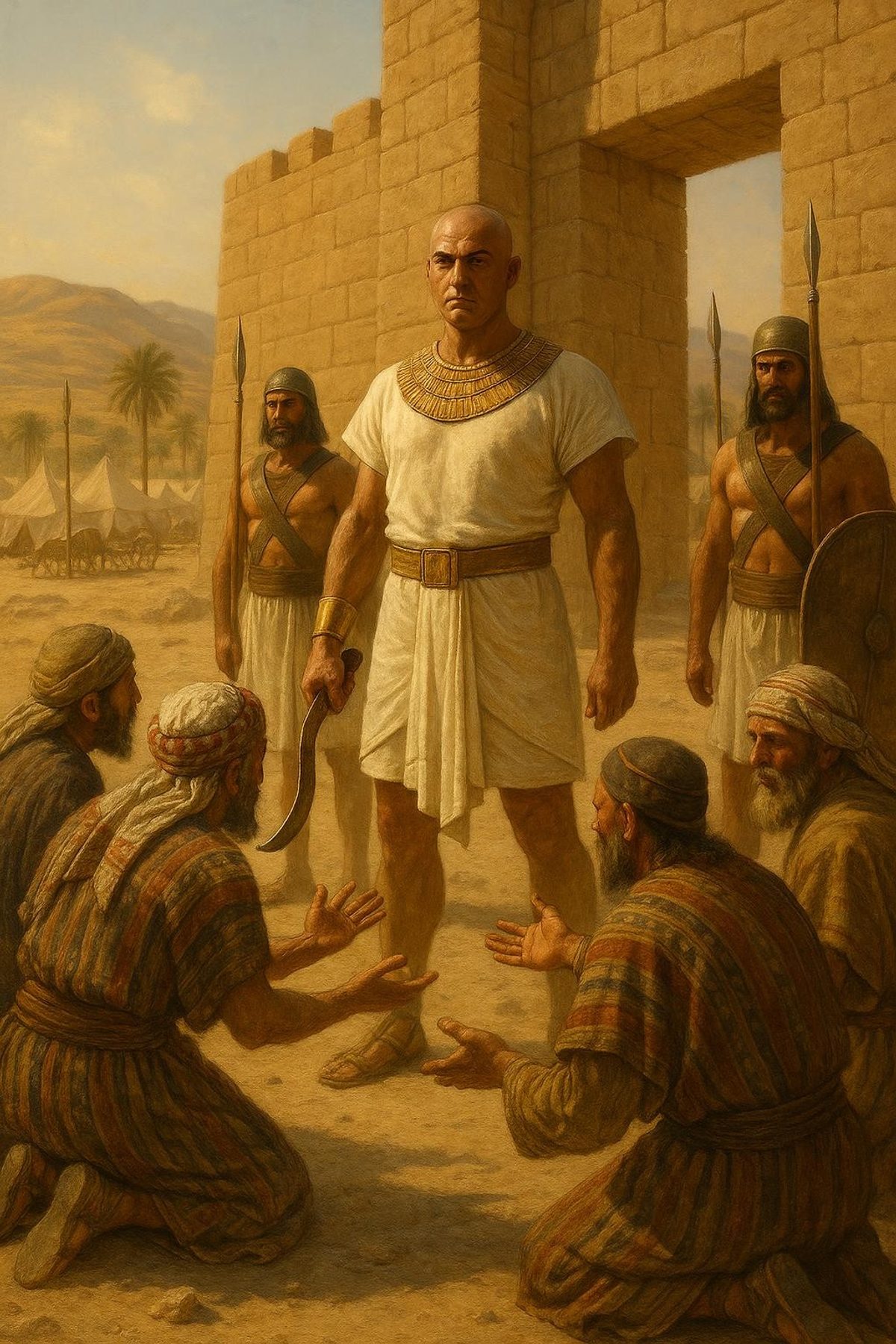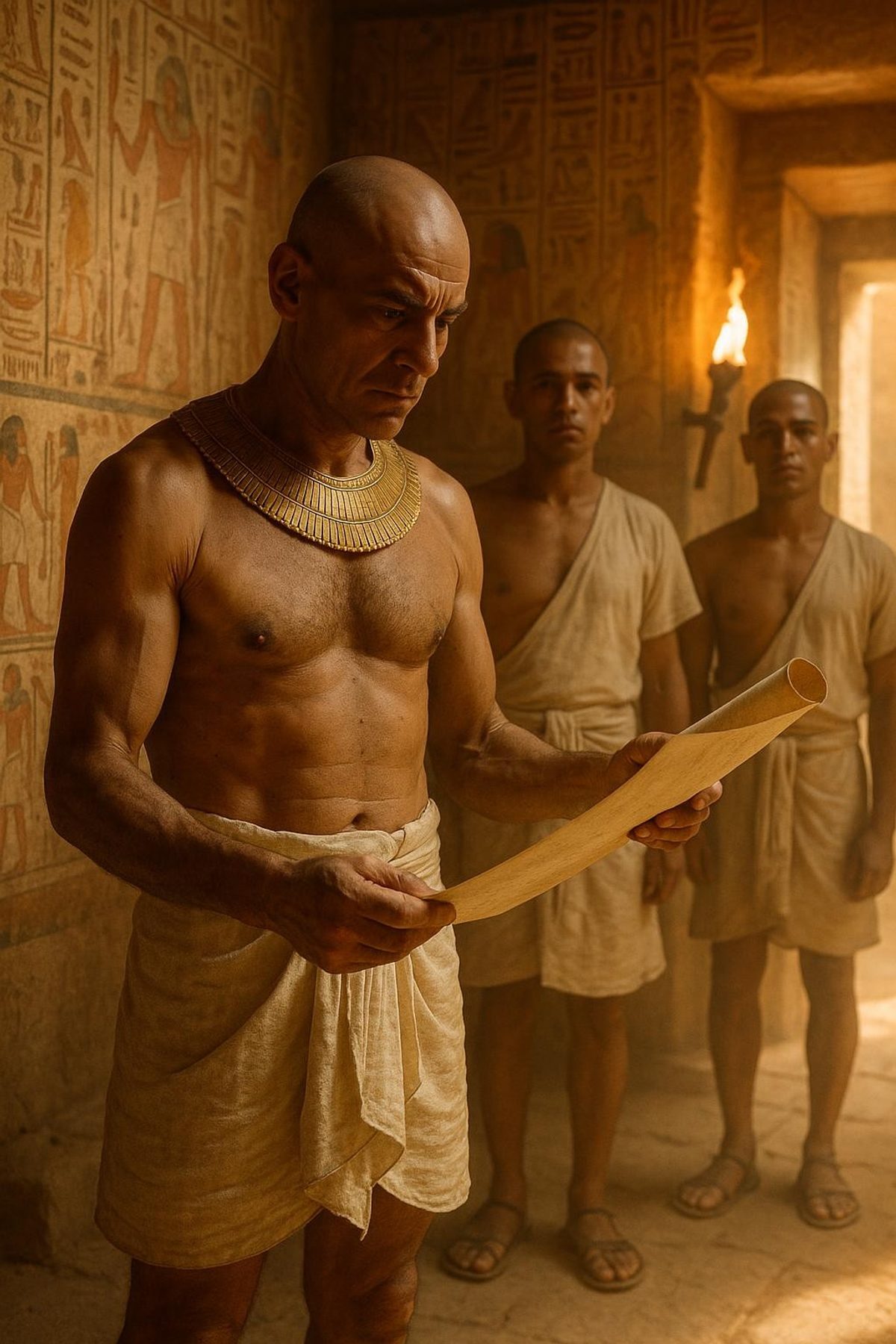
Kha was not a pharaoh or a deity. He was an architect, and yet he commanded more power in his expertise than most kings. His was the hand that built dreams in stone, dreams that still echo thousands of years after his time.
The Craftsman of Deir el-Medina
In the arid embrace of Deir el-Medina, a village nestled on the west bank of the Nile opposite Thebes, lived a community of artisans tasked with constructing the tombs in the Valley of the Kings. Among them was Kha, a royal architect whose name has been etched into history not through monumental structures but through the intimate, well-preserved tomb he prepared for himself and his beloved wife, Merit. While society exalted the pharaohs, it was the hidden labor of these craftsmen that gave Egyptian civilization its lasting legacy. Kha’s deft hands, guided by divine inspiration and human devotion, not only shaped eternity for gods but also carved a personal space for his own passage into the afterlife.
In life, Kha presided over the construction of abiding sanctuaries; in death, he left behind one of the most complete non-royal burials ever discovered. When Italian archaeologist Ernesto Schiaparelli uncovered his tomb in 1906, he encountered a site remarkably untouched since its sealing over 3,300 years earlier. Inside, tools of Kha's trade lay in wait as testament to his life's meticulous labor. At his side, Merit's cherished possessions whispered of their shared existence. The ornately decorated coffin, furniture, pottery, and a myriad of ritual objects conjured images of daily life suspended in amber.
Deir el-Medina was a thriving hub of brilliant yet humble artisans, where Kha and his contemporaries constructed the sacred passages that would, in time, become one of Egypt's most iconic landscapes. Yet, within this remarkable community, Kha stood apart—not for the palaces of the afterlife that he erected for kings, but because he chose to secure an eternal home for himself and his beloved. His tomb offers a rare glimpse into the personal lives of those who dedicated their existence to the dead but were determined to live on in memory.
Read next: Thutmose III Spared His Enemies. They Became His Empire.
A Love Enshrined
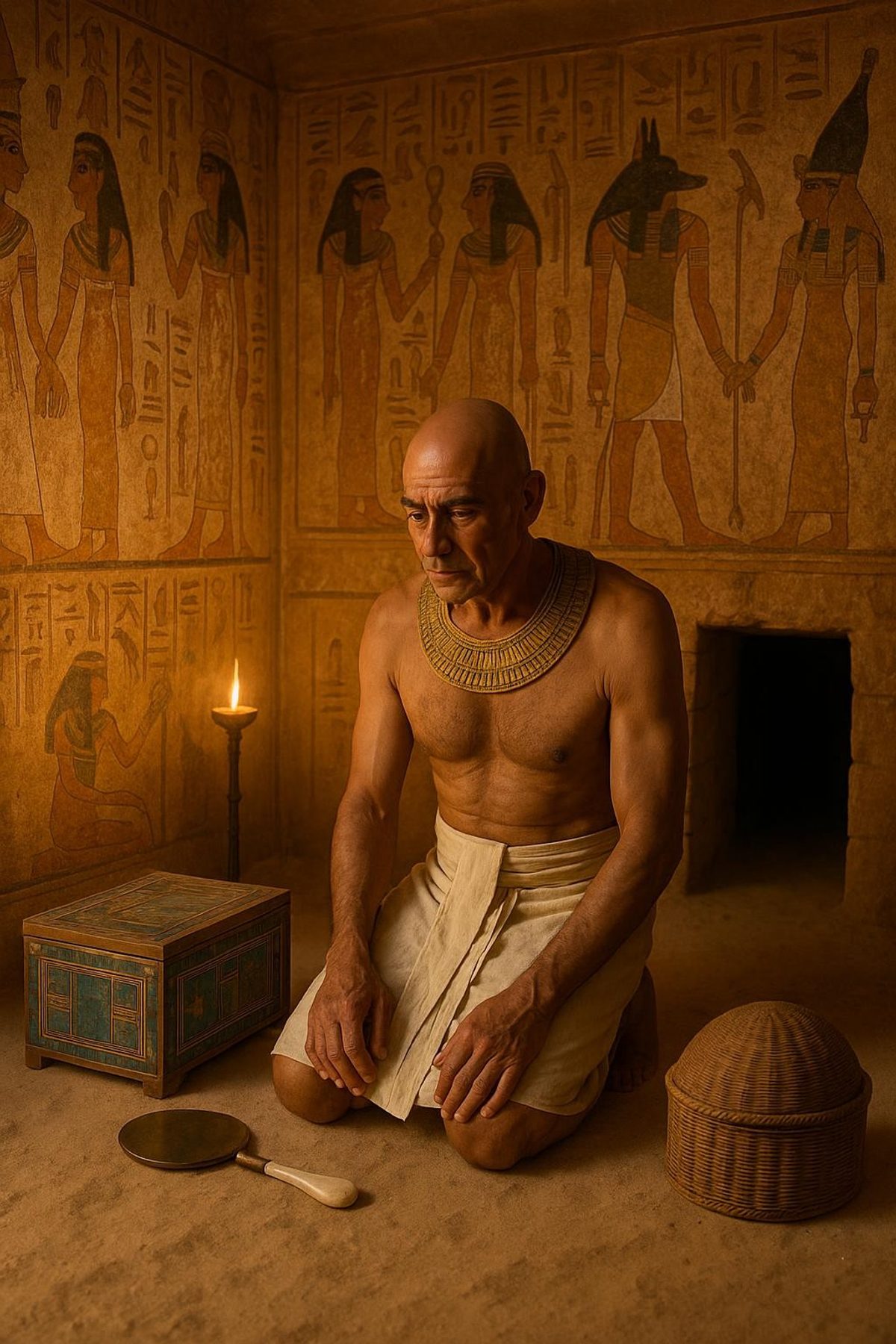
Within the silent chambers of Kha’s tomb rested the untouched artifacts of two intertwined lives. Across millennia, they spoke of a love profound enough to transcend death. Kha ensured that Merit was not only surrounded by goods for survival in the afterlife but by the objects of her fondest earthly joys: her mirror, jewels, a delicately crafted wig box still full and poised as if awaiting her touch. Each item was deliberately chosen, placed with intentionality and care; a husband’s tender goodbye wrought in gold and wood, inlaid with the threads of simpler, precious moments shared.
The discovery of these objects offers more than insight into the artifacts themselves—it reveals a deeply personal narrative, showcasing the tenderness and connection between husband and wife. They echo the societal beliefs of the time, where the afterlife was a continuum of Earthly existence. The presence of Merit's treasured belongings indicated a fervent hope that these expressions of life would seamlessly carry over into eternity. The thoughtful inclusion of such items reflects the profound cultural understanding of the afterlife as an extension, rather than a cessation, of cherished relationships.
As one examines the wig box, once vibrant with the myriad textures and colors of its owner's style, one can imagine Merit standing before her mirror, preparing to face each day with the dignity and grace expected of her status. That this mirror remained as it was, polished and placed with ceremonial care beside her resting place, frames an intimate narrative. We see not only a craftsman’s wife but a woman of individuality and spirit, whose essence Kha sought to protect forever within limestone walls.
Eternal Legacy Beyond Stone
When the seals of Kha's tomb were finally broken, a gust of time long past whispered its secrets. The breathtakingly preserved tableau that scholars faced was not merely evidence of burial customs, but a quiet testament to two lives enshrined in affection and respect. Beyond the reverence for gods and kings typified by ancient Egypt, here was a sanctuary filled with the dignity and intimacy of mortality itself—a place where ambitions as eternal as the pyramids met the tender, ephemeral pursuits of everyday life.
This singular tomb challenges the notion that immortality was reserved solely for pharaohs and deities. Kha's care in preparing a final resting place reflects the universal human desire to honor the past and the people who shaped our personal stories. His tomb speaks as eloquently of love and legacy as any monument to the great rulers of Egypt's storied past, reminding us, as sentinels of history, that sometimes the most profound stories are those etched silently into the margins of time.
This untouched capsule fades the distinctions of rank and reverence and, instead, highlights the enduring spirit of human connection. Through the layers of dusty history, we see Kha and Merit not as distant figures shrouded in mythos but as real people who lived, loved, and hoped beyond the veil of death. Their story, preserved against all odds, humbles us with its humanity. It reverberates across chasms of time, reminding us that among the grandest countenances of power, it is the bonds of personal love and remembrance that truly enshrine eternity.