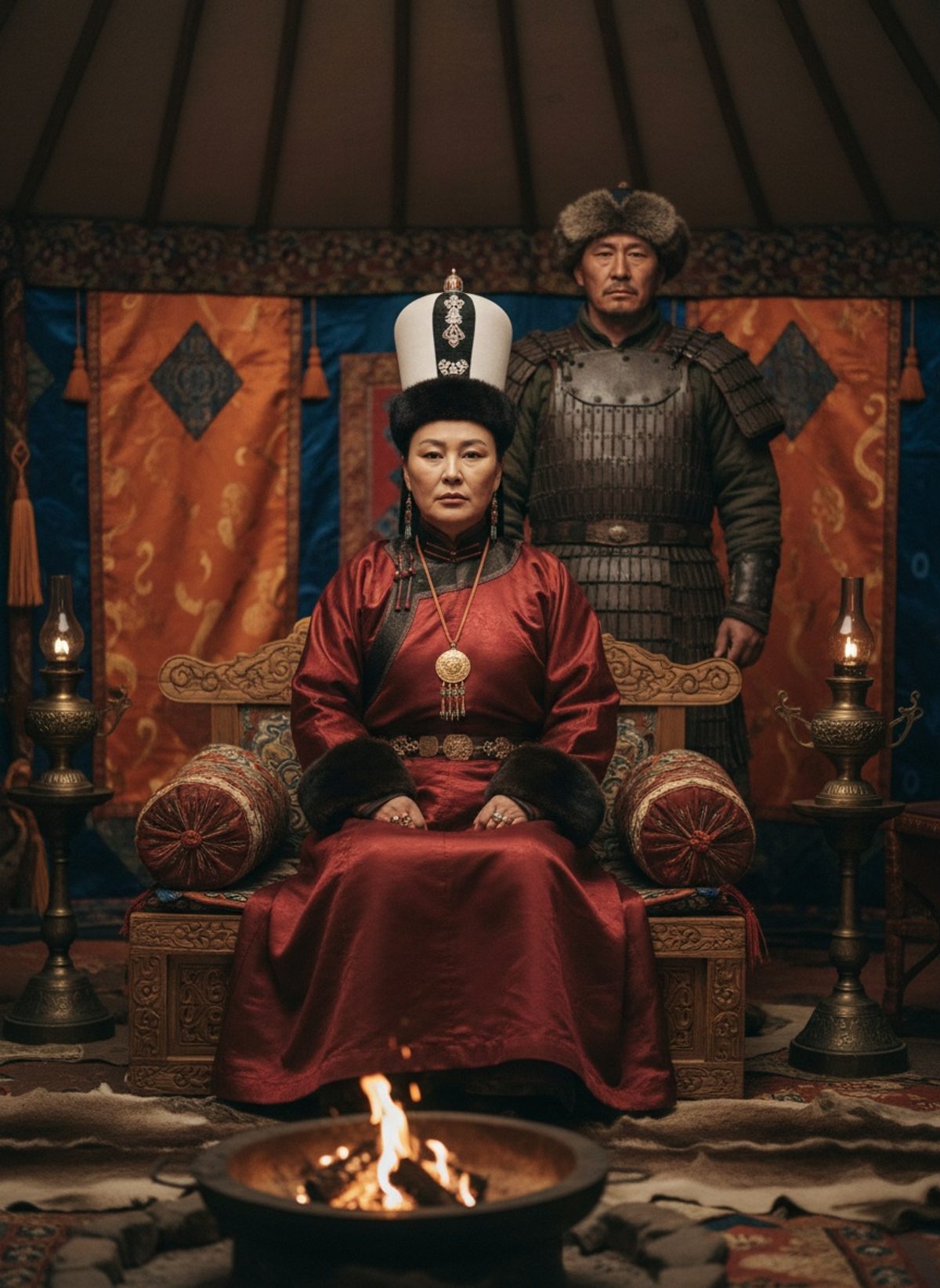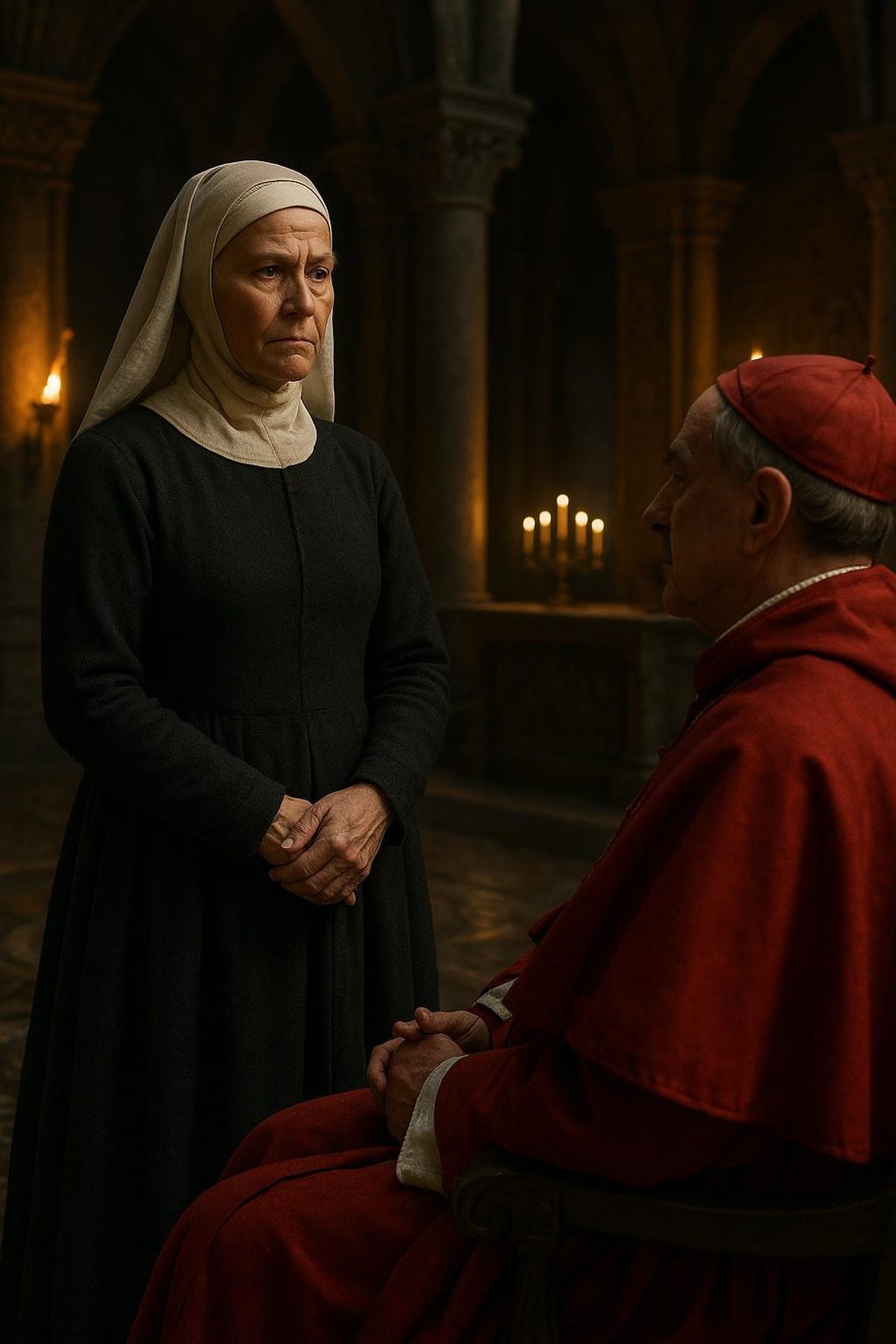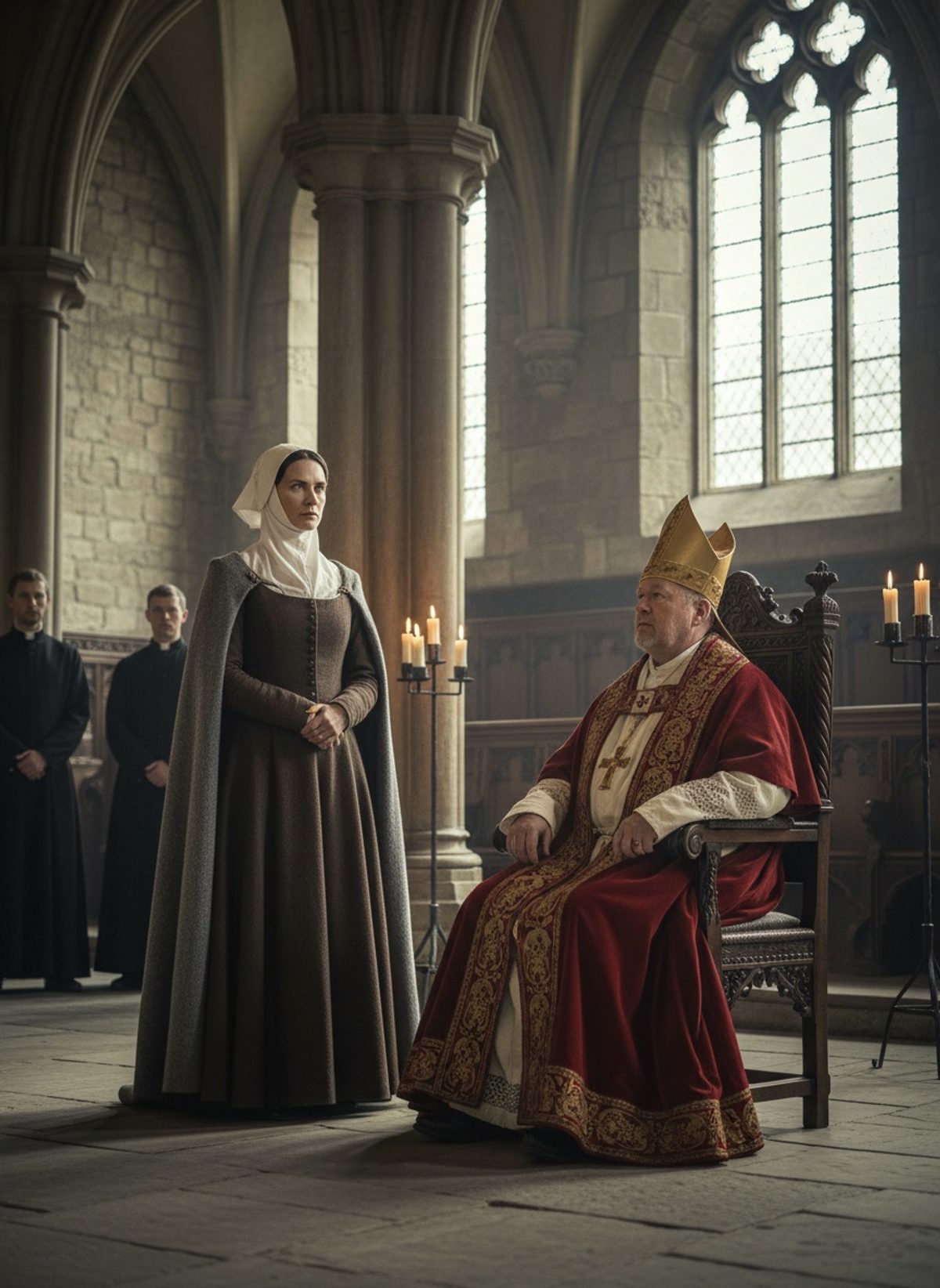
She was a merchant's daughter and mother to fourteen children. She stood before the Archbishop of York with the audacity of someone divinely inspired.
From Lynn to Legend
Margery Kempe's life began unassumingly in Bishop's Lynn, now known as King's Lynn, in Norfolk around 1373. The daughter of John Brunham, a successful merchant and local politician, Margery was most likely expected to follow the typical path set for women of the era: marriage, motherhood, and household duties. Indeed, at around age twenty, she married John Kempe and subsequently bore him at least fourteen children. However, Margery's path diverged significantly after a harrowing spiritual crisis following the birth of her first child. During this time, she claimed to have faced a horde of devils that tormented her, pushing her to the edge of despair.
Surviving this, Margery experienced a divine vision—Christ in the form of a man, speaking directly to her. This vision redirected her life's focus. Her spiritual awakening led her to embrace a mystical devotion that manifested itself in fervent, unconventional expressions of piety, like wearing a hair shirt and pursuing a chaste marriage. Her public displays of ecstasy, including tears and loud proclamations of faith, drew attention—and not always the positive kind. However, Margery remained unswayed, bolstered by her belief that her experiences engaged her in a deeper intimacy with Christ, akin to the great mystics of her time.
In an era where religious expression was heavily scrutinized, especially for women, Margery's actions painted her as a potential heretic in the eyes of church authorities and townsfolk alike. Despite the dismissive or hostile reactions from her community, her resolve only strengthened after conferring with Julian of Norwich, a renowned English mystic. Julian's counsel—that the more Margery suffered public scorn, the more merit she accumulated in God's eyes—became a mantra that emboldened her as she navigated the challenges of her religious journey.
Read next: Władysław of Varna Charged the Sultan. He Was Alone.
Confrontation in York
The year 1417 was pivotal for Margery. Her audacity to travel, preach, and pray openly in unauthorized spaces led her to York, where her increasingly notorious reputation forced a hand that many thought would quiet her once and for all. Summoned before the Archbishop of York, Margery faced a formidable opponent. Armed with authority, he demanded the impossible: her silence. In a time and place where women were expected to occupy strictly subordinate spheres, Margery's continual defiance baffled both clerics and laypeople.
York's imposing ecclesiastical court presented an intimidating setting. As the Archbishop confronted her, Margery did not cower. Instead, her voice rose, not with argumentation, but with testimony. She spoke not with crafted theological arguments, but with the fervor of lived experience, insisting on her divine communications and asserting that her cries and revelations came direct from God as surely as those seen by respected prophets and saints. Margery's boldness stood stark against the backdrop of fifteenth-century religious orthodoxy, which staunchly discouraged lay preaching—especially by women.
Oddly, what could have been a conclusive condemnation transformed into an unexpected release. With no conclusive evidence of heresy beyond her disruptive piety, and possibly swayed by her unyielding declaration of faith, the Archbishop permitted her to leave the court, an outcome few could have predicted. Margery resumed her pilgrimage, seemingly untouched by the institutional power she had momentarily defied.
A Voice Through Centuries
Margery Kempe's journey did not end in York. Her unwavering narrative continued as she traversed Europe and the Holy Land, documenting her visions and spiritual dialogues through dictation. The work became known as *The Book of Margery Kempe*, regarded by many scholars as the earliest autobiography penned in English, despite being written in a time when literacy—and particularly authorship—was far from commonplace for women.
Her accounts capture not only her personal battles with faith and authority but vividly portray the world Margery navigated: a time of religious, social, and political turbulence. Margery's candid revelations offer a singular glimpse into the medieval female psyche and the less-charted terrain of lay mysticism. Despite facing derision, charges of heresy, and the staunch patriarchal barriers of her age, Margery carved out a place for her voice. Remarkably, it is a voice that resonates over the centuries, evidencing the lived spirituality that defied the institutional dictates of its time.
Margery Kempe's story, profoundly human and richly complex, extends beyond its historical context, urging us to consider the enduring struggle between individual expression and social conformity, particularly for those cast to the margins. Her endurance through scrutiny challenges the ecclesiastical and societal constraints, inviting continued reflection on the dynamics of belief, authority, and gender. Ultimately, Margery's resilience in York and beyond serves as a testament to the power of personal conviction amidst oppressive structures, and the indomitable spirit that refuses to be silenced.