The evening breeze swept gently over the salt-speckled stones of Crete's rocky shore, while the last rays of the sun spilled gold across the relentless surf. The skies, deepening to a dusky indigo, cradled shadows that flickered from campfires dotting the sand.
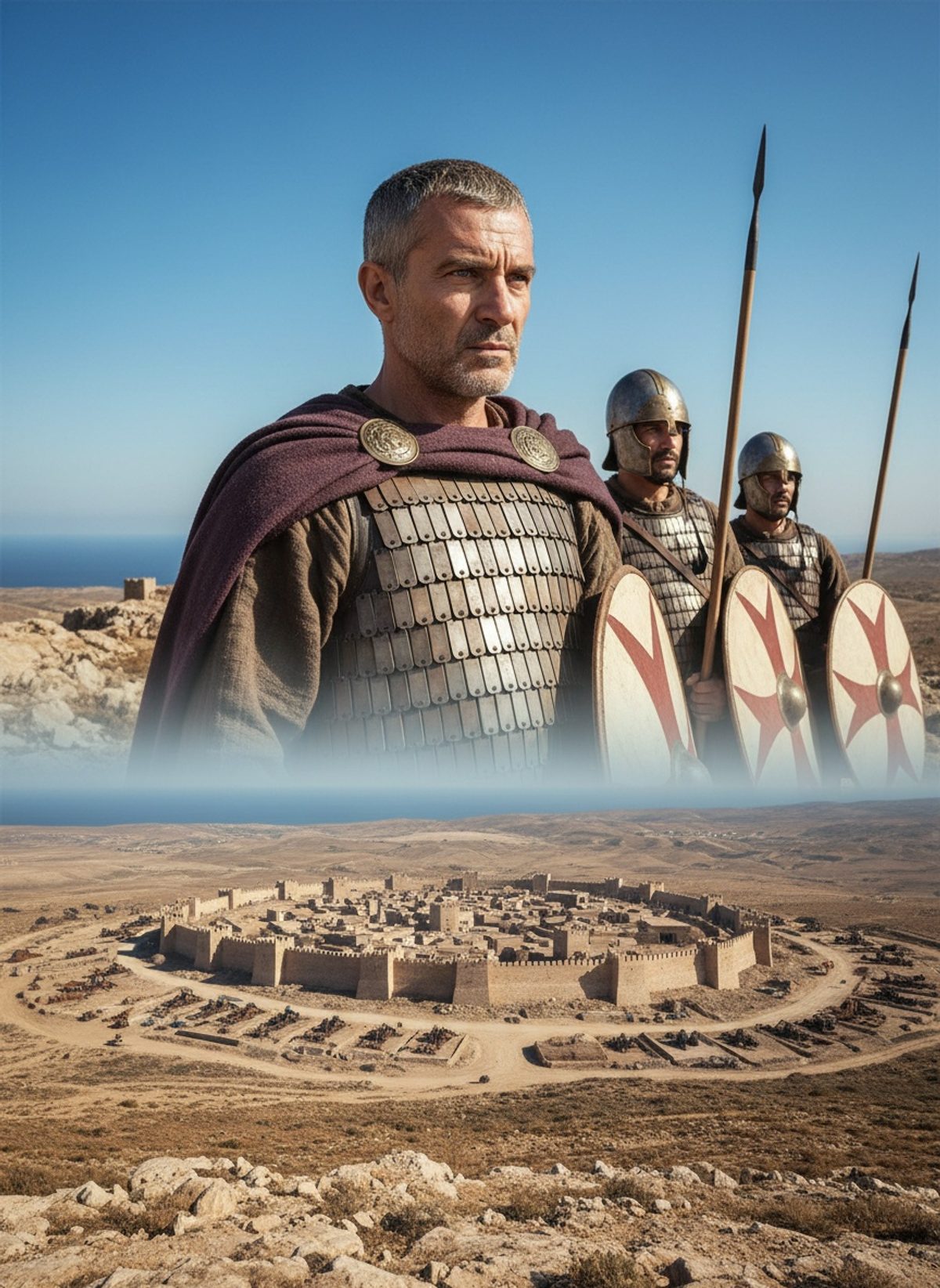
It was the year 960 AD, and the timeless serenity concealed a drama of seismic proportions. Commanding the largest Byzantine fleet in a century, General Nikephoros Phokas forged the destiny of an empire. His gaze fixed on Chandax, Crete's fortified capital, brimming with Arab corsairs who had defied Byzantium for 135 years.
The Gathering Storm
The capture of Crete by Arab forces in 824 had transformed the island into a potent base for piracy in the eastern Mediterranean. Remnant of this conquest was a formidable fortress, unseen to those laying siege beneath its mighty walls—a bastion serving as the Arab corsair kingdom's heartland.
For generations, these corsairs had marauded Byzantine waters, their swift ships leaving trails of flame before vanishing into the Cretan coves. Every Byzantine attempt to reclaim the island had met with failure, but that was before Nikephoros Phokas.
Read next: Jalal ad-Din Rumi Walked Into Exile and Wrote 70,000 Lines
The name Phokas resonated with military prowess. Nikephoros, of Cappadocian stock, descended from a lineage of distinguished generals—a mantle both burden and blessing. The Phokas family, embedded within the Byzantine military structure, witnessed the empire's ebb and flow over half a century.
Nikephoros, much like his father and grandfather before him, was schooled in the art of war. By the time this general of resolute mien stood on the shores of Crete, he had honed his strategical brilliance across myriad campaigns.
In 960, Nikon the "Metanoeite," whose title meant *the repentance preacher*, journeyed alongside Nikephoros. An itinerant monk renowned for his fiery sermons, Nikon infused spiritual resolve into the troops, instilling devout fervor before the siege. As Phokas strategized and deployed, the clouds of an impending storm gathered both on land and sea.
The Byzantine Empire had enough—what was once a lucrative province would no longer be a reaver's refuge. Nikephoros knew the stakes were high. Success on Crete meant not just reclaiming lost land but reasserting Byzantine supremacy in the Mediterranean.
The Siege of Chandax
Under the luminescent chill of the late autumn sun, Nikephoros mobilized 50,000 men, a host never before seen in the lifetime of those who beheld it. With calculated precision, they encircled Chandax, its stout walls looking down impassively.
November opened with the somber rhythm of siege warfare—a test of endurance, resourcefulness, and nerve. The general's plan relied not only on strength but also strategy. Deeper insights into Arab fortification and innovative siege techniques promised opportunities for triumph where others had tasted defeat.
Nikephoros employed sappers to undermine the city walls. Byzantine expertise in military engineering allowed them to destabilize and breach the barriers that had resisted lesser strategies. Siege engines hurled oil-soaked projectiles, and battering rams pounded relentlessly day after day. Amidst the chaos, espionage and psychological warfare sowed discord among the besieged. After nine grueling months, fatigue and famine frayed the defenders' determination. On a swelteringly hot August day in 961, a final concerted assault broke through.
Read next: Ibn Battuta Crossed 75,000 Miles and Wrote It All Down
The fall of Chandax was swift and absolute. Foray smothered resistance as the Byzantine banners unfurled over the city, and the corsair stronghold, once unconquerable, was recast as a symbol of Byzantine resilience. The victory reinvigorated the empire, its wine-dark seas echoing with triumph. It was a critical turning point, as the Cretan advent marked a shift in regional dynamics, reminding enemies of the emperor's extended hand and iron will.
Echoes Through Time
The reclamation of Crete did more than fortify Byzantine borders—it rippled through time as a testament to strategic brilliance and determination. Nikephoros Phokas returned to Constantinople a hero, a living emblem of Byzantine resurgence. Crowned soon after in triumph, he became Emperor Nikephoros II Phokas, and his successes transformed him into a legendary figure within the annals of Byzantine history.
As Byzantine influence swelled, so did tensions with emerging powers. The saga of Crete underscored timeless lessons on resourceful leadership amid adversity. It is a story that whispers to us from the past, resonating with modern struggles where scale and strategy dance precariously against shifting tides.
Reading into its legacy, we can draw strength from the indomitable will of Nikephoros Phokas, whose triumph on Crete remains a beacon of hope for the human spirit’s enduring quest for sovereignty over its destiny.