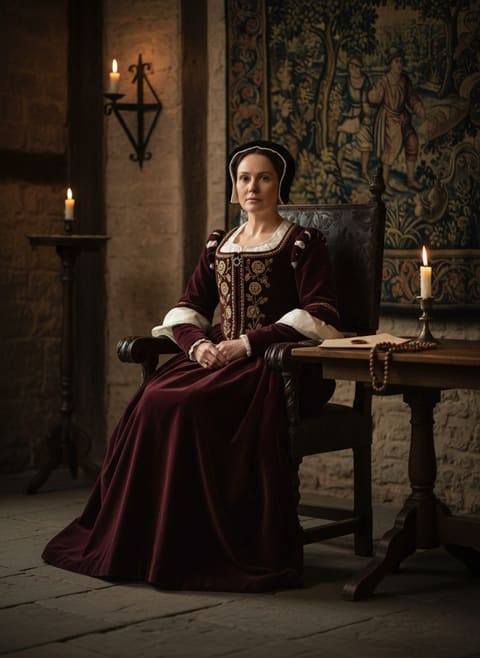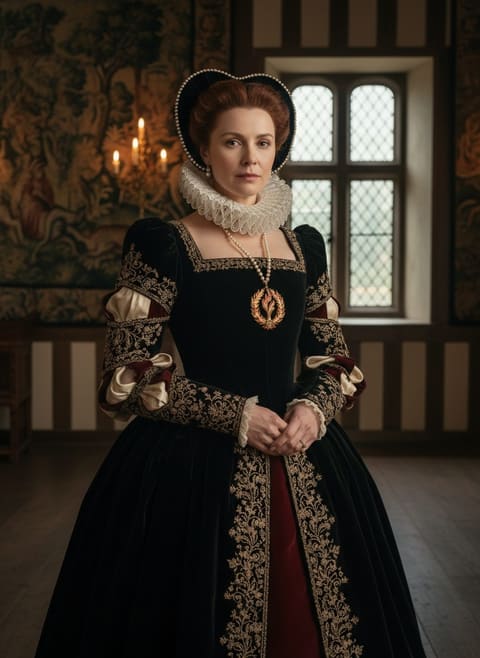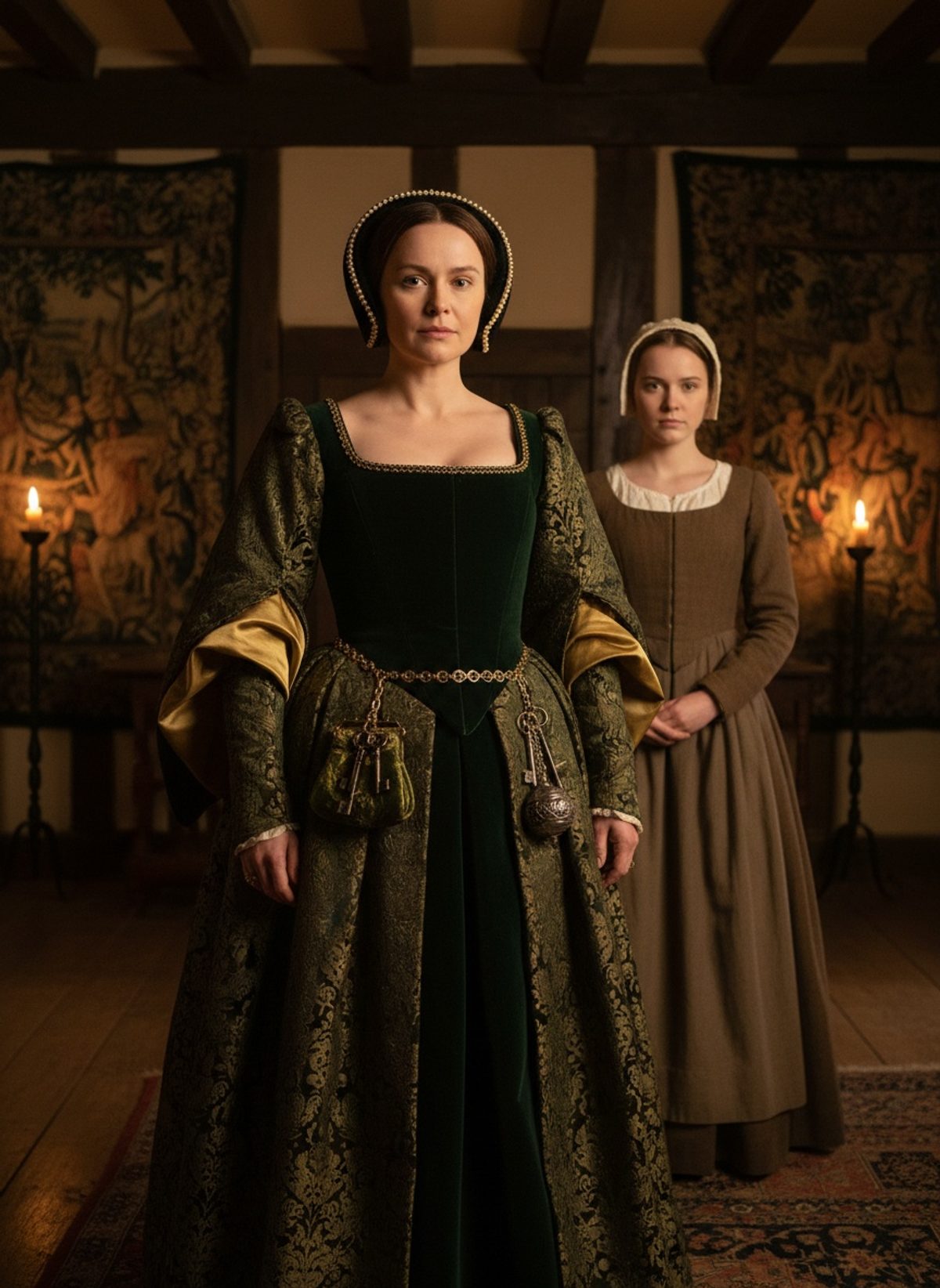
The chime of silver keys clanged softly against a pomander as Lady Margery adjusted her girdle, its intricately woven pattern catching the faint candlelight of the Tudor court. Each step she took echoed in the solemn halls, announcing her authority as the matron of her husband's household. Heads turned, eyes assessed, and beneath each gaze, the adornments hanging from her waist spoke volumes without a word exchanged.
The Girdle as a Social Canvas
In the vibrant tableau of Tudor England, a woman’s girdle was a walking narrative of her social station and virtue. To the casual observer, it might have appeared a simple belt, but those in the know understood it as a meticulously curated display of her life's roles. For women like Lady Margery, the girdle was a visual statement of power and legacy, as much a part of her identity as her family crest.
The rich, polished leather entwined with silver threads in the girdle of a courtly lady stood in stark contrast to the plain utility of a common woman’s belt. From a distance, even the most unadorned of girdles announced the wearer’s rank: for some, the quality of the material was enough to claim immediate recognition, while others required the embellishments that swung with every step.
Nobles bore miniature libraries of possessions from their girdles—key rings bearing the weight of household management, delicately filigreed pomanders containing the finest perfumes to ward off malodorous airs, and heavy purses showcasing their wealth.
Read next: The Spanish Princess Who Arrived at Plymouth in a Storm
Symbols of Authority
Each item attached to a girdle bore specific cultural significance. Keys symbolized command over a household and its possessions, essential for any respectable matron. In an era when the household was the nucleus of production and societal structure, control over its doors and stores was a matter of high status. The girdle transformed a solitary key into a symbol as potent as a knight's sword, underscoring the wearer’s power in domestic governance.
Pomanders, ornate and perfumed, suggested engagement with refined culture, important in a time rife with volatile public smells and pestilence. Their presence was a statement that the owner adhered to the elegant manners of court and had the means to indulge in luxurious imports like ambergris and musk. Similarly, prayer beads strung along the belt announced a woman’s piety and moral standing. Participation in religious life was entwined with social identity, and visible symbols of devotion bolstered a lady’s reputation.
The Court’s Golden Accoutrements
For those at court, the girdle was a work of art, invested with moral, social, and economic power. Enamelled gold belts, styled with finely wrought filigree, transformed their bearers into living, breathing exhibits of their family's affluence and influence. Only those woven into the intricate web of the court could afford or even dream of such luxurious manifestations.
In stark contrast to the loud, deliberate opulence of the palace was the simplicity of the country. Girdles for women among the common folk were often mere leather, utilitarian by design. Yet even these items of necessity hadn't escaped the notice of Elizabethan chroniclers, who documented the modest yet dignified patterns that emerged even in these more humble displays.
Read next: The Room Where Henry VIII Rewrote England Forever
The Consequences of a Missing Girdle
Losing a girdle, or possessing one not reflective of one’s station, could provoke judgment as harsh as any crime. In a world governed by appearance, a missing key spoke of disorder; a missing pomander signified a breach in propriety. A girdle carried connotations of chastity and virtue—without it, purity might be called to question.
Society’s scrutiny was relentless, and women were well aware of the implications of such visible signs of their social and moral state. A woman newly inducted into the queen’s chamber might find herself scrutinized for the decor of her girdle, her future often shaped by such judgments. Attentions to such nuances were not mere vanity but served as shrewd calculations, selections signaling an alliance, an aspiration, or a declaration of status.
The monochrome world where the monochrome announced world, a Tudor girdle was a sum of roles, aspirations, and identities — all silently narrating a woman’s standing and virtues. This unique accessory was far from a simple piece of fashion; it was an emblem of control in a chaotic world.
Knowing how it framed one's identity and position offered a window into the cultural currents of Tudor society. As living records of status and virtue, these accessories remind us that what we wear is more than fabric or adornment. It is a story, a quiet dance of power, always evoking the lessons left unwritten in the textbooks.