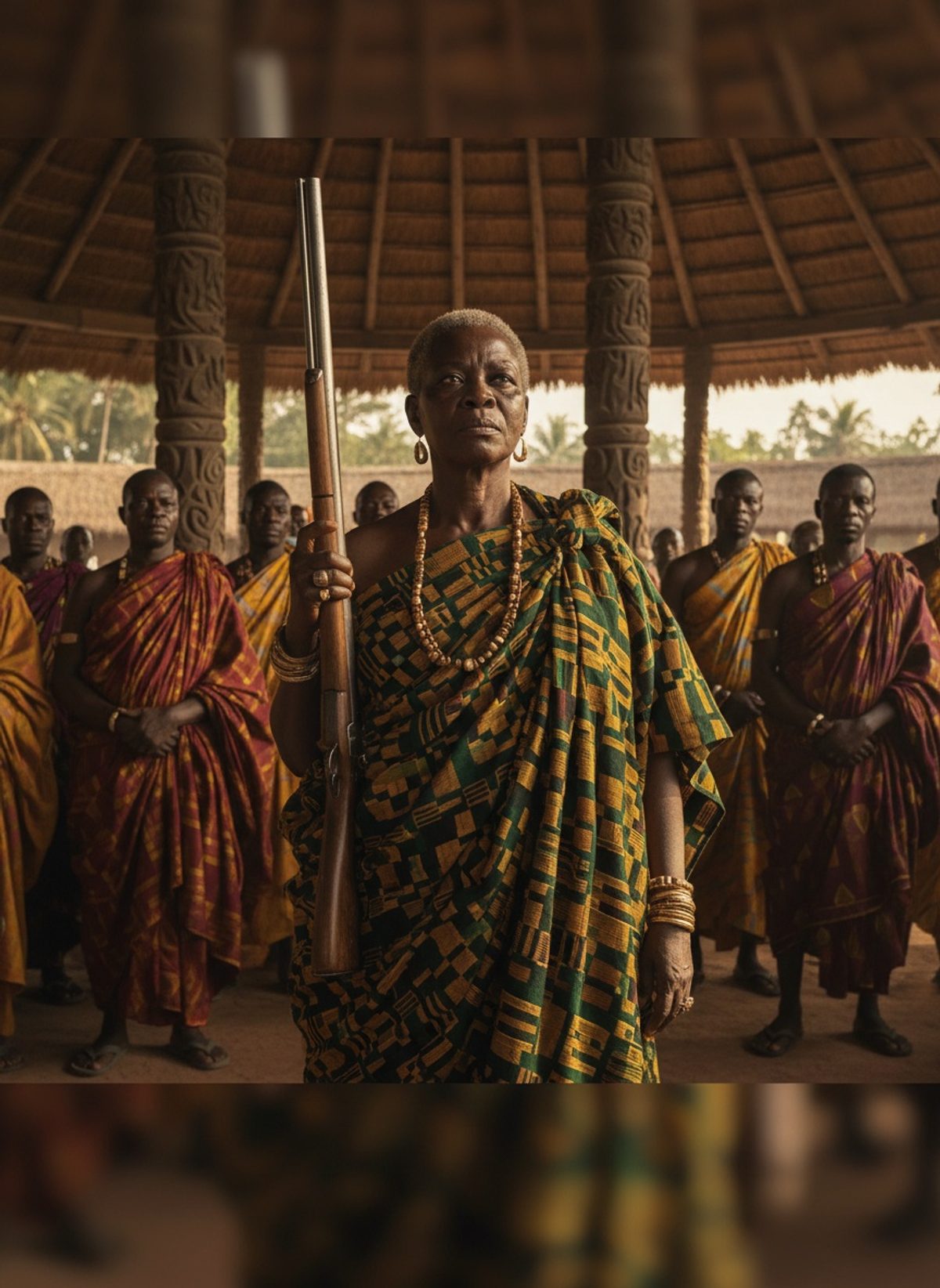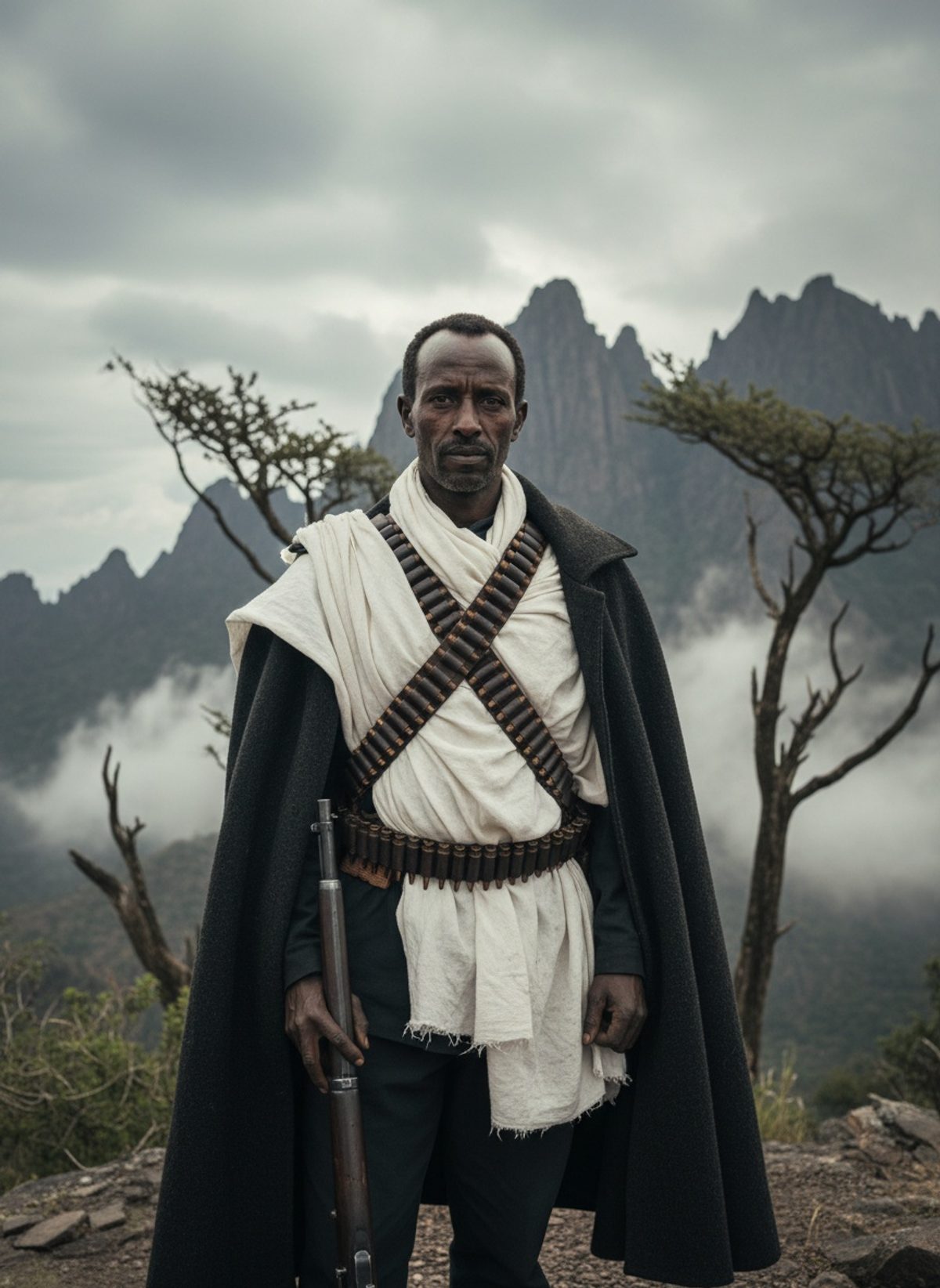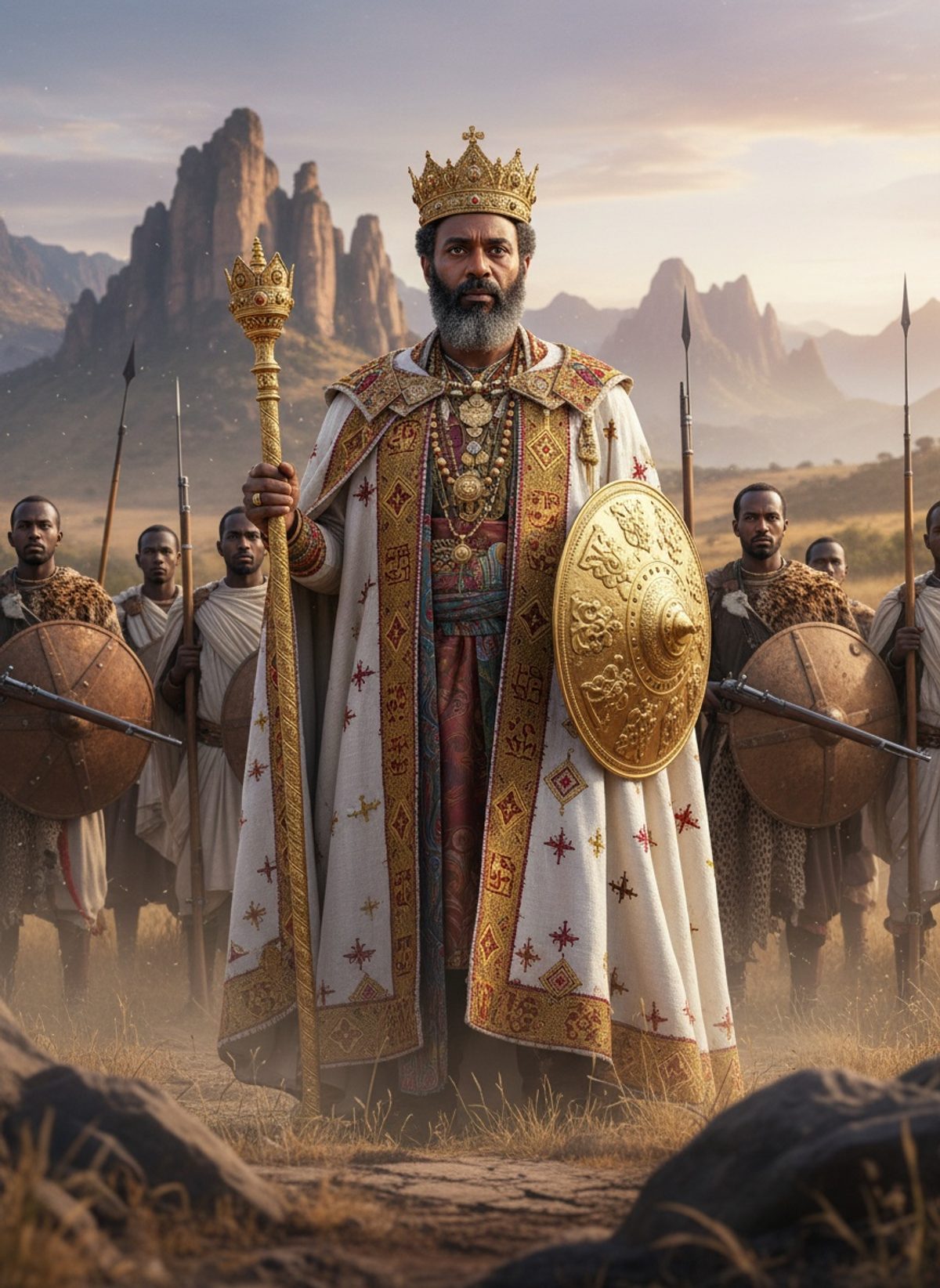
The rifle's report echoed across the mountains, swallowed swiftly by the dawn's mist as Menelik II, Emperor of Ethiopia, surveyed the battleground at Adwa. The air was thick with the smell of gunpowder and determination. Over 100,000 Ethiopian warriors, unified under their emperor’s banner, faced off against the barrels of the Italian Army, poised to defend their homeland against the encroaching tendrils of European colonial ambition.
The Treaty of Two Tongues
In 1889, Menelik II, a savvy and strategic king of Shewa, ascended to the throne as the Emperor of Ethiopia. His vision was clear: to protect and unify Ethiopia against the creeping threats of colonial powers. With an eye on technological advancement, Menelik secured weapons and expertise from European allies such as the Swiss engineer Alfred Ilg. However, a misstep lurked in the form of the Treaty of Wuchale, which Menelik signed with Italy that same year.
The treaty, drafted in two languages, contained a fateful discrepancy. The Italian version suggested Ethiopia had agreed to become a protectorate, while the Amharic version merely stated Ethiopia may choose to use Italy’s diplomatic assistance. When the implications of this divergence became clear, Menelik refused to be ensnared in colonial deception. By 1891, he formally repudiated the treaty, declaring Ethiopia's independence uncompromised.
Italy, undeterred and confident in its colonial aspirations, saw this as a defiance not to be tolerated. They launched an invasion in 1895, intending to bring Ethiopia to its knees. Yet, Menelik's resolve was unyielding. He mobilized a massive force, drawing soldiers from every corner of Ethiopia, equipped and prepared to defend their sovereign land.
Read next: Yusuf I Built a Palace. Granada Wept When He Died.
The Lion’s Call to Arms
Menelik's response was swift and decisive. From the fortified hills of Shewa to the bustling trade hub of Harar, messages flew fast, summoning warriors to the emperor's side. Ethiopia, a tapestry of diverse ethnicities and cultures, stood united as never before. The air buzzed with the anticipation of battle; a sense of purpose united communities previously divided by geography and ethnicity.
On the first day of March 1896, the Ethiopian army — a formidable force over 100,000 strong — prepared to engage. Their numbers were swelled by the cavalry and infantry of key leaders, including the gallant Ras Makonnen. The heart of this army was its resolute commitment to Ethiopia's sovereignty, their spirits bolstered by pride and a shared history of resilience.
Menelik himself was a figure of legendary stature. Baptized as Sahle Maryam and designated heir to the Solomonic dynasty, he was once a prisoner in Magdala's fortress. But his escape and rise to power were testimony to his resilience and strategic brilliance — qualities he would now bring to the battlefield of Adwa.
March at Adwa: The Clash of Armies
The valley of Adwa, brimming with historical significance, would soon be etched into the annals of colonial defiance. As the sun lifted over the horizon on that March morning, the battle commenced with the boom of cannons and the sharp crack of rifles. The Ethiopian forces charged with ferocity, roaring as one across the plains, toward the entrenched Italian positions.
The Italians, numbering about 17,000, were staggered by the sheer volume and speed of the Ethiopian advance. The Ethiopian warriors, wielding rifles, spears, and shields, overwhelmed the flanks, displaying a tactical acumen that belied their indigenous roots. The varying terrains of their homeland, from lowlands to highlands, had prepared them for this very confrontation.
By midday, the Italians were in full retreat, their lines crumbling beneath the relentless Ethiopian assault. The battle was a monumental victory for Menelik II — not only in the lives saved and the territory secured but in the message sent to Europe. The defeat at Adwa resonated across the continents; it was a clarion call to colonial powers that Africa was neither a silent land nor its peoples mere subjects.
A Victory Reverberated through History
The Battle of Adwa left Italy not only militarily defeated but diplomatically humiliated. European nations, accustomed to the ease of colonial conquests, were forced to recognize Ethiopia's sovereignty officially. Borders were defined and treaties signed, acknowledging the nation's proud autonomy amidst a continent peppered with colonial boundaries.
This victory did not transmute Menelik into a mere warrior figurehead. With Italy’s dreams of conquest dashed, Menelik concentrated on transforming his empire. Infrastructure projects flourished, such as the construction of the Addis Ababa–Djibouti Railway, and diplomacy took sophisticated shapes, engaging subjugated tribes into a cohesive nation-state while fostering Ethiopia's modernization.
Yet, this unity had its complexities. Inside Ethiopia, tensions simmered as ethnic groups contended with assimilation and the centralization of power. Menelik’s reign, while internationally regarded as a defiance of colonization that spotlighted Ethiopian resilience, also sowed seeds of internal challenges that would reverberate through the nation's future.
The Echoes of Adwa
The battle of Adwa became a global emblem of dignity and defiance. It was an assertion that a traditional society could stand toe-to-toe with modern imperial giants and triumph. In an era where African sovereignties were vanishing under the crush of colonialism, Ethiopia's victory was not just military but a profound assertion of identity and autonomy.
Adwa inspired a generation of African leaders and thinkers, fuelling aspirations for independence and justice. It served as a poignant reminder that the machinations written in treaties and conquests could be undone by astute leadership and unyielding courage. Even as Menelik’s reign ebbed, and he receded from public life after a stroke in 1906, the legacy of his letter and the victory it invoked continued to ripple through history.
The story of Menelik II and the Battle of Adwa is a testament to the power of discernment, unity, and resilience. It’s a chapter that underscores how the pen, like the sword, can change destinies not only for kingdoms etched on a map but for a continent's very soul.