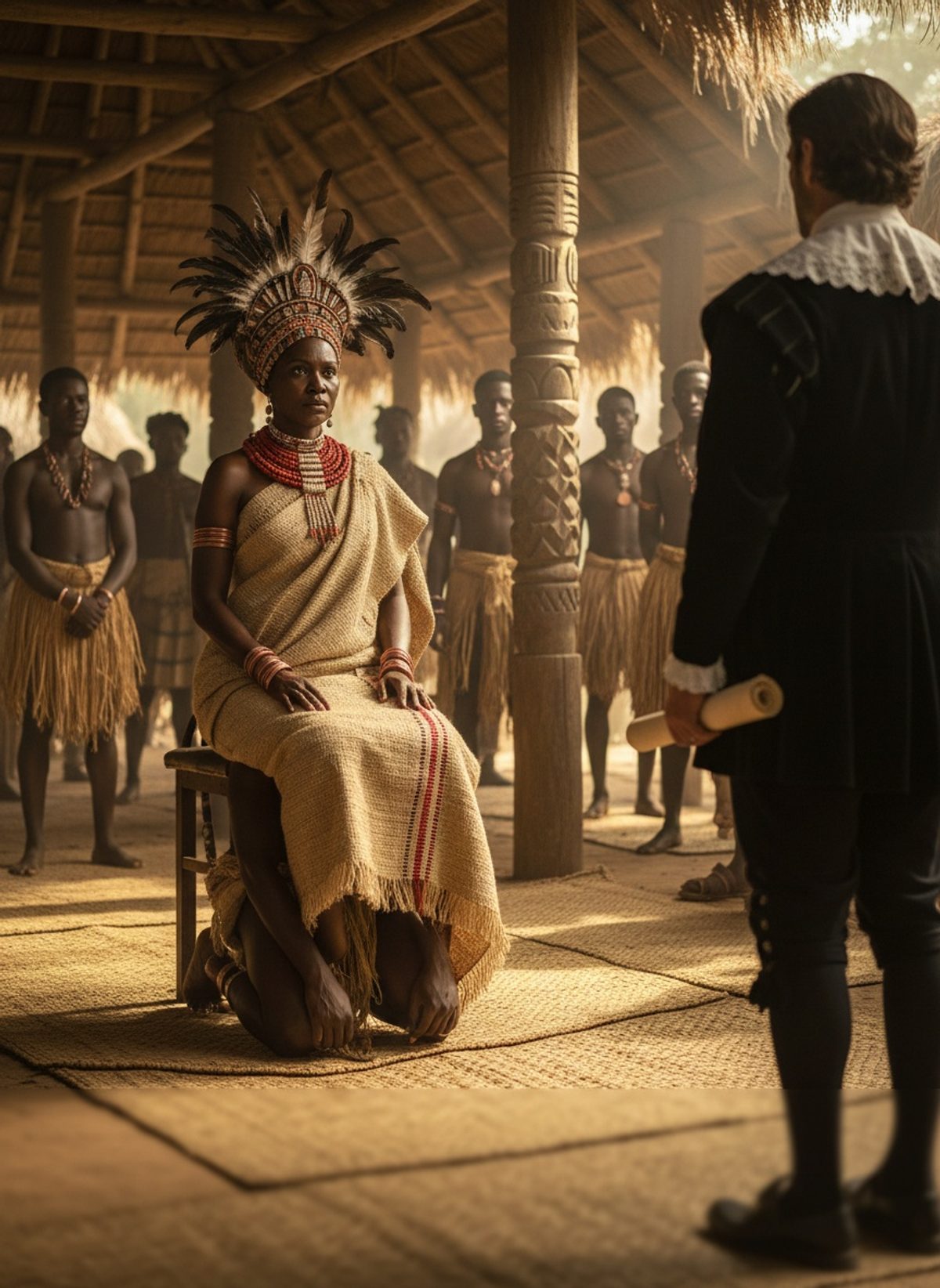
March 28, 1900. The thick, humid air of Kumasi buzzed with tension as the Ashanti chiefs sat in solemn silence.
The Demand for the Golden Stool
On this defining day, the British governor, Frederick Hodgson, arrogantly sat in the heart of Kumasi and leveled a demand that struck at the very soul of the Ashanti people. The Golden Stool, symbol of unity and spiritual embodiment of the Ashanti nation, an object of reverence no mortal was permitted to sit upon, was now the focus of merciless colonial ambition. The British viewed its seizure as a matter of course in their imperial conquest of the Gold Coast, misunderstanding, or perhaps willfully ignoring, its profound cultural significance.
The Ashanti court, stripped of its key leaders, faced a grim crossroads. They sat in a hushed gathering, burdened by the absence of their king, King Prempeh I, and other esteemed leaders who had been exiled to the Seychelles, weakening the political structure of the Ashanti Confederacy. The humiliation ran deep, and the very same chiefs whose counsel and protection were expected seemed paralyzed into inaction, bewildered by the brazenness of British demands.
To grasp the importance of the Golden Stool is to understand the heart of the Ashanti identity. For the British to demand it was akin to demanding the soul of the people. To hand it over would mean unparalleled submission. The chiefs in that thick air of March 1900 felt the gravity of their predicament but were bereft of a voice to rally them until Yaa Asantewaa, the Queen Mother of Ejisu, rose from her place. Her decision would become an electrifying call to arms that defied the indomitable arch of colonial expansion.
Read next: Dahia al-Kahina Faced the Arab Army. She Burned Her Own Land.
The Courage of Yaa Asantewaa
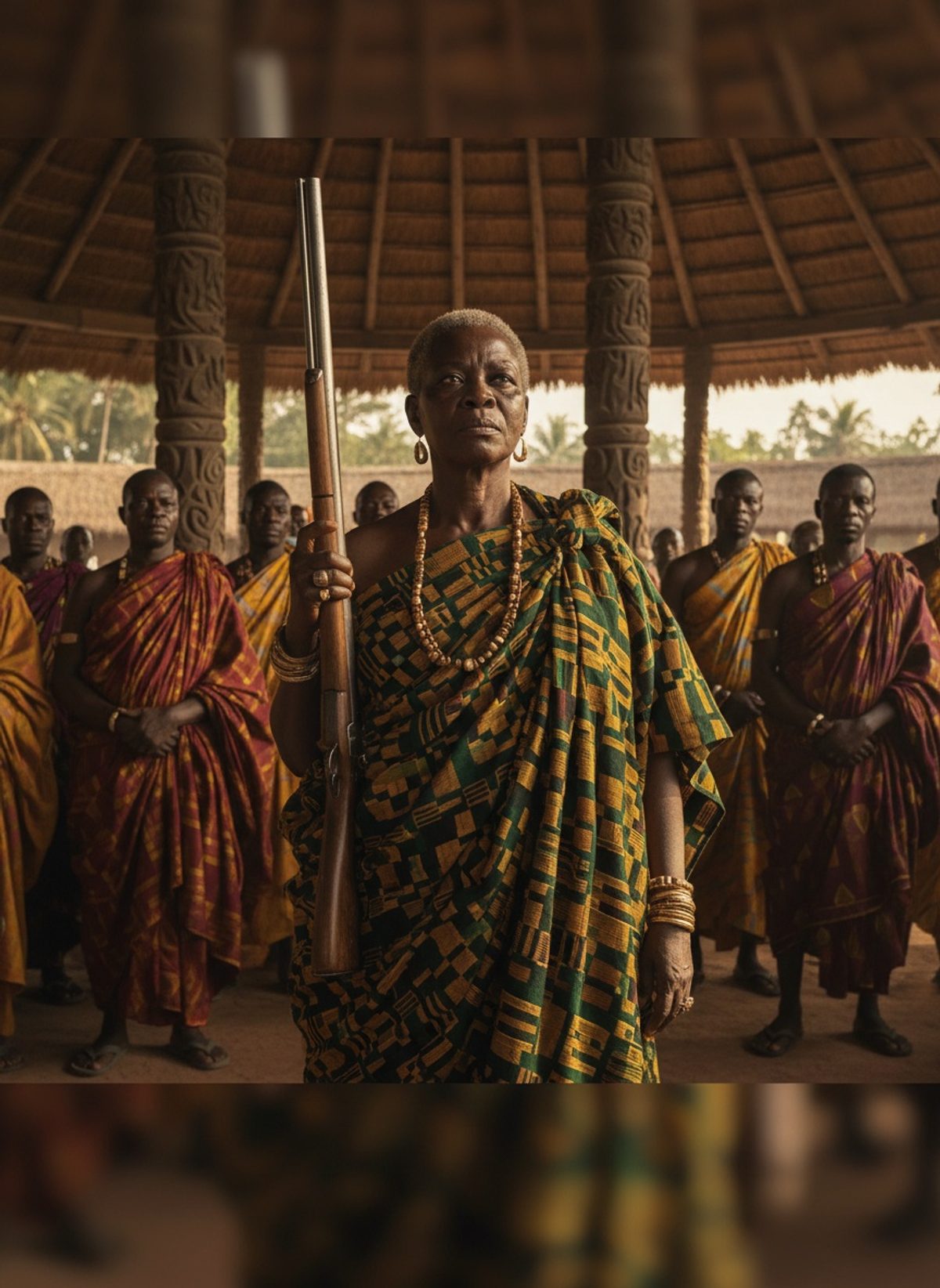
Standing before the finest men of the Ashanti land, Yaa Asantewaa, not constrained by the absence of advanced years, nor swayed by the heavy mantle of tradition, seized the moment. Her words pierced the silence, challenging the passive hesitance of the gathered chiefs. The British, she declared, sought only the monetary value of their sacred Golden Stool. But it meant far more to the Ashanti.
"If you, the chiefs of Asante, are going to behave like cowards," she told them, her voice steeled with conviction, "you should exchange your loincloths for my undergarments." Met by the incredulous stares of the male leaders, she didn't relent. Instead, she picked up a rifle and fired a shot right there to confirm her resolute stand. At this moment, something irreversibly shifted. The chiefs, shamed not just by her words but by her unyielding bravery, finally acknowledged the fight they were obligated to pursue.
In an unprecedented move, Yaa Asantewaa was appointed the war leader of the Asante forces—a role historically held only by men. Her invocation of bravery and defiance renewed the spirits of the disheartened chiefs and galvanized the Ashanti people into action. Her leadership in the War of the Golden Stool, also known as the Yaa Asantewaa War, commanded the respect of her people and the fierce attention of the British colonizers. Her choices in those crucial moments would forge a legacy not just of resistance but of unapologetic courage.
A Standoff for Dignity and Sovereignty
Under Yaa Asantewaa’s leadership, the Ashanti mounted a defense that defied expectation. The British, armed adequately with their military prowess, had underestimated the resolve of a people fighting to preserve their dignity and autonomy. Over the course of months, the Ashanti emboldened by their Queen Mother's defiance, fortified their positions with entrenched warfare tactics that perplexed even seasoned British commanders.
British officers had little experience or understanding of the terrain or the fierce commitment stirring in every Ashanti fighter's soul. This impasse was a thorn in British colonial ambitions and demonstrated the raw determination that erupted from the refusal of oppressive demands. The Ashanti’s passionate resistance held out for several months until the British resorted to heavy reinforcements and modern weaponry to besiege Kumasi effectively.
Even with the eventual arrest and exile of Yaa Asantewaa in 1901, the Ashanti’s spirited defense resonated beyond their borders. The conflict, by forcing the British to engage in protracted negotiations and rethink their African enterprises, confirmed the Ashanti resistance’s profound impact on colonial policies. The story of Yaa Asantewaa’s stand against imperialism serves as a monumental testament to the power and influence a determined individual can have in the course of history.
As imperialists clamored for control over Africa, the defiance of an elderly queen mother who stood unyielding in defense of her people and their honor serves as a hopeful reminder of resilience. Yaa Asantewaa’s story remains one of the myriad understated yet deeply impactful narratives that exemplify the complexity of colonial histories. Her legacy is far more than an anecdotal footnote in the chronicles of African resistance; it is a gripping testament to the enduring strength of cultural identity and the unyielding fight for self-determination. In a world shaped continually by power dynamics, it reflects an unshakeable truth: the spirit of resistance can very well change the course of history.