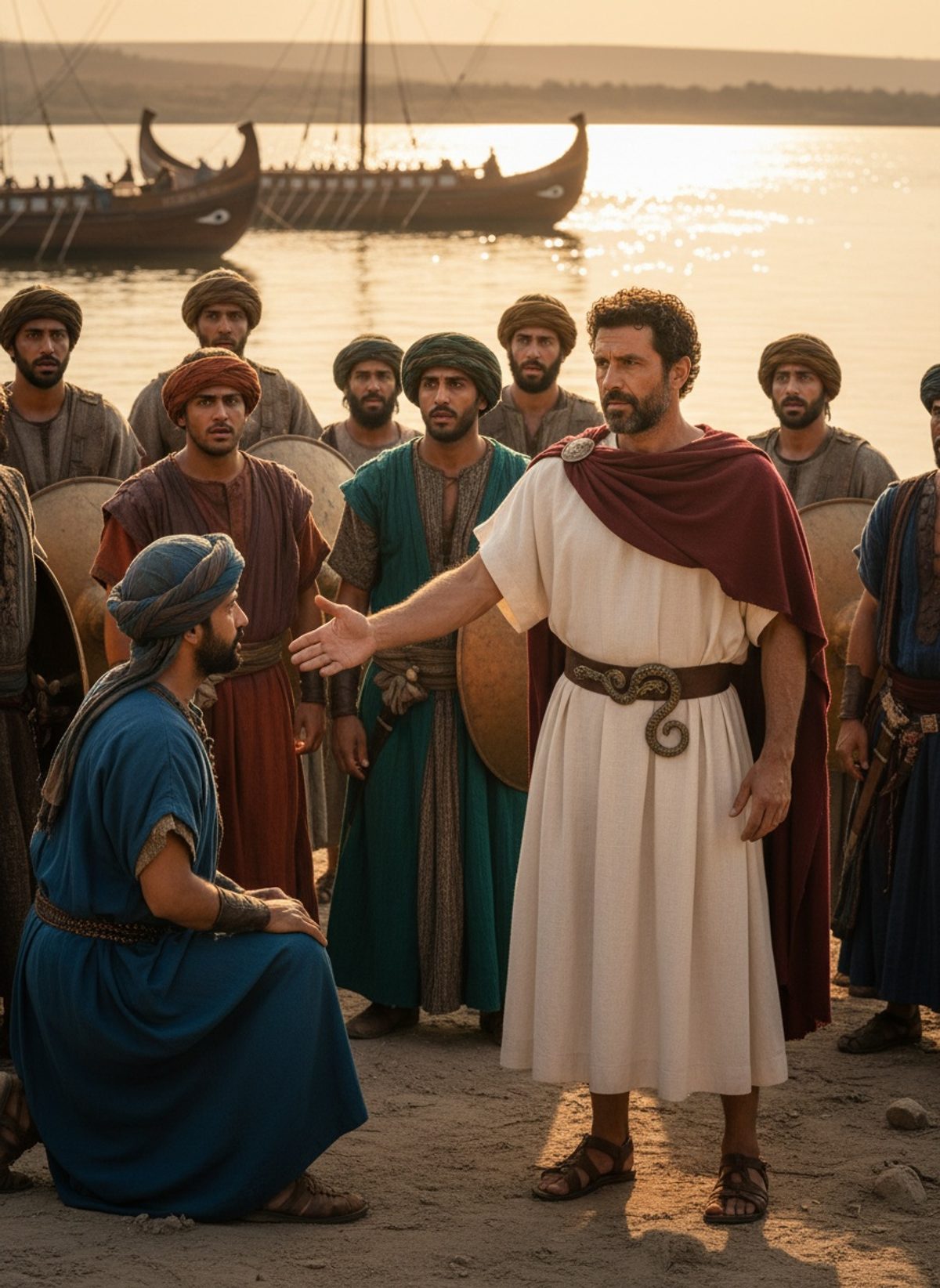
The air was heavy with the scent of salt and olive groves as the sun dipped behind the craggy peaks surrounding the ancient port city of Syracuse. The soft murmur of waves kissing stone echoed along the coastline, a deceptively peaceful sound, belying the turbulence that churned beneath the surface of its society. It was 344 BC, and Syracuse was teetering on the brink of despair under the oppressive thumb of tyrants and surrounded by the battalions of Carthage. From across the Ionian Sea, a flicker of hope emerged, embodied in the form of a single, resolute Corinthian named Timoleon.
Timoleon was not unfamiliar with the burdens of grave decision and moral courage. Born into the aristocracy of Corinth around 411 BC, he witnessed firsthand the destructive potential of despotism when his own brother, Timophanes, seized power in their homeland. Timoleon's earlier heroism in saving his brother's life seemed but a prelude to the tragic duty that would follow. Despite his familial bonds and the love for his sibling, the specter of his brother’s tyranny required action. In a profoundly personal and politically critical decision, he consented to the assassination of Timophanes, an act that thrust him into two decades of voluntary political exile.
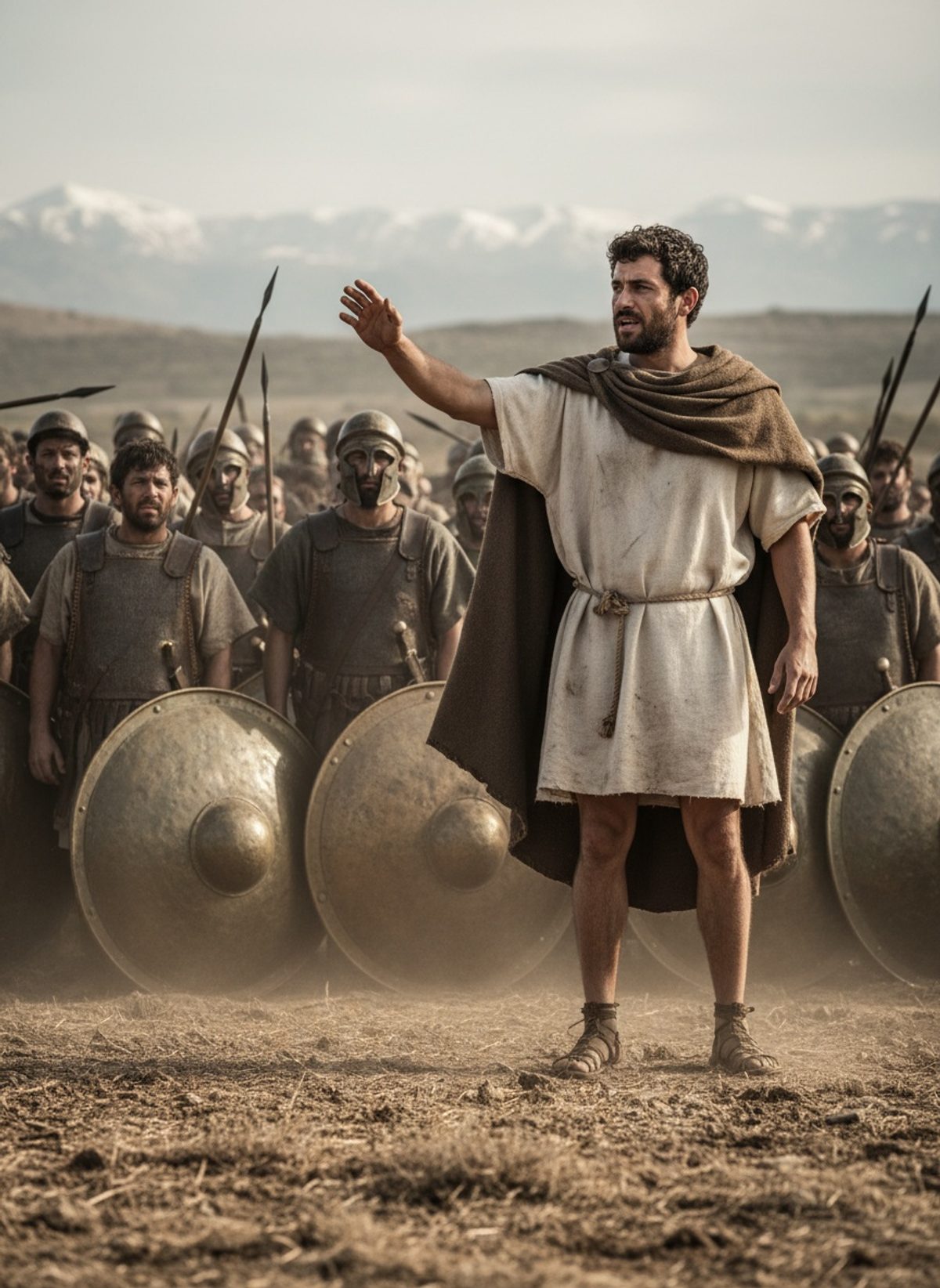
The echoes of fratricide might have continued to reverberate through his life had it not been for the desperate call from Syracuse. This great city, once a beacon of culture and liberty, was now dimmed by the rule of Dionysius II and a cauldron of other tyrants. Even Corinth hesitated to intervene against what seemed an inevitable decline. Yet, as if summoned by fate itself, a voice from the Athenian assembly urged Timoleon to lead an expedition to liberate the city. With a small contingent of 700 soldiers and unwavering resolve, Timoleon embarked on a voyage that would define his legacy.
The journey across the sea was fraught with danger; Carthaginian fleets prowled with a keen vigilance, a testament to their imposing dominance. However, using a clever stratagem, Timoleon evaded these naval captors, landing safely at the friendly port of Tauromenium, modern-day Taormina. Here, he gathered allies and prepared for the daunting mission to unshackle the bonds of tyranny strangling Syracuse. The task was formidable: the city was divided, its morale low, and its enemies numerous. Yet Timoleon’s reputation as a savior quickly spread, bringing reinforcements from Corinth and other states, bolstering his initial forces exponentially.
Read next: Cassander Feared Alexander's Ghost. He Was Right To.
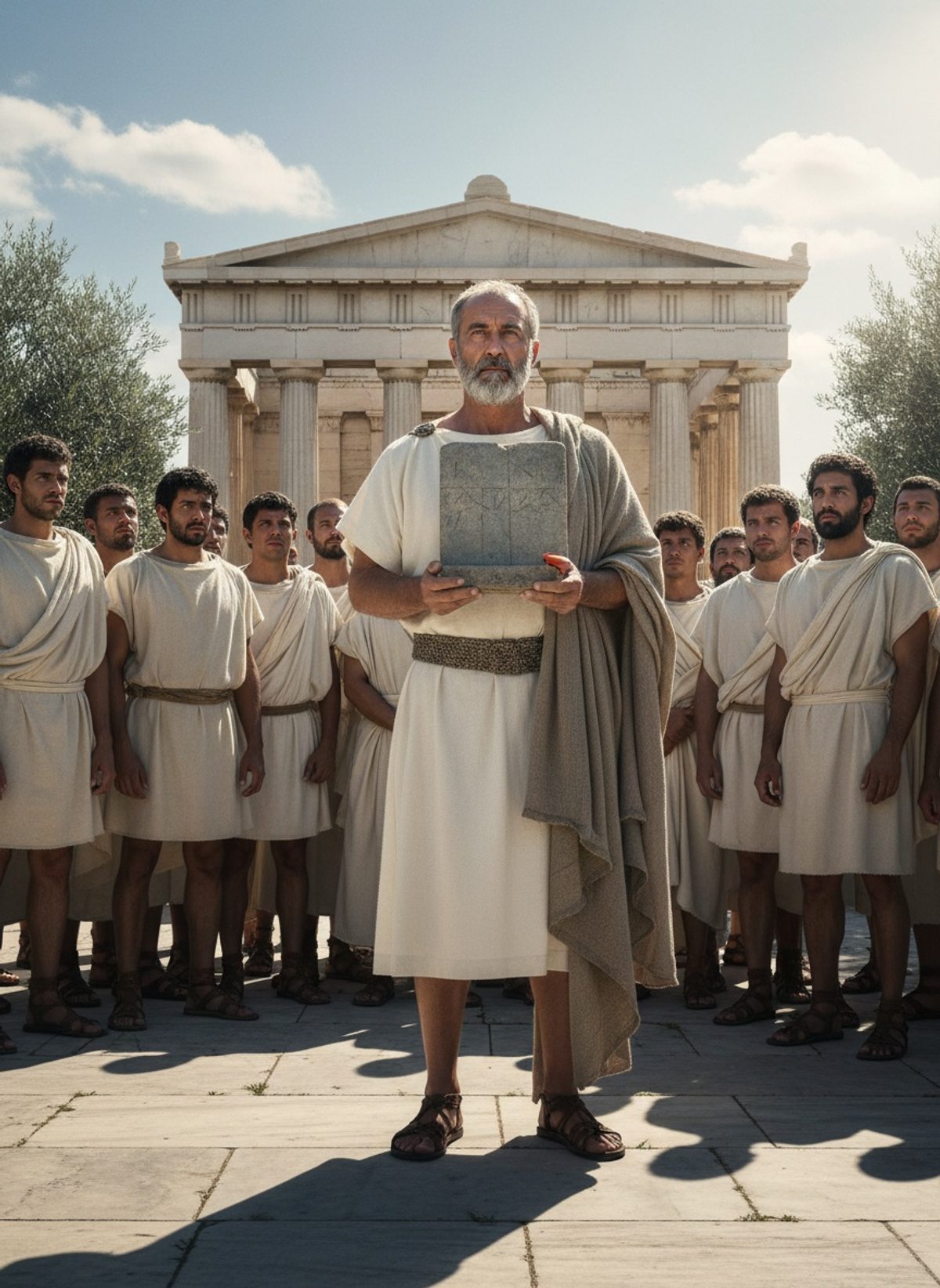
Timoleon's strategy was as much psychological as it was military. In a dramatic and symbolic act, he destroyed the citadel that stood as a grim reminder of servitude, replacing it with a courthouse. He sought not to replicate the tyranny but to dismantle the very structures that supported it. When Dionysius II surrendered Ortygia in 343 BC, a significant victory was secured not by slaughter but by negotiation, allowing Dionysius to retire peacefully to Corinth and ending his autocracy not with a blade but with diplomacy.
Hicetas, the crafty tyrant of Leontini, represented another knot in the weave of oppression. Initially, he seemed insurmountable, buttressed by a Carthaginian army of 60,000 men, yet internal distrust sowed the seeds of his downfall. Abandoned by Carthage, his power eroded, and he capitulated to Timoleon, thus handing Syracuse back to its people. With each victory, Timoleon’s influence widened, yet unlike those vanquished, he saw power not as an end but a burden to be judiciously relinquished.
Timoleon’s reforms in rebuilding Sicily were profound and enduring. He invited settlers from across Greece to re-populate the decimated city, breathing new life into its parched society. Democratic laws of Diocles were reinstated, and the city thrived under a renewed republican framework. The amphipolos, a priest of Olympian Zeus, symbolized the unification of divinity and governance, chosen annually to ward against the concentration of power. Such measures ensured that the political landscape of Syracuse was one of shared responsibility, rather than monolithic rule.
In 340–339 BC, the specter of Carthaginian retaliation loomed large with a massive invasion force. However, Timoleon's strategic genius and inspired leadership once again triumphed, as he deftly navigated these perilous tides to secure Syracuse’s hard-won independence. His tenure marked by both military and political achievements, he was hailed as a liberator and statesman whose actions resonated beyond his mortal years.
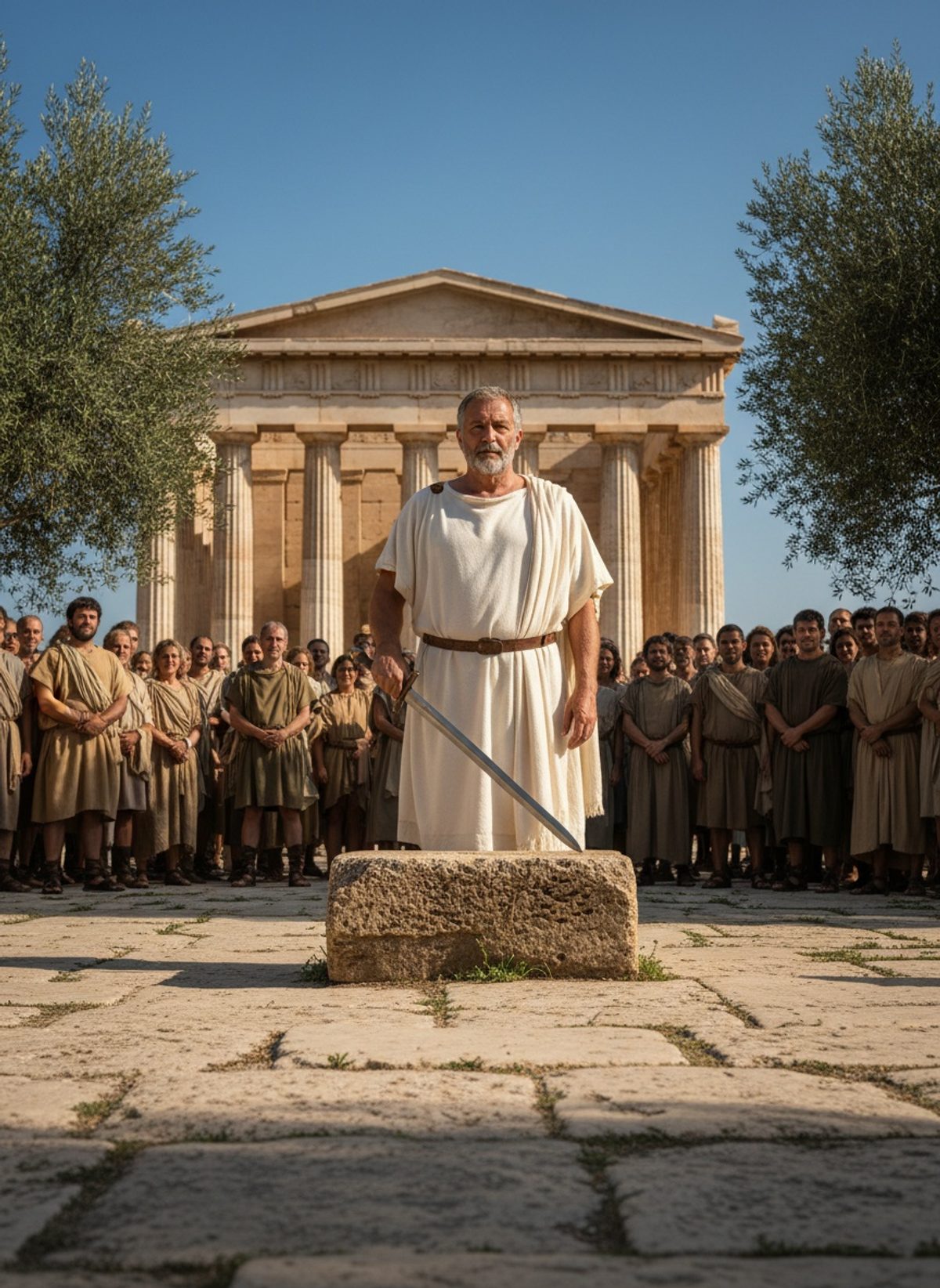
Yet, it was at this pinnacle of influence that Timoleon made his most audacious move. He deliberately forfeited his control and authority, dismantling his own position of power to prevent its seductive corruption. This self-imposed exile from dominion was emblematic of a deep philosophical commitment; what was earned in liberation was meant to be held by the liberated, not the liberator. Such an act, unparalleled in the annals of history, posed profound questions for the ages: When have power and principle been so harmoniously reconciled? And what does it mean to leave a legacy not of domination, but of freedom?
As the sun set over a Sicily now rid of its chains, Timoleon’s story burned bright like a beacon through the ages. It illustrated the depth of human potential when guided by conscience and courage rather than ambition and avarice. In a time where history frequently witnessed the cycle of tyranny and despots, Timoleon's broken sword was not a surrender but a liberation of its own—an enduring symbol that genuine leadership can rise above the allure of power, striving instead for the greater good of human dignity and autonomy.