Theodore Roosevelt was known for his booming voice and indomitable spirit. But even for such an audacious figure, the events of October 14, 1912, are astonishing. On that day, a gunman shot him at close range. Yet, bloodied and undoubtedly in pain, Roosevelt proceeded to deliver one of the most remarkable speeches in American history.
The Milwaukee evening was unassuming as crowds gathered to hear Roosevelt speak during his Bull Moose campaign. He was running for a third term under the Progressive Party, challenging both the Republican incumbent William Howard Taft and the Democratic challenger Woodrow Wilson. As he prepared to head to the Milwaukee Auditorium, few could have anticipated the chaotic turn of events about to unfold. Outside the Gilpatrick Hotel, a man named John Flammang Schrank approached Roosevelt's open car. Schrank, deluded and convinced that the ghost of former President William McKinley had directed him to "kill Roosevelt," fired a single shot from a Colt revolver.
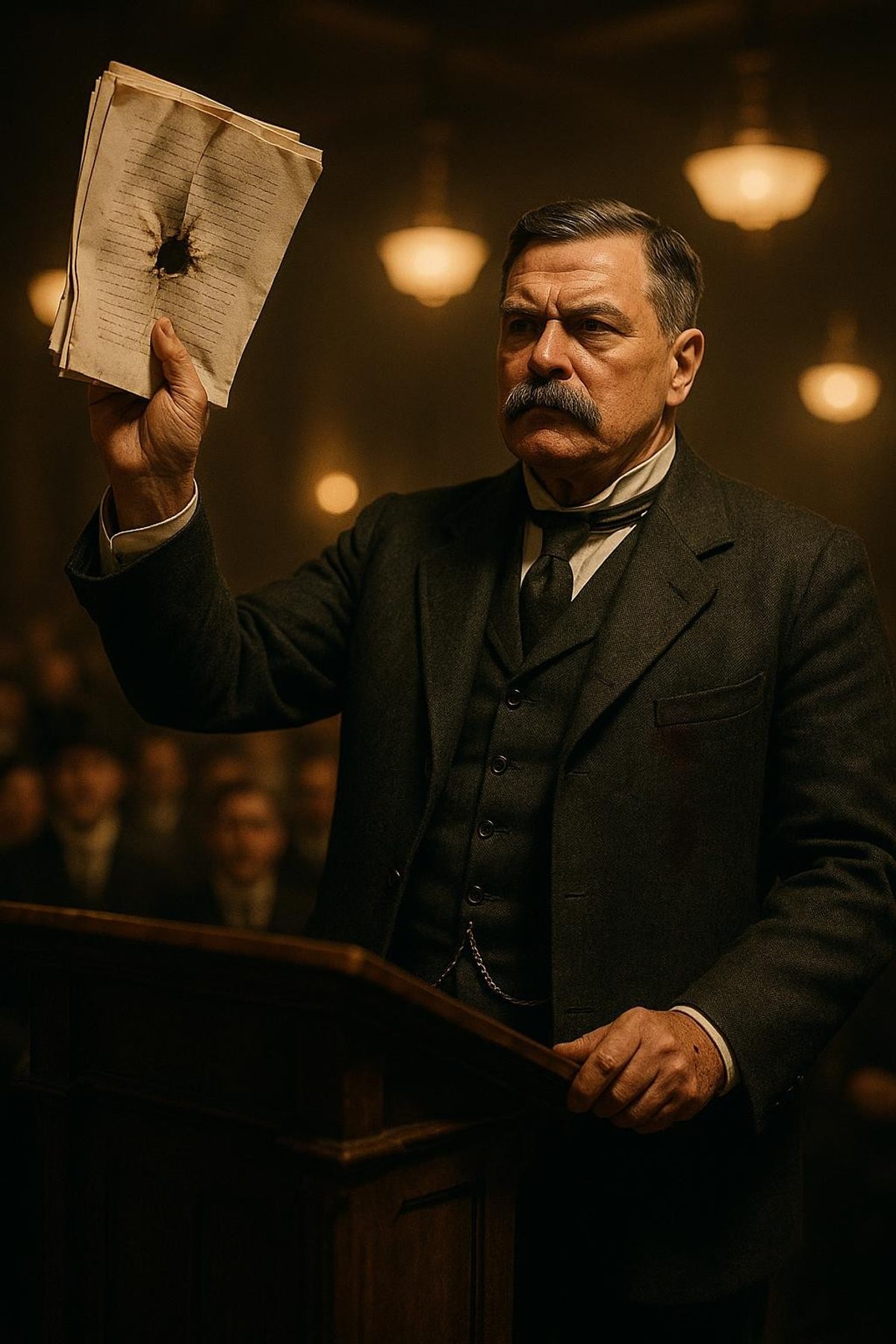
The bullet struck Roosevelt in the chest, passing through his steel eyeglass case and a dense collection of fifty folded pages of his prepared speech. For most, such an injury would have been incapacitating, but Roosevelt was no ordinary man. He felt the warm blossom of blood but knew he had avoided a grievous fate when he did not taste blood in his mouth, indicating his lungs were likely intact.
Doctors traveling with him urged Roosevelt to go to the hospital immediately. Yet, demonstrating the sheer force of will for which Roosevelt was famous, he insisted on delivering his speech. The idea of disappointing a crowd was unacceptable to him. It was as if Roosevelt viewed the bullet lodged in his chest as another battle scar in a life defined by struggle and determination. Arriving at the auditorium, the atmosphere shifted as news spread of the attempt on his life. Determined to dispel any doubt about his condition, he calmly took the stage. The audience, anticipating a roaring rally, instead witnessed a man brimming with resolve, his dress shirt marred by a crimson stain.
Read next: Washington Died. His Enemies Mourned Him Loudest.
The opening lines of his speech shocked those present into silence. Holding the blood-stained pages aloft, he announced, "Friends, I shall ask you to be as quiet as possible. I don't know whether you fully understand that I have just been shot; but it takes more than that to kill a Bull Moose." The crowd, initially silent, erupted in cheers at his defiance. For the next hour, Roosevelt held them captive with passionate rhetoric while slowly bleeding from what could have been a fatal wound. His tenor was steady and authoritative, exhibiting no hint of the trauma his body was enduring. Each sentence was a testament to his resilience and commitment.
The text of Roosevelt's address covered typical topics of his Progressive ideology. He advocated for reforms that would continue breaking the fierce grip of party bosses, demanded social and workplace improvements, and called for a square deal for every man. But knowing what had transpired, every phrase he uttered was amplified with the gravity of a potential martyr. His usual theatrical style was underscored by an authenticity born from that dramatic confrontation with mortality.
Beyond Roosevelt's unwavering courage, the context of this incident shed light on a turbulent chapter in American history. The Progressive Era was marked by rapid change, with aggressive reformers clashing against entrenched interests. Roosevelt, a reformist at heart, embodied the spirit of this age. His campaign was as much a crusade as it was a bid for the presidency, seeking to carve out policies that aligned with the moral and economic realignment of the United States. This incident, and his reaction to it, highlighted the palpable tensions of the era, capturing a time when political fervency often spilled over into violence.
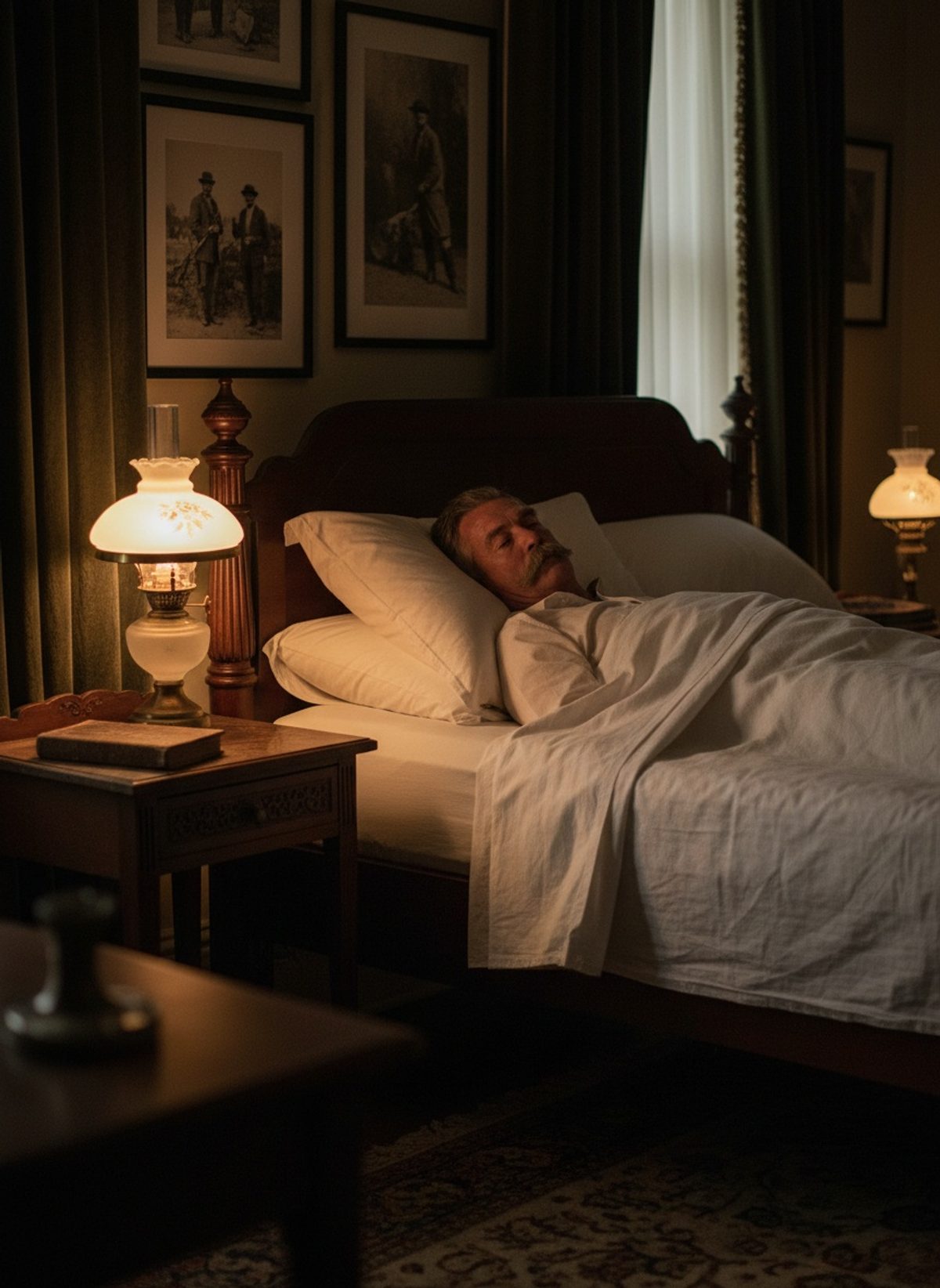
After concluding his speech to raucous applause, Roosevelt was eventually persuaded to seek medical attention. Once in the hospital, doctors confirmed that the bullet was lodged in the thick muscles of his chest wall, near the ribs, and did not pose an immediate life threat. Deciding that it was safer to leave the bullet than to attempt removal, it remained a part of him until his death seven years later in 1919.
The incident cast a new light on Roosevelt's larger-than-life persona. In the annals of history, the Milwaukee shooting underscored his inherent robustness and served as a striking metaphor for his political career—a man of action willing to face down adversity for what he believed was a higher purpose. While the 1912 election ultimately went to Woodrow Wilson, with Roosevelt finishing second and Taft third, the campaign became a significant chapter in the ongoing evolution of American democracy, one in which Roosevelt reaffirmed his place as a titan of the political landscape.
Theodore Roosevelt's decision to face the crowd that fateful October night, bleeding from a fresh wound, stands as one of the most dramatic moments in the annals of U.S. political history. The spectacle of a man, so recently staring death in the face, choosing to engage with the public on issues dear to his heart, invites reflection on the nature of leadership and courage. It was an act that transcended mere politics, resonating as a profound expression of steadfastness and valor. As we look back on that day, it's a pointed reminder of the power of resilience and the extraordinary lengths to which individuals will go when driven by conviction. Roosevelt's words and actions continue to echo through time, immortalizing him as a leader who literally stood for his beliefs—even when facing the lethal force of a bullet.